
Another Blow for Fake News About Fake News: Reason Roundup
Plus: Author Zadie Smith talking cultural appropriation, and Budweiser versus Big Corn


Plus: Author Zadie Smith talking cultural appropriation, and Budweiser versus Big Corn


Hacking tools end up in the hands of some dangerous people. So, apparently, do our government hackers.

Big publishers want new sources of revenue. But trying to force license fees for linking will backfire.

Gun buyers, gay lovers, cannabis customers, and Yelp users are just a few of the groups that benefit from this federal law.

Plus: FDA greenlights new 23andMe test, Kamala Harris gets the Onion treatment, and nobody likes Trump's new shutdown salve.
Covingtongate, Buzzfeed's bomb, Baby Hitler, Kamalamentum…maybe it's time to pull the plug.

Plus: Kamala Harris officially enters the 2020 race and Google News may leave the E.U.

Online black markets shift faster than police can respond

Paying customers may be the next targets for social media "deplatforming."

"We shouldn't have to think about self-censoring what we say online."

"Bears, beets, Battlestar Galactica" goes intergalactic?
The result is consistent with lots of other evidence of widespread ignorance and bias influencing public opinion on political and scientific issues.

Title of the Nature Human Behavior article cited above sadly says it all.
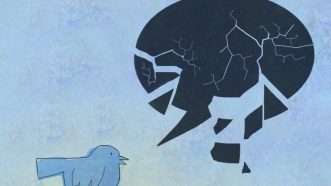
It's "important to be clear about how rare this behavior is on social platforms," researchers say.
Revving up pepper hotness in tomatoes using CRISPR genome-editing
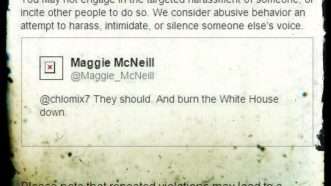
Author and sex worker Maggie McNeill was suspended from Twitter Tuesday for a hyperbolic comment about burning the White House down.

Attempts to control how artificial intelligence develops and is used could backfire.

On Monday, a federal appeals court considered Grindr's guilt in a case involving app-based impersonators.
Defense Distributed and the Second Amendment Foundation insist that law violates the First Amendment, Commerce Clause, and Supremacy Clause.
Malthusian predictions of global famines keep receding.
Food security is not the problem, but nutrition security could be.
Social media platforms have every right to do whatever the hell they want, but they shouldn't really do much speech policing at all.

Michael Shermer, Ron Bailey, and Jim Epstein talk poverty-eradication, genomics, and blockchain at Reason's 50th anniversary celebration
A Barberton judge just sentenced a woman to jail, house arrest, and a year without social media for repeating a rumor about a pellet gun at school.
J.D. Tuccille, Lisa Snell, and Rob Long discuss the democratization of everything at Reason's 50th anniversary celebration.

Companies should be applauded, not criticized, for working to identify the genetic roots of diseases that afflict humanity.

Reason editors' best and worst moments of 2018, including the president's welcome and long-overdue drawdown from Afghanistan

New film The Creepy Line argues that tech giants sometimes silence conservatives and try to steer America left.

The tech giant actually stands to gain by legally hamstringing competition with tough regulations.


One year after Net Neutrality, connection speed is up, the discrimination critics feared is non-existent, and the debate about Internet regulation is abysmal.
The Cypherpunk co-founder was a major influence on both bitcoin and WikiLeaks.
The Electronic Frontier Foundation, the Equal Justice Society, and others are challenging the practice in court.

Economists Kenneth Rogoff and Lawrence H. White face off over what the impact would be of a ban on cryptocurrency and phaseout of the $100 bill.

Yesterday's hearings didn't clarify much except that Washington is in a mood to regulate tech giants.

Australians who want to protect their data from surveillance now need to turn to extra-legal means.

Also: Alexandria Ocasio-Cortez owns the cons while spouting policy B.S.
Plus: Trump changes his mind about military spending and why Rand Paul hates Trump's new attorney general pick.


Parliament passes a bill at the last possible moment to give officials the power to weaken encryption.

New rules ban erotic art, talk of shared sexual interests, kink groups, and anything that "encourages sexual encounters between adults."

It's been dubbed "NYC's Anti-Airdrop Dick Pic Law," but the bill is much broader than that.

The future we've fantasized about really is coming, and soon.

Research shows a fifth of its users seek out sexual images. But the sharing site is now part of a massive media conglomerate.

Plus: the First Amendment problems with prosecuting Wikileaks and the trans troops ban is dealt another blow.

Sophisticated firearms are becoming ever-easier to illicitly manufacture in basic workshops, says a new report. We'll even show you how to do it!
Celebrate your independence with a subscription to Reason magazine, your most trusted source of honest, insightful news and analysis.




