L.A. Bureaucrats Shut Down Restaurants for Selling Groceries Without a Permit
"You cannot just decide you want to sell groceries," said Barbara Ferrer, the director of L.A. County Public Health.


"You cannot just decide you want to sell groceries," said Barbara Ferrer, the director of L.A. County Public Health.
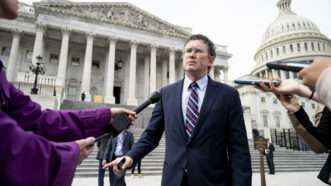
The Kentucky Republican took on Donald Trump and Nancy Pelosi to fight against the $2 trillion coronavirus spending package. He's just getting started.
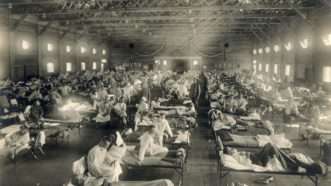
Social distancing and lockdowns today are why deaths from the two pandemics might be comparable.

DIY manufacturers scramble to reduce shortages, as public health officials send mixed messages about the efficacy of broader use.

Threatening shops for selling chocolate Easter eggs and mocking people who are actually following the law undermines citizens’ trust.

Though focused on manufacturing and banking, this study sees economic optimism in quick and thorough interventions to keep people isolated.

Plus: "Netflix for 3-D guns," viral authoritarianism, COVID-19 behind bars, and more…
"We have the capacity to keep this contained," Mayor Bill de Blasio told New Yorkers on March 2.

The county's ban on firearm sales is inconsistent with a new federal advisory as well as the Second Amendment.

Germany's crude case fatality rate is currently less than 1 percent, compared to 1.8 percent in the U.S., 6.4 percent in the U.K., and 11.4 percent in Italy.

"They always overshoot," Anthony Fauci says. "Generally, the reality is somewhere in the middle."
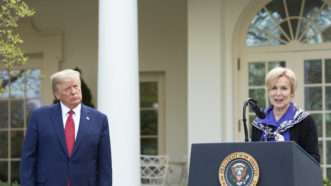
Plus: 13 percent of NYPD out sick, Seattle slows the spread, and more...

Reason's Ronald Bailey on flattening the curve without killing freedom.
Here is the best way to make sense of constantly changing predictions, says Reason Science Correspondent Ronald Bailey

But he has raised his estimate of the virus's reproduction number, which implies a lower fatality rate than his research group initially assumed.

Plus: civic dynamism on display, Justice Department embraces home detainment of federal prisoners, and more...
Reports from USA Today and ProPublica highlight CDC missteps that set back the United States' Covid-19 response.

Or is the Second Amendment suspended for the duration of the epidemic?
Plus: COVID-19 in prisons and jails, Trump campaign threatens TV stations, state disparities in new coronavirus cases, and more...

A Q&A with Alex Tabarrok, an economist at George Mason University and blogger at Marginal Revolution

A cost-benefit analysis of COVID-19 lockdowns highlights crucial gaps in the data.
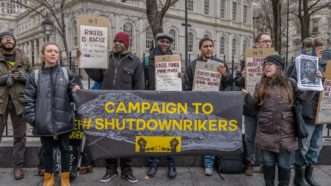
Another 300 low-level offenders set to be released, but the city’s jails house more than 5,000.

A uniform national response risks doing more harm than good in a nation that’s not uniform.
It depends on the state where you live.

Plus: Kudlow says total stimulus package will cost $6 trillion, jails free nonviolent offenders, more...
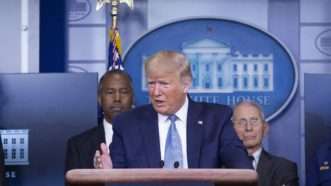
So far politicians have been acting as if only one side of the ledger matters.

The point of shutting down the "nonessential" economy, New York's governor explains, is to "save lives, period, whatever it costs."
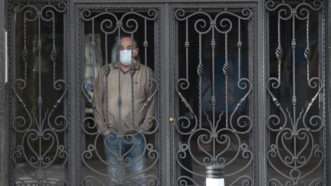
But he stands by his reasoning and predicts that global deaths will peak under 50,000.

Restrictions have been loosened to help ramp up production.

Plus: the pandemic in prisons, pushback on Trump's prescription for economic rebound, and more...

Lawyers, inmates' families, and correctional officers worry the jail is ill-prepared to handle an outbreak.

The mortality rate is much lower than the official numbers suggest, and adaptive behavior affects the transmission rate.

The government botched the early response to coronavirus, so why expect it to grow in competence now?


When this is all over, don’t expect politicians to lose their taste for ordering us around.

Especially during a pandemic, Americans need access to healthy food.
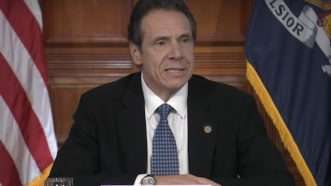
New York's governor insists his edict "mandating that 100% of the workforce must stay home" is "not a shelter-in-place order."
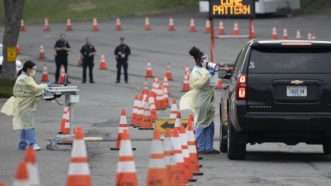
Their complaints shut down an important pandemic-fighting tool. Fortunately, a substitute plan has been found.

The big unknown is how many people are infected but aren't counted in the official numbers because their symptoms are mild or nonexistent.
A big contraction was followed by a bustling aftermath—but with notable negative long-term effects as well.

If this is to respond to a temporary crisis, why do these powers last for two years?

The spread of COVID-19 is making once unthinkably extreme policies seem like the least bad option.
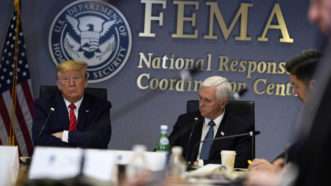
If you really want politicians to do something helpful, ask them to stop "leading" and to get out of the way.

The "panic" Andrew Cuomo has in mind is a rational response to the threat of an economically ruinous government overreaction.

GM’s CEO is offering to help. She shouldn't wait for the feds to figure out what to do.
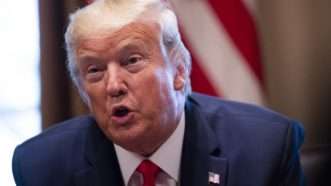
How broken bureaucracy and poor political leadership combined to botch the rollout of COVID-19 testing

The NYU Law professor thinks we're in for a mess of bad epidemiology, ineffective stimulus, and misguided quarantines.

Politicians seem to be proceeding on the dangerous assumption that cost-effectiveness does not matter.


New from Reason: a look into what Javier Milei has accomplished and what it will take to make the most of Argentina’s window for real change. Out now for subscribers.