
Trump's Threatened Tariffs on Mexican Imports Might Not Happen. They Have Costs Anyway.
The president still has time to avoid the economic damage, but who knows how much political damage he's already done?


The president still has time to avoid the economic damage, but who knows how much political damage he's already done?
So far, the answer is "maybe."
Let employers and employees work it out to meet individual needs.

Even if Trump's tariffs go away, the debilitating economic effects are likely to linger for years.

Paul's proposal to cut 2 percent from the federal budget for the next five years was predictably opposed by both Democrats and most Republicans
If the tariffs ramp-up all the way to 25 percent, as Trump has threatened, they would be the biggest tax increase since 1968.
Politically. Economically. Diplomatically. Legally. Trump's tariff threat against Mexico is a stunningly stupid maneuver no matter how you look at it.

Plus: unlicensed diet tips in court, California takes aim at independent contractors, and more...
Navarro's Wall Street Journal op-ed looks more like a deliberately deceptive attempt to argue that limiting imports will boost economic growth. It won't.

Another bad idea from the Democratic presidential hopeful.

China's 2010 export restrictions on rare earth compounds failed then, and they would fail now


Articles complaining "there is too much stuff" may be the one thing of which we have too many.

The good news: Capitalism is working its way back to the Democratic mainstream. The bad news: This capitalism comes with a whole lot of government.
This might seem like nothing more than a snooze-worthy debate over semantics or economic theory or government P.R. strategies. But it matters a lot.

"Tariffs are taxes on Americans—and we talk as if that's not the case; we forget that Americans are paying them," says Pete Buttigieg. That shouldn't be noteworthy, but unfortunately it is.
Still, it's better than the administration's previous proposals to cut legal immigration in half.

What's the point of a "limited government" bloc that doesn't limit government?

Ads for sandwiches, toilet paper, condoms, and more riffing off Game of Thrones show how market culture is a glorious "perpetual meaning machine."

As messy as things are, they could get uglier still.

Obituaries for the benefits of free markets are as numerous as they are wrongheaded.

Trump isn't putting any tariffs on imported cars right now, but the White House has released a report that effectively allows the president to do that any time he chooses.

Trump's strategy was never going to be a winning one.

If the past is any sort of guide to what comes next, his fears about a jobless economy (and his policy prescriptions to fix it) are completely misplaced.

The AFL-CIO's Twitter account appears to endorse a workers' revolution.
The president’s double-talk about tariffs reflects his economically ignorant conviction that exports are good and imports are bad.

Capitalism isn't conservative when it comes to social and economic life. It provides exactly the sort of "bold, structural changes" socialists want but inevitably botch.

While Trump prepares another round of aid payments for farmers, Marco Rubio is pushing for tariffs on Mexican fruits and vegetables that will send prices soaring.

The most likely end result of Trump's literal Buy American policy: lots of American farm goods rotting in federal warehouses

If the United States had pursued a different strategy from the outset of the Trump administration, it might now be in a position to counter China's hardball tactics.
To be this wrong this often deserves recognition.

There's an inherent conflict of interest when an agency serves as both a regulator and competitor.

Is Trump using tariffs as a negotiating tactic? That's the most generous reading of his trade policy, but it's unsupported by the facts.
Is the president the only person left in America who doesn't understand that Americans are paying for his tariffs?

"For the first time ever there are now more people in the world older than 65 than younger than 5."

He's a centrist compared to Sanders, but he's also a classic big-government liberal.




The Vermont socialist can muster a lot of emotional outrage at CEO pay, but his argument about a "moral economy" doesn't add up.
Being a presidential candidate means never having to say sorry for heavy-handed proposals to limit choice and promise free stuff.

Plus: life after ISIS, Kansas says state constitution guarantees abortion access, and more...

After overpromising the benefits and underestimating the costs, reality is starting to puncture the White House's messaging on trade.

It’s time to stop freaking out about humanity's imminent demise.

In a podcast about her new book, Cribsheet, an economist answers your parenting questions about breastfeeding, swaddling, toddler discipline, and more.
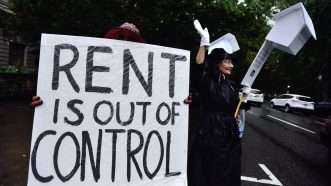
Fresh from their 2018 defeat, California's rent control advocates are back with another statewide ballot initiative.
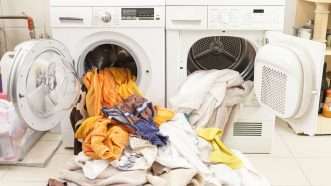
A new report finds the tariffs raised $82 million for the U.S. Treasury but ended up increasing costs for consumers by about $1.2 billion.


New from Reason: a look into what Javier Milei has accomplished and what it will take to make the most of Argentina’s window for real change. Out now for subscribers.

