
California Says Residents With Vacated Out-of-State Convictions May Not Own Guns
A federal lawsuit says the state is violating the Second Amendment by refusing to recognize the restoration of firearm rights by courts in other states.


A federal lawsuit says the state is violating the Second Amendment by refusing to recognize the restoration of firearm rights by courts in other states.



Santa Claus is coming to town with all his liquids in a single quart-sized baggie.
Police officers, who can now charge people who own 15-round magazines with a felony, were outraged when it looked like they might receive equal treatment.
This might not be what lawmakers had in mind when they created this program.
The Supreme Court, though, has suggested that such laws, if narrow enough, are constitutional.
The administration usurps Congress by redefining machine guns.

A federal court has struck down a New York ban inspired by kung fu movies.

A new report from the Foundation for Individual Rights in Education argues DeVos's due process reforms are urgently needed.

New film The Creepy Line argues that tech giants sometimes silence conservatives and try to steer America left.

The tech giant actually stands to gain by legally hamstringing competition with tough regulations.


People getting starry eyed about socialism should look to Venezuela for some important warning signs.

That's PATRIOT Act thinking.

One year after Net Neutrality, connection speed is up, the discrimination critics feared is non-existent, and the debate about Internet regulation is abysmal.

Air marshals might still treat you like a terrorist. But they'll stop documenting your every move.



The university's definition of "harassment" is breathtakingly broad.
The Electronic Frontier Foundation, the Equal Justice Society, and others are challenging the practice in court.
The "questionable" "editing choices," the court said, weren't sufficiently injurious to reputation to qualify as libelous (whether or not they conveyed a false message).
Please share it widely -- there will be at least nine more in the upcoming months.

Episode 1 of Free Speech Rules, a new video series by UCLA Law Professor Eugene Volokh
USC's procedures didn't fairly treat the accused, a California appellate court rules.
"[SUNY] Purchase College student Gunnar Hassard was arraigned in Harrison Town Court for Aggravated Harassment in the First Degree, a class E felony, for hanging posters with Nazi symbolism in areas of the campus."

According to the officer who took them down, the phone was "evidence."
The federal case against the Charlottesville murderer illustrates how hate crime laws punish people for their bigoted beliefs.
"Protection against the possibility of future adverse impact on employment does not overcome the presumption of public access."

The ruling extends to secret recordings of police officers.
A lawsuit argues that the state's elaborate restrictions, ostensibly aimed at preventing underage vaping, violate the right to freedom of speech.

The deputy said he took issue with the word "fuck" in the song despite using it himself moments earlier.

India is known as the land of contradictions, and recent events do little to undermine that reputation.

Australians who want to protect their data from surveillance now need to turn to extra-legal means.
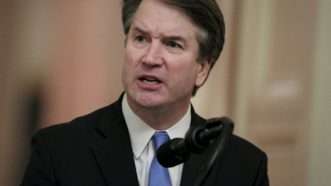
"If Kavanaugh was going to deal a major blow to health care rights during his first session on the court, this would have been the case to do it."

Also: Alexandria Ocasio-Cortez owns the cons while spouting policy B.S.
Plus: Trump changes his mind about military spending and why Rand Paul hates Trump's new attorney general pick.
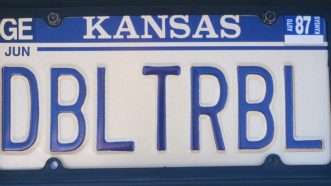
We've got a grant -- we've finished the first video (under 4 minutes) -- but we need a good title for the whole series.

Politicians seem unable to learn from a history of grabby tax policies fueling populist anger.
A 3rd Circuit judge says the decision approving New Jersey's 10-round limit treats the right to arms less seriously than other constitutional rights.
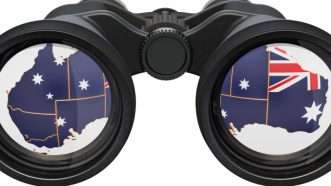
Parliament passes a bill at the last possible moment to give officials the power to weaken encryption.

New rules ban erotic art, talk of shared sexual interests, kink groups, and anything that "encourages sexual encounters between adults."

It's been dubbed "NYC's Anti-Airdrop Dick Pic Law," but the bill is much broader than that.
The statute is "unconstitutionally overbroad," the appeals court says, because it criminalizes "a substantial amount of protected expression."

The ruling concerns flooding of property undertaken by the San Jacinto River Authority in order to mitigate the effects of Hurricane Harvey. Issues raised in the case are similar to those at stake in ongoing federal court litigation.
As the prison-industrial complex starts to crumble, get ready for the social-media-surveillance complex to replace it.
Celebrate your independence with a subscription to Reason magazine, your most trusted source of honest, insightful news and analysis.




