

Last fall, I lamented the sad state of the Mayflower Hotel in Washington, D.C. The concierge lounge was closed, and there was no room service. As I arrived for the 2022 Federalist Society National Lawyers Convention, I had hoped that the pandemic cuts would be restored. No such luck. The concierge lounge is still closed. I'm told it will open up in a "few months." I've heard that before. And no room service menu to be found. Not even a QR code link. For much of my adult life, the Mayflower was something of an annual pilgrimage, stepped in tradition. Alas, due to cost-saving measures--do not even try to blame this on social distancing!--the Mayflower wilts. See everyone in the grand hallway!
The Volokh Conspiracy
Mostly law professors | Sometimes contrarian | Often libertarian | Always independent | Est. 2002

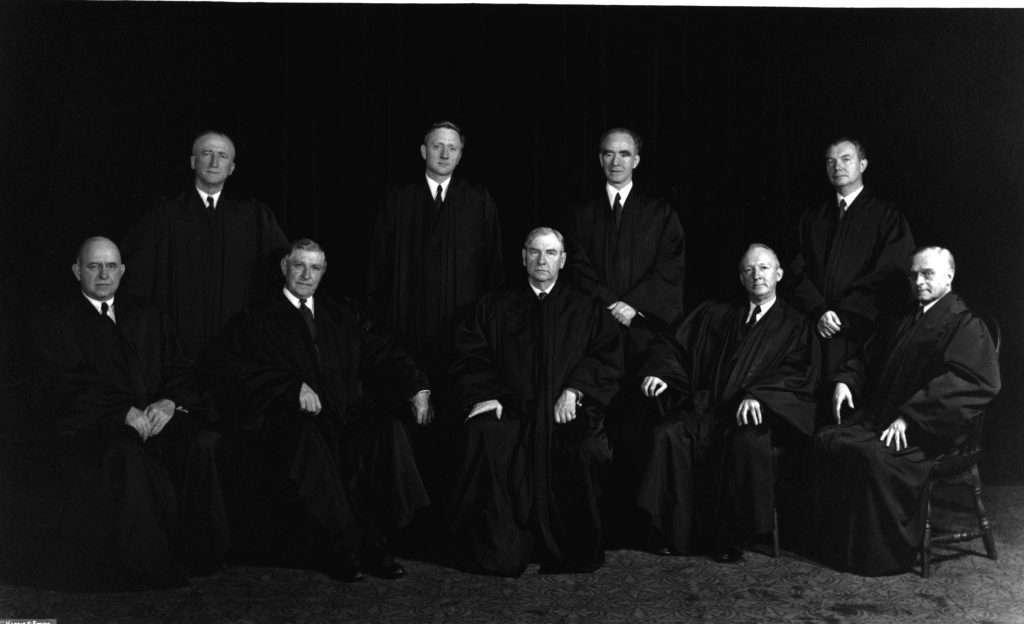
Today in Supreme Court History: November 9, 1942
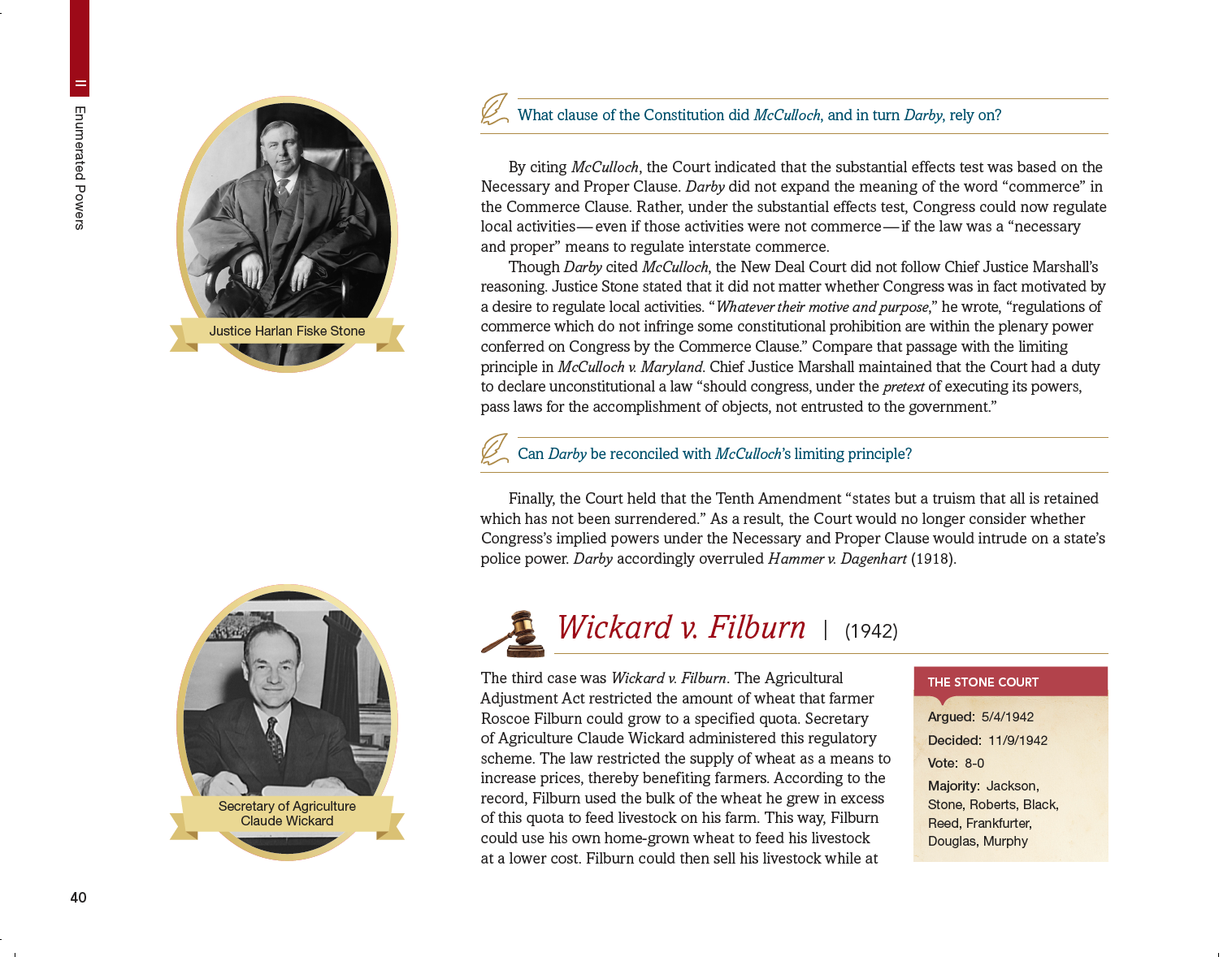
11/9/1942: Wickard v. Filburn decided.
Iowa Voters Add Right to Keep and Bear Arms to Iowa Constitution
After this, only five states (California, Maryland, Minnesota, New Jersey, and New York) won't have such a provision in their state constitutions.
The Des Moines Register reports that the state constitutional amendment is winning 66%-34% with about 87% of the vote counted. The text will read,
The right of the people to keep and bear arms shall not be infringed. The sovereign state of Iowa affirms and recognizes this right to be a fundamental individual right. Any and all restrictions of this right shall be subject to strict scrutiny.
For lists of the current and past state constitutional provisions as of 2006 (a few have been added or changed since), both by state and by date, see here.
"Why Not the Right to Earn a Living?"
In today's Golden Glow Tanning Salon v. City of Columbus, the Fifth Circuit, in an opinion by Judge Edith Jones, joined by Judges James Ho and Cory Wilson, rejected an Equal Protection Clause and Takings Clause challenge to COVID lockdowns. This is a straightforward, and in my view a clearly correct, result under existing law; but Judge Ho had an interesting concurrence (which cited, among others, our own David Bernstein and Eugene Kontorovich):
The Supreme Court has recognized a number of fundamental rights that do not appear in the text of the Constitution. But the right to earn a living is not one of them—despite its deep roots in our Nation's history and tradition. Governing precedent thus requires us to rule against the countless small businesses, like Plaintiff here, crippled by shutdown mandates imposed by public officials in response to the COVID-19 pandemic. Cases like this nevertheless raise the question: If we're going to recognize various unenumerated rights as fundamental, why not the right to earn a living? …
A principled approach to the Constitution can take one of two forms: We can enforce only those rights that are expressly enumerated in the Constitution. Or we can recognize a broader range of fundamental rights, including those not expressly stated in the Constitution, by appealing to some principle not explicit in the text.
The Supreme Court has taken the latter approach. It has long said that it will recognize "those fundamental rights and liberties which are, objectively, deeply rooted in this Nation's history and tradition, and implicit in the concept of ordered liberty, such that neither liberty nor justice would exist if they were sacrificed." …
Under the Court's approach to unenumerated rights, we privilege a broad swath of non-economic human activities, while leaving economic activities out in the cold. Scholars have suggested, however, that this may get things backwards. After all, if anything, "the right to pursue callings and make contracts … have better historical grounding than more recent claims of right that have found judicial favor."
First Circuit: Suitably Narrow Criminal Libel Law Doesn't Violate First Amendment
From Frese v. Formella, decided today by the First Circuit, in an opinion by Judge Jeffrey Howard, joined by Judges William Kayatta and Rogeriee Thompson:
New Hampshire's criminal defamation statute provides that "[a] person is guilty of a class B misdemeanor if he purposely communicates to any person, orally or in writing, any information which he knows to be false and knows will tend to expose any other living person to public hatred, contempt or ridicule." "'[P]ublic' includes any professional or social group of which the victim of the defamation is a member." A person convicted of a class B misdemeanor faces a fine of up to $1,200. Because such charges carry no possibility of jail time, criminal defamation defendants have no right to trial by jury and are not afforded court-appointed counsel.
New Hampshire's misdemeanor enforcement process empowers police departments to prosecute defamation. In the absence of the exercise of discretionary supervisory authority by the state Attorney General or County Attorneys, municipal police departments may initiate prosecutions for misdemeanors, including criminal defamation, without prior input or approval from such prosecutors…. "The prosecution of misdemeanors by police officers is a practice that has continued in one form or another since 1791 and is still permissible under existing statutes." Private citizens may also prosecute misdemeanors in New Hampshire, so long as incarceration is not an applicable penalty. {Notably, any private citizen who commences one of these actions could be held liable for malicious prosecution if that person acted without probable cause; likewise, a police officer could be liable if the officer acted wantonly.}
Although criminal defamation is rarely prosecuted in New Hampshire, Frese has twice been charged under section 644:11. In 2012, the Hudson Police Department arrested Frese for comments about a local life coach that he posted on a Craigslist website. Frese called the coach's business a scam and accused him of, among other things, being involved in a road rage incident and distributing heroin. Without the advice of counsel, Frese pleaded guilty and was fined $1,488, of which $1,116 was conditionally suspended. Six years later, the Exeter Police Department arrested Frese for comments he had pseudonymously posted in the online comments section of a newspaper article about a retiring Exeter police officer. The comments included statements that the retiring officer was "the dirtiest[,] most corrupt cop [Frese] ha[d] ever had the displeasure of knowing" and that the officer's daughter was a prostitute….
The court held that § 644:11 was constitutional under Garrison v. Louisiana (1964):
Congresswoman's Allegations of Voter Fraud Weren't Illegal "Undue Influence" on Voters
From Rud v. Fischbach, decided Wednesday by Administrative Law Judge Barbara Case of the Minnesota Office of Administrative Hearings:
Respondent Michelle Fischbach is a United States Congresswoman representing Minnesota's Seventh Congressional District. She is seeking reelection to that office in the general election to be held on November 8, 2022….
Complainant alleges that:
(1) Respondent violated Minn. Stat. § 211B.06, by disseminating false campaign material related to the 2020 United States Presidential election;
(2) Respondent violated Minn. Stat. § 211B.07, by disseminating false claims about the 2020 Presidential election in order to cause duress and compel voters to vote for her;
(3) Respondent violated Minn. Stat. § 211B.13, by posting a request for donations to former "President Trump's Election Defense Fund" on her campaign website to induce voters to vote for her; and
(4) Respondent violated her oath to uphold and support the United States Constitution by repeating false claims about the validity of the 2020 Presidential election results and by supporting groups that sought to violently prevent the peaceful transfer of power on January 6, 2021….
9-Month Delay in Ukrainian Businessman's Filing Case Cuts Against Issuing Emergency Order, Despite Invasion
"While the Court appreciates and does not intend to minimize the disruption and impact that the invasion has had on Plaintiff's life, Plaintiff's own nine-month delay nonetheless demonstrates that there is no danger of immediate injury sufficient to justify an ex parte TRO here."
From Kovalenko v. Epik Holdings Inc., decided today by Judge Tana Lin (W.D. Wash.):
This action arises out of Plaintiff's action for defamation and invasion of privacy against Defendants Epik Holdings, Inc. and Anonymize, Inc. Plaintiff is a Ukrainian businessman engaged in international trading of coal products. In January 2022, a website called 368.media published an article representing that, in part, Plaintiff was involved in illegal schemes to ship coal into Ukraine with the assistance of corrupt Russian and Ukrainian officers, earning profit margins that resulted in the overpayment for coal and electricity by consumers. 368.media removed the article at the request of Plaintiff's counsel. In the same month, another website, www.weeklynewsreview.com, also published the article. Plaintiff was able to secure a court order in Cyprus directing that the second article be deleted, which was subsequently completed.
On or around January 29, 2022, yet another website, www.warsawpoint.com, published the article (the "Third Article"). Plaintiff's counsel emailed the website on January 29, demanding that it remove the Third Article. The following day, Plaintiff's counsel received a response containing a link to an encrypted and self-destructing message, which demanded a payment of 0.1 bitcoin for the removal of the Third Article. While Plaintiff has not been able to identify the owner of www.warsawpoint.com, Plaintiff believes that Defendant Epik owns the domain for the website, that Defendant Anonymize provides services to protect the identity of the website's owner, and that the two Defendants jointly operate the website.
Supreme Court Turns Down Opportunity to Reconsider Three More Precedents
Justices Thomas and Gorsuch have a much greater appetite for reconsidering prior precedent than the other justices do.
Yesterday's Supreme Court order list produced five dissents from the denial of certiorari. In three of those cases, the justices diseenting from the denial wanted the Court to accept certiorari so that the justices could reconsider, if not overturn, prior Court precedent.
- In Clendening v. United States, Justice Thomas dissented because he believes the Court should overrule Feres v. United States, a 1950 case in which the Court held that military personnel cannot sue the United States for any injury "incident to military service," even though the Federal Tort Claims Act (FTCA) does not preclude such suits. Wrote Thomas: "Congress set out a comprehensive scheme waiving sovereign immunity that we have disregarded in the military context for nearly 75 years. Because we caused this chaos, it is our job to fix it."
- In Khorrami v. Arizona, Justice Gorsuch dissented because he beleives the Court should reconsider Williams v. Florida, a 1970 decision in whcih the Court held that the Sixth Amendment right to a jury trial (as incorporated against the states) does not require a twelve person jury. Wrote Gorsuch: "Williams was wrong the day it was decided, it remains wrong today, and it impairs both the integrity of the American criminal justice system and the liberties of those who come before our Nation's courts." Justice Kavanaugh would also have granted certiorari, but he did not join Justice Gorsuch's dissent.
- In Buffington v. McDonough, Justice Gorsuch dissented form the Court's refusal to consider an opportunity to narrow the Chevron doctrine. Whereas in prior writings Gorsuch expressed a desire to overturn Chevron v. NRDC outright, his Buffington dissent trains its focus on the "expansive reconstruction of Chevron" that holds sway in too many lower courts. Wrote Gorsuch: "With the passage of time, the problems with reading too much into Chevron have become widely appreciated. . . . We should acknowledge forthrightly that Chevron did not undo, and could not have undone, the judicial duty to provide an independent judgment of the law's meaning in the cases that come before the Nation's courts. Someday soon I hope we might." As Josh Blackman notes below, no other justice joined this dissent. I may have more to say about this opinion later.
Sixth Circuit Holds Deposition Testimony Does Not Waive Fifth Amendment Right Against Self-Incrimination
A divided panel concludes that government officials forced to testify at Flint Water Crisis civil trial did not waive their constitutional right against self-incrimination just because they had answered questions in depositions.
Today a divided panel of the U.S. Court of Appeals for the Sixth Circuit held that several government officials had not waived their Fifth Amendment rights against self-incrimination by answering questions in pre-trial depositions. Judge Griffin wrote for the court, joined in part by Judges Thapar and Moore (though each on different parts). The three judges each wrote their own opinions, and broke down this way:
GRIFFIN, J., announced the judgment of the court and delivered the opinion of the court with respect to the Introduction and Parts II, III.G., and IV, and delivered an opinion with respect to Parts I, III, III.A, B, C, D, E, and F. THAPAR, J. (pp. 42–56), delivered a separate opinion concurring in part and in the judgment. MOORE, J. (pp. 57–76), delivered a separate opinion concurring in part and dissenting in part.
Here is how Judge Griffin's opinion for the Court begins:
One of the fundamental liberties enshrined in the Fifth Amendment to our Constitution is the right not to be compelled to bear witness against oneself. The inquisitorial abuses of the Star Chambers eventually led to the inclusion of this right in our Bill of Rights. This bedrock privilege originates from the maxim "nemo tenetur seipsum accusare," that "no man is bound to accuse himself." In the present case, the district court ordered the appellant state officials to testify at trial—to be witnesses against themselves—despite their invocation of their right against self-incrimination. According to the district court, appellants "waived" their right not to be witnesses against themselves at trial by voluntarily submitting to a discovery deposition.
We disagree. We conclude that the district court erroneously held that testifying at a pretrial deposition waives invocation of the privilege at a later trial in the same civil case. In doing so, we hold that a Fifth Amendment waiver does not extend to trial under these circumstances. Thus, we vacate and remand.
And from the close of his opinion:
In our adversarial justice system, a party has the responsibility to "produce the evidence against [another] by its own independent labors." Miranda v. Arizona, 384 U.S. 436, 460 (1966). The Fifth Amendment is thus grounded on this "overriding thought:" that a witness "is guaranteed the right 'to remain silent unless he chooses to speak in the unfettered exercise of his own will.'" Id. (quoting Malloy, 378 U.S. at 8.). Appellants here voluntarily waived their privilege by sitting for their depositions, and appellees had the opportunity to determine the scope of that waiver through cross-examination. But once that testimonial event concluded, the Fifth Amendment again protected appellants, absent a further waiver. We thus hold that appellants' deposition waivers did not waive the privilege at trial because the waiver extended only through the end of cross-examination at their depositions.
Judge Thapar concurred in part and in the judgment, but disagreed that the case was not moot. Here is how his separate opinion begins:
Taft Law Firm Recruiting for Blatantly Illegal Summer Fellowship
From the Taft law firm's website: "Each year, Taft awards up to seven fellowships to highly motivated, first-year law students who are members of historically underrepresented ethnic and/or racial minority groups."
My understanding of employment law is that it's questionable whether race is ever a lawful factor in hiring, beyond a remedial context for past discrimination by a particular company, as in the Weber case.. But that is somewhat controversial.
What I understand is not really controversial (though sophists will be sophists) is that one can't have a 100% quota based on race. Taft's summer lucrative fellowship program, which provides a lucrative salary in the 30-40K range for ten week's work, has such a quota, as it's only open to members of "historically underrepresented ethnic and/or racial minority groups."
I blogged about similar programs many years ago, and when I checked up on them a year or two later, almost all of them had changed from "open to minorities only" to "open to students with a record of dedication to the promotion of diversity" or some such. In practice, employment practices may not have changed, but those firms at the very least decided to pretend not to be enacting illegal 100% quotas.
Putting aside whether one things that law firms should be allowed to have a program like this, one generally expects law firms to be sticklers for obeying the law, for rather obvious reasons. Is there really no one at the Taft firm who noticed the existence of this program and pointed out its illegality?
As a relevant aside, one reason I expect SCOTUS will bite the bullet and issue a strong opinion banning the use of race in higher education is that SCOTUS for 45 years has been telling government (in the contracting field), employers, and universities that they may use race, but only in a very limited, targeted manner. The reaction of government, employers, and universities has been to say, "we can do whatever we want, so long as we don't explicitly use quotas," and sometimes they don't even stop there, as the Taft example demonstrates.
Today's SCOTUS majority might have been willing to cut, say, Harvard some slack if Harvard had really tried to use race-neutral means to achieve "diversity" and then only used race in a limited way. Instead, Harvard's modus operandi has been to have soft quotas with (im)plausible deniability. I don't think the Court is willing to play this game any longer.
Court: Students Can Have Statement Opposing Michigan Pro-Abortion-Rights Ballot Measure Read Over P/A System …
when the school generally allows other non-election-related but still political statements to be read, and is allowing an election-related pro-abortion-rights student walkout.
In Nielsen v. Ann Arbor Public Schools, handed down yesterday by Judge Paul Borman (E.D. Mich.) (the decision itself had been announced Friday), the Skyline High School student Republican park (represented by student S.N.) sought to have an announcement read over the school's public address system, "which also announces proposals from other student groups" (the Complaint had cited many such past announcements, including on controversial political issues):
Attention Students
Are you interested in joining our efforts to protect the health of women and children by joining us in our fight to defeat Proposal 3?
If proposal 3 is passed it would eliminate health and safety regulations, legalize late term and partial birth abortion, no longer require physicians to perform abortions, and eliminate informed consent laws.
If so, email us at ….
The school said no, citing a school district policy:
The Superintendent shall notify any political parties, organizations, and/or candidates that they are expressly prohibited from promoting political activities and/or individuals on school property during school hours.
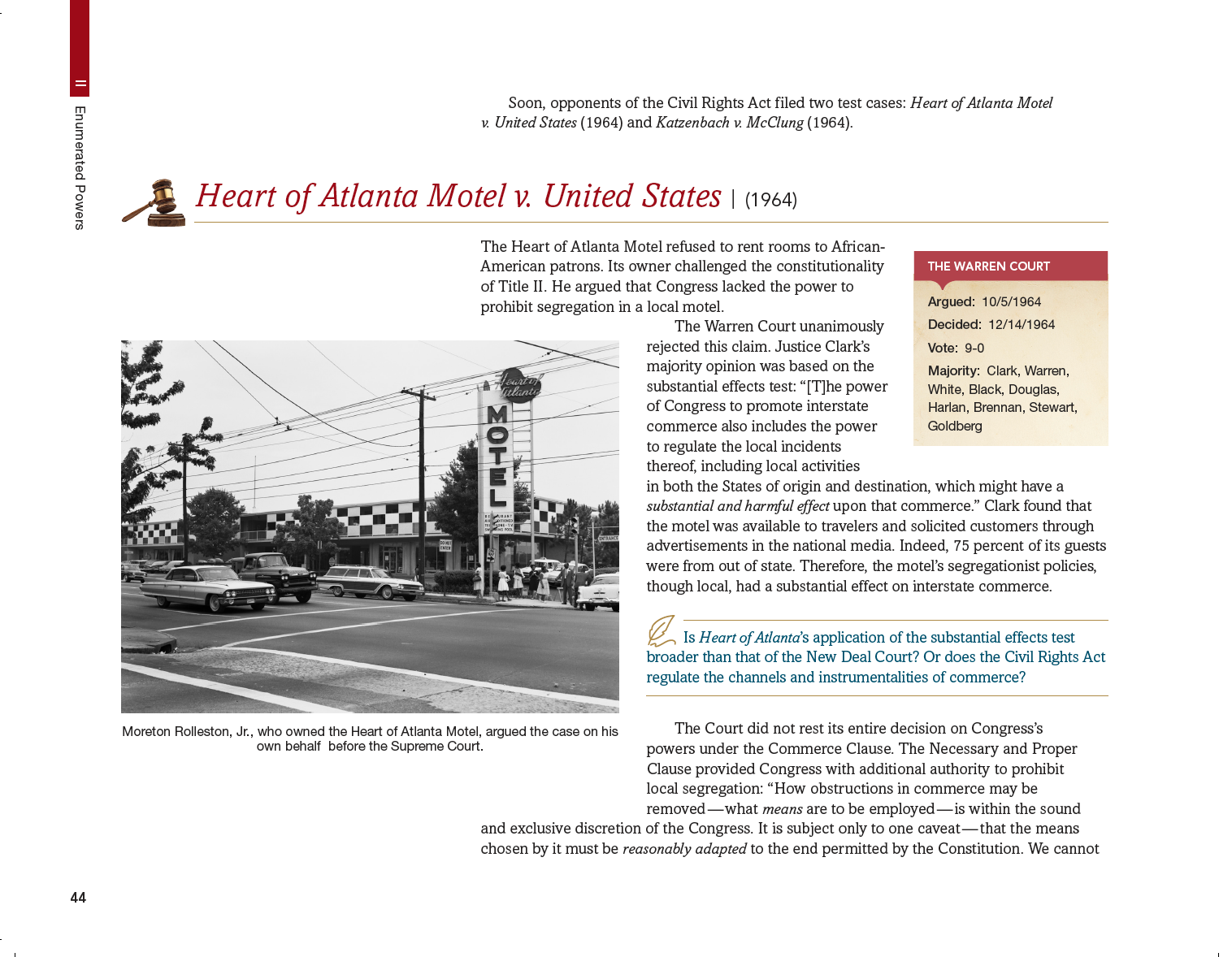
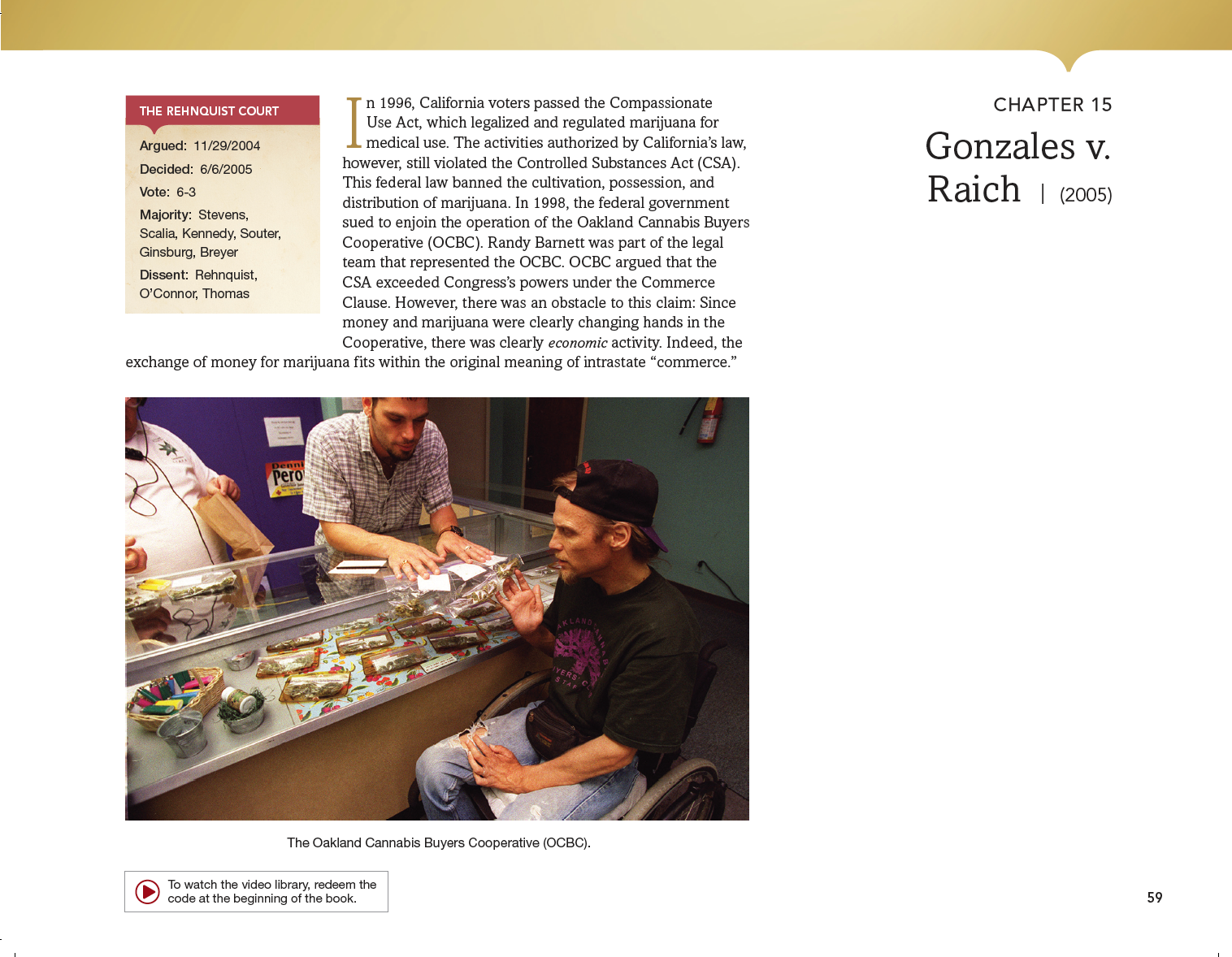
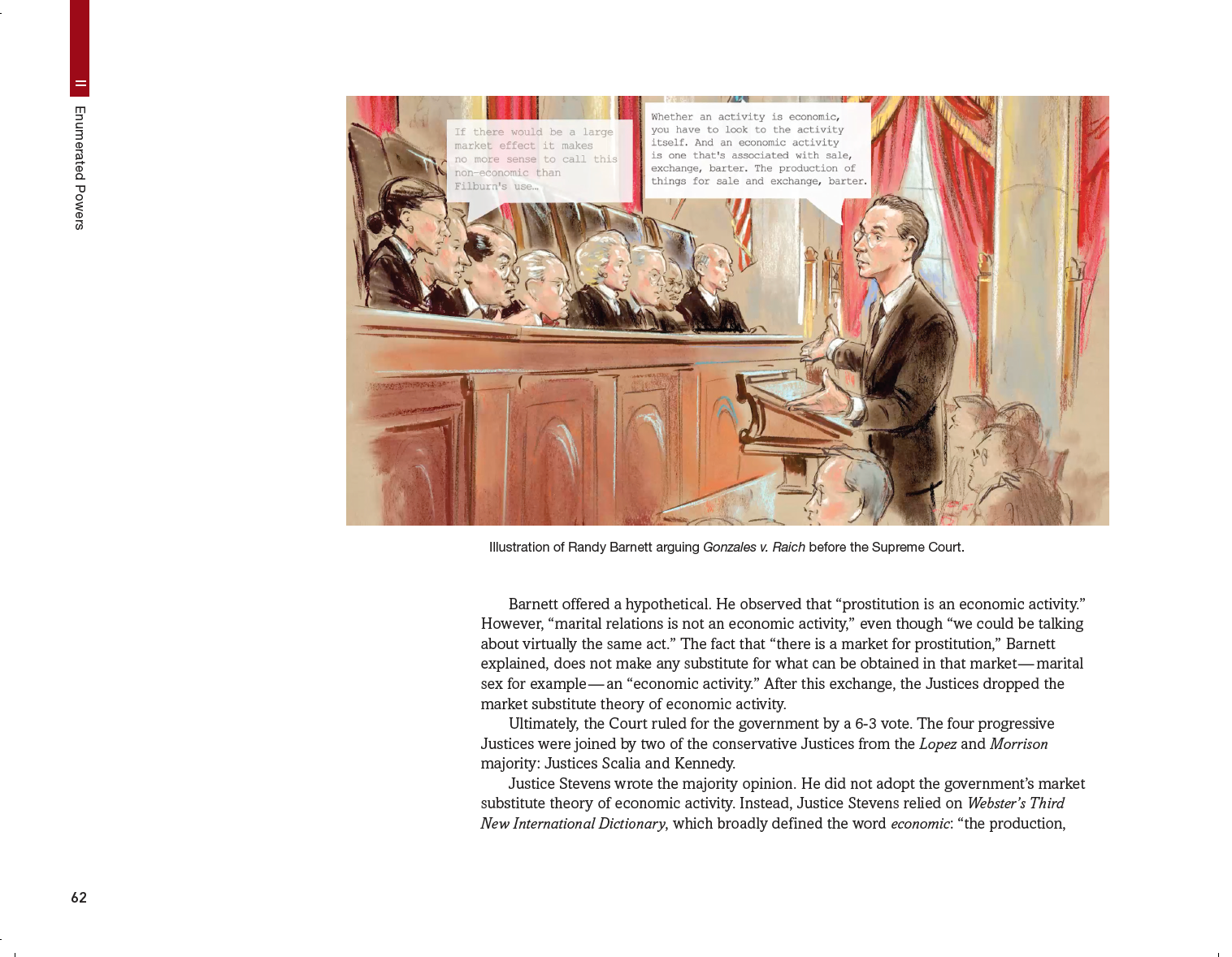
An Introduction to Constitutional Law: The Illustrated Coffee Table Book
With nearly 500 distinctive and intriguing historical images, this unique book brings readers face-to-face with the people and events that have shaped American constitutional law.
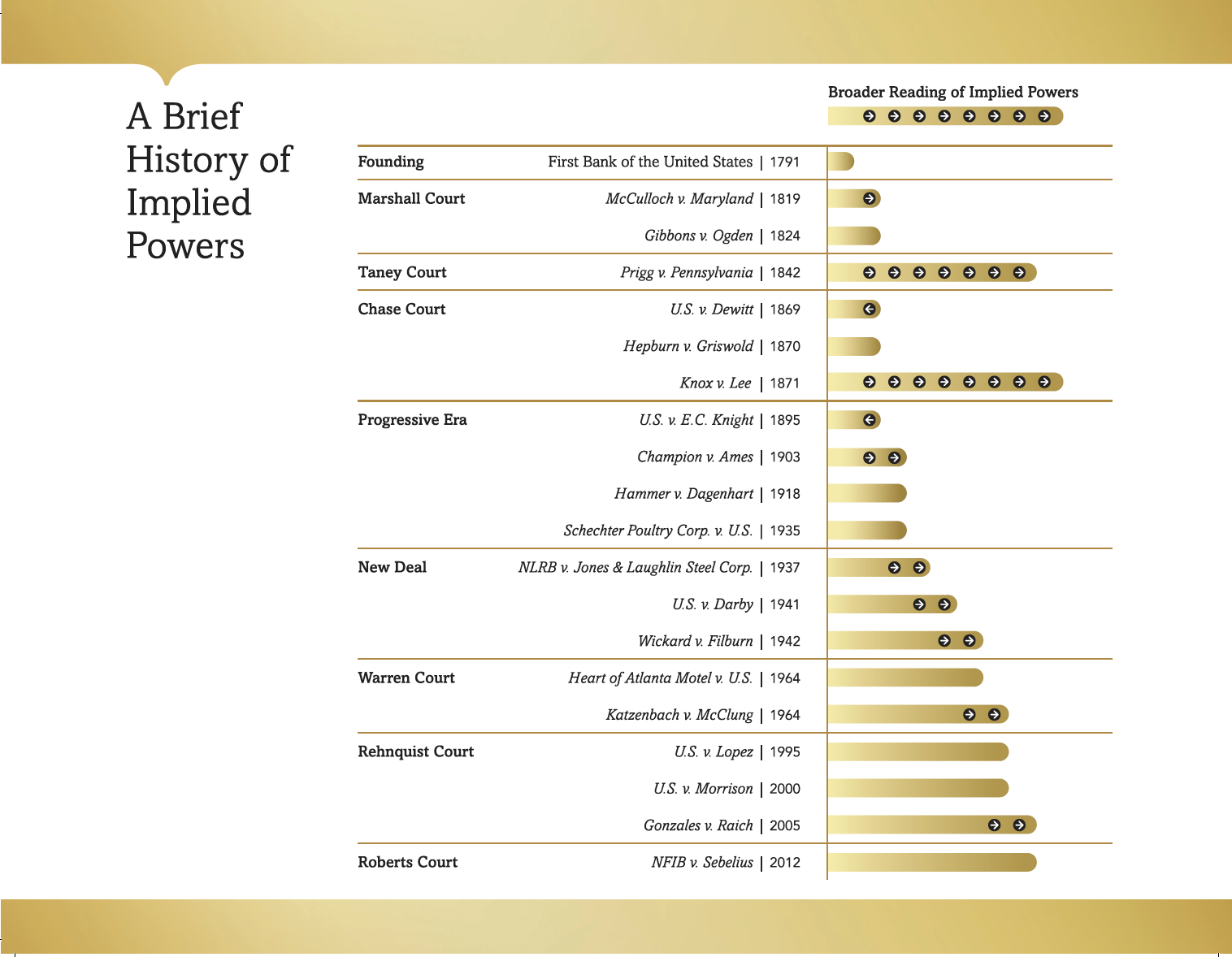
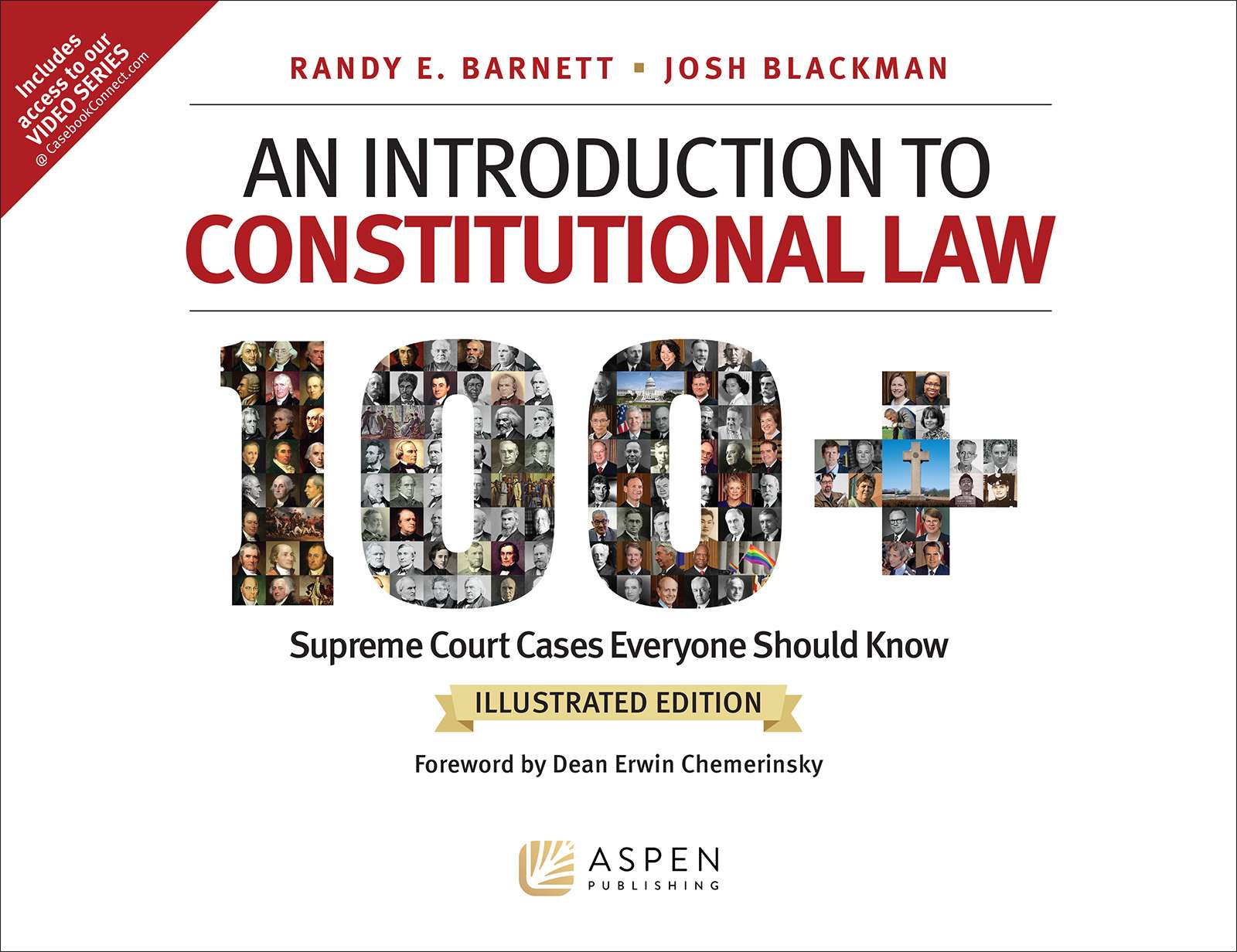 Randy Barnett and I are pleased to announce the launch of our newest project: An Introduction to Constitutional Law - Illustrated Edition. Yes, we made a constitutional law coffee table book. And the 400-page glossy hardcover spread is visually stunning. With nearly 500 distinctive and intriguing historical images, this unique book brings readers face-to-face with the people and events that have shaped American constitutional law. It will make a discussion piece for every office or library. I have been assembling this library for more than a decade! I am so happy to have guided the project to publication. Our publisher only made a limited print run, so I encourage you to order a copy soon.
Here are many of my favorite spreads:
Goodbye "Race Checkbox," Hello "Diversity Sentence"
How universities will get around whatever the Supreme Court decides in the affirmative action cases.
I was a freshman in college in 2003. That year, I took a required course in cultural competency. In one class, we discussed the then-pending affirmative action cases, Grutter and Gratz. I recall that a student asked the professor what our public university would do if the Supreme Court ruled in favor of the plaintiffs. The professor, who I think also served in the university administration, gave an answer that still sticks out in my mind nearly two decades later: it doesn't matter what the Supreme Court says, we will find a way to continue granting racial preferences. At the time, I didn't appreciate her candor. The many briefs filled in Grutter and Gratz predicted an horrific parade of horribles if the Court overruled Bakke. Won't somebody please think of the service academies?!
Now, not-quite twenty-five years later, advocates for affirmative action are singing a similar tune: if the Court reverses Grutter, terrible things will happen. To quote Justice Scalia, "Do not believe it." I doubt the Roberts-six will be bothered like Justice O'Connor was. Grutter is going down. And everyone knows it. So what is Plan B for the Universities? Surely these super-intelligent institutions have considered a host of contingency plans for when the Court rules against them. They aren't going to roll over and say, okay everyone, let's be colorblind!
Allow me to spell out one such alternative. Perhaps the Court will, as I suggested, hold that universities cannot use a "race checkbox" on the application. What will the universities do in response? They will still need a way to quickly sort people based on their race. Goodbye "race checkbox," hello "diversity sentence."
Readers of this blog will likely be familiar with so-called "diversity statements." Many universities require applicants for professorships to discuss their commitments to diversity, equity, and inclusion. Invariably in this process, candidates will write about their race, sexual orientation, gender identity, and any relevant characteristics that might check a DEI box. But really, who needs an entire statement when you are sorting through thousands of college applications. Certainly, as a matter of "triage" (to use Seth Waxman's phrasing), the Common Application can require a "diversity sentence." Yes, describe your commitment to DEIdeology in 20 words or less. See, it's not a check box. We are holistically assessing a person as a whole, with very few words.
Of course admission officers can quickly scan through those sentences looking for important words: black, hispanic, transgender, and so on. CTRL-F is their friend. Universities can develop filters that highlight applications with certain words. To save words, applicants can even include a pride flag or the raised-fist emoji in the appropriate color, to signal their commitment to social justice. Who needs to be constrained to a handful of check boxes when you have thousands of progressive emojis?
Don't laugh. In the wake of Bruen, states like New York and California engaged in massive resistance to the Court's ruling that would make Orval Faubus applaud. Who cares if the Supreme Court strikes down these gun control laws in 4 or 5 years? The struggle is worth it. Universities who deem the Supreme Court as an illegitimate body will fight, kicking and screaming, to maintain their affirmative action hegemony. Sure these universities will get sued. And the discovery will be damning. But don't expect admission offices across the country to go quietly into the good night.
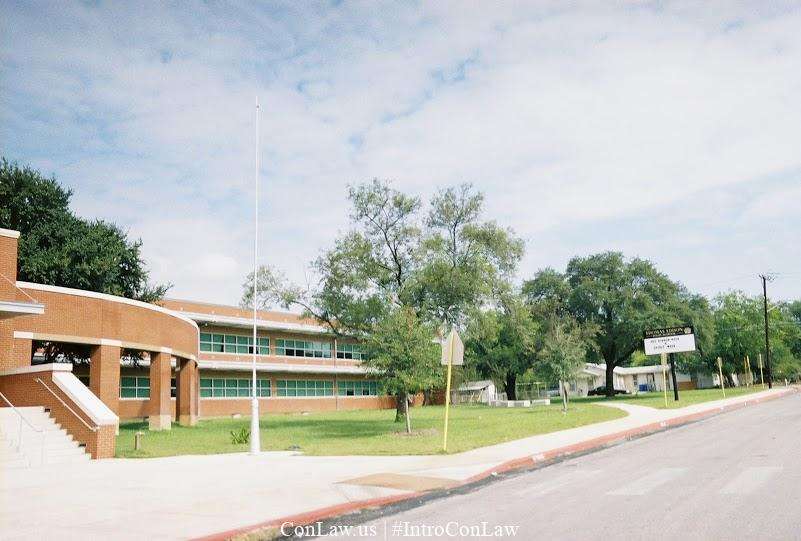
Today in Supreme Court History: November 8, 1994
11/8/1994: U.S. v. Lopez argued.
Seven Reschedules, Four Relists, Zero Joins for Justice Gorsuch's Chevron Dissental
Justice Gorsuch is still at Step 0 of overruling Chevron.
On Monday, the Supreme Court denied certiorari in Buffington v. McDonough. This case, brought by the New Civil Liberties Alliance, expressly asked the Court to overrule Chevron. Justice Gorsuch dissented from the denial of certiorari. He wrote a sixteen-page opinion that excoriated Chevron. Here is the conclusion:
No measure of silence (on this Court's part) and no number of separate writings(on my part and so many others) will protect them. At this late hour, the whole project deserves a tombstone no one can miss. We should acknowledge forthrightly that Chevron did not undo, and could not have undone, the judicial duty to provide an independent judgment of the law's meaning in the cases that come before the Nation's courts. Someday soon I hope we might.
But no one joined Justice Gorsuch. And it wasn't for a lack of trying.
The briefing concluded on April 26, 2022. The petition was originally scheduled for the May 12, 2022 conference. But it was rescheduled before that conference, as well as conferences on May 19, May 26, June 2, June 9, June 16, and June 23. My guess is that Gorsuch was trying to cobble together votes for a grant. These were "reschedules" rather than "relists." The former suggests there is movement afoot; the latter suggest a dissent is being prepared. Now during this period, the Court was otherwise occupied with Dobbs and Bruen, so attention may have been divided.
Alas, the summer did not prove fruitful. The petition was not acted upon at the September 28 conference, and was relisted. The petition was then relisted again after the conferences on October 7, October 14, and October 28. I surmise during this relist watch, Justice Gorsuch was polishing his dissent. The petition was finally put out of its misery on the November 7 order list, accompanied by Justice Gorsuch's dissental.
It seems there is no interest at this point in overruling Chevron. Kisor was probably the closest the Court will get. If the Court couldn't even muster five votes to nix Auer deference, then Chevron is probably a bridge too far. In any event, the Court has already overruled its fair share of Burger-Court precedents: Roe, Lemon, Abood, and (soon enough) Bakke. Often, the current Roberts Court is called the anti-Warren Court, but I think it would be more accurate to call it the Anti-Burger Court. The Court leaves in place the foundational abuses of the judicial role by the Warren Court, such as Griswold, Engel v. Vitale, and Miranda, but instead nibbles around the edge of the follow-up decisions from the Burger era.
Conservative Republican Rep. Dan Crenshaw Says Republican Leaders' Election Denialism was "Always a Lie"
GOP politicians lied in order to exploit public ignorance. That dynamic is just one particularly egregious example of the broader danger widespread voter ignorance and bias.
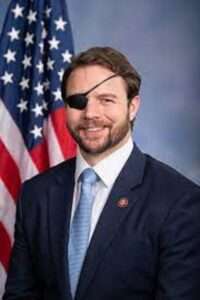
Prominent Republican Rep. Dan Crenshaw (Texas) recently pointed out that Republican politicians who claimed that the 2020 election was somehow stolen from Donald Trump, were lying all along:
Members of Congress who contested the 2020 election results admitted behind closed doors that they know their cause is false, U.S. Rep. Dan Crenshaw, R-Houston, said on his podcast published Wednesday, offering his sternest rebuke yet of his party's rejection of President Joe Biden's win.
Speaking with former congressional candidate and election reform advocate Nick Troiano on his podcast, "Hold These Truths," the Texas Republican said fellow members of his party were merely trying to signal their disapproval of former President Donald Trump's loss but knew there was no real mechanism to overturn it. Still, he warned that messaging could dangerously lead to voters losing faith in the electoral process.
"It was always a lie. The whole thing was always a lie. And it was a lie meant to rile people up," Crenshaw said….
"People just need their last hurrah. They just need to feel like they fought one last time," he added. Other members told him, "'Trust me, it'll be fine.' And I was like, 'No, it won't! That's not what people believe and that's not what you're telling them…'"
Crenshaw has spoken frequently against members of his party who he said focus primarily on projecting conservative soundbites over serious legislating, calling them the "woke right." That arm of the party, he said, will likely only keep growing with more hardline Republicans in tow with Trump running in favorable districts this year. Republicans are widely expected to win control of the U.S. House in the next Congress.
"This extreme willingness to say the most extreme things just to grab people's attention and then the people's willingness to believe some of it," Crenshaw said on the podcast. "There just doesn't seem to be a limit to how far some people are willing to go."
This revelation is far from surprising. Informed observers knew all along that there was no evidence of the kind of massive fraud and skullduggery needed to shift the hundreds of thousands of votes across multiple states by which Biden prevailed in the election. Donald Trump's own advisers, including strongly conservative Attorney General William Barr, told him as much, early on. This obvious fact was further confirmed by the results of numerous lawsuits and post-election audits, including those conducted by Republicans in Michigan and Arizona.
But, as Crenshaw says, many GOP politicians continued to lie about the election because that's what a large part of their political base wanted to hear. They found it easier to exploit this ignorance and bias for political gain than to resist it. Unlike some other conservative critics of Trumpist election denialism, Crenshaw can't easily be dismissed as a "RINO" or a Never-Trumper. He backed Trump in the 2020 election, has few policy differences with him, and would likely back him again if Trump became the GOP nominee in 2024.
It's easy - and right - to condemn lying politicians. The fact that Democratic political leaders also often lie to the electorate (as in the case of the lies Barack Obama peddled to push through the Affordable Care Act) in no way justifies the actions of Trump-era Republicans. The latter are actually worse than most political lies because they could lead to actions that undermine the basic structure of liberal democracy, as opposed to "merely" the enactment of some specific harmful policy.
But even as we decry lying politicians, it's important to remember that the root of the problem is the ignorance and bias of voters, that make such lies effective - and incentivize political leaders to engage in them. Most politicians wouldn't use such tactics if they weren't effective, and especially not if voters punished their use instead of often rewarding it.
I summarized this dynamic in a previous post about Trump's Big Lie:
Why do so many Republicans believe blatant falsehoods about the 2020 election? The answer is rooted the broader problem of political ignorance. Because there is so little chance that any one vote will make a difference to the outcome of an election, most people are "rationally ignorant" about politics and government policy. They spend little time seeking out relevant information, and are often ignorant of even basic facts about the political system, such as the names of the three branches of government. Such ignorance makes people more susceptible to lies and conspiracy theories, including those about the 2020 election….
In [my book] Democracy and Political Ignorance, I described how belief in conspiracy theories is partly fueled by general public ignorance about government and public policy. Most of the public has little understanding of government and political institutions. They thus underestimate the extreme difficulty of planning, coordinating, and covering up large-scale conspiracies. Birtherism, trutherism, and Covid conspiracy theories are all more prevalent among people with relatively low levels of education and political knowledge. The less you know about government, the easier it is to believe that events are controlled by a shadowy cabal of ultra-competent evil-doers who can skillfully cover up their misdeeds.
But the popularity of conspiracy theories is also boosted by partisan and ideological bias. In assessing political information, most people act not as objective truth-seekers, but as "political fans" who tend to overvalue any claims that cohere with their preexisting views, and downplay or ignore any that cut against them. Much like sports fans, who tend to be biased in favor of their preferred team and against its rivals, political fans are highly biased in favor of their preferred party and ideology, and against its opponents….
There is no quick and simple solution to the challenge posed by widespread political ignorance and bias, of which GOP election denialism is just one particularly egregious manifestation. But the beginning of wisdom is to recognize the nature of the problem.
I assessed the pros and cons of several possible "top-down" and "bottom-up" solutions in a forthcoming article.
Preliminary injunction against New York bans on licensed carry
Gun Owners of America prevail in Antonyuk v. Hochul
Today U.S. District Judge Glenn T. Suddaby issued a preliminary injunction against many portions of New York's recently enacted "Concealed Carry Improvement Act." The act had been passed shortly after the U.S. Supreme Court's decision in New York State Rifle & Pistol Association v. Bruen, which upheld the Second Amendment right to "bear arms."
Today's 184-page preliminary injunction opinion in Antonyuk v. Hochul is the latest step in a challenge by Gun Owners of America, represented by Stephen Stamboulieh and Robert J. Olson. The case was filed shortly after the anti-carry statute was enacted. Shortly before the act's September 1 effective date, Judge Suddaby ruled that none of the plaintiffs had pleaded sufficient specific facts to create standing. After an amended complaint was filed, the Judge granted a temporary restraining order on October 6, which was stayed by a Second Circuit panel.
In Part IV.B of the opinion, "Substantial Likelihood of Success on the Merits," there are three major sections:
- Application requirements (including good moral character, 4 character references, social media disclosure, and 18 hours of training). Some upheld, some not.
- Carry bans in many different "sensitive locations." Some upheld, some not.
- Carry bans in "restricted locations" (all homes and businesses that are not "sensitive locations"). Held to violate either the Second Amendment or the First.
Below, I will summarize each subsection.
AI-splaining
Episode 429 of the Cyberlaw Podcast
The war that began with the Russian invasion of Ukraine grinds on. Cybersecurity experts have spent much of 2022 trying to draw lessons about cyberwar strategies from the conflict. Dmitri Alperovitch takes us through the latest learning, cautioning that all of it could look different in a few months, as both sides adapt to the others' actions.
David Kris joins Dmitri to evaluate a Microsoft report hinting at how China may be abusing its edict that software vulnerabilities must be reported first to the Chinese government. The temptation to turn such reports into 0-day exploits is strong, and Microsoft notes with suspicion a recent rise in Chinese 0-day exploits. Dmitri worried about just such a development while serving on the Cyber Safety Review Board, but he is not yet convinced that we have the evidence to make a case against the Chinese mandatory disclosure law.
Sultan Meghji keeps us in Redmond, digging through a deep Protocol story on how Microsoft has helped build Artificial Intelligence (AI) capacity in China. The amount of money invested, and the deep bench of AI researchers from China, raise real questions about how the United States can decouple from China – and whether China will eventually decide to do the decoupling.
I express skepticism about the White House's latest initiative on ransomware, a 30+ nation summit that produced a modest set of concrete agreements. But Sultan and Dmitri have been on the receiving end of deputy national security adviser Anne Neuberger's forceful personality, and they think we will see results. We'd better. Banks report that ransomware payments doubled last year, to $1.2 billion.
David introduces the high-stakes struggle over when cyberattacks can be excluded from insurance coverage as acts of war. A recent settlement between Mondelez and Zurich has left the law in limbo.
Sultan tells me why AI is so bad at explaining the results it reaches. He sees light at the end of the tunnel. I see more stealthy imposition of woke values. But we find common ground in trashing the Facial Recognition Act, a lefty Democrats' bill that throws together every bad idea for regulating facial recognition ever put forward and adds a few more. A red wave election will be worth it just to make sure this bill stays dead.
Finally, Sultan reviews the National Security Agency's report on supply chain security. And I introduce the elephant in the room, or at least the mastodon: Elon Musk's takeover at Twitter and the reaction to it. I downplay the probability of CFIUS reviewing the deal. And I mock the Elon-haters who fear that Musk's scrimping on content moderation will turn Twitter into a hellhole that includes *gasp!* Republican speech. Turns out that they are fleeing Twitter for Mastodon, which pretty much invented scrimping on content moderation.
Download the 429th Episode (mp3)
You can subscribe to The Cyberlaw Podcast using iTunes, Google Play, Spotify, Pocket Casts, or our RSS feed. As always, The Cyberlaw Podcast is open to feedback. Be sure to engage with @stewartbaker on Twitter. Send your questions, comments, and suggestions for topics or interviewees to CyberlawPodcast@steptoe.com. Remember: If your suggested guest appears on the show, we will send you a highly coveted Cyberlaw Podcast mug!
The views expressed in this podcast are those of the speakers and do not reflect the opinions of their institutions, clients, friends, families, or pets




