The Volokh Conspiracy

Mostly law professors | Sometimes contrarian | Often libertarian | Always independent | Est. 2002

The Volokh Conspiracy

Free Speech

Professor-v.-Professor Defamation Suit Can Go Forward, Based on Defendant's Statements to Students

|

From Porter v. Sergent, decided yesterday by Sixth Circuit Judge Raymond Kethledge, joined by Judges Richard Griffin and John Bush:

Professor David Porter sued his former employer, Berea College, for employment discrimination, retaliation, and breach of contract, and he sued his former colleague, Professor F. Tyler Sergent, for defamation, portrayal in a false light, and retaliation….

In describing the facts for purposes of summary judgment, we view the record in the light most favorable to Porter.

David Porter, a white male in his late 60s, was a tenured professor of psychology and general studies at Berea College from 2005 until September 2018. In March 2017, a younger female colleague, Wendy Williams, initiated a Title IX complaint against the then-chair of the psychology department, Wayne Messer, for allegedly creating a hostile-work environment for women. Two of Williams's female colleagues later joined the complaint. Porter served as Messer's advisor throughout the grievance proceedings. In September 2017, a disciplinary board found Messer guilty, and Berea's president, Lyle Roelofs, removed Messer as department chair. Soon afterward, in email exchanges with President Roelofs and Dean Chad Berry, and in an open letter to campus, Porter said that the proceedings against Messer had been flawed and unfair.

In February 2018, for one of his psychology courses, Porter created a survey to measure "community perceptions and attitudes about academic freedom, freedom of speech, and hostile work environments under civil rights law." The survey contained hypothetical scenarios based on Porter's observations of Messer's Title IX investigation. But the survey did not include any names, and its instructions disclaimed any "relationship between these scenarios and actual events, either here at Berea College or elsewhere." Porter shared the survey with a few of his colleagues, including Messer, who worried that it might be "highly inflammatory."

Read More

Campus Free Speech

On Punishing Speech vs. Punishing Conduct

A university president provides a helpful explanation of the difference.

|

Cornell University recently sanctioned students who were involved in a protest that disrupted a university job fair. At least fifteen students have been suspended, according to this report.

After the sanctions were announced, a student asked  "Why are you punishing students for free speech?" a student asked interim president Michael Kotlikoff after the sanctions were announced. No one is being punished for speech, he explained. Rather, some students are being punished for disruptive conduct. The distinction is important.

This week, Kotlikoff wrote an op-ed for the Cornell Daily Sun explaining the distinction and the reasons for the university's approach. After explaining university policies, he writes:

no one has been referred for their speech, and free expression remains fully protected at Cornell. But we must understand the difference between protected speech and speech or actions that are designed to suppress the speech and rights of others. Recent Sun letters similarly appear to confuse this issue. Shouting or writing "f*ck you Boeing" is free speech and fully protected; preventing Boeing from discussing jobs with students is not. Calling someone a "kapo" is offensive, but protected speech; breaking through a police line is not.

When I quickly tried to point out this distinction to my questioner, she responded that "Boeing kills babies." That is not a free speech argument, but rather one that asserts a moral justification for violating the rights of others; that assumes the right to decide what activities other students may pursue, what conversations they may have and with whom they may have them. Whatever their argument, whatever the grounds on which they see their actions as justified, we need to be cleareyed about what those actions are: not the assertion of the right of free speech, but the presumption of the right to suppress the speech of others. Jefferson, the flawed individual, but great political theorist and proponent of free speech, asked when arguing against censorship and for religious freedom: "Whose foot is to be the measure against which ours are all to be cut or stretched?" Indeed, who gets to decide which university activities are acceptable and which are not?

No student at Cornell has been punished for expressing their beliefs. Neither will any student be permitted, whatever their feelings of moral righteousness, to forcibly deny others the rights that are central to our mission at Cornell: the rights to freely speak, converse and learn, with whomever and about whatever they choose.

Universities should endeavor to provide broad protection for speech, including offensive or uncomfortable speech, but this does not require excusing or ignoring disruptive conduct. Indeed, a particularly ill-advised approach would be to water down protections for offensive speech while failing to meaningfully punish (and thereby discourage) disruptive and destructive conduct, such as defacing university property, interrupting classes, or disrupting university operations, such as a job fair. Unfortunately, some universities seem intent on making that mistake.

Crime Victims Rights Act

The Twentieth Anniversary of the Crime Victims' Rights Act

Twenty years ago to the day, the CVRA took effect ... changing the legal culture in federal criminal cases.

|

In 2004, the United States Congress passed, and the President signed into law, the Scott Campbell, Stephanie Roper, Wendy Preston, Louarna Gillis, and Nila Lynn Crime Victims' Rights Act (the "CVRA"), codified at 18 U.S.C. § 3771 -- effective October 30, 2004.  Today, twenty years later, it is interesting to read Senator Kyl's law review article about the CVRA, written shortly after the Act went into effect.  Along with Steven Twist and Stephen Higgins, Senator Kyl described the law as part of a "civil rights movement" designed to reform criminal justice culture:

The CVRA is the latest enactment in a forty-year civil rights movement. The victims' rights movement seeks to end the unjust treatment of crime victims by reforming the culture of the criminal justice system in the federal government and the states. Before the victims' movement gained momentum in the 1970s and 1980s, this country's criminal justice system had come to treat all crimes as acts committed only against the community, and consequently gave the direct victims of crime little, if any, recognition. Believing that crimes are committed against individuals just as much as they are against the community, the crime victims' rights movement has sought to guarantee rights to crime victims through the state and federal legislative process. The movement has secured federal and state statutory reforms and even state constitutional amendments to ensure that innocent victims of crime are respected by the justice system. These efforts have had only mixed success in securing enforceable rights for crime victims.

Sen. Jon Kyl et al., On the Wings of Their Angels: The Scott Campbell, Stephanie Roper, Wendy Preston, Louarna Gillis, and Nila Lynn Crime Victims' Rights Act,  9 Lewis & Clark L. Rev. 581 (2005).

Senator Kyl went on to ask: "Whether the CVRA has the power to change the legal culture in the United States will soon be known as the case law develops. A watchful Congress, indeed a watchful nation, will monitor the law as it unfolds."

Now, twenty years later, has the legal culture changed? As somone who has litigated CVRA cases all over the country, I believe in the federal system the legal culture has changed for the better. While problems still exist, crime victims are now able to assert rights in federal cases -- and have asserted rights frequently.  For example, shortly after the Act's passage, in 2006, the Ninth Circuit observed that the CVRA sought to make crime victims "independent participants in the criminal justice process." Kenna v. U.S. District Court, 435 F.3d 1011(9th Cir. 2006). And in that case, the Ninth Circuit ordered a re-sentencing to allow a victim to make a victim impact statement at sentencing.

My recent efforts in the U.S. v. Boeing case illustrate how victims of federal crimes can use the CVRA, as I've blogged about earlier. While the final chapter in the Boeing case has yet to be written, it is notable that the victims' families have been able to file motions in that criminal case--successfully challenging the Justice Department's position that only the FAA was the "victim" of Boeing's false statements and gaining a ruling from the Fifth Circuit that their rights must enforced throughout the process.

Earlier today, the National Crime Victim Law Institute held a virtual symposium on the CVRA and its legacy.  The symposium will be posted shortly on NCVLI's website here. I was one of the participants.

The panelists were all asked what is the biggest challenge for victims' rights today. And we all answered that legal services for crime victims' remains the top goal for protecting victims' rights going forward. Hopefully access to crime victims' legal services will expand in the future, making crime victims' rights under the CVRA available to more victims in more cases as time marches on.

crime victims

When Prosecutors "Take a Dive" — The Purported "Error" in the Glossip Case

My op-ed in The Hill discusses the problem of prosecutors confessing "error" where none exists.

|

Previously I blogged about the Glossip case before the Supreme Court, in posts found here, here, and here. This death penalty case involves a prosecutor confessing a purported "error" where, in fact, no error exists.

This past weekend, I published an op-ed in The Hill that reviews the problem of prosecutors "taking a dive" by confessing nonexistent errors. Here's the introduction:

Earlier this month, Amherst College Professor Austin Sarat criticized Supreme Court Justices Clarence Thomas and Samuel Alito for asking pointed questions about death row inmate Richard Glossip's claim that his 2004 murder conviction should be overturned. After all, Oklahoma's new attorney general, Gentner Drummond, supports Glossip's contention that the trial prosecutors withheld evidence.

This popular narrative, however, is a manufactured and bogus claim. The prosecutors never withheld evidence. The case's true lesson is about the emerging dangers of prosecutors confessing phantom "errors," and sometimes even throwing cases on purpose.

You can read the whole op-ed here. Kent Scheidegger has some interesting discussion of the issues over at the Crime and Consequences blog.

Judiciary

Why Has the D.C. Circuit Made It More Difficult to Find Opinions? [Updated]

A recent website "upgrade" is not an improvement.

|

[See Update.]

The U.S. Court of Appeals for the D.C. Circuit recently "upgraded" the opinion archive on its website. It is aesthetically appealing, but it is actually a significant step backwards for public access to the court's opinions.

In "upgrading" the site, the D.C. Circuit apparently re-indexed its opinions, revising the URLs. What this means is that all previously posted hyperlinks to D.C. Circuit opinions are now dead. Clicking on them does not pull up the opinion. Instead the user is dropped off on the opinion archive landing page. This, by itself, would be but a small annoyance if one could then simply search for the opinion question. Therein lies the rub, for there is no longer an opinion search function. Whereas on the old site one could search opinions by party name or docket number, there is no search capability at all on the new page. (There is, however, a way to browse by month and year, if one knows when a case was decided, but that's it.)

With these changes, the D.C. Circuit's website has gone from one of the better circuit court websites, in terms of the accessibility of its opinions to the public, to one of the worst. I hope this change is only temporary, and a search function is restored, as not everyone has access to PACER or on-line databases, and slip opinion PDFs remain superior for many purposes to available no-cost versions accessible on other sites.

While I am on the subject on circuit court opinions, let me also suggest that other circuits take a page from the U.S. Court of Appeals for the Sixth Circuit and include at the front of slip opinions a) how participating judges voted, and b) page numbers for any separate opinions. This is extremely useful information to include at the front of an opinion and there is no reason for courts not to provide it.

Free Speech

Book Review (by Prof. Jacob Mchangama): "Fearless Speech" Doesn't Take First Amendment History Seriously

A review of Prof. Mary Anne Franks' new book, Fearless Speech: Breaking Free from the First Amendment (plus a response by Prof. Franks to Prof. Mchangama's Tweeted criticisms, and a reply by Prof. Mchangama).

|

I'm delighted to pass along this book review by Prof. Jacob Mchangama (Vanderbilt), who is the author of Free Speech: A History from Socrates to Social Media and other works on free speech; he is also the CEO of The Future of Free Speech and Senior Fellow at the Foundation for Individual Rights and Expression.

[* * *]

Mary Anne Franks claims that her new book, Fearless Speech: Breaking Free from The First Amendment, "offers a different and bolder perspective on free speech that takes power, harm, and history seriously." In this post (adapted from a thread on X) I provide a brief critique of Franks' thesis and methodology.

Franks argues that "First Amendment norms have consistently exalted and elevated reckless speech that benefits the powerful at the expense of the vulnerable. This exploration peels back the rhetoric of free speech to expose how it has perpetuated and maintained a neo-Confederate ideology of white male supremacy."

Franks rightly points out that proponents of slavery and white supremacy systematically censored proponents of equality. But she conveniently omits that many of those whose voices were quashed were deeply committed to a universalist and principled conception of free speech. Take Frederick Douglass, who is entirely left out of the book. Douglass insisted that "the right of speech is a very precious one, especially to the oppressed" and that "[n]o right was deemed by the fathers of the Government more sacred than the right of speech." To Douglass, free speech was "the dread of tyrants" and critical to the abolitionist movement.

Douglass also famously argued, "A man's right to speak does not depend upon where he was born or upon his color. The simple quality of manhood is the solid basis of the right—and there let it rest forever."

In the South, which criminalized abolitionist speech, Douglass would have been tortured and executed for his "incitement." In the North, where anti-slavery speech was better protected, he became a sensation who moved hearts and minds. In reflecting on Douglass' 1841 speech in Nantucket, William Lloyd Garrison wrote, "I shall never forget his first speech at the convention — the extraordinary emotion it excited in my own mind—the powerful impression it created upon a crowded auditory, completely taken by surprise—the applause which followed from the beginning to the end of his felicitous remarks. I think I never hated slavery so intensely as at that moment."

In her book, Franks jumps from Whitney v. California (1927) to lynchings and KKK terror to the Brandenburg decision in 1969. She argues that SCOTUS upheld the conviction of Anita Whitney under the "bad tendency" test but moved to a "reckless speech" standard in order to overturn the conviction of a KKK leader who threatened "revengeance" against Blacks and Jews in Brandenburg v. Ohio (1969).

But along the way, she forgets to mention landmark cases often brought by civil rights activists expanding their right to speak and breathing new life into the First Amendment to the benefit of all Americans. In Herndon v. Lowry (1937), the U.S. Supreme Court overturned the Georgia Supreme Court's upheld conviction of an African American who possessed Communist publications In NAACP v Alabama (1958), the court ruled Alabama violated freedom of speech and assembly by attempting to access membership lists of the NAACP. In Garner v. Louisiana (1961), the court ruled that Louisiana could not convict peaceful sit-in protestors under state's "disturbing the peace" laws. Edwards v. South Carolina (1963) found that the Constitution forbids state officials from forcing a crowd to disperse when legally marching for civil rights at the state house. And New York Times v Sullivan (1964) overturned the Alabama Supreme Court's defamation decision against supporters of Martin Luther King, who placed an ad in the New York Times, limiting the ability of public officials to sue for defamation.

Read More

Donald Trump

Supreme Court Refuses to Remove RFK Jr. from Wisconsin and Michigan Ballots

Robert F. Kennedy Jr. was running for President, but now he isn't and he does not want to be on the ballot in states where that might hurt Trump.

|

In two unsigned orders, the Supreme Court has denied Robert F. Kennedy Jr's applications for injunctions that would have removed his name from the ballots in Wisconsin and Michigan. RFK Jr had been running for President as an independent, and qualified to be on many ballots around the country. He subsequently dropped out of the race, however, and endorsed Donald Trump. Now he would like to be removed from the ballot in swing states where he fears he would draw votes away from Trump, but his efforts to get off of the ballot in Wisconsin and Michigan were unsuccessful.

No justice dissented from the Wisconsin order. Justice Gorsuch, however, dissented from the Michigan order. His dissent reads:

Respectfully, I dissent for substantially the reasons given by Judges Thapar, Readler, and McKeague. See Kennedy v. Benson, case No. 24-1799, (CA6, Oct. 16, 2024), pp. 13—19 (Thapar, J., dissenting from denial of rehearing en banc); id., at 20—32 (Readler, J., dissenting from denial of rehearing en banc); id., at 35—37 (McKeague, J., statement respecting denial of rehearing and denial of rehearing en banc).

His references are to the McKeague dissent in this unpublished panel opinion and the Thapar and Readler dissents from the denial of rehearing en banc.

On Sunday, Trump reportedly said he would let RFK Jr. "go wild" on food and public health issues were he to be re-elected. From one report:

"I'm going to let him go wild on health. I'm going to let him go wild on the food. I'm going to let him go wild on the medicines," Trump told supporters at Madison Square Garden.

"The only thing I don't think I'm going to let him even get near is the liquid gold that we have under our feet," he added, referring to oil.

Given some of RFK Jr's borderline-insane views on a range of public health issues, that would be quite the choice. Back in 2008, there were reports that RFK Jr could be considered as EPA Administrator in the Obama Administration, but was "too controversial."

Free Speech

Journal of Free Speech Law: "The Free Speech Clause as a Deregulatory Tool," by Alexander Tsesis

A new article from the Daedalus (Journal of the American Academy of Arts and Sciences) Future of Free Speech Symposium.

|

The article is here; the Introduction:

The language of the Free Speech Clause is not self-definitional. Almost all human activities involve communications; even criminality can be infused with expressiveness, but that does not mean that conspiracy, assault, and hate crimes are protected by the First Amendment. The Supreme Court of the United States is tasked with explaining the scope of its coverage. In recent years, the Court has taken a decidedly libertarian approach to laws that impose even nominal restrictions on communications.

That approach has proven strategically beneficial to special interests who challenge laws meant to secure labor rights, to restrict corporate expenditures on political campaigns, to prevent protestors from standing too close to the entrances of clinics where abortions are performed, and to compel the posting of health notices. The Court's reasoning has become increasingly formalist, adopting judicial categories of interpretation to strike legislation without giving adequate consideration to countervailing government interests.

The Supreme Court's free speech jurisprudence has relied increasingly on a categorical understanding of free speech that purports to have historical pedigree. Close examination, however, reveals absolutist statements and historical inaccuracies. A series of recent cases have strictly construed the Free Speech Clause to strike various regulations. The predominant framework of analysis strengthens the Court's hand at the expense of legislative initiative. As the power of the judiciary has waxed, the ability of legislators to pass laws responsive to constituents' demands has waned. The Court's rigid free speech doctrine creates a model of governance that is "incapable of responding to new conditions and challenges."

Judicial formalism lacks transparency, which is essential to litigation and appeal. This essay argues for greater judicial clarity in balancing competing interests and in evaluating surrounding circumstances. It proposes an analytical approach for courts to undertake when assessing First Amendment challenges to traditional government functions. Rather than dismissing lawmakers' concerns, the Court should evaluate whether a law interferes with self-expression, civic participation, or factual assessment. A balance is needed for courts to reflect on speech concerns, how well the law fits with regulatory aims, and alternatives for communication.

Immigration

Elon Musk's Story Highlights Harm Caused by Immigration Restrictions

Immigration restrictions nearly prevented Musk from making his major contributions to economic innovation, and they do block all too many other potentially great innovators.

|

Elon Musk
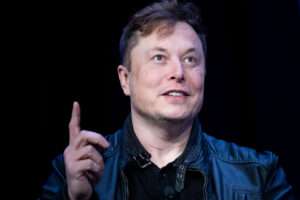
Elon Musk. (BRENDAN SMIALOWSKI / GDA Photo Service/Newsco)


A recent Washington Post article shows Elon Musk was, for a time, working illegally in the US, and  subject to deportation. He was able to remain in the US and eventually legalize his status because law enforcement was either unaware of his status or chose to look the other way. Much of the commentary on this issue focuses on Musk's hypocrisy: he has since become an advocate of hardline policies on illegal migration, under which people like Musk himself would be deported.

But Musk's story also highlights the harm caused by immigration restrictions. Cato Institute immigration policy expert Alex Nowrasteh explains:

What bothers me in the WaPo article is how destructive the US immigration system is. It almost didn't allow Elon Musk to settle here and build several innovative firms, push technological breakthroughs, and build enormous consumer surplus and shareholder value. Musk is a 1 in a billion innovator and businessman. If the US immigration system blocked at least one other Musk-type entrepreneur from coming here in the last century, then this should make intelligent nativists rethink their position. Few of them would want to kick Musk out now, but they support rules and enforcement that could stop the next Musk from coming or staying here. Musk was bright before he got a work visa, but there was little indication that he'd become the wealthiest man in the world. The conceit of immigration central planners almost cost us Musk's talents. Let's stop ignoring the right tail of the distribution and error on the side of letting more people in – one of them could take us to Neptune. I hope that readers of this story will come away with the same lesson instead of focusing on the hypocrisy.

Had Musk been forced to return to South Africa, he probably would never have had the opportunity to make major innovations and found Tesla and SpaceX.

Immigrants contribute disproportionately to a wide variety of entrepreneurial and scientific innovations. As discussed more fully in my article "Immigration and the Economic Freedom of Natives," that means large-scale immigration restrictions inevitably keep out significant numbers of people who might otherwise become major innovators or make important scientific breakthroughs. The immigrant we keep out today might have gone on to make a scientific discovery that could have saved your life, or that of one of your loved ones.

Obviously, a small fraction of would-be immigrants will become major innovators. But that small fraction is extremely important. And the cumulative impact of keeping out large numbers of ordinary migrants is that we also lose massive economic and scientific contributions by major innovators.

I am a bit less bullish about Musk's impact, in particular, than Alex Nowrasteh is. The benefits of his great innovations are partly offset by his harmful impact on political discourse, such as promoting bogus conspiracy theories about immigration ("great replacement theory") and voter fraud. On balance, however, the benefits of Musk's presence in the US almost certainly outweigh the costs. The real problem with political misinformation is a matter of demand more than supply. So long as there is a large demand for conspiracy-mongering claptrap, political entrepreneurs are likely to supply it. The particular claptrap that Musk promotes wasn't invented by him, and had widespread dissemination (including by Donald Trump) before Musk became involved. By contrast, Musk's entrepreneurial innovations are far less likely to have been quickly achieved by others, if he weren't around. And Twitter was a cesspool of awful political discourse long before Musk bought it. At most, he made it marginally worse.

There's a chance Musk might ultimately have a massively deleterious political impact. But more likely, he has just somewhat amplified terrible ideas that were already getting widespread dissemination. In addition, I would be wary of empowering government keep out migrants on the theory that they might spread harmful political ideas. If we don't trust government to censor supposedly harmful ideas disseminated by natives, the same reasoning also undermines the case for ideological screening of immigrants. Elsewhere, I have addressed in more detail the issues raised by the possibility that an extraordinary individual migrant could cause great harm as a political leader or a producer of harmful technological innovations.

In sum, the real lesson of Musk's story as an illegal migrant worker is that immigration restrictions often block tremendously valuable innovation. Musk was lucky enough to get around the system. All too many other potentially great innovators aren't as fortunate.

Two Sentences I Never Thought I'd Write

How to pick your poison.

|

The first sentence: "I hope the Yankees win the World Series."

I was born in 1951 in Brooklyn, and grew up there, leaving for college in 1968.  I was a very passionate Dodgers fan, as was pretty much everyone else I knew. Several Dodger players lived in our neighborhood, including the great Gil Hodges, after whom my elementary school, formerly PS 193, is now named. The Dodgers in the '50s were easy to love: Hodges, Jackie Robinson, Roy Campanella, PeeWee Reese, Duke Snider . . .  a fabulous squad that made the World Series four times in the 50's ('52, '53, '55, and '56), winning their first and only title, gloriously, in the thrilling 7-game 1955 Series versus the Yankees.

I was devastated when the Dodgers abandoned Brooklyn after the 1957 season. Though I was only six years old, I remember it vividly; it was the first time in my life that I understood that the world could be a cruel, cruel place. I swore never to forgive them for the betrayal, and I never have.

There's the famous story of Jimmy Breslin and Pete Hamill, two hard-boiled New York City news reporters hailing from Queens and Brooklyn, respectively, having drinks at a bar when they consider the question: who were the three most evil people in human history?  Each writes down his choice on a napkin out of sight of the other, and when they look at the two napkins they're in total agreement: Hitler, Stalin, and Walter O'Malley, the Dodgers' owner who took the Dodgers out to the West Coast.  Exactly how I felt.

Loving the Dodgers in the '50s meant hating, with all your heart, the Yankees. The Yankees were the implacable foe, having beaten the Dodgers in the World Series in six of their seven meetings ('41, '47, '49, '52,'53, and '56). While the Dodgers were building their formidable squad in the late '40s/early '50s, the Yankees were, alas, a step (or two or three) ahead of them, far and away the best team on the planet; between 1949 and 1961 they won eight World Series titles, with a awe-inspiring lineup - Mantle, Berra, Moose Skowron, Whitey Ford, Roger Maris, Tony Kubek, etc. etc. - all of whom I detested with every bone in my young body. The idea of switching allegiance to them - they were, after all, the only team left in NYC after the Giants followed the Dodgers out west in 1958 - was absurd, and I can't remember a single person from my childhood who did so.

In 1941, the Germans invaded Russia.  So, given the choice between Hitler and Stalin, who do you root for?  We chose Stalin - clearly, at the time, the lesser of two evils.  So I'm going for the Yankees; their crime - being spectacularly good for an amazingly long period of time - does not reach the depths of the Dodgers' immorality.

Predictably enough, given that the baseball gods have rarely been kind to me, the one time I'm rooting for them, they stink, having apparently forgotten how to hit.

The second sentence (in a more serious vein): "Tens of millions of my fellow-citizens  - perhaps even a majority - appear to be poised to elect, as President, a man who tried to overthrow the constitutionally-elected government of the United States."

I cannot wrap my mind around it. As anyone who has read my postings in the past is well aware, I'm no fan of Donald Trump. For any number of reasons - the compulsive lying, the hate-infused rants, the fact that he was the first President since Herbert Hoover to have left office with a net job loss during his four years as President, the shameful kissing-up to Putin and Kim Jong Un, his tariff policy, the threats to pull out of NATO, . . . - I think he was a terrible President during his first term and would almost certainly be a terrible President the second time around.

But put all of that aside.  I get it - people have divergent views about all of those things. That's just politics.

But I would have thought that the vast majority of Americans would view attempting to overthrow the government through unconstitutional means as a total disqualification for holding the highest office in the land, and would not countenance casting their vote for anyone who participated in such an attempt.

Do the folks pulling Trump's lever not believe that he was a willing and active participant in the overthrow scheme, involving, as it did, the Jan. 6 attack on the Capitol, the pressure on Vice-President Pence to single-handedly overturn the election results, the "fake elector" schemes, the threatening phone calls to State election officials? Or do they view all that as not being of sufficient moment to disqualify someone from getting their vote for President - perhaps formally, via Section 3 of the 14th Amendment, or just as a matter of common sense and a sense of duty to their fellow-citizens?

Like I said, I don't understand it. I'm hopeful that one of my readers can explain to me which of those possibilities is closer to the truth of the matter, and why, in either case, we shouldn't be terrified about that.


Free Speech

Texas Public University Restrictions on Anti-Israel Speech Likely Violate First Amendment

So holds a federal court (correctly, I think), considering restrictions that were prompted by Texas Governor Abbott's General Order GA-44.

|

From today's decision by Judge Robert Pitman (W.D. Tex.) in Students for Justice in Palestine v. Abbott:

GA-44 begins with a preamble detailing events of the Israel-Palestine conflict and related protests that had recently occurred on university campuses. The preamble includes the provision:

WHEREAS, multiple protests and walkouts have been staged by universities' student organizations, with students chanting antisemitic phrases such as "from the river to the sea, Palestine will be free," which has long been used by Hamas supporters to call for the violent dismantling of the State of Israel and the destruction of the Jewish people who live there;

Then, GA-44 directs all Texas higher education institutions to do the following:

  1. Review and update free speech policies to address the sharp rise in antisemitic speech and acts on university campuses and establish appropriate punishments, including expulsion from the institution.
  2. Ensure that these policies are being enforced on campuses and that groups such as the Palestine Solidarity Committee and Students for Justice in Palestine are disciplined for violating these policies.
  3. Include the definition of antisemitism, adopted by the State of Texas in Section 448.001 of the Texas Government Code, in university free speech policies to guide university personnel and students on what constitutes antisemitic speech.

That definition of antisemitism in Section 448.001 of the Texas Government Code is:

"Antisemitism" means a certain perception of Jews that may be expressed as hatred toward Jews. The term includes rhetorical and physical acts of antisemitism directed toward Jewish or non-Jewish individuals or their property or toward Jewish community institutions and religious facilities. Examples of antisemitism are included with the International Holocaust Remembrance Alliance's "Working Definition of Antisemitism" adopted on May 26, 2016.

Two of the "examples of antisemitism" included in the International Holocaust Remembrance Alliance's "Working Definition of Antisemitism," relevant here, are:

  1. Denying the Jewish people their right to self-determination, e.g., by claiming that the existence of a State of Isr[ae]l is a racist endeavor;
  2. Drawing comparisons of contemporary Israeli policy to that of the Nazis.

Read More

Free Speech

Journal of Free Speech Law: "The First Amendment Meets the Virtual Public Square," by Allison Stanger

A new article from the Daedalus (Journal of the American Academy of Arts and Sciences) Future of Free Speech Symposium.

|

The article is here; the Introduction:

On January 6, 2021, with the encouragement of President Donald Trump, a motley crew of "Stop the Steal" zealots stormed the U.S. Capitol, destroying lives and property. In response, Twitter, YouTube, and Facebook took the unprecedented step of deplatforming a freely elected U.S. president. Twitter permanently suspended Trump's account, Google's YouTube shut him down indefinitely, and Facebook closed his account but referred its decision to Facebook's newly assembled Global Oversight Board for review. Yet two years later, in January 2023, Twitter's new owner Elon Musk reinstated Trump's Twitter account, and Facebook announced the lifting of Trump's ban, without any public explanation. There was no public outcry.

At the time of Trump's social media silencing, there had been considerable public debate over whether such dramatic action had been warranted. For liberal elites, it had happened far too late. For red-state America, the very idea of censoring a freely elected president was unacceptable. Both sides of this discussion had a point but were asking the wrong questions, and in doing so, lost the plotline of the real story. Things had gone too far so that every choice at the time was a bad choice. Rather than asking if Big Tech should have silenced Donald Trump after January 6, we should instead be asking: how and why did we reach the point at which that Hobson's choice had to be made in the first place? The short answer to that question is that while the world's attention was focused elsewhere, Big Tech came to be the gatekeeper of our virtual public sphere, supplanting media institutions and national social norms, the latter of which no longer exist.

Whereas governance and civic engagement used to emerge from deliberation framed by the marketplace of ideas under the protection of the First Amendment (unless the speech incited violence), online harassment and cancel culture today, fueled by social media and framed by recommender algorithms, undermine reason-based public deliberation. For many younger people, freedom of speech has become the rallying cry of white people in red states. The Republican Party's attack on what it calls "wokeness" and its repeated calls for defending free speech feeds that perception.

While those on the extreme left and extreme right argue about their respective trampled free speech rights, they both overlook that the First Amendment protects citizens from government encroachment on freedom of speech and assembly; the First Amendment is mute on corporate suppression of free expression. If we want each and every voter to have an equal voice in public deliberation, the Constitution alone will no longer get us there.

Read More

Free Speech

Court Vacates Order That Apparently Called for Vanishing of My (and Others') Posts About Hyman v. Daoud

|

From today's Order Vacating in Part and Clarifying Order of Mar. 13, 2024 (responding to a motion filed Friday on my behalf by Marc Randazza and Kylie Werk of the Randazza Legal Group, PLLC):

ORDER VACATING IN PART AND CLARIFYING ORDER OF MARCH 13, 2024

This action came before the Court on NON-PARTY EUGENE VOLOKH'S MOTION [D.E. 48] TO INTERVENE AND FOR RECONSIDERATION OF ORDER.

The Motion is granted. The order docketed March 13, 2024 is hereby vacated to the extent it can be read or interpreted to apply to anyone other than the parties to this action. It is expressly vacated to the extent it purports to order Mr. Volokh to take any action -- or to refrain from taking any action. The order shall be interpreted to only apply to Defendant Arnold Daoud, or anyone acting at his direction. The order does not apply to anyone who is not a party to this action; to be clear, this includes any non-party who has or may write about this action or the filings docketed in this action, or both.

The March 13 order had said, among other things,

1. This order requires the taking down or deletion or deindexing the following links on the internet:

 http://conlinpa.com/2016/04/03/hyman-v-daoud/
https://www.miamiherald.com/news/local/community/miami-dade/miami-beach/article

Attempt to Vanish My Article About Attempt to Vanish My Article About Attempt to Vanish Other Articles


https://www.cbsnews.com/miami/news/notorious-father-faces-eviction-by-daughter/

Hyman v. Daoud: A family feud over corporate ownership and control


[Many more URLs, including several of mine. -EV] …

Read More

Free Speech

More on the Diploma Questions in Adams v. Gulley, the Case Where a Judge Ordered the Removal of Reddit Criticisms of a Public Commentator

|

The order: As readers may recall, I've written about a recent California court order that restricted online criticism of one Sarrita Adams. Adams runs Science On Trial, Inc., which "provides forensic consultation services across the United States and the United Kingdom." Adams drew public attention by publicly criticizing the evidence in the 2023 English trial of nurse Lucy Letby, who was convicted of murdering seven infants. Her claims were mentioned in, among other publications, The Times (London), the New York Post, and most recently The New Yorker.

Adams' criticism, however, itself drew criticism, including on Reddit's r/scienceontrial ("This community exists to fact check claims about Science on Trial, its creator Sarrita Adams, and various statements that can be credited to her."). The main poster there has been the pseudonymous Reddit user MrJusticeGossipGirl, apparently a reference to Mr. Justice Goss, the judge in the Letby trial. The posts generally criticize Adams' credentials, views on the Letby trial, responses to critics, and more. (There's also a reddit r/sarritaadams, which points the reader to r/scienceontrial.)

But on June 7, San Francisco County Superior Court Maria Evangelista issued a temporary harassment restraining order (Adams v. Gulley, PDF pp. 42-47) ordering defendant Gulley—who appears to be MrJusticeGossipGirl—

Do not make any social media posts about or impersonating plaintiff and her company Science on Trial on any public or social media platform. All harassing posts shall be removed.

This was done based on a restraining order request filed June 6; it appears that Gulley wasn't given an opportunity to appear in court to oppose the order (this is known in this context as an "ex parte" proceeding). The order was extended for over four months, until mid-October, when the court ultimately vacated it on the grounds that the California courts lack jurisdiction over Gulley, a Pennsylvania resident. I argued here that the order also violated the First Amendment and the California restraining order law.

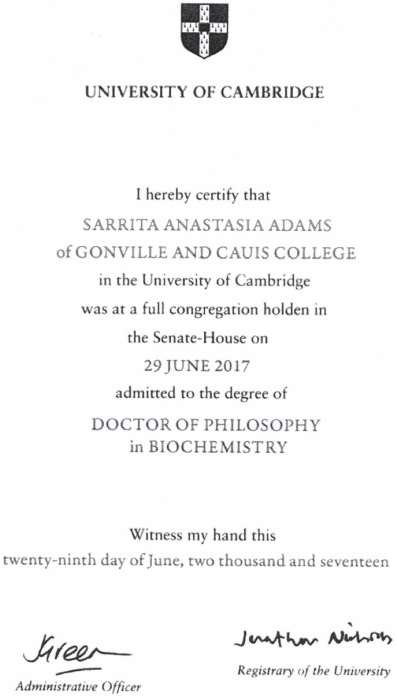
The diploma: But in the litigation over the order, Gulley's lawyers (at the Foundation for Individual Rights and Expression) alleged that the filings on Adams' side included a seemingly inauthentic diploma:

At the time I posted about that (Oct. 18), I had asked the Cambridge administration (on Oct. 6) whether the diploma was authentic but hadn't gotten an answer. But I finally did get an answer, and here's what the Cambridge people reported that "The attached certificate has not been issued by the University of Cambridge." They specifically noted:

Read More

Free Speech

Another Attempt to Vanish My Posts About Kelly Hyman v. Alex Daoud—Seemingly Backed by Court Order

|

[UPDATE 10/28/2024 3:57 pm: The business day after the motion below was filed, the court vacated the Mar. 13 order in relevant part.]

Kelly Hyman is a lawyer, frequent FoxNews.com contributor, and a media and Twitter commentator in this year's presidential campaign. She had also (in Hyman v. Daoud) sued her father, a disgraced former Miami Beach mayor, over a real estate transaction. And, for several years, there have been attempts to vanish from the Internet various materials related to that dispute—including attempts to vanish news stories about it, including my own articles.

On Oct. 17, I got an e-mail related to the latest such attempt:

[Subject] Request for Link Removal as per Court Order

Hello,

I am reaching out to request the removal of the following link from your website, as per a court order:

  • https://reason.com/volokh/2020/11/24/an-odd-response-from-one-of-the-lawyers-in-the-kelly-hyman-v-alex-daoud-case/
  • https://reason.com/volokh/2023/12/14/attempt-to-vanish-my-article-about-attempt-to-vanish-my-article-about-attempt-to-vanish-other-articles/

I've attached a copy of the court order for you to look over. Please proceed with removing the links at your earliest convenience.

Thank you for taking the time to look into this matter.

Sincerely,

Angelina

The court order, issued in the initial Hyman v. Daoud case in March of this year, specifically states, "This order requires the taking down or deletion or deindexing the following links on the internet:," followed by several links, including those on sites run by (among others) CBS News, Miami Herald, the Daily Mail, and me.

Read More

More