
Wednesday Open Thread
What's on your mind?

Mostly law professors | Sometimes contrarian | Often libertarian | Always independent | Est. 2002
What's on your mind?
I spoke along with my Cato colleague Walter Olson.
Today the Cato Institute held a virtual event on "Tariffs, Emergencies, and Presidential Power." Cato Institute Senior Fellow Walter Olson and I discussed Trump's "Liberation Day" tariffs attempting to leverage the International Emergency Economic Powers Act of 1977 (IEEPA), the lawsuit against them brought by the Liberty Justice Center and myself on behalf of five US businesses harmed by the tariffs, nondelegation, the general problem of abuse of emergency powers, and other related issues. Brent Skorup of Cato (who is also a former student of mine!) moderated, and asked some great questions. Here is the video:
I have gone over the legal issues raised by Trump's IEEPA tariffs in greater detail in my Lawfare article, "The Constitutional Case Against Trump's Trade War." See also my post on why these tariffs threaten the rule of law, an issue we discussed at the Cato event.
Readers of today's opinion in Wilmer Cutler Pickering Hale & Dorr LLP v. Executive Office of the President (which I think got it largely right in its substantive analysis), might notice that it included 26 exclamation points (not counting one in a quote from President Trump). Here is just a subset:
The Founding Fathers knew this! …
Please—that dog won't hunt! …
The causal chain contains at most two links, and it is certainly not highly attenuated! …
Please! …
I agree! …
Taken together, the provisions constitute a staggering punishment for the firm's protected speech! The Order is intended to, and does in fact, impede the firm's ability to effectively represent its clients! …
Thus, to the extent the President does have the power to limit access to federal buildings, suspend and revoke security clearances, dictate federal hiring, and manage federal contracts, the Order surpasses that authority and in fact usurps the Judiciary's authority to resolve cases and sanction parties that come before the courts! …
A (relatively) short excerpt from today's long decision by Judge Richard Leon (D.D.C.) in Wilmer Cutler Pickering Hale & Dorr LLP v. Executive Office of the President; there's a lot going on here, but in general I agree with the First Amendment and Sixth Amendment arguments (I'm not sure either way about the others):
The cornerstone of the American system of justice is an independent judiciary and an independent bar willing to tackle unpopular cases, however daunting. The Founding Fathers knew this! Accordingly, they took pains to enshrine in the Constitution certain rights that would serve as the foundation for that independence. Little wonder that in the nearly 250 years since the Constitution was adopted no Executive Order has been issued challenging these fundamental rights. Now, however, several Executive Orders have been issued directly challenging these rights and that independence. One of these Orders is the subject of this case. For the reasons set forth below, I have concluded that this Order must be struck down in its entirety as unconstitutional. Indeed, to rule otherwise would be unfaithful to the judgment and vision of the Founding Fathers! …
"[T]he First Amendment prohibits government officials from retaliating against individuals for engaging in protected speech." WilmerHale alleges that "[t]he Order blatantly defies this bedrock principle of constitutional law." I agree!
To establish First Amendment retaliation, WilmerHale must plausibly allege and then prove: "(1) [WilmerHale] engaged in conduct protected under the First Amendment; (2) [defendants] took some retaliatory action sufficient to deter a person of ordinary firmness in [WilmerHale's] position from speaking again; and (3) a causal link between the exercise of a constitutional right and the adverse action taken against [WilmerHale]."
WilmerHale represents a range of clients in litigation. This advocacy is unquestionably protected conduct under the First Amendment. See Legal Servs. Corp. v. Velazquez (2001) (treating "the analysis of certain legal issues" and their "presentation to the courts" as "speech and expression"); Lehnert v. Ferris Faculty Ass'n (1991) ("We long have recognized the important political and expressive nature of litigation."); McDonald v. Smith (1985) ("[F]iling a complaint in court is a form of petitioning activity ….")….
The WilmerHale Order is, on its face, retaliation for the firm's protected speech. Indeed, § 1 outlines the motivations of the Order, including WilmerHale's pro bono practice, "obvious partisan representations to achieve political ends," and involvement in immigration and election litigation.
NBC News (Viola Flowers) reports:
Gino, widely known for researching honesty and ethical behavior, was placed on administrative leave in 2023 after multiple allegations of falsifying data surfaced….
No professors are known to have lost their tenure at Harvard since the 1940s, when the American Association of University Professors formalized rules of termination, according to The Harvard Crimson, the student newspaper.
Gino's lawsuit against Harvard related to Harvard's earlier disciplinary actions is still pending, but her defamation claims (including ones against authors at Data Colada, who had raised the allegations) were dismissed in September.
From Justice Alito's dissent from the denial of certiorari in L.M. v. Town of Middleborough, joined (with a twist) by Justice Thomas:
This case presents an issue of great importance for our Nation's youth: whether public schools may suppress student speech either because it expresses a viewpoint that the school disfavors or because of vague concerns about the likely effect of the speech on the school atmosphere or on students who find the speech offensive. In this case, a middle school permitted and indeed encouraged student expression endorsing the view that there are many genders. But when L.M., a seventh grader, wore a t-shirt that said "There Are Only Two Genders," he was barred from attending class. And when he protested this censorship by blocking out the words "Only Two" and substituting "CENSORED," the school prohibited that shirt as well.
The First Circuit held that the school did not violate L.M.'s free-speech rights. It held that the general prohibition against viewpoint-based censorship does not apply to public schools. And it employed a vague, permissive, and jargon-laden rule that departed from the standard this Court adopted in Tinker v. Des Moines Independent Community School Dist. (1969).
The First Circuit's decision calls out for our review….
From today's dissent from denial of certiorari by Justice Gorsuch, joined by Justice Thomas, in Apache Stronghold v. U.S.:
For centuries, Western Apaches have worshipped at Chí'chil Biłdagoteel, or Oak Flat. They consider the site a sacred and "direct corridor to the Creator." It is a place where tribal members conduct "religious ceremonies that cannot take place elsewhere." Recognizing Oak Flat's significance, the government has long protected both the land and the Apaches' access to it.
No more. Now, the government and a mining conglomerate want to turn Oak Flat into a massive hole in the ground. To extract copper lying beneath the land, they plan to blast tunnels that will result in a crater perhaps 1,000 feet deep and nearly two miles wide. "It is undisputed" that the government's plan will permanently "destroy the Apaches' historical place of worship, preventing them from ever again engaging in religious exercise" at Oak Flat.
Seeking to halt the destruction of the Apaches' sacred site, Apache Stronghold, a nonprofit organization, sued under the Religious Freedom Restoration Act of 1993 (RFRA). That law prevents the federal government from "substantially burden[ing] a person's exercise of religion," unless that burden represents "the least restrictive means of furthering [a] compelling governmental interest." In a sharply divided en banc decision, the Ninth Circuit rejected Apache Stronghold's challenge. Though the government's plan will result in the destruction of an ancient sacred site, the Ninth Circuit reasoned, that plan does "not impose a substantial burden on religious exercise."
Apache Stronghold asks us to review the Ninth Circuit's extraordinary conclusion. But the Court today turns aside the group's request. Respectfully, that is a grave mistake. This case meets every one of the standards we usually apply when assessing petitions for certiorari: The decision below is highly doubtful as a matter of law, it takes a view of the law at odds with those expressed by other federal courts of appeals, and it is vitally important. Before allowing the government to destroy the Apaches' sacred site, this Court should at least have troubled itself to hear their case….
An explainer from Cass Sunstein
A new episode of the Academic Freedom Podcast has been released. The podcast is sponsored by the Academic Freedom Alliance and the Center for Academic Freedom and Free Speech at Yale Law School.
This episode features a conversation with Cass Sunstein, the Robert Walmsley University Professor at Harvard Law School and former administrator of the White House Office of Information and Regulatory Affairs. His recent working paper, "'Our Money or Your Life!' Higher Education and the First Amendment," explores the First Amendment constraints federal funding to American universities.
In the last few weeks, the Trump administration has made several announcements that it is withholding a significant amount of federal funds from specific universities, notably Columbia University and Harvard University, and that those funds will not be released until those universities comply with a set of demands. Harvard received a letter on April 11 demanding changes in Harvard's governance, faculty hiring practices, student admissions practices, viewpoint diversity among the faculty, and student disciplinary policies, among other things. On May 5, the Secretary of Education sent a letter to Harvard informing the university that the federal government will award it no grants for scholarly research in the future. Reportedly, there is more than $2 billion dollars at stake.
On the podcast we talk through what the Trump administration is doing, what the consequences are for Harvard and other affected universities, and what constitutional issues are raised by the administration's actions in denying Harvard access to federal research funds. In the process, we get a short course on First Amendment doctrine relating to viewpoint discrimination and unconstitutional conditions.
Washington State's new law on clergy reporting in child abuse cases.
This month, Washington State enacted a law requiring clergy to report suspected child abuse or neglect, even when the information is obtained through a confidential spiritual communication, like Confession in the Catholic Church. The new law seems clearly unconstitutional under current doctrine; that's the easy part. But the deeper issues are more interesting and more difficult, and they have been with us for a very long time.
The new law departs significantly from the approach in most other states, even those that mandate clergy reporting. Most of those states preserve the traditional clergy-penitent privilege while mandating that clergy report abuse they learn about in other contexts. What's more, Washington's law expressly preserves other professional privileges, like the attorney-client privilege, but explicitly eliminates the clergy-penitent privilege. That unequal treatment presents a serious problem under current free exercise law.
Under cases like Fulton v. City of Philadelphia and Tandon v. Newsom, which adopt what scholars have called the "most favored nation" approach, laws that provide exemptions for secular conduct but not analogous religious conduct must survive strict scrutiny. That means the government must show that the law advances a compelling state interest and that it uses the least restrictive means of doing so. Punishing child abuse is undoubtedly a compelling state interest, but if the law allows attorneys to withhold relevant information while requiring clergy to disclose it, the state will have difficulty justifying its choice.
The issues surrounding the clergy-penitent privilege have been with us a long time. In one of the earliest American cases on religious liberty, People v. Philips (1813), a Catholic priest refused to testify in a criminal trial about a penitent who had confessed to returning stolen goods. The state argued that public safety required all citizens to cooperate with the criminal process and that religion was no excuse. The court, however, sided with the priest, reasoning that public safety did not justify requiring him to violate a core "ordinance" of his faith. Confession might in fact encourage culprits to come clean, as had happened in Philips; the stolen goods had been returned. What's more, the court noted that the state already recognized an attorney-client privilege, and implied that religious privileges deserved equal respect. Read More
What did that 1995 article trying to predict the Internet future get right? More amusingly, what did it get wrong?
In Fall 1994, I wrote an article called "Cheap Speech and What It Will Do," which became my first publication as a law professor. It was for a Yale Law Journal symposium called "Emerging Media Technology and the First Amendment," which was about the then-emerging technology of the Internet. (Fun fact: Back then, we would hammer out our manuscripts with chisels on clay tablets.) Thirty years later, I thought I'd serialize the piece here, to see what I may have gotten right—and what I got wrong, from "infobahn" to people printing out daily newsletters to read them.
I've omitted most of the footnotes—you can see them here—but I've moved a few of the substantive ones into text, marking them (as I usually do for moved text) with { and }. This morning, I begin with the Introduction.
[* * *]
It's easier for the rich to speak than it is for the poor. It's also easier to speak if what you're saying, or singing or drawing, has mass appeal. Publishers will only invest in a product if the expected returns exceed the expected costs. If your work lacks a wide audience, publishers may be hard to find; and even if you can get a small publisher to back you, distributors may be unwilling to let you use their scarce shelf space. Getting access to nationwide radio and TV is harder still. People with unorthodox tastes lose out, and even those in the mainstream suffer when potentially interesting work isn't produced because of (rational) predictions that it won't be a hit.
Many have pointed to these problems—the bias in favor of speech of the rich, or of speech endorsed by the rich, and the relative blandness of much mass media. The perfect "marketplace of ideas" is one where all ideas, not just the popular or well-funded ones, are accessible to all. To the extent this ideal isn't achieved, the promise of the First Amendment is only imperfectly realized. And some suggest that because current First Amendment doctrine is premised on an open-market metaphor that isn't valid, the law should be adapted to this brutal reality.
My thesis is that (1) these two problems are directly linked to the fact that speaking today is expensive; (2) new information technologies, especially the "information superhighway" or "infobahn," will dramatically reduce the costs of distributing speech; and, therefore, (3) the new media order that these technologies will bring will be much more democratic and diverse than the environment we see now. Cheap speech will mean that far more speakers—rich and poor, popular and not, banal and avant garde—will be able to make their work available to all.
5/27/1935: Schechter Poultry Corp. v. U.S. decided.
The move may be a pretext for blocking the church's plan to build a homeless shelter. If the town proceeds, it will face near-certain litigation under the federal and state constitutions.

The New York Times reports that the town of Toms River, New Jersey is planning to use eminent domain to condemn a church, raze it, and build a park and pickleball courts on the spot. The planned condemnation may be motivated by a desire to prevent the church from opening a small homeless shelter on part of its land:
Leaders of Christ Episcopal Church in Toms River, N.J., were preparing for a Cinco de Mayo festival late one night when the news began to spread: The mayor planned to use eminent domain to seize their church and its 11 acres of land.
Under his plan, the church, which was founded in 1865, would be replaced by 10 pickleball courts, a soccer field and a playground with a nautical theme, according to an engineer's drawing. The first vote by the Township Council, Toms River's governing board, was the next afternoon.
The proposal represented a curious new twist in an ongoing battle in the large Jersey Shore community. An affordable housing nonprofit that rents space from the church had asked to create a small homeless shelter on the very land the mayor now wanted to turn into a park. The request was unpopular with neighbors, and the organization was awaiting approval from a zoning board.
The mayor, Daniel T. Rodrick, called the timing a "coincidence." But opponents have condemned the park plan as a thinly disguised way to block the shelter.
The effort to buy or take the land is all but certain to face legal challenges. But it has unleashed an emotional debate over property rights, religious liberty and the limits of a community's responsibility to care for poor people….
"I am outraged," said Rabbi William Gershon of Congregation B'nai Israel, a conservative synagogue that has been in Toms River for 75 years. "If you can do it to them, you can do it to any of us."
Rabbi Gershon said members of the town's interfaith council were united in their opposition to the effort, which he considers an attempt to use "political levers to cudgel a community, almost vindictively."
Rabbi Gershon is right. This sort of use of eminent domain is abusive and unjust. As the NY Times article notes, there is substantial public opposition to the taking. The Mayor of Toms River (who supports the taking) has postponed the final town council vote on it until July 30.
If the town decides to proceed with the condemnation, it will likely be challenged in court under the state and federal constitutions, as not being for a "public use." Unfortunately, US Supreme Court precedents, such as the notorious ruling in Kelo v. City of New London (2005), hold that almost anything that might benefit the public in some way qualifies as a "public use," even if the land is going to be transferred to a private party (see my critique of this position in my book The Grasping Hand: Kelo v. City of New London and the Limits of Eminent Domain).
However, Kelo does allow courts to strike down "pretextual" condemnations where the official rationale for the taking is really a pretext for a scheme to benefit a private party. What qualifies as a pretextual taking is anything but clear! Lower courts have developed at least five different approaches for addressing such issues. For details, see my recent amicus brief urging the Court to revisit Kelo. But if the plan to condemn the church really is motivated by neighbors' complaints abut the potential homeless shelter, there is at least a plausible argument that the taking here is pretextual. That would be even more true if the plan provides for transferring some or all of the condemned property to a private owner.
New Jersey is within the jurisdiction of the US Court of Appeals for the Third Circuit. In Carole Media v. N.J. Transit Corp., 550 F.3d 302 (3d Cir. 2008), that court ruled that a key criterion for identifying a pretextual taking is whether there is a private beneficiary (usually the new owner) whose identity is known in advance.
I won't go into detail here. But New Jersey courts applying their state constitutional public use clause are much less deferential than federal courts applying Kelo and other Fifth Amendment public use precedents. Just ask Donald Trump, whose effort to use eminent domain condemn a widow's home to build a parking lot for one of his casinoes got struck down by a New Jersey court in CRDA v. Banin (1998) [I had a very small role in working on that case as a law student clerk at the Institute for Justice, which represented the property owners].
Whether the Toms River Church condemnation can be successfully challenged in court is likely to depend on facts such as how detailed and extensive the development plan is, whether some or all of the property will be transferred to a new private owner (public use challenges are much more likely to succeed if the answer is "yes"), and the extent of evidence of pretextual motivation.
I intend to reach out those involved to learn the answers to these questions, and - if possible - offer assistance to the Church in fighting this condemnation. If readers have relevant contacts, please let me know.
Lifting TPS status would make them eligible for deportation to Afghanistan, where the Taliban is likely to persecute and punish them.

The Washington Post reports that Trump will lift Temporary Protected Status (TPS) from thousands of Afghans who fled persecution by the Taliban, after the radical Islamist movement took over their country in 2021:
The Trump administration's move to end deportation protections for wartime allies who fled to the United States after the fall of Afghanistan has infuriated veterans of the 20-year conflict there, who say the U.S. government is betraying a sacred promise made to some of America's most vulnerable partners.
The fear, veterans and other advocates say, is that anyone who returns to Afghanistan will almost certainly face reprisal by the Taliban, the extremist militant group that in 2021 overran the U.S.-trained Afghan military and toppled the government in Kabul…..
Advocacy groups estimate that about 10,000 Afghans in the United States have been dependent on TPS while they navigate the lengthy and complex process for obtaining permanent residency, a process made all the more difficult, they say, by the absolute chaos that defined Afghanistan's collapse — and by the guidance they received from the U.S. government while trying to escape.
The veterans' groups are right. Afghans deported back to Afghanistan - especially those who worked with the US during the war - will indeed face harsh persecution by the Taliban. Deporting them would be profoundly unjust, and also a betrayal of wartime allies that will make it more difficult for the US to recruit local support in any future conflict. If we don't stand by our allies, why would anyone trust us?
I'm old enough to remember a time when Republicans saw themselves as fighters against radical Islamism. Now they seek to deport Afghan allies back to the tender mercies of the Taliban, under the ludicrous pretext that conditions in Afghanistan are improving under the Taliban's rule.
This move is part of Trump's broader cruel assault on legal immigration, which includes barring nearly all refugee admissions, and targeting other groups for deportation back to repressive regimes in their countries of origin. Virtually the only group the Trump Administration sees as worthy of refuge are Afrikaner white South Africans, prioritized for refugee status under a February executive order.
I don't object to admitting the Afrikaners, and doing so might even set a useful precedent. But the idea that South African whites face worse persecution than Afghan opponents of the Taliban and other victims of oppressive regimes is utterly ridiculous. It reflects the racial obsessions of elements of the far right, not any objective reality.
Trump's abrogation of TPS for the Afghans is likely to be challenged in court. But the Supreme Court recently stayed a lower court decision blocking revocation of TPS for Venezuelans (despite the fact that they too face deportation to a brutally repressive government), and it seems likely, even if not certain, that the justices would do the same in a case involving the Afghans.
The lifting of TPS doesn't immediately imperil all Afghans in the United States. Many have parole status, granted and extended during the Biden Administration. But Trump could try to pull that, as well (as he has sought to do in the case of Cubans, Haitians, Nicaraguans, and Venezuelans), and in any event parole status is only temporary, and will eventually run out.
While Trump deserves severe condemnation for this cruel policy, Congress also deserves a hefty share of the blame. For years, veterans groups and others lobbied them to pass the Afghan Adjustment Act, which would have granted permanent residency rights to Afghans who fled the Taliban. I repeatedly advocated this, as well. But Congress dithered, and so here we are.
What's on your mind?
From Friday's order by Magistrate Judge Susan van Keulen in Concord Music Group, Inc. v. Anthropic PBC (N.D. Cal.)
At the outset, the Court notes that during the hearing, Publishers asked this Court to examine Anthropic's expert, Ms. Chen and strike her declaration because at least one of the citations therein appeared to have been an "AI hallucination": a citation to an article that did not exist and whose purported authors had never worked together. The Court gave Anthropic time to investigate the circumstances surrounding the challenged citation. Having considered the declaration of Anthropic's counsel and Publishers' response, the Court finds this issue is a serious one—if not quite so grave as it at first appeared.
Anthropic's counsel protests that this was "an honest citation mistake" but admits that Claude.ai was used to "properly format" at least three citations and, in doing so, generated a fictitious article name with inaccurate authors (who have never worked together) for the citation at issue. That is a plain and simple AI hallucination. Yet the underlying article exists, was properly linked to and was located by a human being using Google search; so, this is not a case where "attorneys and experts [have] abdicate[d] their independent judgment and critical thinking skills in favor of ready-made, AI-generated answers…."
A remaining serious concern, however, is Anthropic's attestation that a "manual citation check" was performed but "did not catch th[e] error." It is not clear how such an error—including a complete change in article title—could have escaped correction during manual cite-check by a human being. Furthermore, although the undersigned's [i.e., the Magistrate Judge's] standing order does not expressly address the use of AI by parties or counsel, Section VIII.G of [District] Judge Lee's Civil Standing Order requires a certification "that lead trial counsel has personally verified the content's accuracy." Neither the certification nor verification has occurred here. In sum, the Court STRIKES-IN-PART Ms. Chen's declaration, striking paragraph 9 [which contains the footnote that contains the citation with the hallucination], and notes for the record that this issue undermines the overall credibility of Ms. Chen's written declaration, a factor in the Court's conclusion.
Thanks to ChatGPT Is Eating the World for the pointer; it also discusses more about the substantive role of paragraph 9 in the declaration. Here's more backstory (from an earlier post):
From M.B. v. C.B., decided May 15 by Westchester County (N.Y.) trial court judge James Hyer:
During the conference Plaintiff's counsel indicated that his client was concerned about Defendant's continued erratic behavior including his use of the social media platform TikTok (hereinafter "TikTok"), including representations made during recordings of Defendant on TikTok that he had gifted significant sums of funds believed to be in excess of twenty or thirty thousand dollars:
"TikTok has the ability for individuals to give gifts to other people on TikTok, so you go live on TikTok and then it's showing what you're doing live. [Defendant], from what we can tell, has given away well in excess of twenty or thirty thousand dollars in the last two months to just third parties, individuals, and bragged about it very openly. We have recorded video of all of this. He talks about giving Pegasuses, giving universes. A universe costs $532 to the individual who gives it and it has a cash value that's redeemable by the person who receives it of around $500."
Plaintiff's counsel marked as Court Exhibit 1 a summary of certain TikTok recordings wherein he noted the following including asserted quotes of Defendant:
… "I'm gonna pegasus" with a woman as the background. Pegasus is a virtual gift you get after reaching the highest "gifter level." … To reach level 50 gifter, you need to spent a significant amount of real money on gifts (estimated around $845,000.00). You can then send Pegasus during a tick tok live….
"That's the Lord Marcellus one. I don't even know how many of these I sent but I send a lot of these. I sent a lot of Lord Marcellus'. That's a vault gift. It's the best gift you can send other than the Pegasus" … Lord Macellus is a Tik Tok gift worth $10 ….
"You wanna be like me. You wanna drop the uni's. You wanna drop the vaults." … Tick tok Universe $500 ….
Plaintiff's counsel also played several TikTok recordings of Defendant, one of which was asserted to have been made the day before the conference referring to this action, two of which were asserted to have been recorded just prior to the last conference in this courthouse with one being filmed in the hallway outside the courtroom and the other being filmed in the courthouse bathroom:
"I would note, your Honor, this is all while my client is not receiving child support, spousal support, has received no temporary counsel fees.
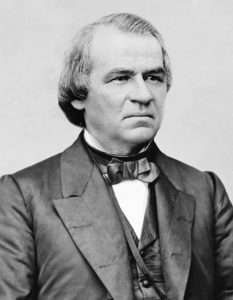
5/26/1868: Senate acquitted President Andrew Johnson and adjourned as court of impeachment. Chief Justice Chase presided over that trial. Johnson is one of four presidents that did not appoint any Supreme Court Justices. The others are William Henry Harrison, Zachary Taylor, and Jimmy Carter.
Legal scholar Rebecca Ingber offers some strong arguments against deference in this context.
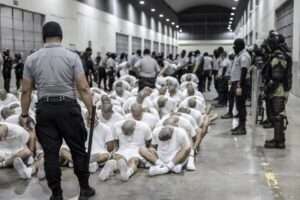
President Trump has been trying use the Alien Enemies Act of 1798 as a tool for mass deportation. The AEA allows detention and deportation of foreign citizens of relevant states (including legal immigrants, as well as illegal ones) "[w]henever there is a declared war between the United States and any foreign nation or government, or any invasion or predatory incursion is perpetrated, attempted, or threatened against the territory of the United States by any foreign nation or government." Multiple federal courts have ruled against Trump on the grounds that his invocation of the AEA is illegal because there is no declared war, and the activities of the Venezuelan drug gang Tren de Aragua (which Trump cites as justification for using AEA) are not an "invasion" or a "predatory incursion."
One federal judge has issued a badly flawed ruling holding that TdA's actions qualify as a "predatory incursion." But with that exception, courts have rejected the Administration's interpretation of the AEA, and there has been unanimous agreement that the meaning of terms like "invasion" is subject to judicial review and interpretation.
But some judges have held that the Administration does deserve deference on its factual determinations about whether a war, "invasion," or "predatory incursion" have occurred, and if so whether they were perpetrated by a "foreign nation or government." I previously critiqued such deference here. Legal scholar Rebecca Ingber has now published a more detailed critique in an insightful article for Just Security:
The question of who gets to make the predicate determination of whether the United States is at war or facing invasion or predatory incursion is as or more important as the assessment itself. That who should involve Congress, first and foremost, as the branch constitutionally assigned decisions to go to war. But in the case at hand, I mean, do judges get to review the president's factual assertions that the United States is at war or facing invasion or predatory incursion, or is that left entirely to the executive's discretion? This question, so framed, has implications far beyond the AEA cases. Given just how much extraordinary power the courts have recognized for the president during times of war, this power would be all-encompassing if it is left to turn on or off by the president alone – especially if the president can declare a situation is one of war or the like with no judicial check on whether that claim is completely unfounded….
Judge Haines' favoring "substantial deference" to the President's factual analysis is of a piece with years of judicial reticence to look too closely at what the President is doing when he claims war powers. Judges quite regularly question the competence of courts to "second guess" national security judgments the executive branch puts forward. As Judge Rodriguez states, they worry that the President's decisions might be based on some secret intelligence or "sensitive and confidential information" they do not have, and which they should not push the President to divulge….
This supposed expertise or information gap is one basis on which courts often defer to the executive…"
Yet while courts are often invested in the idea that there is some special process happening behind the closed doors of the executive, they are typically loath to delve behind it. As a result they defer aimlessly, often to what is simply the litigation position the executive branch puts forward in court. They may seem willfully blind to clear unconstitutional animus by the president because they are comforted that an internal, and secret, "review process undertaken by multiple Cabinet officials and their agencies" sufficed to remove its taint.
In the AEA cases, deferring to the President's expertise and secret intelligence is an especially transparent legal fiction. We have seen the publicly released work of those experts and intelligence sources, and they fundamentally undermine the President's assertions….
Moreover, not all courts have been so blindly deferential on questions of national security. Indeed, federal judges regularly adjudicate highly sensitive foreign intelligence and surveillance matters in cases before the Foreign Intelligence Surveillance Court (FISC); they review classified information using the Classified Information Procedures Act (CIPA) in a range of criminal cases; they adjudicate whether the military detention of alleged "enemy combatants" is lawful in Guantanamo Bay habeas cases relying on the government's classified information about an ostensibly ongoing armed conflict… In the Guantanamo habeas cases in particular I have seen firsthand how much of the government's initial assertions dissolve like sand through one's fingers in the face of adversarial process and judicial review. Our nation's history is also replete with examples of federal courts making much weightier determinations, stretching from policing the executive's use of the limited war powers granted to it by Congress in the quasi-war with France to determining the legality of Lincoln's blockade of southern ports at the outset of the Civil War….
When the President exploits the concept of war, or emergency, or national security, to claim extreme power over all aspects of our lives, we should scrutinize that power with a rigorous lens. And when we are talking about basic civil liberties – and a President's attempt to turn off constitutional due process with the flick of a pen – these questions are well within the province of the courts.
The war powers that Congress and the courts have over time granted the President are extraordinary. When the courts cede to the President absolute discretion to turn them on, this makes them virtually limitless. Today, the President claims authority to snatch people off the streets by masked federal agents and ship them to a foreign gulag, in the name of an invasion he alone has the power to name. It is almost too on the nose. This cannot possibly be a plausible exercise of the exceptional war power that the courts and Congress have long ceded to the President. But it is certainly an opportunity to rein those powers in.
I agree completely! The key point here is that an unreviewable power to make a "factual" determination that a war or an "invasion" has occurred turns into an unreviewable power to wield vast authorities intended to be limited to wartime emergency situations anytime the president wants. For example, in the event of a real "invasion" the federal government the power to suspend the writ of habeas corpus, thereby authorizing detention without due process for migrants and US citizens, alike.
And, as Prof. Ingber emphasizes, claims to deference based on superior expertise should be viewed with great skepticism, especially in a situation like this one where the appeal to expertise is a transparent pretext. The Administration has in fact ignored the expert conclusions of its own intelligence agencies, and fired those experts who dared to tell the Boss things he didn't want to hear.
I would add that specialized expertise isn't much needed to ascertain the existence of a genuine "invasion" or "predatory incursion," when these concepts are properly defined as military attacks, rather than mere illegal migration or drug smuggling. Such assaults are anything but subtle or hard to detect! Perhaps deference is still appropriate in close, ambiguous cases. But it is not justified in situations where the presence or absence of a military attack is pretty obvious. That is, in fact, our situation right now.
Celebrate your independence with a subscription to Reason magazine, your most trusted source of honest, insightful news and analysis.




