
Open Thread
What’s on your mind?

Mostly law professors | Sometimes contrarian | Often libertarian | Always independent | Est. 2002

What’s on your mind?
Illegal aliens are prohibited from possession of firearms.
Now that the Supreme Court has granted cert in Trump v. Barbara, the meaning of the Citizenship Clause in the Fourteenth Amendment should be definitively clarified. There are numerous collateral issues that are stake besides whether a birth certificate reflects citizenship. One of those is whether the person may lawfully receive or possess firearms.
The Gun Control Act (GCA) makes it unlawful for "an alien" who "is illegally or unlawfully in the United States" or who (with certain exceptions) "has been admitted to the United States under a nonimmigrant visa" to receive or possess a firearm. 18 U.S.C. § 922(g)(5). As elsewhere provided, "The term 'alien' means any person not a citizen or national of the United States." 8 U.S.C. § 1101(a)(3). That raises serious questions about whether a person born in the United States is "subject to the jurisdiction thereof" so as to be a "citizen" under the Fourteenth Amendment. Is a person born here of illegal aliens or of temporary visitors on a nonimmigrant visa a non-citizen who does not have Second Amendment rights?
I have posted an article on SSRN entitled "Birthright Citizenship Requires Parental Allegiance to the United States: The Meaning of 'Subject to the Jurisdiction Thereof' in the Fourteenth Amendment." Although the article doesn't mention the Second Amendment in detail, that issue looms in the background of who are citizens and thus who may lawfully possess firearms.
The federal appellate courts have consistently held that illegal aliens are subject to the federal gun ban because they are not protected by the Second Amendment. Post-Rahimi, the Seventh Circuit held in U.S. v. Carbajal-Flores (2025): "Even if the plain text of the Second Amendment presumptively protects Carbajal-Flores because he falls within 'the people,' a long tradition exists of disarming individuals, like illegal aliens, who have not sworn allegiance to the sovereign." As if to confirm his dangerousness, the defendant was apprehended firing shots at passing vehicles during the George Floyd riots.
Similarly, in U.S. v. Jimenez-Shilon (2022), the Eleventh Circuit skipped over the textual issue and found that under the history-tradition test, firearm ownership was limited to citizens. While decided just before Bruen, the court relied only on what would become Bruen's text-history test and did not wander into tiers of scrutiny.
While the cases are rarer, it has also been held that aliens here under a nonimmigrant visa are not protected by the Second Amendment. Noted U.S. v. Oghenebrume (M.D. La. 2025): "F-1 visas are held by those 'having a residence in a foreign country which he has no intention of abandoning,' who enter the United States 'temporarily and solely for the purpose of' education. Thus, on its face, the provision restricts aliens who have no intention of becoming a citizen and who have not declared allegiance to the United States."
Pursuant to Bruen, the courts cite various historical analogues involving persons deemed by the Founders as untrustworthy and dangerous who could be disarmed. Perhaps the strongest analogue is the disarming of supporters of the Crown and even persons who refused to take an oath of allegiance during the American Revolution. Without allegiance, citizenship has no meaning.
None of the precedents on the GCA appear to concern whether persons born here of illegal aliens or temporary visitors are "citizens" as defined by the Fourteenth Amendment. The Amendment's framers inserted the "subject to the jurisdiction thereof" clause to ensure that persons born here have allegiance to the United States. It so happens, as I show in my book Securing Civil Rights: Freedmen, the Fourteenth Amendment, and the Right to Bear Arms, these same framers were strong supporters of Second Amendment rights.
I wrote it (with help from others) on behalf of the Cato Institute and a group of takings and property scholars.

Today, I submitted an amicus brief in Pung v. Isabella County, the "home equity theft" takings case I previously wrote about here. The brief is on behalf of the Cato Institute, and a group of takings and property law scholars: Jessica Asbridge (Baylor University), James W. Ely, Jr. (Vanderbilt), Julia Mahoney (University of Virginia), and myself. Here is a summary of our brief, adapted from the Introduction:
At its heart, this is a simple case. The Takings Clause of the Fifth Amendment requires payment of "just compensation" whenever the government takes "private property" for "public use." U.S. Const. Amend. V. In this case, the government undeniably took the property of the Pung estate and paid far less than just compensation for it. If this Court does not reverse the badly flawed decision of the Sixth Circuit, state and local governments could systematically undercompensate vulnerable property owners who lose their land to tax foreclosure. Such an outcome would gravely undermine the rule set out in this Court's unanimous decision in Tyler v. Hennepin County, which held that "home equity theft" violates the Takings Clause and vindicated "[t]he principle that a government may not take more from a taxpayer than she owes." 598 U.S. 631, 639 (2023).
The compensation paid to the Pung estate fell far short of the "fair market value" standard required by this Court's precedents, as indicated by the County's own valuation of the property at $194,400 – more than twice the amount it paid to the estate. Pet. Cert. at 5. The flawed auction held by the county brought in a price of only $76,008, of which the owner received some $73,800 after subtracting the $2241.93 tax debt supposedly owed by the Pung estate. Id. The new owner of the property then sold it for $195,000, further underscoring the enormous disparity between the Pung estate's loss and the compensation received. Id.
Part I of this amicus brief explains why reversal of the Sixth Circuit decision is required by basic Takings Clause principles, including those enunciated in Tyler. There is no other way to forestall home equity theft and ensure that property owners facing loss of property through tax foreclosure are fully compensated.
Part II outlines historical evidence showing the importance of the requirement of just compensation, and the need to fully compensate property owners for property taken by the government. Mere partial compensation is not enough.
Finally, Part III explains why a ruling upholding the lower court is likely to result in severe abuses of property rights, because local governments often have incentives to undercompensate property owners whose land is subject to tax foreclosure. Elderly, minority, and less affluent property owners are likely to be particularly vulnerable.
This is a shorter and simpler amicus brief than most of those I write, because the case itself is simple. It comes down to the basic principle that the Takings Clause requires payment of full compensation for property taken by the government, and what the Pung estate got here obviously falls far short of that standard. Allowing the local government to get away with that would set a very dangerous precedent.
As noted in Part I of our brief, many legal scholars (myself included) argue that "fair market value" compensation is actually often insufficient. We don't ask the Supreme Court to resolve that longstanding problem here. But, at the very least, courts cannot allow the government to take property while paying far less than fair market value, which is what Isabella County is trying to get away with here.
As in Tyler v. Hennepin County (2023), of which Pung is a natural extension, this case features a broad cross-ideological coalition of groups filing amicus briefs supporting the property owner. Our own brief includes takings scholars with a range of different views, as well as the libertarian Cato Institute (where I am the Simon Chair in Constitutional Studies, in addition to my primary job at George Mason University).
Other amicus briefs on our side include those filed by libertarian and conservative property rights advocates, such as the Institute for Justice, and a range of groups led by the Buckeye Institute. But there are also briefs by left-liberal groups, such as the Constitutional Accountability Center, and briefs filed by the AARP (which emphasizes the disproportionate harm elderly property owners suffer from home equity theft), and disability rights advocates (which emphasizes the danger to disabled homeowners). There area also briefs by legal aid groups, business groups (including the US Chamber of Commerce and NFIB, the latter of which joined by Buckeye Institute brief), consumer advocates, taxpayer rights groups, and more. Some of the briefs focus on the argument that the County's actions here violate the Excessive Fines Clause of the Eighth Amendment, rather than on the Takings Clause. For a complete list and links to the briefs, see here.
Rarely do we see such a broad coalition supporting judicial protection for property rights. But it has come together in both this case and Tyler. I am guardedly optimistic the Court will reach the right result here. It might even be unanimous, as the Tyler decision was.
I am grateful to the other takings scholars in our group for their help in writing the brief, and to Daniel Suhr of Hughes & Suhr LLC for his invaluable assistance with editing, formatting, and filing.
Here's my summary of the May 23 majority en banc opinion by Judge Kyle Duncan in Little v. Llano County, which the Supreme Court just declined to review (you can also read more about the debate on the rights of listeners, Judge James Ho's concurrence on positive vs. negative rights, and the uncertain state of Supreme Court precedent on the subject):
We consider whether someone may challenge a public library's removal of books as violating the Free Speech Clause.
Patrons of a county library in Texas sued the librarian and other officials, alleging they removed 17 books because of their treatment of racial and sexual themes. The district court ruled that defendants abridged plaintiffs' "right to receive information" under the Free Speech Clause and ordered the books returned to the shelves. On appeal, a divided panel of our court affirmed in part. We granted en banc rehearing.
We now reverse the preliminary injunction and render judgment dismissing the Free Speech claims. We do so for two separate reasons.
First, plaintiffs cannot invoke a right to receive information to challenge a library's removal of books. Yes, Supreme Court precedent sometimes protects one's right to receive someone else's speech. But plaintiffs would transform that precedent into a brave new right to receive information from the government in the form of taxpayer-funded library books. The First Amendment acknowledges no such right.
That is a relief, because trying to apply it would be a nightmare. How would judges decide when removing a book is forbidden? No one in this case—not plaintiffs, nor the district court, nor the panel—can agree on a standard. May a library remove a book because it dislikes its ideas? Because it finds the book vulgar? Sexist? Inaccurate? Outdated? Poorly written? Heaven knows. The panel majority itself disagreed over whether half of the 17 books could be removed. For their part, plaintiffs took the baffling view that libraries cannot even remove books that espouse racism.
The Cato Institute has posted one on its website.
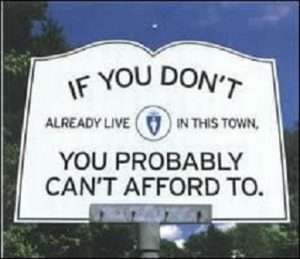
The Cato Institute has posted a non-paywalled version of my recent Washington Examiner article on "Foot Voting, Housing, and Affordability." I don't see a paywall blocking the article on the Examiner website. But some readers have told me they have encountered one. Regardless, you can now avoid any paywall by reading it at the Cato site. Here is an excerpt that summarizes the article:
Affordability was the biggest issue in the 2025 off-year elections.
In various forms, affordability played a major role in the winning state campaigns of center-left candidates such as Govs.-elect Mikie Sherrill (D-NJ) and Abigail Spanberger (D-VA). It also propelled a self-proclaimed democratic socialist, New York Mayor-elect Zohran Mamdani, to the leadership of the largest U.S. city, a major global financial hub. A year earlier, the affordability issue played a crucial role in President Donald Trump's 2024 win.
A central element of the affordability problem in recent years has been the high cost of housing, to the point where many people are prevented from living in the communities where they would like to be. Housing shortages increase the cost of living, prevent millions from "moving to opportunity," and curtail people's ability to "vote with their feet."
The problem of housing affordability is attracting increasing public attention. But many politicians in both parties continue to promote policies that make it worse: rent control in the case of many leftists, such as Mamdani, and tariffs and deportation of immigrants when it comes to Republicans, led by Trump. Both parties would do better to drop the counterproductive snake oil and instead focus on eliminating exclusionary zoning and other regulatory restrictions, which are the main causes of the crisis.
The rest of the article develops these points in detail, explaining the benefits of curbing exclusionary zoning, and also why rent control, deportations, and tariffs all actually exacerbate the housing crisis instead of alleviating it.
I cover some of these issues in greater detail in my recent Texas Law Review article, "The Constitutional Case Against Exclusionary Zoning" (coauthored with Josh Braver). We also published a shorter, nonacademic version in the Atlantic.
In Coffee County (Alabama) Circuit Court Judge Henry T. Reagan II's decision Nov. 19 in Wasmiah v. Raymond, a divorcing "husband request[ed] a court order preventing the wife from relocating the minor child to Saudi Arabia," but the court said no. There were many reasons, including various secular concerns about the father's conduct, but the court often mentioned the child's being a Muslim. I'd love to hear what readers think about this:
The parties were married on November 7, 2014. The husband was previously married and has adult children. The wife is a natural born citizen of Saudi Arabia and maintains a dual citizenship in the United States of America. The parties have … a son, born August 2, 2015. The husband is age 71 years and the wife is age 41 years. The parties have lived in Coffee County, Alabama for the entire duration of their 11-year marriage….
The wife described how she first met the husband while he was working in Saudi Arabia. She testified the husband had converted to the Muslim faith before the two met. After knowing each other for two years, the wife agreed to marry the husband and relocate to Coffee County. Alabama. She gave birth to their son after moving to the U.S.A.
The parties are both members of the Islamic faith and agreed to raise the minor child as a Muslim….
The child … was not involved in any church, mosque, or community activities other than attending public school….
This court received no evidence regarding how often the child conducts his five daily Islamic prayers required of its followers. But this court is generally aware that most elementary school children in the Enterprise City School System do not engage in daily Islamic prayers. Relocating the child to Saudi Arabia would have a positive impact on the child's ability to practice his Islamic Faith. The court believes the child would likely have a feeling that he "fit in" better in Saudi Arabia….
The evidence established the child has deeper roots in Saudi Arabia than in Alabama. The child has more family members and playmates in Saudi Arabia than in Alabama. His Islamic faith is more common in Saudi Arabia than in Alabama. The opportunity to practice and strengthen his faith is greater in Saudi Arabia than in Alabama….
Yet the facts in the article would equally have supported the headline, "Elite Private Colleges Apparently Hurt College-Bound Women, Trump May Stop That."
The federal Title IX provisions generally ban discrimination based on sex in federally supported higher education programs—but they specifically exempt sex discrimination by undergraduate private universities (and not just single-sex ones). And, according to Thursday's Washington Post article, there is evidence that elite private universities are taking advantage of that to discriminate in favor of men:
[Brown University] accepted nearly equal numbers of male and female prospects, though, like some other schools, it got nearly twice as many female applicants. That math meant it was easier for male students to get in—7 percent of male applicants were admitted, compared with 4.4 percent of female applicants, university data shows….
Nationwide, the number of women on campuses has surpassed the number of men for more than four decades, with nearly 40 percent more women than men enrolled in higher education, federal data shows…. Colleges that have been accepting men at higher rates are trying to avoid a marketing problem they fear will crop up if campuses become too female ….Colleges worry, "will men look at that and think, 'That's essentially a women's college, and I don't want to go there'?" [former private university head admissions officer Madeleine] Rhyneer said. "For the Browns and Columbias and highly selective and very competitive institutions, [gender imbalance] is a problem," she said. "They want to create what feels like a balanced climate."
There are more similar claims as to Columbia, Chicago, Vassar, and (less elite) the University of Miami, though the exact magnitude of any suspected preference is unclear; the article, for instance, cites a study saying that "The country's top 50 private colleges and universities have two percentage points more male undergraduates than the top 50 flagship public universities, which do not consider gender in admission." Of course, the data doesn't prove that universities are indeed using sex as a factor to prefer male applicants over females. (For instance, it's conceivable that women are more willing to apply to long-shot schools than men are, and that this explains the difference in the percentages of applicants of each sex who were admitted.) But the article treats the data as quite telling.
Yet the article is not framed as "elite private universities are apparently discriminating against women in admissions." And when the article notes that the "Trump administration has consistently included gender among the characteristics it says it does not want schools to consider for admissions or hiring, along with race, ethnicity, nationality, political views, sexual orientation, gender identity or religious associations," it doesn't quote anyone (other than, briefly, Linda McMahon, the Secretary of Education) who takes the view that maybe stopping this discrimination against women are a good idea.
Rather, the article is framed, as the headline suggests, as "Trump's attack on DEI may hurt college men, particularly White men." The first quote in the article is from the president of the American Council on Education, Ted Mitchell:
Thursday's decision in Salazar v. Majestic Realty Co., by California Court of Appeal Justice Helen Bendix, joined by Justices Frances Rothschild and Gregory Weingart, dealt with plaintiff's attempt to leaflet at large privately owned shopping centers. The California Supreme Court has (rightly or wrongly) held that the California Constitution protects such a right; so the court ended up applying pretty much the same rule (to oversimplify slightly) as to leafletting on public sidewalks. And the court held that plaintiffs' leaflets are indeed protected, reversing a trial court's decision to the contrary:
We disagree with the trial court that plaintiff's leafletting constitutes the unauthorized provision of legal advice such that it is not entitled to constitutional protection.
Plaintiff's first leaflet stated, inter alia, "Men are not legally and financially responsible for supporting a child that a woman chooses to have," and invited men to attend plaintiff's meetings to "Learn the truth. Learn your rights." His second leaflet described his meetings, stating, "I give a [one-hour] pre[sen]ta[t]ion in Riverside to teach men that they do have the r[e]pr[o]ductive right to choo[s]e too and why they are not r[e]sponsible for supporting a woman's r[e]pr[o]ductive d[ec]i[s]ion to have a child."
The trial court cited Howard v. Superior Court (Cal. App. 1975), which states, "The constitutional protection for free speech does not extend to the delivery of legal or medical or financial advice by persons not licensed to give such advice." The court also cited Business and Professions Code section 6126, which provides, "Any person advertising or holding himself or herself out as practicing or entitled to practice law or otherwise practicing law who is not an active licensee of the State Bar, or otherwise authorized pursuant to statute or court rule to practice law in this state at the time of doing so, is guilty of a misdemeanor …." The court found plaintiff's statement that men were not financially responsible for the care of their children was not only legal advice but also inaccurate legal advice and cited Penal Code section 270, which criminalizes the failure to provide necessary care to one's child. In light of these authorities, the court concluded plaintiff's leaflets are not constitutionally protected.
Plaintiff's leaflets cannot fairly be construed as offering legal advice. The dictionary definition of "advice" is a "recommendation regarding a decision or course of conduct." Although arguably the leaflets state plaintiff's interpretation of the law, the only recommendation the leaflets make is that the recipient attend plaintiff's presentation and/or contact him for further information. The leaflets do not advise recipients to cease paying child support. Rather, they present plaintiff's views on the law and invite the recipient to learn more at plaintiff's meetings….
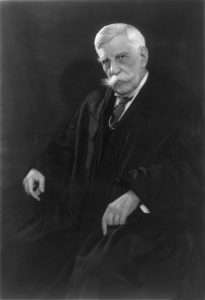
12/8/1902: Justice Oliver Wendell Holmes takes the oath.
What’s on your mind?
From retired Third Circuit Judge Thomas Vanaskie (who had also served on the Middle District of Pennsylvania), and who was serving as a court-appointed Special Master in In re: Valsartan Losartan, and Irbesartan Products Liability Litigation; the decision was handed down Sept. 3, but just came up on one of my searches:
Dr. Sawyer's citation to non-existent sources due to his use of an artificial intelligence tool without adequate verification of the sources generated by the artificial intelligence tool, while perhaps warranting an award of costs in favor the defense and permitting cross examination of Dr. Sawyer during the trial on his failure to verify the sources cited in his report, does not warrant exclusion of his opinions as they are otherwise the product of reliable scientific methodology and are supported by "good grounds," especially given "the liberal thrust of the Federal Rules of Evidence, the flexible nature of the Daubert inquiry, and the proper roles of the judge and jury in evaluating the ultimate credibility of an expert's opinion" ….
This was appealed to District Judge Renée Marie Bumb, who decided that the appeal was moot in light of her opinion granting summary judgment to defendant in this case, but "Defendants have preserved their position should Dr. Sawyer's testimony be presented in another action in this [Multi-District Litigation]." Here's an excerpt of the plaintiff's argument in favor of not excluding the expert opinion:
The court's rationale for dismissing the case simply ignores the plaintiffs' allegations.
I recently read the complaint and district court opinion in Yakoby v. Trustees of University of Pennsylvania. The plaintiffs brought several claims against Penn, including that Penn tolerated a hostile environment for Jewish students in violation of Title VI of the 1964 Civil Rights Act. The case is currently on appeal to the Third Circuit.
In June, district court judge Mitchell S. Goldberg dismissed the Title VI complaint with the remarkable assertion that "At worst, Plaintiffs accuse Penn of tolerating and permitting the expression of viewpoints which differ from their own."
I say remarkable, because the plaintiffs did in fact make a series allegations that went well beyond (and in most cases had nothing to do with) Penn "tolerating and permission the expression of viewpoints" the plaintiffs disagreed with, including:
(1) Penn received antisemitic emails threatening violence against Penn Hillel and failed to warn students about the threats.
(2) Penn allowed faculty to punish students for refusing to attend anti-Israel ideological events, and to harangue students in class in an abusive manner if they disagreed with the professors' extreme anti-Israel views.
(3) Penn Chabad house was defaced with antisemitic graffiti, with no public response from the university.
(4) A mob that had previously vandalized an Israeli-owned restaurant marched across campus chanting violent "intifada" slogans and defaced campus buildings with no resistance from the Penn administration, which failed to warn Jewish students of the mob or call in law enforcement despite its illegal acts.
(5) Penn threatened Jewish students who complained about discrimination or a hostile environment with retaliation if they pursued their complaints.
(6) Penn enforced its disciplinary rules in a discriminatory manner, for example punishing Professor Amy Wax for allegedly racist statements, but claimed that academic freedom preventing the university from punishing professors who made antisemitic statements. (FWIW, I think this is quite a strong allegation for a discrimination claim based on differential treatment, without needing a hostile environment twist).
The court could have taken these allegations at face value, as it's required to do at the motion to dismiss stage, and then decided whether the allegations, if proven, would in context show a severe and pervasive hostile environment as required under Title VI. Instead, for reasons known only to Judge Goldberg, the court simply ignored all of these allegations and pretended that the plaintiffs merely objected to being exposed to viewpoints they didn't like.
The ruling deserves a quick reversal. I was going to suggest assignment to a different judge on remand, but it turns out that Goldberg retired in September.
12/7/1941: Pearl Harbor is attacked.
What’s on your mind?
I just gave to Reason, to support their excellent coverage and analysis. We are editorially independent of Reason, and contributions to them don't support us. (We split our modest advertising revenue with them, and they provide technical and other services.) My donation just reflects my respect for the work they do; I don't always agree with it, but I think it's on balance a huge contribution to public debate.
You can donate yourselves here, if you are so inclined. To quote their pitch this year,
Welcome to the most wonderful time of the year: Reason's annual webathon, our end-of-year fundraising drive. All year long, we offer investigative reporting, sharp analysis, and arguments for free minds and free markets. We offer cheap subscriptions and give most of our content away for $0.
So why are we asking for your donations this week? Because Reason is stubbornly independent.
We don't take government money (gross), and we don't tailor our journalism to please anyone (as my inbox demonstrates every single day).
Your donations support high-quality journalism covering such important areas as civil liberties, free speech, the rule of law, politics, criminal justice, economics, innovation, and more. (Plus we cover a bunch of fun stuff, including video games, books, movies, and new tech.)
Turning out all the podcasts, videos, articles, TikToks, and newsletters you love isn't cheap. We have to keep Kennedy in bus tokens, Zach Weissmueller in plane tickets, Damon Root in law books, Emma Camp in poppy seed bagels, Matt Welch in tickets to baseball museums, and C.J. Ciaramella in FOIA fees. Plus everyone needs the occasional lawyer or cup of coffee. It all adds up, and your donations make it possible.
So please donate! We take U.S. dollars. We take crypto. We take PayPal. Whatever form of peaceful, consensual exchange you prefer.
If you'd like to make a donation RIGHT NOW you can do that RIGHT HERE.
Obviously, there is swag. (I know why you're here.)
- $50—Reason Plus subscription: ad-free browsing, early access to the magazine, commenting privileges, exclusive live online events, and archive access
- $100—Reason camper mug: everything at $50 plus a Reason-branded camper mug
- $250—Reason-branded scarf: everything at $100 plus a Reason-branded scarf
- $500—Jacob Sullum's new book: everything at $250 plus Beyond Control
- $1,000—Reason Weekend eligibility, a Torchbearer pin, podcast shoutout: everything at $500 plus Torchbearer status (including an invitation to Reason Weekend), a special Torchbearer pin, and a shoutout on The Reason Roundtable
- $5,000—Lunch with an editor: everything at $1,000 plus lunch with a Reason editor in Washington, D.C., or New York
- $10,000—Ticket to Reason Weekend (first-time attendees valued at $2,300): everything at $5,000 plus one ticket to Reason Weekend for first-time attendees.
As always, donations are tax-deductible, so you get the added benefit of sticking it to the taxman when you give.
From The Doc App, Inc. v. Leafwell, Inc., decided Nov. 26 by Judge Sheri Polster Chappell (M.D. Fla.):
The Court finds that Mr. Castro violated Rule 11(b) in filing the Motion for TRO and imposes sanctions. His motion contained fabricated citations, citations that do not contain quoted language, and citations that do not relate to the purported proposition. While Mr. Castro purports to "own" his mistakes and uses words like "respectfully," his defiant tone and condescending communications with and about his opposing counsel, Jody A. Stafford, undermine any supposed respectful sentiment. Rather than take responsibility for the legal inaccuracies permeating his Motion for TRO, Mr. Castro's response to the Order to Show Cause is as colossal a collection of excuses and projection as the Court has seen in 25 years on the bench.
Here are a few examples. He claims that Henson v. Allison Transmission, Inc. exists. The Court checked his original citation in the Motion for TRO. The Henson citation in the original motion—No. 6:16-cv-1223-Orl-41DCI, 2017 WL 59085 (M.D. Fla. Jan. 5, 2017)—does not exist. Sidestepping the issue, Mr. Castro explains that he intended to cite Henson v. Allison Transmission, No. 07-80382-CIV, 2008 WL 239153 (S.D. Fla. Jan. 28, 2008). That case does exist. But it does not matter what counsel intended to cite. It is neither the Court's nor opposing counsel's job to identify his fake citations and intuit what he meant.
Anyway, the Court read the version of Henson that Mr. Castro claims
stands for the proposition that a party may pursue injunctive relief when continued harm to its business and customer base is likely without court intervention. It discusses the court's authority to act where equity demands it, even in early stages of litigation. The citation error was clerical—not substantive. A copy of this case is incorporated hereto as Exhibit A.
Defendant argues that this version "does not concern injunctive relief whatsoever." Yet again, Defendant is correct. Mr. Castro's inaccurate characterization of Henson is beyond perplexing. The Henson he intended to cite does not stand for the proposition in his original explanatory parenthetical: "conduct violating established regulations is unfair under FDUTPA." Rather, Henson concerns a plaintiff's request to review his lemon law case and involves breach of warranty-based claims, the Magnuson-Moss Warranty Act, and the Uniform Commercial Code. See Henson, 2008 WL 239153, at *2. The word "injunction" does not appear once. Nor do the terms "unfair," "deceptive," "FDUTPA," or "regulation." Ultimately, Mr. Castro misrepresents Henson to the Court not once, but twice.
12/6/1865: The 13th Amendment is ratified.
What’s on your mind?
Celebrate your independence with a subscription to Reason magazine, your most trusted source of honest, insightful news and analysis.




