
The Supreme Court Agrees To Address the Constitutionality of 'Assault Weapon' Bans
The case could settle the long-simmering issue of whether the Second Amendment covers commonly owned but politically disfavored rifles.

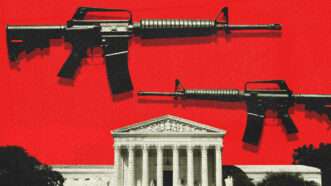
The case could settle the long-simmering issue of whether the Second Amendment covers commonly owned but politically disfavored rifles.
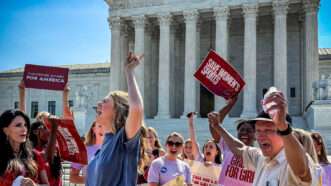
Plus: A 29-year-old DSAer wins, San Francisco's disappearing babies, and more...
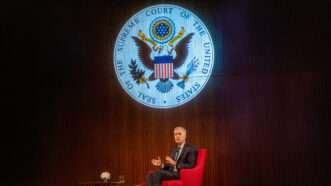
The justice criticizes the Court’s endorsement of coercive plea bargaining and its embrace of dubious Fourth Amendment doctrines.
Robby Soave and Amber Duke discuss the Supreme Court’s rulings on birthright citizenship and transgender athletes.

The Supreme Court has "no shortage of tools" to enforce the separation of powers, Justice Neil Gorsuch notes. "The only real question is whether we will use them."

Donald Trump and Zohran Mamdani both do their bit to sabotage healthy housing policy.
Understanding Trump v. Barbara.
The Supreme Court extended presidential control over federal agencies. What could go wrong?
The justice argues that the "reasonable expectation of privacy" test and the third-party doctrine are indefensible in theory and unworkable in practice.
Understanding Chatrie v. United States.
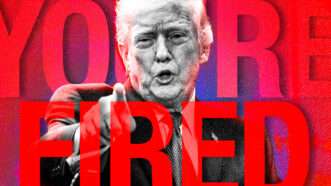
In a pair of decisions on Monday, the Supreme Court ruled that presidents have full authority to fire heads of executive branch agencies—but that the Fed is different.
As expected, the Supreme Court overturns Humphrey's Executor, but reaffirms the independence of the Federal Reserve.

Thousands of lawsuits alleging Roundup causes cancer are likely dead after Supreme Court Monsanto ruling.
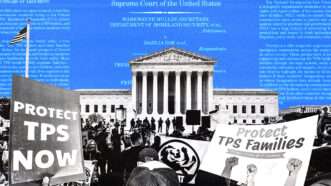
Understanding the 6–3 decision in Mullin v. Doe.
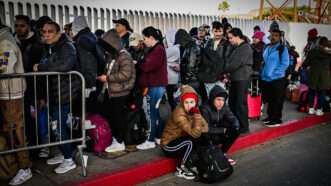
Justice Samuel Alito compared asylum seekers who haven't made it across the border to a running back being tackled on the 1-yard line.

The decision means similar laws in other states likewise violate the Second Amendment, and it casts doubt on the constitutionality of location-specific gun bans that cover a lot of territory.
With the Birthright Citizenship case still undecided, the Trump Administration has prevailed in every other immigration case before the Court this term, and some are quite consequential.
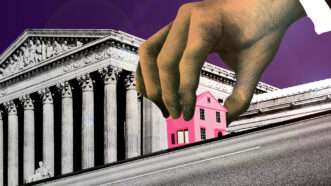

The Supreme Court's decision in United States v. Hemani could open the door to relief for cannabis consumers convicted of illegal gun possession.
Is the D.C. Circuit willing to allow "conservative" panel decisions on hot-button issues to stand? And is en banc review more than a way to ensure further review at One First Street?
The Supreme Court could be poised to decide whether it's you or Big Tech companies.
The decision is a modest but welcome step toward rectifying the injustice of criminalizing conduct that violates no one’s rights.

The Pung family of Isabella County, Michigan, maintained they were entitled to fair market value. The high court disagreed, but with a twist.
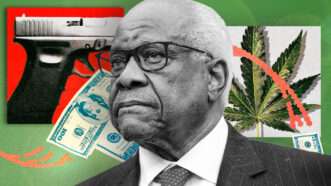
Even under the Supreme Court's highly elastic understanding of that clause, Thomas says, such laws do not qualify as regulation of interstate commerce.
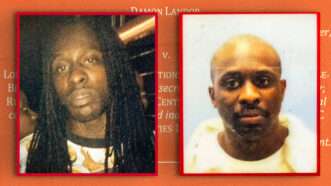
Understanding the stakes of Landor v. Louisiana Department of Corrections.

The conservative justice continues to wage a lonely legal crusade over the Commerce Clause.
The Supreme Court ruled that "an agreement not to appeal a sentence is unenforceable when it would result in a miscarriage of justice."
The Supreme Court's unanimous decision in Hemani.

The unanimous decision upholding the gun rights of cannabis consumers is striking given the Supreme Court's long history of accommodating the war on drugs.
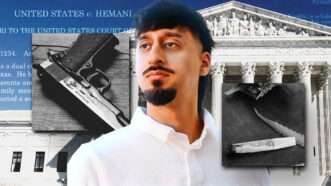
A landmark win for the right to keep and bear arms in United States v. Hemani.
Leave it to the Rooker-Feldman doctrine to divide the justices in an unusual way.
Understanding the stakes in Kian v. Florida

Richard Hershey is asking the Supreme Court to overrule a 5th Circuit decision that blocked the lawsuit provoked by that obvious First Amendment violation.
The proposal was nixed only after White House Staff Secretary Will Scharf explained why it was legally dubious.
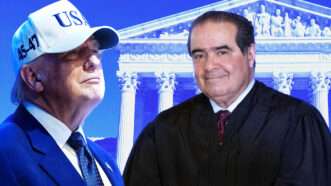
How a four-decade-old dissent may now help the president fire independent federal agency heads at will
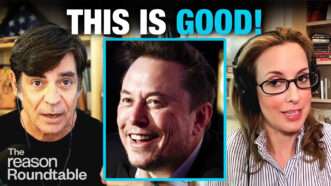
Plus: the Supreme Court's biggest pending decisions, renewed court-packing debates, and the economic fallout from the Iran war
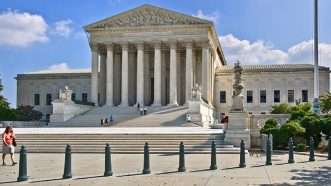
These arguments are relatively weak. And to the extent they are valid, they can be addressed without changing the Court's ideological balance.

The JAWBONE Act would let Americans sue government officials who try to restrict their speech by pressuring social media platforms, broadcasters, or AI companies.
Three different VC bloggers are among the speakers: Jonathan Adler, Keith Whittington, and myself.
Court-packing would cause great harm, including by boosting power-grabbing presidents like Trump. Callais's flaws are better addressed by other means.
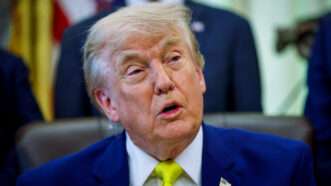
The president has repeatedly argued that courts have no business deciding whether his actions are legal.
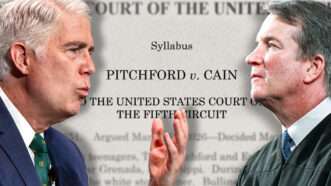

The court unanimously ruled that penile plethysmography is unreliable and inadmissible as evidence of recidivism risk.
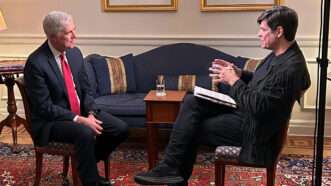
"There was nothing inevitable about it. Absolutely nothing," the Supreme Court justice tells Reason's Nick Gillespie.
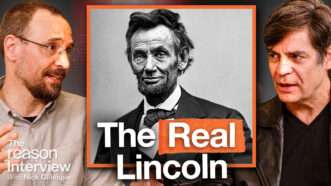
Damon Root discusses the path to emancipation, the struggle to secure freedom after the Civil War, and the constitutional changes that remade America.

Plus: a few words about my new book
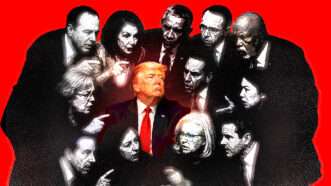
The president’s habitual attempts to criminalize dissent hark back to tyrants of yore.
The two judicial conservatives continue to disappoint criminal justice reform advocates.
Celebrate your independence with a subscription to Reason magazine, your most trusted source of honest, insightful news and analysis.




