
Banning Flock Won't Be Enough Without Police Reform
It was Flock that led cops to the wrong woman. It was police who ignored the other evidence and jailed her.


It was Flock that led cops to the wrong woman. It was police who ignored the other evidence and jailed her.

A federal appeals court says it's legal for federal agents to scroll through your phone and take pictures of its contents without a warrant or suspicion of criminal activity.

Recent comments by Greg Abbott and Ron DeSantis reflect a bipartisan backlash against warrantless surveillance.
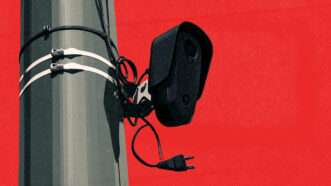
Criticism from Trump allies and recent survey results show that resistance to widespread deployment of automated license plate readers spans the political spectrum.

Sonoma County launched the program to find illegal cannabis grows, but it secretly morphed into a wider search for minor building code violations.
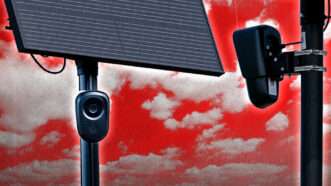
Americans are starting to recognize the dangers of pervasive surveillance by automated license plate readers.

In a federal lawsuit, Byron Prophet argues that police supervisors "turned a blind eye" for years as Gerald Goines framed innocent people.

The Kansas Justice Institute argues that Wichita's "warrantless ALPR dragnet surveillance program" violates the state constitution's privacy protections.
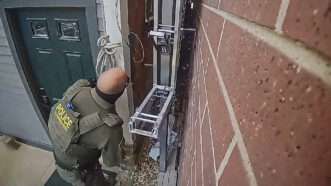
Will they be held responsible for the illegal search and the damage to his property?

The justices said the "open fields" doctrine, a sweeping exception to constitutional privacy protections, does not apply in the Keystone State.

Cops stopped a semitruck because of a drug tip, then tried to dress the illegal search up as a routine inspection.
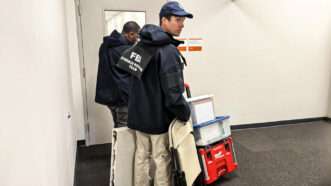
The decision rebukes the DOJ for demanding "private and sensitive" information about Georgia election workers "with no legitimate law enforcement purpose."
Neil Gorsuch proposes an alternative to a Fourth Amendment standard that has proven to be an unreliable safeguard against government snooping.

The officer's avowed reasons for killing Dennis Tuttle and Rhogena Nicholas were contradicted by the physical evidence.
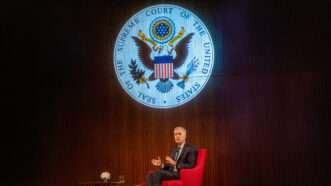
The justice criticizes the Court’s endorsement of coercive plea bargaining and its embrace of dubious Fourth Amendment doctrines.
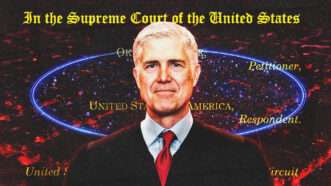
The justice argues that the "reasonable expectation of privacy" test and the third-party doctrine are indefensible in theory and unworkable in practice.
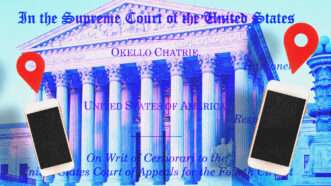
Understanding Chatrie v. United States.
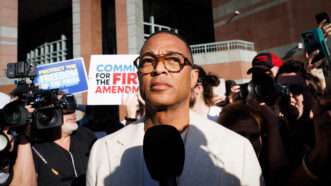
After a magistrate judge said a DHS investigator had failed to establish probable cause, the government decided it did not need the YouTube and iPhone records after all.
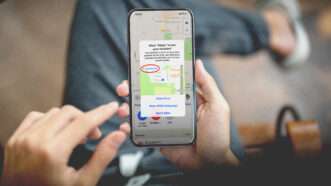
"Geofence" searches illustrate the perilous combination of modern technology and deference to law enforcement.
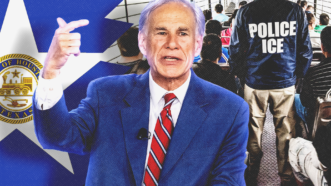
The governor is threatening to defund the police because of an ordinance noting that an ICE administrative warrant "does not justify a stop, arrest, or continued detention" by city officers.
The president once said he wanted to kill warrantless electronic spying. So much for that.

Two petitions ask the Supreme Court to uphold the remedy required by the Fifth Amendment.

But for a fraudulent and misleading warrant affidavit, Taylor would not have been killed during a fruitless late-night drug raid.

“Officers don’t have the blanket authority to arrest anyone who runs from them,” says an attorney from the Institute for Justice.

Technological innovations allow the authorities to see who has visited whole geographic areas.

The Department of Homeland Security argues it doesn't need a warrant to enter a construction site.
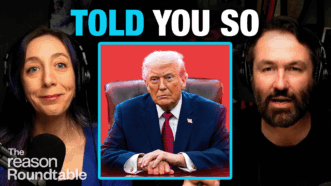
Plus: Speaker of the House Mike Johnson embraces warrantless ICE searches, the Super Bowl halftime culture war, and Trump continues funding the Department of Education

The 4th Circuit held that the doorstep of an apartment did not qualify as protected "curtilage" under the Fourth Amendment.
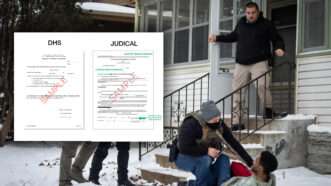
Under this understanding of the Fourth Amendment, an attorney at the Institute for Justice says, “there is little left of the rights of Americans to be secure in their houses.”

Despite their general ignorance of constitutional law, bears pose a much less grave threat to your civil liberties than humans do.
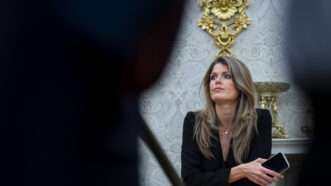
A magistrate judge says the government’s missteps may warrant dismissal of the charges against the former FBI director.

The former vice president liked being compared to the supervillain as a joke. But he had seriously villainous effects on millions of people in real life.

Even well-intentioned “community caretaking” can’t justify ignoring the Fourth Amendment.
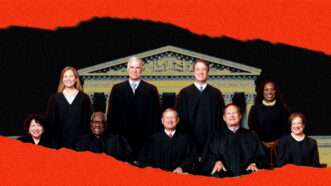
In a new Supreme Court term packed with big cases, these disputes stand out.

The agency has been expanding its surveillance capabilities without a public explanation.

A federal judge cleared the way for Jennifer Heath Box's lawsuit against the cops who misidentified her as a fugitive, despite a "mountain of evidence" that they had the wrong woman.

The war on drugs authorizes police conduct that otherwise would be readily recognized as criminal.
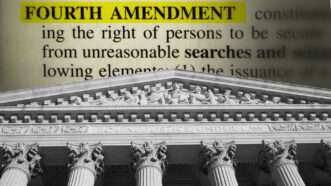
SCOTUS will soon decide.

The former FBI director's cringey Instagram photos are not an "exigent circumstance" that allows law enforcement to circumvent the Constitution.
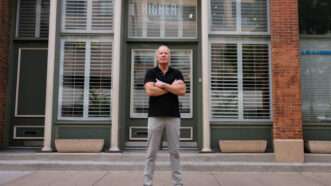
Michael Mendenhall wants the Supreme Court to reconsider a precedent that allows home invasions based on nothing but hearsay.

The administration's lawyers claim that this was justified by Khalil's likelihood of escape.

The woman has since recanted her allegations.

Already this year, the agency has allegedly conducted a warrantless raid in Newark and several warrantless arrests in the Midwest.

Federal agents are allowed to search private property without a warrant under this Prohibition-era Supreme Court precedent.
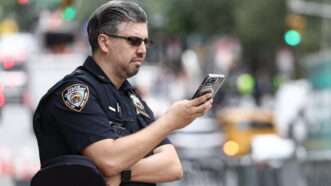
Without a warrant and specific proof of incriminating evidence, police should never be allowed past your phone’s lock screen.

That amounts to a life sentence for Gerald Goines, who instigated the no-knock raid that killed Dennis Tuttle and Rhogena Nicholas by falsely accusing them of selling heroin.
Similar scandals across the country suggest the problem is widespread.
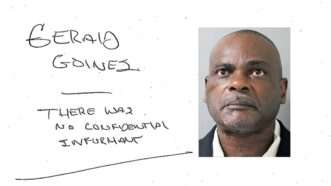
The jury accepted the prosecution's argument that Dennis Tuttle and Rhogena Nicholas died because of Gerald Goines' fraudulent search warrant affidavit.
Celebrate your independence with a subscription to Reason magazine, your most trusted source of honest, insightful news and analysis.




