The Volokh Conspiracy

Mostly law professors | Sometimes contrarian | Often libertarian | Always independent | Est. 2002

The Volokh Conspiracy

Free Speech

Protecting People from Their Own Religious Communities: Subpoenas, Political Disclosures, Public Records

|

This new article of mine will be coming out next year in the Journal of Law and Religion, and I thought I'd serialize it here; there's still plenty of time for editing, so I'd love to hear people's feedback. Here's the rest of Part I.

[* * *]

Let's now turn to some other areas beyond pseudonymity of litigants.

[A.] Allowing Subpoenas Used to Identify Defendants

So far we have discussed people who want to call on the coercive power of the court system without having to name themselves as plaintiffs. But people may also want to stop coercive subpoenas aimed at uncovering their identities as potential defendants. Those people's concerns are often just about being fired or professionally blacklisted if they are identified as having publicly criticized their employer, or about being retaliated against by the government if they are identified as having publicly criticized government officials.[1] But sometimes the defendants also argue that they would be ostracized by their religious communities.[2]

Some defendants in lawsuits claiming copyright infringement by viewers and sharers of pornographic films, for instance, have sought pseudonymity based in part on the argument that "having my name or identifying or personal information further associated with the [porn film] is embarrassing, damaging to my reputation in the community at large and in my religious community"[3] (though it's not clear how much weight that argument had in the courts' decisions). Likewise, a potential defendant in a copyright case brought by the Jehovah's Witnesses sought anonymity in part because "if Watch Tower discovers his identity, the revelation of his identity would damage or destroy his relationships with friends and family who are active members of the Jehovah's Witness community"—"he has been part of the Jehovah's Witness community his whole life, and so the pain of social exclusion would be overwhelming."[4] A similar argument was made by an Orthodox Jewish blogger ("Orthomom") whose identity was being sought, as a potential libel defendant, via a subpoena directed to her blog hosting company.[5]

Read More

Free Speech

1st Cir. Ruling Is Promising for Pseudonymity in Title IX Cases Alleging Biased Sex Assault Investigations

|

From yesterday's decision of the First Circuit in Doe v. MIT, by Judge Bruce Selya, joined by Judges Rogeriee Thompson and Gustavo Gelpi (note that I submitted an amicus brief in the case, in support of neither side):

[I.] The court reaffirms that there is a "strong presumption against the use of pseudonyms in civil litigation," but declines to follow many other courts in saying that this stems directly from the Federal Rules of Civil Procedure, or to the right of access to court records involved in sealing decisions. Rather, the court reasons,

[F]ederal courts enforce the presumption against party pseudonyms in civil litigation under their inherent power to "formulate procedural rules not specifically required by the Constitution or the Congress." This inherent power applies foursquare to the presumption against pseudonymity, which is a "polic[y] intrinsic to the litigation process." Courts have distilled such a presumption from a brew of custom and principle, including the values underlying the right of public access to judicial proceedings and documents under the common law and First Amendment….

Judicial hostility to a party's use of a pseudonym springs from our Nation's tradition of doing justice out in the open, neither "in a corner nor in any covert manner." In defending that tradition, we have explained that "[p]ublic access to judicial records and documents allows the citizenry to 'monitor the functioning of our courts, thereby insuring quality, honesty and respect for our legal system.'" "Identifying the parties to the proceeding is an important dimension of publicness." That is because—to a certain degree—letting a party hide behind a pseudonym dims the public's perception of the matter and frustrates its oversight of judicial performance.

Lacking knowledge of the parties' names, the public could learn virtually nothing about a case outside the facts and arguments in the record. The record, though, is not the alpha and omega of public concern. To take one example of important extra-record data, the real-world aftermath of a suit will sometimes bear upon the assessment of whether justice was done. Another example is the kind of institutional rot that is scrubbed from the record: judicial conflicts of interest, ex parte contacts, and the like. Anonymizing the parties lowers the odds that journalists, activists, or other interested members of the public would catch wind of such mischief. See Globe Newspaper Co. v. Pokaski (1st Cir. 1989) (acknowledging "the contribution to governance of investigative reporting" regarding such matters).

An even thornier issue involves protecting the appearance of fairness in judicial proceedings. "Litigating behind a curtain creates a shroud of mystery, giving the impression that something secret is going on." Secrecy breeds suspicion. Some may believe that a party's name was masked as a means of suppressing inconvenient facts and that the court was either asleep at the wheel or complicit in the cover up. It is no answer to dismiss such beliefs as conspiracy theories because "justice must satisfy the appearance of justice." Distrust is toxic to the judiciary's authority, which "depends in large measure on the public's willingness to respect and follow its decisions." A judicial system replete with Does and Roes invites cynicism and undermines public confidence in the courts' work.

[II.] The court goes on to elaborate the following approach to when the presumption can be rebutted, which is quite different from the multi-factor balancing tests that many courts follow:

Read More

Free Speech

"Fuck" Belongs to Us All; or the "Ubiquity of FUCK" Doctrine

"No ordinary word."

|

In Iancu v. Brunetti, the Patent & Trademark Office refused to register the trademark FUCT, because federal trademark law prohibited registration of "immoral[] or scandalous" marks; unconstitutionally viewpoint-discriminatory, in violation of the First Amendment, held the Supreme Court. But Monday, Erik Brunetti was denied registration of the trademark FUCK ("for [c]arrying cases for cell phones; carrying cases specially adapted for pocket calculators, laptops and cellphones; cases adapted for mobile phones; cases for spectacles and sunglasses; cell phone cases; spectacles and sunglasses"), for a different reason—the word will

fail to function as a trademark [because] it is a common term or phrase that consumers of the goods or services identified in the application are accustomed to seeing used by various sources to convey ordinary, familiar, or generally understood concepts or sentiments…. Such widely used messages will be understood as merely conveying the ordinary concept or sentiment normally associated with them, rather than serving any source-indicating function. See, e.g., D.C. One Wholesaler, 120 USPQ2d at 1716 (sustaining opposition to registration of I ♥ DC for clothing because it "has been widely used, over a long period of time and by a large number of merchandisers as an expression of enthusiasm, affection or affiliation with respect to the city of Washington, D.C." and thus would not be perceived as a source-indicator); In re Volvo Cars of N. Am., Inc., 46 USPQ2d at 1460-61 (affirming refusal to register DRIVE SAFELY for automobiles because it would be perceived as an everyday, commonplace safety admonition).

The PTO decision canvasses a great deal of evidence (including many illustrations), and concludes:

A. Ubiquity of FUCK

The evidence in this case shows that the word FUCK is no ordinary word, but rather one that has acquired a multitude of recognized meanings since its first recorded use, and whose popularity has soared over the years, particularly in recent times, transforming what was once a taboo word to be spoken in hushed tones to one that is trendy and cosmopolitan….

Read More

Why the IRA Does Not "Grant" the EPA "Broad Authority to Shift America Away from Burning Fossil Fuels"

A New York Times story creates a false impression about the effects of the Inflation Reduction Act's Climate Provisions

|

On Monday, the New York Times published a story proclaiming that the Inflation Redution Act is a "game changer" because it amended the Clean Air Act to "make new regulations much tougher to challenge in court." This would be an incredibly important development if it were true, but it's not, for reasons I will explain.

Here is how the NYT story begins:

When the Supreme Court restricted the ability of the Environmental Protection Agency to fight climate change this year, the reason it gave was that Congress had never granted the agency the broad authority to shift America away from burning fossil fuels.

Now it has.

Throughout the landmark climate law, passed this month, is language written specifically to address the Supreme Court's justification for reining in the E.P.A., a ruling that was one of the court's most consequential of the term. [West Virginia v. EPA, which I discussed here.] The new law amends the Clean Air Act, the country's bedrock air-quality legislation, to define the carbon dioxide produced by the burning of fossil fuels as an "air pollutant."

That language, according to legal experts as well as the Democrats who worked it into the legislation, explicitly gives the E.P.A. the authority to regulate greenhouse gases and to use its power to push the adoption of wind, solar and other renewable energy sources.

There is quite a bit that is problematic about this framing, and what follows.

The IRA does include multiple provisions designed to accelerate the reduction of greenhouse gas emissions, including multiple provisions (in Title VI of the law) that amend the Clean Air Act to create various incentive programs. Most of these are various types of subsidy programs, though one authorizes a "waste emissions charge" on excess methane emissions from oil and gas facilities. The IRA does not grant the EPA new regulatory authority with regard to GHGs. Nor does it address the Supreme Court's reasons for rejecting a broad view of EPA's regulatory authority in West Virginia v. EPA.

Nor is it quite accurate to say the IRA "amends the Clean Air Act . . . to define the carbon dioxide produced by the burning of fossil fuels as an 'air pollutant.'" Nothing in the IRA modifies the CAA's existing definition of air pollutant in Section 302 of the Act.

What the IRA does instead is to provide several section-specific definitions of greenhouse gases that read like this:

Definition of Greenhouse Gas.--In this section, the term `greenhouse gas' means the air pollutants carbon dioxide, hydrofluorocarbons, methane, nitrous oxide, perfluorocarbons, and sulfur hexafluoride.

This language does not speak at all to the issues in WVa v. EPA, as nothing in that case turned on whether greenhouse gases are air pollutants. Moreover, these definitional provisions - which refer to various air pollutants as greenhouse gases for the purposes of the specific sections of the CAA in which they are included - do not address or adjust any of the CAA provisions at issue in WVa. Nor do these provisions alter or affect any of the CAA provisions at issue in prior legal challenges to GHG regulations, nor do they address any of the provisions the EPA is likely to use for future GHG regulations.

Later on in the article, it is suggested that because these provisions define greenhouse gases as a set of air pollutants, this makes clear that GHGs may be considered air pollutants under the Act, and that this will be "'a powerful disincentive' to new lawsuits." Don't bet on it.

In Massachusetts v. EPA the Supreme Court concluded that the CAA's definition of "air pollutant" is sufficiently broad to include greenhouse gases, at least for the purposes of Section 202. This conclusion was reaffirmed in the Supreme Court's UARG v. EPA decision, albeit with the important caveat that just because GHGs are air pollutants under some provisions of the CAA, they are not air pollutants under other portions of the Act.

The new IRA provisions are certainly consistent with the Mass v. EPA holding, but they are consistent with the UARG holding as well. Indeed, because the relevant definitional provisions in the IRA are all section-specific, they actually reinforce UARG's conclusion that GHGs may be air pollutants for some portions of the Act, but not others. In other words, these provisions will not stop red-state AGs and others from challenging efforts to regulate GHGs through provisions of the CAA that had not been used previously for that purpose. There is one provision in the IRA that references EPA's use of "existing authorities" of the CAA to reduce GHGs, but that too is as consistent with UARG and WVa. as it is with Mass v. EPA, and so does not move the needle much either.

These provisions are not going to discourage litigation, nor do they do much of anything to protect future EPA regulation of GHGs from legal attack. Serious challenges to future EPA regulations will not seek to overturn Mass v. EPA or claim that the EPA has no authority to regulate GHGs. Rather, these suits will (as in UARG) challenge the EPA's authority to regulate GHGs under specific provisions of the CAA, argue that the EPA's regulations are arbitrary or unreasonable, or (as in WVA v. EPA) that the manner in which the EPA is seeking to regulate GHGs exceeds the scope of the EPA's power. Nothing in the IRA will help the EPA fend against these sorts of arguments.

It is fair to argue that the IRA evinces Congress's intention that the EPA concern itself with greenhouse gas emissions, including from the power sector. But that's not the terrain upon which future challenges to EPA regulation of greenhouse gases will be fought. If, for example, the EPA responds to WVa v. EPA by issuing new regulations mandating co-firing or the use of carbon capture technology at coal-fired power plants, those rules will be challenged on various grounds, and some of these challenges will be serious, but the serious challenges will not include the claim that GHGs cannot be air pollutants under the CAA.

There is one way there IRA may help the EPA make new regulations stick, but it has nothing to do with the new CAA language hyped by the NYT. That is that insofar as the IRA's subsidies reduce the costs of reducing GHG emissions, the EPA may be able to adopt more aggressive regulations without risking judicial invalidation. (Robinson Meyer notes this point here, though I disagree with those portions of the article that echo the NYT's mistaken analysis.)

One other (somewhat pedantic) point about the NYT story is that it misrepresents how endangerment works for purposes of triggering regulation under the CAA. The story claims that the EPA's 2009 conclusion that GHGs could be reasonably anticipated to endanger health or welfare "meant carbon dioxide could be legally defined as a pollutant and regulated." This is backwards. It is not that something must be considered dangerous before it can be considered an air pollutant under the Act. Rather, if something is an air pollutant (because it satisfies the Act's definition, which does not require dangerousness), then the EPA may regulate that pollutant under certain CAA provisions if the EPA subsequently concludes that emissions of that pollutant cause or contribute to air pollution that may endanger health or welfare. In other words, just because something is an air pollutant under the Act does not necessarily mean that it is dangerous or that the EPA can or must regulate it.

None of this means the IRA is not significant climate legislation. It is not only the most significant climate legislation ever enacted by Congress [low bar, admittedly]. It represents the most serious and substantial legislative effort to begin decarbonizing the American economy, and this effort may well bear fruit. (For a sober take on its likely effect, see Ron Bailey's assessment.) But the significance of the IRA as a climate policy measure is not that it bulletproofs the EPA against legal challenges to its regulations, because that is not what the IRA does.


Vaping

Eleventh Circuit Finds FDA Treatment of Vaping Product Marketing Applications to be Arbitrary & Capricious

The likelihood that the Supreme Court considers the FDA's treatment of vaping products is increasing.

|

Yesterday, a divided panel of the U.S. Court of Appeals for the Eleventh Circuit concluded that the Food and Drug Administration was arbitrary and capricious when it rejected marketing applications from several vaping companies. Because the FDA has deemed vaping products to be "tobacco products" for purposes of federal law, FDA approval is necessary for such products to be sold. The Eleventh Circuit's decision in Bidi Vapor LLC v. FDA, deepens a conflict among the circuit courts over how the FDA should evaluate marketing applications for vaping products and makes eventual Supreme Court review of the question more likely.

Chief Judge Bill Pryor wrote the opinion for the court, joined by Judge Brasher. Judge Rosenbaum dissented (in what is the first dissent I can recall that begins with an all-caps "SPOILER ALERT.")

The basis for the Eleventh Circuit's decision is fairly straight-forward: In rejecting the vaping product applications, the FDA expressly refused to consider the firms' marketing and sales-access-restriction plans to reduce youth access to and consumption of their products. According to the FDA, such measures are not sufficient to reduce youth access, so they did not need to be considered, even though the relevant statute requires the agency to consider whether new tobacco products will attract consumers who do not currently use tobacco products and the FDA had issued prior guidance documents indicating that marketing and sales-access-restrictions were "factors" the FDA "intend[ed] to consider" when evaluating applications, and applicants relied upon the FDA's guidance when preparing their applications.

While the FDA was free to conclude that the marketing and sales-access-restrictions proposed by the various applicants were insufficient, it was not free to simply disregard those parts of the applications. To do so would be to ignore a relevant aspect of the question before the agency, which is a textbook example of arbitrary and capricious decision-making.

The panel majority not only disagreed with their dissenting colleague. They also disagreed with recent decisions from the U.S. Courts of Appeals for the Fifth Circuit and D.C. Circuit rejecting similar claims from vaping companies.  Among other things, the Eleventh Circuit disagreed with its sister circuits' interpretation of the FDA's 2020 guidance to concerning product applications. This, combined with the string of other decisions in which federal appellate courts have found fault with the FDA's treatment of vaping product applications, makes me suspect this question could soon be ripe for Supreme Court review.

Free Speech

N.C. Election Criminal Libel Statute Enjoined Pending Appeal

|

From yesterday's decision in Grimmett v. Freeman, entered by Judge Toby Heytens, joined by Judge Albert Diaz:

In 2020, Josh Stein and Jim O'Neill were engaged in a heated campaign to serve as attorney general of North Carolina. The Stein campaign ran an advertisement the O'Neill campaign believes was false. Stein ultimately won the election.

Now, nearly two years later, the district attorney's office in Wake County has indicated that it plans imminently to seek an indictment against Josh Stein's campaign (and others involved in producing the advertisement) under a state criminal libel statute. The potential targets of the investigation sought a preliminary injunction against the district attorney, which the district court denied. The Stein campaign and its affiliates appealed and seek an injunction pending appeal.

We conclude plaintiffs have satisfied the demanding standard for obtaining an injunction pending appeal. Most critically, plaintiffs have made a "strong showing that [they are] likely to succeed on the merits" of their First Amendment challenge. Nken v. Holder (2009) (quotation marks omitted)…. The North Carolina statute at issue criminalizes publishing "derogatory reports with reference to any candidate in any primary or election, knowing such report to be false or in reckless disregard of its truth or falsity." Because this statute regulates "core political speech," First Amendment concerns are at their "zenith" and we must subject the statute to particularly careful constitutional examination.

Like the district court, we acknowledge that a nearly 60-year-old decision of the Supreme Court states that a "lie, knowingly and deliberately published about a public official" may potentially be the subject of a criminal prosecution. Garrison v. Louisiana  (1964) (emphasis added). Plaintiffs have questioned whether that holding remains viable under modem First Amendment doctrine. But, even accepting Garrison as good law, that same decision made clear that the First Amendment does not permit a State to criminalize "true statements," even those "made with 'actual malice.'" And it appears the law challenged here does just that by criminalizing a "derogatory report" made either "knowing such report to be false or in reckless disregard of its truth or falsity." {At this point, we are not persuaded by the district court's apparent conclusion that "derogatory" necessarily means false. The ordinary meaning of "derogatory" is "[l]essening in good repute; detracting from estimation; disparaging." Derogatory, The Practical Standard Dictionary of the English Language (1936); see also State v. Petersilie, 432 S.E.2d 832, 834, 842 (N.C. 1993) (holding that a statute criminalizing "derogatory charges against candidates" "clearly does" cover "even truthful statements"). Plenty of perfectly true statements might reflect badly on a person and lessen their good repute.}

My quick reaction at this point:

Read More

Parental Rights

Father's Tort Claim Based on Alleged Falsification of Drug Test Results Can Go Forward

|

From Avendano v. Shaw, decided Friday by a five-Justice division of the Alabama Supreme Court (in an opinion by Justice James Mitchell, joined by Chief Justice Tom Parker; Justices Greg Shaw, Tommy Bryan, and Brady Mendheim concurred in the result, but without a separate opinion):

This case stems from the serial fraud of Brandy Murrah, the former owner of a drug-screening laboratory who is now in prison for falsifying test results. The plaintiffs, Angel Avendano and Sandy Knowles, claim to be victims of Murrah's fraud and allege that social worker Victoria Shaw conspired with Murrah to falsify the results of their drug tests…. {For purposes of this appeal, we view the record in the light most favorable to Avendano and Knowles, and we resolve factual disputes and ambiguities in their favor to the greatest reasonable extent.}

Angel Avendano is the father of two children who, during the time frame relevant to this case, had been placed in foster care. Though the children's foster parents were their primary caregivers, Avendano retained visitation rights and would regularly host the children at his home. Avendano's employer, Sandy Knowles, was close with Avendano and would help care for the children while they were staying with him.

During the children's time in foster care, one of the foster parents came to believe that the children's biological mother (Avendano's ex-wife) had been using illegal drugs around the children. The foster parent decided to give the children an at-home drug test, which allegedly turned up positive. The Dale County Department of Human Resources ("DHR")—the agency charged with providing child-protective services and overseeing the county's foster-care system—soon launched an investigation. As part of that investigation, DHR social worker Victoria Shaw (who all parties agree is an employee of the State of Alabama for purposes of this appeal) went to Avendano's house, accompanied by Brandy Murrah, and asked Avendano and Knowles to submit to drug tests administered by Murrah. Believing that the tests were legitimate, Avendano and Knowles agreed.

Read More

Religion and the Law

Georgia Supreme Court on Sincerity and Religious Exemptions

An unusually detailed discussion of what factors court should consider in deciding whether a religious exemption request is sincere (generally a threshold requirement for the request to stand any chance of prevailing).

|

From In the Interest of C.C., decided yesterday by the Georgia Supreme Court, in a unanimous opinion written by Presiding Justice Nels Peterson:

The Division of Family and Children Services (DFCS) is the temporary custodian of Appellants John and Brittani Chandler's three children. {The Lumpkin County Juvenile Court temporarily removed the Chandlers' children into DFCS's custody on January 6, 2021. The Chandlers consented to an adjudication that the children were dependent within the meaning of OCGA § 15-11-2 (22), and that it was contrary to the welfare of the children to be returned to a home of a parent at that time.}

The Chandlers argued that, even though DFCS had temporary custody, they were entitled to "object on religious grounds to DFCS's immunization of their children," under Georgia law and the U.S. Constitution; but the juvenile court rejected that claim, partly based on a finding that the Chandlers' religious objections were insincere:

[T]he Court finds that [the Chandlers'] argument that vaccination of the dependent children by the Department violates their free exercise of religion is specious at best. The Court finds that [the Chandlers] have not established by a preponderance of the evidence that they have a religious objection or even observe a particular religion. Contrary to, the evidence shows that they previously attended church but are no longer active, are against vaccination by personal philosophical choice based at least in part on an alleged perception after the oldest was vaccinated and that [John] is a self-proclaimed conspiracy theorist.

Wrong approach, the Georgia Supreme Court held:

Read More

Free Speech

Protecting People from Their Own Religious Communities: Pseudonymity of Litigants

|

This new article of mine will be coming out next year in the Journal of Law and Religion, and I thought I'd serialize it here; there's still plenty of time for editing, so I'd love to hear people's feedback. Here's Part I.A.

[* * *]

Let's begin by laying out the areas where this issue can arise, starting with pseudonymity in litigation.

Generally speaking, American law requires all parties to a lawsuit to be named, so that the public can better monitor the activities of public courts deciding cases using public funds, in the public's name, and relying on government coercive power.[1] Indeed, some courts see this as a facet of members of the public's First Amendment rights to access court records.[2] This rule isn't absolute: Sometimes parties can appear pseudonymously, and one factor that courts consider is whether publicly identifying a party would cause "social stigma" beyond mere "personal embarrassment" or mere damage to reputation.[3] But courts are sharply split on what sorts of social stigma qualify; for instance, some courts have let plaintiffs claiming to have been sexually assaulted proceed pseudonymously, but others haven't.[4]

Yet when plaintiff argues that publicly identifying her (or, somewhat more rarely, him) would cause special stigma because of the likely reactions of her religious community, courts often cite that as a special reason for pseudonymity, for example:

The Court recognizes that victims of sexual assault often wish to keep their identities secret out of fear of embarrassment or social stigmatization. Those concerns alone, however, are insufficient to permit a plaintiff to proceed under a pseudonym. Doe v. Princeton Univ., 2019 WL 5587327, at *4 (D.N.J. Oct. 30, 2019). However, if a movant shows that her specific circumstances demonstrate a risk of serious social stigmatization surpassing a general fear of embarrassment, courts may consider those circumstances in favor of granting the motion. Doe v. Neverson, 820 F. App'x 984, 988 (11th Cir. 2020) (reversing the denial of a motion to proceed under a pseudonym because the district court failed to consider the potential significant social stigmatization on account of the movant's membership in "a strict Muslim household where under their cultural beliefs and traditions such a sexual assault would have the tendency to bring shame and humiliation upon [the movant's] family.").[5]

The same has arisen as to potentially controversial voluntary sex-related behavior. One court allowed an erotic dancer to litigate her wages-and-hours claim pseudonymous­ly in part because "her parents are devoutly religious members of a Christian church."[6] The Seventh Circuit granted, without discussion, a motion that similarly justified pseudonymity for Notre Dame students who were admitting premarital sexual activity and contraceptive use (or at least use of contraceptives that some view as abortifacients).[7]

Read More

Immigration

Don't Play into Putin's Hands by Barring Russians from the West - Instead, Let More in

Calls for Western nations to bar Russian migrants and visitors are wrong on both moral and strategic grounds. Acting on them would only benefit Vladimir Putin and his regime..

|

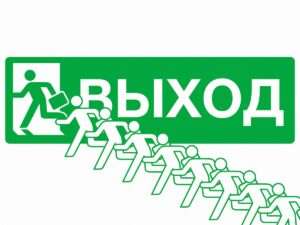
The Russian-language sign in this image says "exit."


I was going to write a post about the current debate over whether Western nations should bar all or most Russian migrants and visitors. But much of what I might have said has already been better stated in an article by Reason immigration policy writer Fiona Harrigan. Here is her summary of the ongoing debate:

In an interview with The Washington Post earlier this month, Ukrainian President Volodymyr Zelenskyy said that Russians should "live in their own world until they change their philosophy." In practical terms, he suggested that countries should "close the borders" to Russian citizens. "Whichever kind of Russian," he said, "make them go to Russia."

A number of nations have taken steps to prevent Russians from entering. So far, the Czech Republic, Lithuania, Estonia, Latvia, and Poland have decided to stop issuing certain visas to Russian citizens. Finland will be slashing its current level of Russian tourist visas by 90 percent….

European Union foreign ministers are expected to discuss the issue of Russian visas on August 31. Ahead of that meeting, many major figures—including people within the Zelenskyy administration—have argued against a blanket ban on visas for Russians. They recognize the ethical and practical issues that come with punishing civilians for the actions of an authoritarian government they can't feasibly control.

Oleksiy Arestovych, a military adviser to Zelenskyy, told The Washington Post that he's "not a supporter of collective responsibility [but of] individual." While it might be reasonable to sanction those who overtly support Russian President Vladimir Putin, he said, he favored a "more selective" approach to visa denials for Russians.

German Chancellor Olaf Scholz likewise has rejected the idea of an E.U.-wide ban on Russian tourists, arguing that such a measure "would undermine the purpose and effect of targeted sanctions that have been applied to those supporting the war," explains Politico. "This is not the war of the Russian people, but it is Putin's war," Scholz said at a press conference last week. "It is important to us to understand that there are a lot of people fleeing from Russia, because they are disagreeing with the Russian regime."

On this issue, Zelensky is wrong and Arestovych, Scholz, and others are right. Harrigan explains some of the reasons why:

Zelenskyy argues that limiting the movement of Russian travelers should be done "until they change their philosophy." But keeping Russians in Russia isn't the right approach to encourage them to change their views. For one, the Kremlin has censored all manner of information about the war. Back in March, it blocked access to Facebook. It's cracked down on journalists and foreign websites, censoring sites like BBC, Radio Free Europe/Radio Liberty, and Deutsche Welle. And in March, Putin signed a law that would dole out prison sentences of up to 15 years for those who circulate "false news" about the invasion. Russia arrested over 13,000 anti-war protesters in just the first two weeks after the war began.

Isolating Russians will be counterproductive. Allowing them to travel will surely bring them some measure of joy, but it will also give them access to views and insights on the invasion of Ukraine that they'd be hard-pressed to find at home. Fencing Russians off from freer nations will ensure that they're kept in a hostile information environment, deprived of experiences that may make them more amenable to freedom and more hostile to their current regime. What's more, it could keep certain vulnerable groups—like LGBT people or political dissidents—from leaving for safer places.

A sweeping visa ban would harm the Russian citizens that could very well benefit either from an escape route or exposure to ideas outside Russia's borders. Keeping them isolated will only trap them in a country rife with censorship and risk alienating them from the West, playing directly into Putin's hands.

Harrigan also notes that it would be a mistake to try to screen Russians in order to keep out those who support Putin, because it would "require visa-issuing authorities to make any number of subjective judgments" about visa applicants' political views. More generally, imposing political viewpoint restriction on migration policy has much the same flaws as other government policies targeting people based on their political views. It's reasonable to sanction and otherwise punish Russians (and others) for perpetrating injustices and human rights violations - including those associated with the Putin's brutal war against Ukraine. But it's wrong to restrict people's liberty merely based on the fact that governments have concluded they have wrong political views. Restricting it merely because they have the misfortune of being born in a country with a horrible government is even worse.

In addition to the points made by Harrigan, it's also worth emphasizing that letting Russians migrate freely to the West can impose a "brain drain" on Putin, while simultaneously bolstering our own economy. It would also strengthen our position in the war of ideas against his brand of authoritarian nationalism. The potential risk of espionage by Russian migrants is low and can be addressed by measures other than exclusion. Instead of making it harder for Russians to enter the West, we should be making it easier, thereby simultaneously helping people fleeing oppression and strengthening ourselves.

It might be argued that barring short-term visitors is less harmful than banning those seeking to live and work in the West long-term. Perhaps so. But even relatively brief visits can open people's eyes to the fact that life in the West is happier, free, and more prosperous than in Russia, and thereby lead the visitors to question Putin's regime. A short-term visit could also lead some to leave permanently. In addition, barring visits is still a restriction on the liberty of innocent people that serves no useful purpose.

The war against Putin is supposed to be a war for liberal democratic values. Imposing collective punishment on innocent civilians - including those who have no hand in the war and in many cases even oppose it - is the kind of thing Putin and other authoritarians do. Rejecting such measures is one of the ways the West can show we differ from our enemies.

In earlier posts (e.g. here and here), I addressed claims that opening the door to Russians and Ukrainians is unfair so long as the West is less open to those fleeing violence and tyranny elsewhere. While such arguments have a certain degree of merit, the right way to deal with the problem is through "leveling up" by being more open to others, not by barring Russians and Ukrainians. For those interested in consistency, I have a long record of also advocating refuge for victims of war and and oppression from elsewhere in the world, including in this recent post about Chinese fleeing that country's brutal Covid lockdowns and other human rights violations. The Chinese government's atrocities are at least as bad as Putin's. If they do not justify barring Chinese from the West (and they don't!), the same goes for the Russian case.

In sum keeping Western doors open to Russian migrants is the right thing to do for both moral and strategic reasons. If we forget that and ignore our principles, the main beneficiary will be Vladimir Putin.

Free Speech

Federal Circuit re: Bulk Unsealing Plans -- Never Mind

|

From today's order:

Upon further consideration of the court's August 17, 2022 Order, the court finds it impracticable at this time to continue to proceed with the proposed unsealing of previously-identified cases. Specifically, the court finds that there will be insufficient time and considerable, unanticipated administrative difficulty to both the court and to counsel in providing an opportunity for counsel and parties in the previously-identified cases to permit a physical review of the identified cases by the National Archives and Records Administration's December 31, 2022 deadline for the court to complete the accessioning of its remaining paper case records.

IT IS ORDERED THAT:

(1) The court's August 17, 2022 Order is hereby RESCINDED in full. Any impacted parties, counsel, and other interested parties are excused from any requirement to show cause pursuant to Federal Circuit Rule 25.1(a)(1). Any filed responses to the court's order are DENIED as moot.

(2) The cases identified in the Addendum to the August 17, 2022 Order shall remain under seal until further order of the court but without prejudice to a motion to unseal in an identified case consistent with the court's rules.

(3) The Clerk of Court is directed to accession the cases identified in the August 17, 2022 Order Addendum to the National Archives and Records Administration for permanent retention under seal….

Here's my post from last Wednesday, about the order that has now been rescinded:

Read More

Free Speech

No Money for a Pure Jane Doe: Totally Unidentified Defendant Can't Recover Sanctions and Attorney Fees

|

Allison Publications, LLC v. Doe, decided last week by the Texas Court of Appeals (Fort Worth), in an opinion by Justice Brian Walker, joined by Justice Wade Birdwell and Judge Ruben Gonzalez, involves a rare libel lawsuit by a publisher:

Allison publishes regional and specialty publications in Texas, such as D Magazine. According to Allison, in April 2021, three of its advertisers received phone calls from a person who identified herself as a journalist named "Maya" or "Maya Pembledon." The caller allegedly told the advertisers that Allison is a racist publisher and encouraged them to cease advertising with Allison. The advertisers expressed concerns to Allison after receiving the calls, and at least one decided not to renew its advertising contract with Allison.

More specifically, according to the amended petition (cf. this post, where I criticized the original petition, which was much vaguer):

While the total number of Doe's false and disparaging calls to Plaintiff's advertisers is not yet known, Plaintiff has learned of the following calls beginning in April 2021: (a) Doe called a real estate agency that advertises with Plaintiff, falsely accused Plaintiff of being a racist organization, and stated that the agency should never spend money with Plaintiff and should avoid being associated with Plaintiff; (b) Doe called a photographer that advertises with Plaintiff, falsely accused Plaintiff of being a racist organization, and suggested that the photographer should no longer advertise with someone Doe had accused of being racist; and (c) Doe repeatedly called a financial advisory firm that advertises with Plaintiff and falsely accused Plaintiff and its editor of being racists.

Allison then sued Doe, and sought to use discovery to identify her, but Texas's Anti-SLAPP statute (the Texas Citizens Protection Act, TCPA) came into the picture:

On June 29, 2021, someone declaring to be the "Jane Doe" named in the petition filed a special appearance and a motion to dismiss under section 27.003 of the TCPA[,] … anonymously and without any identifying information…. [T]hey attached a "Declaration of Jane Doe"—bearing the signature "Jane Doe"—through which she asserted the need to preserve her anonymity to protect against "reprisals" such as Allison's lawsuit and to allow her reporting to "stand on its own." Doe claimed to be a journalist who sought information from certain of Allison's advertisers for a project investigating an alleged lack of diversity and inclusion of racial minorities at publications located in major U.S. cities….

So this is pure anonymity, in which Doe seeks to be unknown from everyone, including the plaintiff (and indeed even the court and her own lawyer), rather than being known to the plaintiff or at least the plaintiff's lawyers but not to the public. The court also granted Doe's TCPA motion, concluding that her speech was constitutionally protected opinion (for more on that generally, see this post, including the last two paragraphs), and awarded Doe "$10,650 in attorneys' fees and $10,000 in sanctions," to be paid to her lawyer who would then somehow distribute it to her. It also denied discovery, since TCPA motions are usually supposed to be conducted without discovery.

Now the court of appeals has concluded that Texas law prohibits the award of affirmative relief, such as fees and sanctions, to an entirely unidentified party:

Read More

First Amendment

D.C. Circuit Divides on Level of Scrutiny for Regulation of Filming on Federal Property

A panel majority holds that "reasonableness" is all that is required and upholds the Park Service's permit-and-fee requirements.

|

Today, in Price v. Garland, a divided panel of the U.S. Court of Appeals for the D.C. Circuit rejected a constitutional challenge to federal regulations imposing permit and fee requirements for filming within the National Park System.

Judge Ginsburg wrote for the Court, joined by Judge Henderson. Judge Tatel dissented.  Judge Henderson also wrote a brief concurrence.

Judge Ginsburg's opinion for the Court begins:

Gordon Price is an independent filmmaker. He filmed parts of a feature film on land administered by the National Park Service (NPS) without having obtained the requisite permit and having paid the requisite fee. The Government charged him with a misdemeanor but later dismissed the charge. Price then sued for declaratory and injunctive relief, arguing the permit-and-fee requirements are facially unconstitutional under the First Amendment to the Constitution of the United States. The district court agreed with Price, holding the permit-and-fee requirements do not satisfy the heightened scrutiny applicable to restrictions on speech in a public forum.

We hold that regulation of filmmaking on government controlled property is subject only to a "reasonableness" standard, even when the filmmaking is conducted in a  public forum. Because the permit-and-fee requirements are reasonable, we reverse the order of the district court.

And here is a key part of Judge Ginsburg's analysis:

The United States argues that  . . . not every activity the First Amendment protects as speech benefits from the strict, speech protective rules of a public forum. Because a filmmaker does not seek to communicate with others at the location in which he or she films, the filmmaker does not use the location as a "forum." Therefore, the United States argues, the district court's forum analysis was misplaced. Price counters that the district judge had it right: There is no basis to distinguish between filmmaking and other activities protected by the First Amendment.

We think the Government is correct. Based upon the historical underpinnings of forum analysis, the evolution of this analytical framework, and the cases in which the Supreme Court has applied it, we are convinced that it would be a category error to apply the speech-protective rules of a public forum to regulation of an activity that involves merely a noncommunicative step in the production of speech. Although that activity warrants solicitude under the First Amendment, that solicitude does not come from the speech-protective rules of a public forum. In reaching this conclusion we are buoyed by the Supreme Court's warning against extending the public forum doctrine "in a mechanical way" to contexts that meaningfully differ from those in which the doctrine has traditionally been applied.

Judge Tatel saw the issues quite differently. Here is how his dissent begins:

Federal law prohibits anyone from engaging in "commercial filming activities" in the national parks without first obtaining a permit and paying a fee. 54 U.S.C. § 100905(a)(1). Even though our court recently struck down similar restrictions on speech in national parks as "overbroad" and "antithetical to . . . core First Amendment principle[s]," Boardley v. United States Department of Interior, 615 F.3d 508, 511 (D.C. Cir. 2010), the court today upholds these restrictions on grounds untethered from our
court's precedent and that of our sister circuits. Because the permit and fee requirements penalize far more speech than necessary to advance the government's asserted interests, they run afoul of the First Amendment.

And how he concludes:

Under today's sweeping holding, regulation of filming on government property is no longer subject to heightened scrutiny, even when the filming occurs in traditional public forums where "the rights of the [government] to limit expressive activity are sharply circumscribed" or designated public forums that the government "has opened for use by the public as a place for expressive activity." . . .  Before standing outside Yosemite National Park's visitor center using a cell phone to record commentary on our national parks that will air on an advertisement-supported YouTube channel, an individual must obtain a permit and pay a fee. Before filming a protest on the National Mall, tourists must obtain a permit and pay a fee if they have any inkling that they might later make money from this footage on social media. And when the filming is spontaneous, these individuals will be criminally liable and face up to six months in prison even though they could not possibly have obtained a permit ahead of time. See 18 U.S.C. § 1865; 36 C.F.R. §§ 1.3, 5.5(a). By stripping public forum protection from filming, my colleagues—for the very first time—disaggregate speech creation and dissemination, thus degrading First Amendment protection for filming, photography, and other activities essential to free expression in today's world. . . . I respectfully dissent.

Game of Thrones

Thoughts on the First Episode of "House of the Dragon"

It's early going. But the first episode is a promising start to HBO's prequel to the famous "Game of Thrones" series.

|

NOTE: This post contains some minor spoilers for Fire and Blood, the George R.R. Martin book on which the TV series is based.

On Sunday night, HBO aired the first episode of House of the Dragon, the prequel series to the hugely successful - but also highly controversial - Game of Thrones. The new series is based on part of George R.R. Martin's book Fire and Blood, the history of House Targaryen's rule over the Seven Kingdoms of Westeros. It is set some 200 years before the events of GOT, and focuses on civil conflict known as the "Dance of the Dragons" and the events leading up to it.

At the time of House of the Dragon, the Targaryen dynasty is firmly in control of the Iron Throne of the Seven Kingdoms. And there are plenty of dragons! The Targaryens' control over them is one of the foundations of their power. But a potential succession crisis is brewing over King Viserys' lack of a direct male heir. While the King has a daughter, Princess Rhaenyra, many Westerosi are unwilling to accept a female ruler. Viserys is reluctant to name his brother, Prince Daemon as his successor, because - among other things - Daemon seems violent and unstable.

It's too early to say how good the new series will be overall. But the first episode was a strong start. The acting, visuals, plot, and pace, were all excellent. Perhaps the most compelling element of the pilot is the way it was able to generate sympathy for the main characters, even though almost all of them are actually awful people. This is possible, in part, because many of their worst deeds lie in the future. But it's an achievement nonetheless.

If you have read the book on which the series is based, you know that there are few, if any admirable people among the key figures in the story. This is not the tale of a conflict between good and evil, or even between a greater evil and a much lesser one. Both sides are awful, arguably to roughly the same degree.

The "Dance of the Dragons" largely lacks sympathetic protagonists, like Arya, Sansa, Tyrion, Jon Snow, and (until late in the series) Daenerys Targaryen, in Game of Thrones. Despite this obstacle, the pilot episode nonetheless generates considerable sympathy for the major characters. It does so by highlighting the understandable nature of their motivations, and the difficult situations they find themselves in.

The series also turns King Viserys I into a more substantial and compelling figure than he is in the book. This can be defended on the grounds that the book narrator (a fictional Westerosi historian) isn't unbiased. Rhaenyra is also a sympathetic figure here, as well. We see her trying to make the best of a tough situation, and she doesn't - yet - seem intent simply on pursuing power for its own sake. While the show highlights Prince Daemon's ambition and penchant for violence, even he has some good moments, as he makes some telling points on occasion.

It will be interesting to see how the series handles these characters as the story moves on. I don't think it's too much of a spoiler to note that their actions get more and more reprehensible over time!

In  addition to the problem of dealing with unsympathetic characters, a major challenge of adapting story of the "Dance of the Dragons" is figuring out what the theme of the story is. As I have discussed in previous writings (e.g. here and here), the big overarching theme of Game of Thrones is that the dangers of political power require institutional solutions, not merely the replacement of evil or incompetent rulers with seemingly good ones. If we are going to "break the wheel" of oppression, as Daenerys famously puts it, we need institutional change. This is an important idea, at odds with the typical focus of many science fiction and fantasy stories on individual heroes.

It is hard to say whether the "Dance of the Dragons" has any comparably powerful main theme to it. The most obvious candidate is a feminist message about how it's wrong to reject the idea of female rulers. But, in 2022, this hardly comes off as a brilliant new insight. In addition, at least in the book, Princess Rhaenyra is hardly a poster girl for the virtues of female political leadership. In fairness, her mostly male adversaries are just as bad. But "women have the right to be evil rulers just like men" probably isn't the best possible feminist message.

Of course, the series could potentially push other ideas. Or it could find a way to promote feminist ideals in spite of Rhaenyra's shortcomings. The pilot nods to the latter possibility with its emphasis on the pain and danger women undergo in the process of giving birth (especially in a society without modern medicine), which is explicitly analogized to men's suffering in warfare; even today, society honors the latter far more than the former, and the show suggests that attitude is deeply wrong. They could also potentially depict Rhaenyra as a far more admirable person than she is in the book, though I don't see how that can be achieved without substantial plot changes.

I look forward to seeing how the show-runners handle these and other issues!

Free Speech

Protecting People from Their Own Religious Communities: Jane Doe in Church and State

|

This new article of mine will be coming out next year in the Journal of Law and Religion, and I thought I'd serialize it here; there's still plenty of time for editing, so I'd love to hear people's feedback. Here's the Introduction:

[* * *]

Debates about religious exemptions often involve a religious community seeking protection against secular law. But what should be done when religious community members seek protection against their own community, or at least against parts of that community? In particular, when should the legal system take steps to help such members conceal actions—actions that for the rest of us would have to be public—precisely to avoid the religious community learning about those actions?

Many legal rules require that people be identified in public documents. Litigants must generally litigate under their own names, not pseudonymously (or anonymously, two terms that are generally used interchangeably in these contexts[1]). Firearms licenses and license applications are public records in many states; so are liquor license applications. Public records laws sometimes require disclosing the names of people who have been involved in government actions.

Some of these laws provide for exceptions, for instance when requiring a litigant's "disclosure of his identity in the public record would reveal highly sensitive and personal information that would result in a social stigma."[2] And some courts have read this as authorizing confidentiality for people who might otherwise face special stigma in their religious community.[3]

Considering the possible reactions of a litigant's or applicant's religious community does make some sense, since it helps accurately estimate the social stigma this person is likely to face. And the interest in shielding people from such stigma isn't just individual but also social: For instance, we want to encourage victims of tortious misconduct to come forward, so that the civil liability system can better deter such misconduct. If we know some victims won't sue if they must be named, because they fear being ostracized by friends and family, we might want to allow them to sue pseudonymously.

At the same time, note the premise of the analysis: The claimants are entitled to protection not just from the operation of the secular legal disclosure rule, but from what is seen as the oppressive or backward view of their religious community. The community is viewed as unfairly judgmental of (for instance) sex assault victims, of people who engage in premarital sex, of people who sue fellow community members, or perhaps of drinkers and gamblers and gun owners. After all, this perceived unfairness is what gives the claimant's confidentiality argument a special edge in the request for pseudonymity—an edge that claimants who belong to other religious communities (or to no religious community) lack.

Read More

Politics

Today in Supreme Court History: August 23, 2007

|

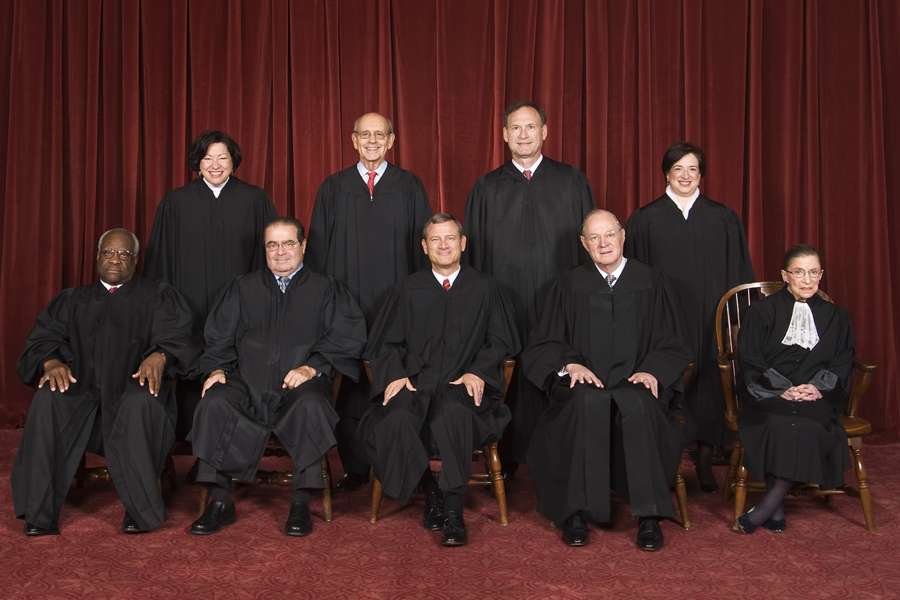
8/23/2007: John Yates, aboard the Miss Katie boat, threw fish overboard to avoid an inspection. He was prosecuted for destroying property to prevent a federal seizure. In Yates v. United States (2015), the Supreme Court held that the fish was not a "record."

The Roberts Court (2010-2016)
More