
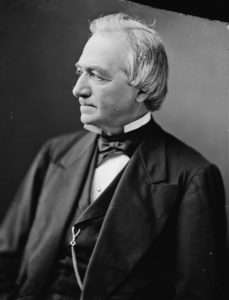
3/23/1870: Justice Joseph Bradley takes oath.

Mostly law professors | Sometimes contrarian | Often libertarian | Always independent | Est. 2002
3/23/1870: Justice Joseph Bradley takes oath.
Nero the police dog put his paws on the side of the car, which qualifies as a trespass, and thereby also a "search" under the Fourth Amendment.

In State v. Dorff, a decision issued on March 20, the Idaho Supreme Court suppressed evidence obtained in a police search of a car because Nero the drug-sniffing police dog committed "trespass" by "intermeddling" with the defendant's vehicle. More specifically, Nero put his paws on the side of the car:
For the reasons discussed below, a "search" occurs when a drug dog trespasses against the exterior of a vehicle during a "free air" sniff if its physical contact with the vehicle amounts to "intermeddling" at common law. In this case, a drug dog intermeddled with Dorff's vehicle when it jumped onto the driver side door and window, planted two of its paws, and sniffed the vehicle's upper seams. Accordingly, law enforcement conducted a warrantless and unlawful "search" of Dorff's vehicle by way of its drug dog.
Nero should have studied the relevant legal precedents more carefully! His more learned predecessor, Caligula, would never have made such an obvious mistake.
On a slightly more serious note, I am no Fourth Amendment expert. But the case does interest me in my capacity as both a property law professor, and a longtime dog owner.
The majority opinion, written by Justice Brody, reasons that a "search" occurs if a police officer (or, in this case, his dog) trespasses on the defendant's property, and that physical contact with the property qualifies as a trespass if it rises to the level of "intermeddling":
At common law, a "trespass" to chattel occurs when an actor violates "the dignitary interest in the inviolability of chattels," PROSSER & KEETON, at 87, i.e., those "interests" that comprise the "bundle of sticks" (e.g., the right to use, possess, and exclude).… An actor violates such interest"either by intentionally using or otherwise intermeddling with a chattel in the possession of another or by continuing to use or intermeddle therewith after a privilege to do so has been terminated." RESTATEMENT (FIRST) OF TORTS § 217 (1934) (emphasis added)….
The physical contact with the chattel must amount to "intermeddling" for a "trespass" to occur, and although some contact to the exterior surface of a chattel in every-day type commotions will be insufficient, entering into another's chattel—and thereby intruding against the inviolability of the chattel's "close"—is a form of "intermeddling" that suffers no de minimus exception.... Intermeddling is the difference between someone who brushes up against your purse while walking by—and someone who, without privilege or consent, rests their hand on your purse or puts their fingers into your purse…. It is also the difference between a dog's tail that brushes against the bumper of your vehicle as it walks by—and a dog who, without privilege or consent, approaches your vehicle to jump on its roof, sit on its hood, stand on its window or door—or enter into your vehicle….
Nero fell on the "intermeddling" side of the line:
[W]hen Nero approached the driver's side on his second pass, he clearly trespassed against Dorff's vehicle. The footage reflects that when Nero reached the front driver side door, he jumped up onto the door, and planted his two front paws on the door (and then the window) as he sniffed the upper seams of the vehicle. Although the length of time Nero had his paws on the vehicle is not dispositive of whether Nero's doing so amounted to intermeddling, the seconds that do pass while Nero stood on, and occupied, Dorff's vehicle—without privilege or Dorff's consent—is enough to objectively constitute a wrongful trespass against, and intermeddling with, Dorff's vehicle, and his right to exclude. And as we have said before, "there is no asterisk to the Fourth Amendment excusing the unconstitutional acts of law enforcement when they are accomplished by means of a trained dog."Howard, 169 Idaho at 382, 496 P.3d at 868. Thus, although it was accomplished by Nero, it was law enforcement who violated Dorff's dignitary interest in maintaining the inviolability of his chattel….
Woof!
I think it's pretty obvious that a drug-sniffing dog jumping on the side of your car and placing his paws on the window qualifies as a "trespass to chattel" under the common law. And that's true regardless of whether it can be described as "intermeddling." Such an action is also a trespass because it temporarily "dispossesses" the owner, in so far as he cannot safely drive the car so long as the dog is on it.
In a dissenting opinion, Justice Moeller appears to agree that Nero's actions may qualify as a search, but argues that it wasn't an "unreasonable" one because it wasn't a sufficiently grave "physical intrusion." It therefore didn't violate the Fourth Amendment. I will leave that issue to the Fourth Amendment experts.
Chief Justice Bevan joined Moeller's dissent, and also wrote a separate dissent arguing that "a dog's instinct to jump cannot be imputed to its officer-handler when the dog acts without instruction" and therefore Nero's actions do not qualify as a true search by the police. This argument makes little sense. The dog didn't just spontaneously jump on the car. It did so while sniffing for drugs under the direction of his handler. Surely the officer is responsible for controlling the dog in such a situation.
If I am walking my dog down the street and she jumps on another pedestrian - or on a car - surely I am responsible, and am liable for any damage or trespass the dog inflicts. Police K-9 handlers should be held to at least the same standards as ordinary dog owners.
The possibility of trespass to chattel is far from the only problem with drug-sniffing dogs. They also often make mistakes, including ones motivated by the desire to please their law-enforcement handlers, who may want false alerts in order to facilitate asset forfeiture abuse. In an era of widespread marijuana legalization, drug-sniffing dogs have become even less reliable than before, because they may "alert" to marijuana, despite its no longer being illegal in a given jurisdiction.
A defense of institutional neutrality.
To second an important point made in Dean Martinez's new letter (discussed in David Bernstein's post below): law schools, like other institutions, sometimes have good moral reasons to stay silent on important moral questions.
At the same time, I want to set expectations clearly going forward: our commitment to diversity, equity, and inclusion is not going to take the form of having the school administration announce institutional positions on a wide range of current social and political issues, make frequent institutional statements about current news events, or exclude or condemn speakers who hold views on social and political issues with whom some or even many in our community disagree. I believe that focus on these types of actions as the hallmark of an "inclusive" environment can lead to creating and enforcing an institutional orthodoxy that is not only at odds with our core commitment to academic freedom, but also that would create an echo chamber that ill prepares students to go out into and act as effective advocates in a society that disagrees about many important issues. Some students might feel that some points should not be up for argument and therefore that they should not bear the responsibility of arguing them (or even hearing arguments about them), but however appealing that position might be in some other context, it is incompatible with the training that must be delivered in a law school. Law students are entering a profession in which their job is to make arguments on behalf of clients whose very lives may depend on their professional skill. Just as doctors in training must learn to face suffering and death and respond in their professional role, lawyers in training must learn to confront injustice or views they don't agree with and respond as attorneys.
The more that we disagree, the more that we need limited-purpose institutions, in which people can come together on discrete issues notwithstanding their disagreements on others. That kind of neutrality isn't moral indifference; it's moral commitment to achieving the institution's goals. As I argued in 2020:
Some of those people might have been surprised at political spam from their expense reporting company. . . . And a few customers have dropped Expensify since, protesting the misuse of their email lists. But whatever happens to Expensify, the episode reminded me of a passage by Yuval Levin, on treating institutions as platforms:
We now think of institutions less as formative and more as performative, less as molds of our character and behavior, and more as platforms for us to stand on and be seen. And so for one arena to another in American life, we see people using institutions as stages, as a way to raise their profile or build their brand. And those kinds of institutions become much harder to trust.
Institutions get weaker as their purposes expand. Once every #brand has had to pick a side on Kashmir or the filioque clause, no one can tell them apart. Whatever makes Expensify distinct, whatever unique contribution it offers—saving time and money! making employees' lives easier!—seems pale and wan next to the great causes of the day.
But the great advantage of limited-purpose institutions is that they let us achieve their limited purposes while still disagreeing on other things. Everyone gets this instinctively when it comes to "Sir, this is a Wendy's." Sometimes mundane things like lunch take precedence over great moral conflicts: not because the conflicts are unimportant, but because we shouldn't hold up the drive-thru line until the great conflicts are resolved. It's precisely when the issues are important—and divisive—that we need limited-purpose institutions most.
After a more ambiguous initial reaction to student disruption of Judge Kyle Duncan's speech, sponsored by the Stanford Federalist Society, Dean Jennifer Martinez has issued a passionate, well-argued, and occasionally blistering letter explaining why the students behaved inappropriately, and expressing the view that Stanford's "commitment to diversity and inclusion means that we must protect the expression of all views." (emphasis in original)
Some might be disappointed that no students will be penalized for their misbehavior. But I think the letter is a much greater victory for academic values than if Martinez had stayed silent and meted out relatively small penalties to the most egregious perpetrators, which is almost certainly the maximum that would have been done.
However, I think some additional soul-searching at Stanford is in order. Dean Martinez and her faculty should ask themselves why students at Stanford felt it appropriate to disrupt Judge Duncan's speech. Surely some of it is a product of illiberal trends in elite academia more generally. Some of it, though, surely has to do with the fact that Stanford Law is virtually a left-wing monoculture.
On a faculty of over sixty, Stanford has exactly one faculty member known to be right-of-center politically, Michael McConnell, compared to dozens on the left. While the pool of academic talent available to Stanford leans strongly to the left, no one sensible believes that the pool is that skewed. So intentionally or not, the Stanford faculty is sending its students the message that right-of-center views are not respectable, and not worth listening to, such that Stanford (not unlike other top law schools these days) won't hire professors who hold them. And if they are not worth listening to, it's not much of a leap for students to conclude that the law school (unofficially) believes that people who hold such views are contemptible, and as contemptible people with worthless viewpoints, they shouldn't be given a forum at Stanford.
So if Dean Martinez really wants to promote a culture of civil discourse at Stanford, she could build on her letter by urging not just that invited guests not be shouted down, but that right-of-center voices be part of daily academic life at Stanford.
UPDATE: For those who are interesting in getting the gist of Dean Martinzez's letter without reading the whole thing, FIRE has a good summary and analysis.
I was pleased to attend oral argument today in Jack Daniel's Properties, Inc. v. VIP Products--my first argument since the pandemic. This fun IP case considers a doggy toy that closely resembles a bottle of Jack Daniels whisky. It is always fun to see Lisa Blatt argue in person. She never disappoints. This exchange, in particular, was delightful:
MS. BLATT: Well, just showing how confused I was suggests that I would be your perfect consumer.
(Laughter.)
MS. BLATT: Justice Alito, I don't know how old you are, but you went to law school, you're very smart, you're analytical, you have hindsight bias, and maybe you know something -
JUSTICE ALITO: Well, I went to a law school where I didn't learn any law -
MS. BLATT: Okay. But -
JUSTICE ALITO: --so don't -
(Laughter.)
MS. BLATT: --it's just a little rich for people who are at your level to --to say that you know what the average purchasing public thinks about all kinds of female products that you don't know anything about or dog toys that you might not know anything about. And so I just think -
JUSTICE ALITO: I don't know. I had a dog. I know something about dogs.
MS. BLATT: Okay.
Alito has said many times before that he learned no actual law at Yale Law School. As soon as Blatt mentioned law school, I knew Alito would jab back at his alma matter.
Black's Law Dictionary reports that "headnote lawyer" means
A lawyer who relies on the headnotes of judicial opinions rather than taking the time to read the opinions themselves.
"He's a chatbot lawyer" would mean that he's a lawyer who relies on ChatGPT-4 etc. summaries of court opinions (or of legal questions more broadly) rather than taking the time to read the relevant cases, statutes, regulations, and the like. On the other hand, one downside is "chatbot lawyer" is already coming to mean chatbots that are actually acting, or trying to act, or being planned to be acting, as lawyers ….
Episode 449 of the Cyberlaw Podcast
GPT-4's rapid and tangible improvement over ChatGPT has more or less guaranteed that it or a competitor will be built into most new and legacy IT products. Some of those applications will be pointless; but some will change users' world. In this episode, Sultan Meghji, Jordan Schneider, and Siobhan Gorman explore the likely impact of GPT4, from Silicon Valley to China.
Kurt Sanger joins us to explain why Ukraine's IT Army of volunteer hackers creates political, legal, and maybe even physical risks for the hackers and for Ukraine. This may explain why Ukraine is looking for ways to "regularize" their international supporters, and probably to steer them toward defending Ukraine's infrastructure rather than attacking Russia's.
Siobhan and I dig into the Biden administration's latest target for cybersecurity regulation -- cloud providers. I wonder if there isn't a bit of bait and switch in operation here. The administration seems at least as intent on regulating cloud providers to catch hackers as to improve defenses.
Say this for China: It never lets a bit of leverage go to waste, even when it should. Case in point: To further buttress its seven-dash-line claim to the South China Sea, China is demanding that companies get Chinese licenses to lay submarine cable in the contested territory. That, of course, incentivizes the laying of cables much further from China, out where they'll be harder for the Chinese to deal with in a conflict. That doesn't sound smart, but some Beijing bureaucrat will no doubt claim it as a win for the wolf warriors. Ditto for the Chinese ambassador's response to the Netherlands restricting chip-making equipment sales to China, which boiled down to "We will make you pay for that. We just don't know how yet." The U.S. is not always good at dealing with other countries or the private sector, so it's nice to be competing with a country that is demonstrably worse at it.
The Security and Exchange Commission has gone from catatonic to hyperactive on cybersecurity. Siobhan notes its latest 48-hour incident reporting requirement and the difficulty of reporting anything useful in that time frame.
Kurt and Siobhan bring their expertise as parents of teens and aspiring teens to the TikTok debate.
I linger over the extraordinary and undercovered mess created by "18F" -- the General Service Administration's effort to bring Silicon Valley's can-do culture to the government's IT infrastructure. It looks like they managed to bring Silicon Valley's arrogance, its political correctness, and its penchant for breaking things but forgot to bring either competence or honesty. Login.gov was 18F's online identity verification for federal agencies disbursing benefits or otherwise dealing with the public. 18F sold it to a host of federal agencies that wanted to control fraud during the pandemic. But it never delivered the biometric checks that federal standards required. First, 18F lied to its federal customers about how or whether it was using biometrics. When it finally admitted the lie, it brazenly claimed it was not checking because the technology was, wait for it, racially biased. This claim ran counter to the only available evidence (GSA claimed that it did its own bias research, research that was apparently never published). Oh, and it refused to give back the $10 million it charged its victims, arguing that the work it did on the project cost more than it billed them, so they didn't lose anything. Except for the fraud that bad identity checks likely enabled in the middle of COVID handouts, a loss everyone has been decidedly incurious about. And one more thing: Among the victims of 18F's scam was Senator Ron Wyden (Ore.), who touted login.gov and its phony biometric checks as the "good" alternative to ID.me, a private identity-checker that encountered political flak over its contract with the IRS. Bottom line advice for 18F alumni: It's not too late to start scrubbing the entity from your LinkedIn profile.
The Knicks have won some games. Blind pigs have found some acorns. But Madison Square Garden (and Knicks) owner, Jimmy Dolan is still pouring good money into his unwinnable but highly entertaining fight to use facial recognition against lawyers he does not want in the Garden. Kurt offers commentary, and probably saves himself the cost of Knicks tickets for all future playoff games.
Finally, in listener feedback, I give Simson Garfinkel's answer to a question I asked (and should have known the answer to) in episode 448.
You can subscribe to The Cyberlaw Podcast using iTunes, Google Play, Spotify, Pocket Casts, or our RSS feed. As always, The Cyberlaw Podcast is open to feedback. Be sure to engage with @stewartbaker on Twitter. Send your questions, comments, and suggestions for topics or interviewees to CyberlawPodcast@steptoe.com. Remember: If your suggested guest appears on the show, we will send you a highly coveted Cyberlaw Podcast mug! The views expressed in this podcast are those of the speakers and do not reflect the opinions of their institutions, clients, friends, families, or pets.
My Friday post erroneously stated that I got the bogus results from ChatGPT-4; it turns out they were from ChatGPT-3.5—but ChatGPT-4 does also yield similarly made-up results.
Friday, I posted an item titled, "Large Libel Models: ChatGPT-4 Erroneously Reporting Supposed Felony Pleas, Complete with Made-Up Media Quotes?," but I'm afraid I erred: The queries I ran turned out to have been on ChatGPT-3.5. I had accessed the OpenAI query portal through a page focusing on ChatGPT-4 (https://openai.com/product/gpt-4) and then clicking on "Try on ChatGPT Plus," which is why I had assumed that I was running GPT-4; plus the page indicated that this was the "Mar 14 version," with a link to a page that announced GPT-4. But it appears that the version was actually 3.5, and the particular results in my post don't appear on GPT-4 (though other queries do yield similarly false accusations about R.R., the subject of my post). I've therefore revised that post to talk about 3.5.
But the underlying problem of bogus quotations and citations remains present with ChatGPT-4. For example, I asked ChatGPT-4, "What scandals have involved law professors? Please cite and quote newspaper articles." It mentioned the Amy Wax Penn controversy, which it seemed to describe correctly, but then went on to a different example (all redactions here and below are mine; the ChatGPT-4 output named names):
In 2021, [redacted], a prominent law professor at [redacted] Law School, was accused of harassment and creating a hostile work environment by a former student. The student claimed that [redacted] had made inappropriate comments about her appearance and clothing.
Source: The [newspaper connected to the law school's undergraduate institution]: "[Redacted] made comments on [the student's] appearance and clothing, and invited her to dine with him alone on multiple occasions — invitations that she felt uncomfortable declining."
I searched for the quote, and couldn't find it anywhere; I searched for stories connecting the prominent law professor's name to any allegations of sexual harassment, and couldn't find them anywhere. As best I can tell, this was entirely made up by ChatGPT-4.
Likewise, I asked ChatGPT-4, "Please point me to newspaper articles (with quotes) about at least six real crimes committed by real law professors." It gave me six items, of which at least four seemed to be entirely bogus; an example:
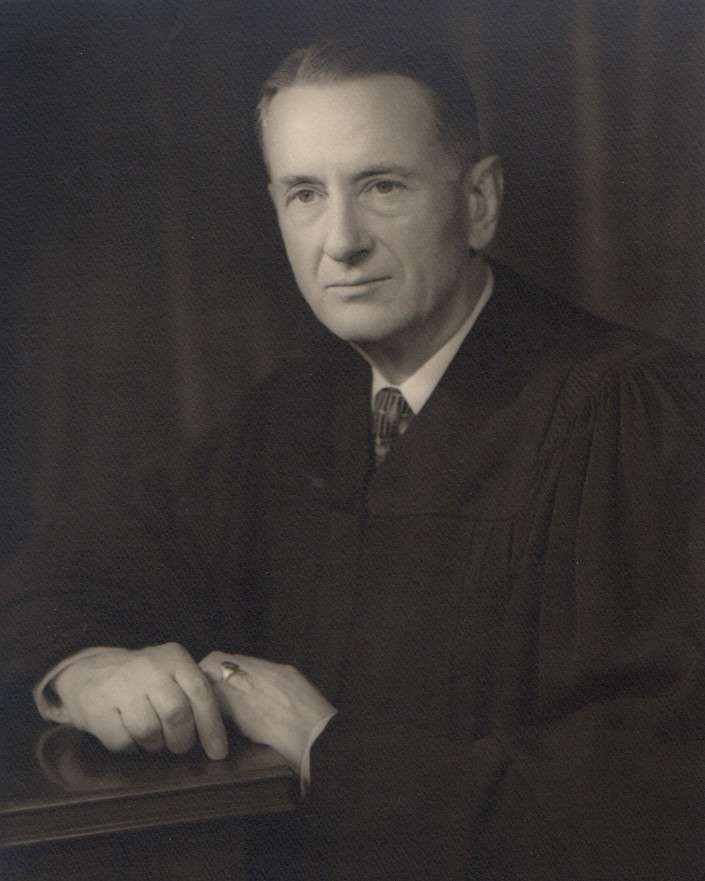
3/22/1957: Justice Charles Whittaker takes oath.
upholds the ban on landlords' taking adverse action based on that information.
From today's Ninth Circuit decision in Yim v. City of Seattle, written by Judge Kim McLane Wardlaw, joined in part by Judges Ronald M. Gould and Mark J. Bennett:
In 2017, the City of Seattle enacted the Fair Chance Housing Ordinance. The Ordinance prohibits landlords from inquiring about the criminal history of current or potential tenants, and from taking adverse action, such as denying tenancy, against them based on that information….
We conclude that the Ordinance's inquiry provision impinges upon the First Amendment rights of the landlords, as it is a regulation of speech that does not survive intermediate scrutiny. However, we reject the landlords' claim that the adverse action provision of the Ordinance violates their substantive due process rights. The landlords do not have a fundamental right to exclude, and the adverse action provision survives rational basis review….
[We need not decide] whether the Ordinance regulates commercial speech and calls for the application of intermediate scrutiny, or whether the Ordinance regulates non-commercial speech and is subject to strict scrutiny review …, because we conclude that the Ordinance does not survive the intermediate scrutiny standard of review….
From Order on Amicus Briefs, just issued today; it will be entered in all of Judge Rudofsky's civil cases:
When I was practicing law, I often wondered why amicus briefs were generally not filed at the district court level. It occurred to me back then that such briefs could have considerably more impact at the district court level than they have at the circuit court level or even at the Supreme Court. Since taking the bench, my views on the desirability of amicus briefing at the district court level have only grown stronger. While the majority of cases on a district court's docket don't warrant amicus briefing, there are a healthy number of cases each year that do.
By way of example, and not limitation, each year a handful (or two) of cases on my docket present really serious issues of constitutional law or statutory interpretation that are not directly controlled by binding precedent. And I have found that, in these cases, the parties often do not have the necessary time or economic resources to devote to full analyses of the text and history of the provision or provisions at issue. In such cases, my judicial process and my decisions would likely benefit from amicus briefing on the original public meaning of the disputed provision or provisions. I can imagine amici providing, among other things, important historical context, in-depth corpus linguistics analyses, or detailed structural arguments that might not make it into the parties' briefing.
I recognize that amicus briefing is a costly and time-consuming endeavor. However, it is also a great way for more junior attorneys at law firms, non-profits, corporations, and government entities to gain valuable experience, make a good reputation for themselves, and get some oral argument time. Accordingly, in addition to making it known that I invite and am grateful for amicus briefs in my cases, I wish to extend the following notice. Anyone who is the principal drafter of an amicus brief on either a dispositive motion or a motion for preliminary relief in one of my cases will be guaranteed at least ten (10) minutes of oral argument time so long as the person has been a lawyer for fewer than seven (7) years. The parties in the case may not in any way fund the amicus brief or the drafter's attendance at oral argument.
An important and compelling new book on qualified immunity and other obstacles to holding law enforcement officers accountable for rights violations.

The last few years have seen increased attention to the ways that qualified immunity and other legal doctrines and structural features of the criminal justice system protect law enforcement officers who violate citizens' rights, often even those who have engaged in very egregious abuses. UCLA law Professor Joanna Schwartz is probably the nation's leading expert on this subject and her new book Shielded: How the Police Became Untouchable is must reading for those interested in the topic. Here is the publisher's description:
In recent years, the high-profile murders of George Floyd, Breonna Taylor, and so many others have brought much-needed attention to the pervasiveness of police misconduct. Yet it remains nearly impossible to hold police accountable for abuses of power—the decisions of the Supreme Court, state and local governments, and policy makers have, over decades, made the police all but untouchable.
In Shielded, University of California, Los Angeles, law professor Joanna Schwartz exposes the myriad ways in which our legal system protects police at all costs, with insightful analyses about subjects ranging from qualified immunity to no-knock warrants. The product of more than two decades of advocacy and research, Shielded is a timely and necessary investigation into why civil rights litigation so rarely leads to justice or prevents future police misconduct. Weaving powerful true stories of people seeking restitution for violated rights, cutting across race, gender, criminal history, tax bracket, and zip code, Schwartz paints a compelling picture of the human cost of our failing criminal justice system, bringing clarity to a problem that is widely known but little understood. Shielded is a masterful work of immediate and enduring consequence, revealing what tragically familiar calls for "justice" truly entail.
The Balkinization website recently posted a symposium on the book, with commentary by eight prominent legal scholars, and Schwartz's response to their comments and criticisms.
Schwartz's book comes at a time when reform efforts have largely gone stagnant. In the aftermath of the death of George Floyd at the hands of abusive police in 2020, there was hope that qualified immunity might be abolished by the Supreme Court or through legislation. But, while some progress was made in a few states, it has stalled as public attention moved on to other issues, and rising crime rates make it politically more difficult to curb police in any way. Most states still have broad QI doctrines.
There is a similar story at the Supreme Court. While the Court has denied law enforcement officers quality immunity in a few extreme cases, there does not seem to be a majority of justices willing to abolish this judicially created doctrine entirely, or even to severely restrict it. The unusual coalition of justices Sonia Sotomayor and Clarence Thomas does support major constraints on QI. But, so far at least, they have not found the three additional votes they need to make it happen. Some other observers are more optimistic about the Supreme Court on this issue, than I am. Time will tell.
Curbing police abuses is an issue that unites most progressives and libertarians, and even some conservatives. But it is hard to accomplish because of a combination of long-entrenched judicial precedent, structural flaws in the legal system ( (many of them brilliantly dissected in Schwartz's book), powerful interest groups, and rising public fears of crime.
Hopefully, Shielded will help rekindle interest in these important issues. It could even give a boost to otherwise stalled reform efforts.
The surprising recent rise in partisan, racial, and gender differences in circuit judges following earlier opinions.
I have just uploaded to SSRN a draft of a forthcoming article I have coauthored with Kevin Quinn and ByungKoo Kim entitled Twenty-First Century Split: Partisan, Racial, and Gender Differences in Circuit Judges Following Earlier Opinions. We have not started the editing process, so we would love to read any comments you might have. Here is a summary of the article (the abstract plus a bit more):
Judges shape the law with their votes and the reasoning in their opinions. An important element of the latter is which opinions they follow, and thus elevate, and which they cast doubt on, and thus diminish. Using a unique and comprehensive dataset containing the substantive Shepard's treatments of all circuit court published and unpublished opinions issued between 1974 and 2017, we examine the relationship between judges' substantive treatments of earlier appellate opinions and their party, race, and gender. Are judges of a particular party, race, or gender more likely to positively treat (that is, follow) opinions written by judges who share that attribute than are judges of a different party, race, or gender? What we find is both surprising and nuanced. We have two major findings.
First, over the forty-four years of our study, we find growing partisan differences in positive treatments of earlier opinions. The partisan differences are largest for treatments in ideologically salient categories of cases. Interestingly, the partisan differences arise more for treatments of opinions written by Democratic appointees than for opinions written by Republican appointees, which we think is best explained by an accelerating movement among Republican appointees in a conservative direction compared to a steady move among Democratic appointees in a liberal direction. The increase in partisan differences is not a function of presidential cohorts or age cohorts. More recently appointed judges and judges appointed decades ago show similar patterns of increasing partisan differences in recent years. And this is not a function of less partisan judges retiring earlier: the recent partisan differences apply when we focus only on judges who served during the same extended period of time.
Second, there are intra-party racial and gender differences in positive treatments of past opinions, and these differences are similar to the partisan differences. Within each party, Black and White judges differ in their treatments of opinions authored by Black copartisans, Hispanic and White judges differ in their treatments of opinions authored by Hispanic copartisans, and female and male judges differ in their treatments of opinions authored by female copartisans. Similar to the partisan divergence noted above, we also find that some of these differences increase in magnitude over time—with particularly notable increases in the Black-White Democratic differences, Hispanic-White Republican differences, and female-male Republican differences. Notably, the racial and gender differences we find in positive Shepard's treatments are not mirrored in most studies of racial and gender differences in judicial behavior, which focus on merits votes and include a much smaller number of cases.
These results defy easy explanation. They do not support the proposition that party, race, and gender have always played a pervasive role for judges. Instead, our results provide evidence of increasing partisan, racial, and gender polarization among judges in recent years. For reasons we explain in the article, the partisan, racial, and gender differences we find appear to be a function of political ideology. Further, because the racial and gender differences are within parties, our results indicate that not only partisan differences but also intra-party racial and gender ideological differences have risen in recent years (particularly for Republican judges).
Our data thus reveal polarization among circuit judges and, as a result, in their shaping of the law. Many groups in the United States have become more ideologically polarized in recent years. Our data indicate that judges are one of them.
Before 1900, was there a legal history in America of prohibiting particular types of arms? Yes, but it is very short. The far more common policy for controversial arms, such as Bowie knives or handguns, was forbidding concealed carry, limiting sales to minors, or imposing extra punishment for use in a crime.
My coauthor Joseph Greenlee and I explain it all in our 165 page article, The History of Bans on Types of Arms Before 1900, recently submitted to law reviews. Here is the abstract:
This Article examines all American state, territorial, and colonial laws that prohibited possession or sale of any type of arm. Also covered are English laws before 1776, and the Dutch and Swedish colonies in America.
Among the arms studied are handguns, repeating guns, Bowie knives, daggers, slungshots, blackjacks, brass knuckles, and cannons.
The U.S. Supreme Court's decision in New York State Rifle and Pistol Association v. Bruen directs lower courts to review modern gun control laws in part by analogy to historic laws before 1900. This Article provides the resources to do so, and offers its own analysis.
Besides describing prohibitory laws, the Article details other types of regulation, such as forbidding concealed carry, forbidding all carry, restricting sales to minors, licensing dealers, or taxing possession. It is the first comprehensive study of historic American laws about knives, swords, and blunt weapons.
It is also the first comprehensive study of the types of arms for which colonies and states required ownership by militiamen, by some men not in the militia, and by some women.
The arms regulation laws and cases of the 19th century are examined in the context of the century's tremendous advances in firearms. The century that began with the single-shot muzzle-loading musket ended with modern semiautomatic handguns and magazines.
Synthesizing Supreme Court doctrine with historic statutes and cases, the Article concludes that prohibitions on semiautomatic rifles and magazines lack foundation in American legal history. In contrast, other regulations, such as restricting the purchase of certain arms by minors, have a stronger historic basis.
And here is the introduction: Read More
My seminar picks for 2023 (and every year since 2005).
Each fall, I teach a seminar called Recent Books on the Constitution. I initially designed this course when I visited Georgetown in 2005. At that time, because I tend to read what relates directly to my current projects, I felt that I was not keeping up with the literature. By assigning recent books on the Constitution to read as part of my teaching, I would actually read them. This has really worked for me. I have now read a lot of books on the Constitution. The complete list of all the books I have assigned is below.
Since 2005, I have assigned 90 books by 83 authors, with Sandy Levinson, Gerard Magliocca, Eric Segall, Dan Farber, Philip Hamburger, Kim Roosevelt, and David Bernstein each making more than 1 appearances. Four books were assigned in manuscript before publication. This fall, I am assigning a portion of my book Our Republican Constitution: Securing the Liberty and Sovereignty of We the People, which is not as recent as The Original Meaning of the Fourteenth Amendment: Its Letter and Spirit but relates more closely to the other books the students will read. Here are this year's 5 recent books:
James Fleming, Constructing Basic Liberties: A Defense of Substantive Due Process (2022)
Paul Moreno, How the Court Became Supreme: The Origins of American Juristocracy (2022)
Vincent Philip Munoz, Religious Liberty and the American Founding (2022)
Justin Dyer & Kody Cooper, The Classical and Christian Origins of American Politics (2022)
Kermit Roosevelt, The Nation That Never Was: Reconstructing America's Story (2022)
I select books I think I ought to read–either because of the subject or the author. I then hold off reading them myself so I can read them at the same time as the students. This enables me to react to the books along with them, and for me to remember the nuances of the books for class discussion.
The seminar format is to read 6 books, taking 2 weeks on each book, with the author coming to the class during the second week to discuss the book. The first book is now always one of mine to use as a trial run and to give the students an idea of where I am coming from when we discuss the other books. When books are longer than 250 pages, I ask the author to tell me which 250 pages I should assign. If I assign much more than 125 pages per week, I fear the students won't read them, or won't read them carefully enough. To help assure that they do, students submit one-page summaries of each half of the book (graded pass-fail). On the day before the author's visit, they submit a 5500 character critique of the book, which I send to the author electronically the day before class. (They all read them.) When the class ends, there is no exam or paper for the students to write or for me to grade. We are done!
Students consistently tell me that the course is extremely enriching, and helps them develop their critical skills. It is also empowering for them to see how well they are able to find the holes in a professor's book-length presentation. I find that, collectively, the students are able to nail the weaknesses of every book (except mine, of course).
[Note to law professors: I have a budget to pay for the authors' travel expenses. But now that we all have access to Zoom teaching, this seminar format can be replicated anywhere at zero cost. Wouldn't it be great if there were a dozen or more such book seminars around the country? Try it. I promise you will love it.]
If you click on READ MORE you will see why teaching this class has been enormously rewarding for me. Offer my heartfelt thanks to all these authors for trekking to DC to discuss their books with my students.
Read More
William Brewer, Sarah Rogers & Noah Peters of Brewer Attorneys & Counselors and I filed a petition earlier this month asking the Supreme Court to review the Second Circuit decision in NRA v. Vullo; I think many of our readers will find it interesting (my apologies for the delay in passing it along).
I generally tend to agree with the NRA's ideological views, to a considerable extent, but I would have been glad to be engaged to argue a similar case on behalf of groups I disagreed with as well; it's a pretty important First Amendment question that can affect groups with all sorts of views. (Note that the ACLU filed an amicus brief on NRA's side in the District Court.) Here's our Introduction:
The Second Circuit's opinion below gives state officials free rein to financially blacklist their political opponents—from gun-rights groups, to abortion-rights groups, to environmentalist groups, and beyond. It lets state officials "threaten[ ] regulated institutions with costly investigations, increased regulatory scrutiny and penalties should they fail to discontinue their arrangements with" a controversial speaker, on the ground that disfavored political speech poses a regulable "reputational risk."
It also permits selective investigations and penalties targeting business arrangements with disfavored speakers, even where the regulator premises its hostility explicitly on an entity's political speech and treats leniently, or exempts, identical transactions with customers who lack controversial views. In sum, it lets government officials, acting with undisguised political animus, transmute "general backlash" against controversial advocacy into a justification for crackdowns on advocates (and firms who serve them), eviscerating free speech rights.
Reaching this result, the Second Circuit disregards basic pleading standards and undermines fundamental First Amendment freedoms. It also departs from this Court's precedent in Bantam Books, Inc. v. Sullivan and from the Seventh Circuit's precedent in Backpage.com, LLC v. Dart.
This case arises from a series of actions—including press releases, official regulatory guidance, and contemporaneous investigations and penalties—issued by or on behalf of New York's powerful Department of Financial Services ("DFS") against financial institutions doing business with the NRA. Among other things, the Complaint states that Superintendent Maria Vullo: (1) warned regulated institutions that doing business with Second Amendment advocacy groups posed "reputational risk" of concern to DFS; (2) secretly offered leniency to insurers for unrelated infractions if they dropped the NRA; and (3) extracted highly-publicized and over-reaching consent orders, and multi-million dollar penalties, from firms that formerly served the NRA. Citing private telephone calls, internal insurer documents, and statements by an anonymous banking executive to industry press, the Complaint alleges that numerous financial institutions perceived Vullo's actions as threatening and, therefore, ceased business arrangements with the NRA or refused new ones.
3/21/1989: Texas v. Johnson is argued.
Is testimony over Zoom consistent with a criminal defendant's Constitutional rights?
The New York Times' Adam Liptak has an interesting "Sidebar" column on a case raising the question of whether a court's decision to allow a witness to testify over Zoom violated a criminal defendant's rights under the Confrontation Clause.
In March 2021, a year into the coronavirus pandemic, a key witness in a criminal case in a federal court in New York was allowed to testify remotely, from his lawyer's office in California. The cross-examination was marred by technical glitches and the stilted awkwardness familiar to anyone who has participated in a Zoom call.
The testimony helped convict two defendants of bank fraud. This month, they asked the Supreme Court to decide whether the remote testimony had run afoul of the Sixth Amendment, which guarantees a criminal defendant the right "to be confronted with the witnesses against him." . . .
The case concerned credit card transactions for marijuana dispensaries. Among the witnesses was Martin Elliott, a Visa executive who was 57 and had hypertension and a heart arrhythmia and also helped care for his mother-in-law. Judge Jed S. Rakoff, of the Federal District Court in Manhattan, granted the witness's request to testify remotely in light of his health and family obligations.
Everyone else — the judge, the lawyers, the jurors, court staff and 15 other witnesses — came to court in person. The two sides dispute how important Mr. Elliott's testimony was, but a prosecutor made 42 references to information about Visa in the government's closing argument.
The defendants were convicted and, relying upon its own precedent in United States v. Gigante, the U.S. Court of Appeals for the Second Circuit affirmed. Under Gigante, remote video-conference testimony is permissible under "exceptional circumstances" where the "interest of justice" favors it. Some other circuits to have considered the question (such as the 11th Circuit) have gone the other way, however. A cert petition in the Second Circuit case is pending.
As Liptak notes, back in 2002 the Supreme Court rejected a proposed revision to the Federal Rules of Criminal Procedure that would have allowed video-conference testimony:
In March 2021, a year into the coronavirus pandemic, a key witness in a criminal case in a federal court in New York was allowed to testify remotely, from his lawyer's office in California. The cross-examination was marred by technical glitches and the stilted awkwardness familiar to anyone who has participated in a Zoom call.
The testimony helped convict two defendants of bank fraud. This month, they asked the Supreme Court to decide whether the remote testimony had run afoul of the Sixth Amendment, which guarantees a criminal defendant the right "to be confronted with the witnesses against him."
Justice Scalia also dissented in Maryland v. Craig, in which the Supreme Court, 5-4, allowed a child could testify via video-conference in the trial of their alleged abuser.
We will see whether the Supreme Court revisits the question again.
Celebrate your independence with a subscription to Reason magazine, your most trusted source of honest, insightful news and analysis.




