
The 3rd Circuit Upholds the Gun Rights of a Man Who Committed a Nonviolent Misdemeanor 2 Decades Ago
The appeals court said it was unconstitutional to permanently disarm Edward Williams based on a 2005 DUI conviction.


The appeals court said it was unconstitutional to permanently disarm Edward Williams based on a 2005 DUI conviction.

The case involves a federal law that criminalizes gun possession by people convicted of nonviolent felonies.

The case hinges on the distinction between "unusual" weapons and arms in common use for lawful purposes.

Meanwhile, the top court of Massachusetts considers whether the state can deny carry permits to applicants who are deemed "unsuitable."

A SCOTUS petition argues that the practice, which allows a judicial finding of dangerousness based on a preponderance of the evidence, violates the Fifth Amendment.

In a decision written by a Joe Biden nominee, the appeals court addresses a long-simmering issue that the Supreme Court will consider during its next term.

After upholding the Second Amendment rights of drug users and carry permit holders, the justices will address the constitutionality of "assault weapon" bans.

Assistant Attorney General Harmeet Dhillon argues that both laws are unconstitutional because they prohibit arms in common use for lawful purposes.

The case could settle the long-simmering issue of whether the Second Amendment covers commonly owned but politically disfavored rifles.

The decision means similar laws in other states likewise violate the Second Amendment, and it casts doubt on the constitutionality of location-specific gun bans that cover a lot of territory.
The Supreme Court's unanimous decision in Hemani.

The unanimous decision upholding the gun rights of cannabis consumers is striking given the Supreme Court's long history of accommodating the war on drugs.

In a unanimous opinion, the court ruled that it is unconstitutional for officers to stop and frisk someone based solely on suspicion that the person is carrying a gun.

Three Second Amendment groups say the law violates the right to own arms in common use for self-defense and other lawful purposes.

Even as the Justice Department files lawsuits aimed at vindicating gun rights, it undermines them in other cases.

The civil liberties group, which long maintained that there is no constitutional right to arms, sang a different tune at the Supreme Court this year.

Assistant Attorney General Harmeet Dhillon argues that both laws violate the Second Amendment by banning arms in common use for lawful purposes.

The ban, which targets guns based on criteria that make little sense, seems vulnerable to a challenge under the Supreme Court's Second Amendment precedents.

A Supreme Court case illustrates the potential for trans-partisan alliances between critics of gun control and critics of the war on drugs.

Alexander Ledvina was convicted of violating a federal law at the center of a Second Amendment case that the Supreme Court is considering.

Most of the justices seemed unsatisfied by the Trump administration's argument that the law is constitutional as applied to a Texas marijuana user.

The prosecutor's threat renewed concerns about the Trump administration's commitment to protecting Second Amendment rights.
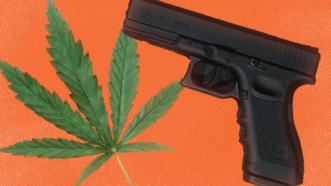
Drug policy reformers and Second Amendment advocates team up in a case before the Supreme Court.

The Liberty Justice Center is urging the Supreme Court to uphold a 5th Circuit decision rejecting the claim that cannabis consumers have no Second Amendment rights.

The state requires carry permit holders to obtain advance permission before bringing firearms into businesses.

They are joining the Trump administration in urging the Supreme Court to uphold a federal law that disarms "unlawful" drug consumers.

The ruling, which emphasizes the lack of historical support for such a law, is unlikely to survive en banc review.

The department's lawsuit notes that the prohibited firearms are "in common use" for "lawful purposes," meaning they are covered by the Second Amendment.

The Justice Department's litigation positions are at odds with its avowed intent to protect Second Amendment rights.

Steven Duarte is one of several petitioners who are asking the justices to address the constitutionality of that absurdly broad gun ban.

His administration is urging the Supreme Court to uphold a prosecution for violating a federal law that bars illegal drug users from owning firearms.

The law applies to millions of Americans who pose no plausible threat to public safety, including cannabis consumers in states that have legalized marijuana.

The cases give the justices a chance to address a constitutionally dubious policy that disarms peaceful Americans.

The law is one of several attempts to override the right to bear arms by making it impractical to exercise.

The decision, which hinges on an exception to the Gun-Free School Zones Act, does not say whether that law is consistent with the Second Amendment.

A unanimous three-judge panel concluded that "no historical tradition supports" the 1987 law.
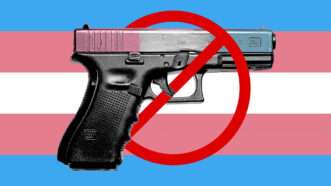
Such a gun ban is not authorized by statute or allowed by the Second Amendment.

Minnesota's proposed firearm restrictions raise serious constitutional questions—and offer little in return.

The Justice Department reportedly is considering a regulation aimed at disarming "mentally ill individuals suffering from gender dysphoria."
The appeals court rejected most of the arguments in favor of that policy, saying "the government must show non-intoxicated marijuana users pose a risk of future danger."

The appeals court concluded that the government had failed to show that policy is consistent with "this Nation's historical tradition of firearm regulation."

The contrast between the two cases illustrates the haphazard impact of an arbitrary, constitutionally dubious gun law.

In response to a Second Amendment lawsuit, the government says the restriction "serves legitimate objectives" and "only modestly burdens" the right to arms.

The appeals court concluded that the restriction impinges on the right to arms and is not consistent with the historical tradition of firearm regulation.

Melynda Vincent is asking the justices to decide whether it's constitutional to disarm people based on nothing more than a nonviolent criminal conviction.
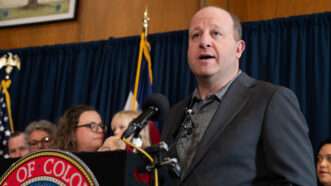
The state may have a hard time showing that its broad restrictions are consistent with the "historical tradition of firearm regulation."

Millions of people are barred from owning firearms even though they have no history of violence, and they have essentially no recourse under current law.

The government failed to persuade the appeals court that 18-to-20-year-olds are not part of "the people" or that the age restriction is consistent with the "historical tradition of firearm regulation."
Celebrate your independence with a subscription to Reason magazine, your most trusted source of honest, insightful news and analysis.




