The Volokh Conspiracy

Mostly law professors | Sometimes contrarian | Often libertarian | Always independent | Est. 2002

The Volokh Conspiracy

Immigration

Only Congress May Suspend the Writ of Habeas Corpus

Lessons from Hamdi v. Rumsfeld

|

As my co-blogger Ilya Somin notes below, White House aide Stephen Miller commented today that the Trump Administration is "actively looking at" whether it would be possible to suspend the writ of habeas corpus on the grounds that the country is suffering an "invasion" by illegal immigrants.

My own view is that the White House can look at this question all it wants, but it is ultimately up to Congress whether the writ should be suspended (at least during times of peace). This is clear form the Constitution's text and structure. The suspension clause is in Article I, section 9, as among several enumerated constraints on legislative power. It is an interesting question whether Courts can review a legislative suspension of the writ, but I think it is relatively clear that the Executive cannot do so unilaterally.

I also think that the Supreme Court has fairly consistently operated under this assumption. Consider Hamdi v. Rumsfeld. In that case there was unanimous agreement that Congress had not suspended the writ, and so the question was whether the federal government could detain Hamdi (an American citizen alleged to be an enemy combatant captured in Afghanistan) in the United States without putting him on trial.

Justice Scalia, joined by Justice Stevens, concluded that the answer was "no," absent suspension of the writ of habeas corpus by Congress.

Where the Government accuses a citizen of waging war against it, our constitutional tradition has been to prosecute him in federal court for treason or some other crime. Where the exigencies of war prevent that, the Constitution's Suspension Clause, Art. I, § 9, cl. 2, allows Congress to relax the usual protections temporarily. Absent suspension, however, the Executive's assertion of military exigency has not been thought sufficient to permit detention without charge.

In other words, the Constitution's full procedural protections apply unless and until Congress suspends the writ.

While other justices did not agree with Justice Scalia on the merits, a majority of the justices indicated that they too believe it is for Congress to determine whether the writ should be suspended.

Justice O'Connor's plurality opinion, for example, noted that the write exists as a check on executive power unless and until Congress suspends it. Consider these two passages:

Though they reach radically different conclusions on the process that ought to attend the present proceeding, the parties begin on common ground. All agree that, absent suspension, the writ of habeas corpus remains available to every individual detained within the United States. U.S. Const., Art. I, § 9, cl. 2 ("The Privilege of the Writ of Habeas Corpus shall not be suspended, unless when in Cases of Rebellion or Invasion the public Safety may require it"). Only in the rarest of circumstances has Congress seen fit to suspend the writ. See, e.g., Act of Mar. 3, 1863, ch. 81, § 1, 12 Stat. 755; Act of Apr. 20, 1871, ch. 22, § 4, 17 Stat. 14. At all other times, it has remained a critical check on the Executive, ensuring that it does not detain individuals except in accordance with law.

Unless Congress suspends the writ, it remains a check on the Executive. This is a claim that would be nonsensical if the Executive could suspend the writ unilaterally. As she wrote later in her opinion:

Likewise, we have made clear that, unless Congress acts to suspend it, the Great Writ of habeas corpus allows the Judicial Branch to play a necessary role in maintaining this delicate balance of governance, serving as an important judicial check on the Executive's discretion in the realm of detentions. See St. Cyr, 533 U.S., at 301, 121 S.Ct. 2271 ("At its historical core, the writ of habeas corpus has served as a means of reviewing the legality of Executive detention, and it is in that context that its protections have been strongest"). Thus, while we do not question that our due process assessment must pay keen attention to the particular burdens faced by the Executive in the context of military action, it would turn our system of checks and balances on its head to suggest that a citizen could not make his way to court  with a challenge to the factual basis for his detention by his Government, simply because the Executive opposes making available such a challenge. Absent suspension of the writ by Congress, a citizen detained as an enemy combatant is entitled to this process.

Even Justice Thomas, who embraced an incredibly expansive view of the Executive Branch's authority to detain enemy combatants in an armed conflict, wrote as if it is solely up to Congress whether the writ should be suspended. Indeed, this formed part of the basis for his disagreement with Justice Scalia, as if suspension of the writ was necessary to detain Hamdi, Justice Thomas wrote, Congress would have to violate the Constitution (by suspending the writ absent the required predicate) to achieve the desired result.

Justice SCALIA apparently does not disagree that the Federal Government has all power necessary to protect the Nation. If criminal processes do not suffice, however, Justice SCALIA would require Congress to suspend the writ. See ante, at 2673. But the fact that the writ may not be suspended "unless when in Cases of Rebellion or Invasion the public Safety may require it," Art. I, § 9, cl. 2, poses two related problems. First, this condition might not obtain here or during many other emergencies during which this detention authority might be necessary. Congress would then have to choose between acting unconstitutionally4 and depriving the President of the tools he needs to protect the Nation. Second, I do not see how suspension would make constitutional otherwise unconstitutional detentions ordered by the President. It simply removes a remedy.

So even if the White house is convinced that the United States is currently subject to an "invasion" (a view I reject), I believe there is broad (if not universal) agreement that it would be solely up to Congress to suspend the writ.

UPDATE: On the original meaning of the suspension clause, see John Harrison, "The Original Meaning of the Habeas Corpus Suspension Clause, the Right of Natural Liberty, and Executive Discretion."
Supreme Court

Homer Nodded in the U.S. Reports

How the phrase ended up in an opinion after it had been omitted.

|

The phrase "Homer nodded" appears four times in the U.S. Reports.  The first time was in Justice Douglas' concurrence in Brandenburg v. Ohio (1969) (quoting Judge Learned Hand as it happens).

The phrase would not appear in another Supreme Court decision until 1992's Lee v. Weisman, when Justice Souter included it in a footnote. Yet as Mark Tushnet recounts on Balkinization, while the phrase had been included in the original slip opinion, it was omitted by the Reporter's office--apparently because no one there recognized the phrase and they thought it was an error. As a consequence, it did not appear in the official bound volume for several years. Indeed, it was only after Tushnet contacted Souter about the omission that Souter realized what had occurred, and the language was restored by a subsequent erratum.

Tushnet writes:

 "Homer nodded" comes to us from the Roman poet Horace via two English poets from the turn of the seventeenth and eighteenth centuries, John Dryden and Alexander Pope. It's been widely observed that Justice Souter seems to have been more comfortable in some earlier century, though the seventeenth seems to me a bit too far back. Justice Souter's writing style was more ornate, more nineteenth century, than the pared down (Hemingway-influenced?) contemporary opinion style.

"Homer nodded" was part of Justice Souter's store of cultural knowledge—but not, apparently, part of the store of such knowledge in the Reporter's office. Justice Souter could write "Homer nodded" as easily as Justice Scalia could refer without citation to Broadway lyrics or Justice Kagan (with citation!) to Dr. Seuss. When I retired from classroom teaching I had just about played out my string on cultural allusions that my students could understand ("The Princess Bride" was hanging in there by a thread), and my guess is that that experience is near-universal (we age, the students we deal with in the classroom remain young).

If there's a larger point here, and maybe there isn't, it is something like this: We all carry cultural knowledge with us but what that knowledge is changes—not for any individual, but for the population composing our institutions—and analysis may go at least a bit off the rails if "we" (the older among us) use our cultural knowledge as the predicate for our evaluation of the performance of today's institutions. Or, I suppose, for our evaluation of the performance of yesterday's.

For what it is worth, "Homer nodded" has appeared in two more Supreme Court opinions: McCreary County, Kentucky v. American Civil Liberties Union (2005) (citing Lee v. Wiesman) and Justice Gorsuch's concurrence in Kisor v. Wilkie (2019).

Emergency Powers

White House May Try to Suspend the Writ of Habeas Corpus in Order to Facilitate Deportation of Migrants

I have long warned of this dangerous implication of the argument that illegal migration qualifies as "invasion."

|

NA

White House Deputy Chief of Staff Stephen Miller recently said the Trump Administration is "actively looking" into suspending the writ of habeas corpus in order to prevent immigrants from challenging their deportation in court:

White House deputy chief of staff Stephen Miller said Friday that President Trump and his team are "actively looking at" suspending habeas corpus as part of the administration's immigration crackdown.

"Well, the Constitution is clear — and that of course is the supreme law of the land — that the privilege of the writ of habeas corpus can be suspended in a time of invasion," Miller told reporters at the White House.

A writ of habeas corpus compels authorities to produce an individual they are holding and to justify their confinement.

It's been a key avenue migrants have used to challenge pending deportations under the Alien Enemies Act, a rarely-used 18th-century power Trump cited to deport Venezuelan nationals he's accused of being gang members to a notorious megaprison in El Salvador.

If the writ of habeas corpus is suspended, the consequences would not be limited to supposedly illegal migrants. Legal immigrants and US citizens could be detained without due process, as well.

I have been warning about this implication of the argument that illegal migration is "invasion" for a long time. See, e.g., here and here.

If illegal migration and cross-border drug smuggling are "invasion," that means we are in a state of invasion at virtually all times, since these activities have been ubiquitous for so long as we have had the War on Drugs and significant migration restrictions. That is both dangerous, and  an additional reason to conclude that this broad interpretation of "invasion" is at odds with the original meaning of the Constitution. Given the importance that the Founders assigned to the writ of habeas corpus (British violations of the writ were among the major grievances that led to the American Revolution), they would not have created a system where the federal government could suspend it at any time.

Fortunately, courts (including both liberal and conservative judges) have so far uniformly rejected the administration's claims about the meaning of "invasion" in ongoing litigation over the Alien Enemies Act. Multiple earlier court decisions have reached the same conclusion with respect to the meaning of "invasion" in the Constitution. Those rulings were in cases involving state governments, and their claims to be able to "engage in war" in response to "invasion," as  Article I, Section 10, Clause 3, of the Constitution authorizes them to do.

Hopefully, that judicial trend will continue. And if the administration tries to suspend the writ based on bogus claims of "invasion," courts should reject it.

In addition, there is longstanding disagreement over the issue of whether the President can suspend the writ of habeas corpus on his own, or whether only Congress can do so. Most legal scholars hold the latter view, since the Suspension Clause is listed in Article I among the powers of Congress, not Article II (which outlines those of the executive branch). But even if the president can suspend the writ without congressional authorization, the Suspension Clause says he can only do so "when in Cases of Rebellion or Invasion the public Safety may require it." There is no such "Rebellion or Invasion" going on, and therefore suspension would be illegal.

UPDATE: Steve Vladeck has additional (I think well-taken) criticisms of Miller's statements here.

Politics

Short Circuit: An inexhaustive weekly compendium of rulings from the federal courts of appeal

Non-citizen soldiers, habeas runarounds, and all federal law.

|

Please enjoy the latest edition of Short Circuit, a weekly feature written by a bunch of people at the Institute for Justice.

State courts often follow bad federal precedent in interpreting their own state constitutions. How best to litigate against this? Over at the Brennan Center's State Court Report, IJ's Anthony Sanders suggests that lawyers should make originalist arguments using their own states' history. Even if they're not originalists themselves.

New on the Short Circuit podcast: Jury trial rights and a very general search.

  1. In 2017, the Trump administration put the brakes on the expedited path to citizenship that's been available to non-citizen soldiers since World War I. After the district court strikes down some of the changes, the Biden administration rescinds the policy (while continuing to litigate the case and formulating a new policy that never materializes). Trump II administration: We're bringing the policy back, and we want to appeal the district court's opinion. D.C. Circuit: No can do. The case is moot, and also, since the recission was not an attempt to evade judicial review, the district court's opinion is vacated.
  2. If you want to pilot commercial vessels on the St. Lawrence Seaway, you need a license from the Coast Guard. The Coast Guard, however, has fully turned over its licensing authority to a private, for-profit business. When one captain—who has completed a lengthy apprenticeship but not yet received his license—raises concerns that the business is mismanaging its financial affairs, he's blackballed on a variety of pretexts. He sues the Coast Guard, arguing, among other things, that delegating its regulatory authority to a private business is unconstitutional. D.C. Circuit: And we won't get to the merits of any of it because we're not sure he completed the training, even though he did the exact same training as everyone else who received licenses. (This is an IJ case.)
  3. Over a dissent from Justice Breyer, the First Circuit says a federal prisoner in New Hampshire who complains of intolerable knee pain cannot sue prison officials for deliberate indifference to his medical needs. Because knee pain is an entirely different context than untreated asthma. Read More

Free Speech

Hate Crime Hoax Could Be Constitutionally Unprotected True Threat

|

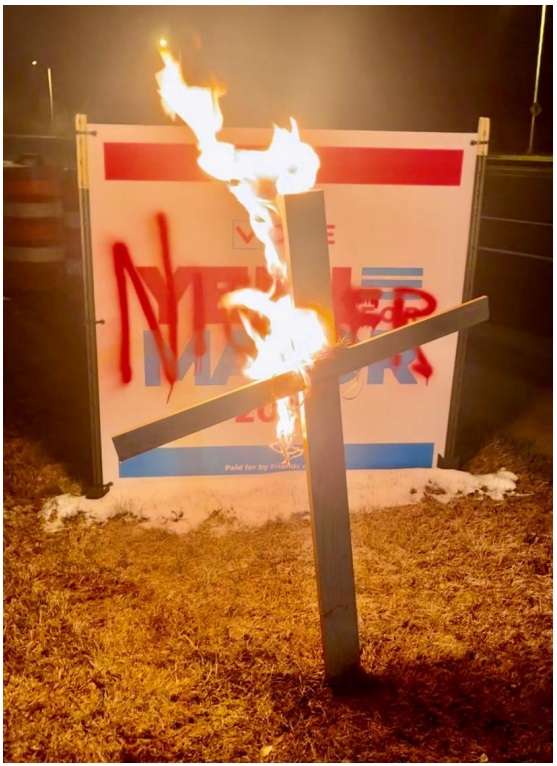
Photo from the indictment.

From today's decision by Judge Regina M. Rodriguez (D. Colo.) in U.S. v. Bernard:

Colorado Springs, Colorado, held an election for mayor …. CANDIDATE 1 [Yemi Mobolade -EV] is black and CANDIDATE 2 [Wayne W. Williams -EV] is white…. Defendants supported CANDIDATE 1. The Indictment alleges that the Defendants devised a plan to help CANDIDATE 1 win the runoff election. In the early morning hours [three weeks before the election], the Defendants defaced a political sign with CANDIDATE 1's name on it by using red spray paint to write the N-word on it. The Defendants then staged a burning cross in front of the sign and videotaped it.

Later that same day, the Defendants created a fake email account, posing as a concerned citizen, and sent the video, along with an email referring to hate crimes, to media outlets and CANDIDATE 1's campaign. {The email described what was depicted in the video—"To my surprise and disgust it was a cross on fire in front of running candidate's sign for Mayor. Looking past the flames I see it's Yemi Mobalade's sign with the word sprayed painted across in red 'NIGGER'!" The email also included language regarding hate-crime tactics used to harass and intimidate candidates and voters in elections.} According to Defendant Bernard, Defendants' actions were "specifically designed to generate voter outrage and support for a candidate" they actively backed….

Defendants were charged with conspiracy and with "using instrumentalities of interstate commerce to maliciously convey false information to intimidate someone by means of fire," and the court rejected defendants' motion to dismiss the charge:

Read More

Free Speech

Free Speech Unmuted: Can AI Companies Be Sued For What AI Says?

|

A mother sues Character.AI, claiming that a conversation between her teenage son and a Character.AI chatbot led him to commit suicide. A conservative activist sues Meta, claiming that its AI generated false accusations about him. Jane and I analyze these cases, and more broadly, discuss lawsuits against AI companies, and possible First Amendment defenses to those lawsuits.

See also our past episodes:

Read More

Justice Souter's Papers Will Be Available In The Year 2075

The Justice was "emphatic" that his papers would be available only fifty years after his death.

|

Today the Supreme Court announced that Justice David H. Souter passed away at his home in New Hampshire. I expect there will be many remembrances of the Justice. But today does mark something of a countdown.

In 2015, Justice Souter told my colleague Gerard Magliocca that his papers would become available fifty years after his death:

"I have given such papers as I've retained to the New Hampshire Historical Society, to be opened for inspection after the 50th anniversary of my death. By that time, they will be of interest only to the historians taking the long view."

Tony Mauro offered more details at the defunct Blog of the Legal Times:

Bill Veillette, the historical society's executive director in 2009, also confirmed on Wednesday that Souter's wish all along was for release of his papers 50 years after his death, not his retirement.

"He was very emphatic about it," Veillette recalled. "He told me, 'I've got an incinerator outside my house, and either you agree to 50 years after my death, or they go into the incinerator.'" Since many papers are donated by families decades or centuries after a notable person's death, Veillette said Souter's 50-year delay seemed relatively brief. Veillette is now the executive director of the Northeast Document Conservation Center in Massachusetts.

(I miss BLT.)

Start the clock. Souter's papers will be available at the earliest in the year 2075--just in time for the Tricentennial. If I am still on planet earth then, I would be about 90 years old. I am skeptical anyone in the year 2075 will have much interest in those papers, as all of Souter's other colleagues will have likely released their papers by then.

Religion and the Law

Transcendental Remediation: $2.6M Settlement in Lawsuit Over Chicago Public School Transcendental Meditation Program

|

The ABA Journal (Debra Cassens Weiss) reports on the settlement (in which "defendants did not admit liability"):

The lead plaintiff in the [class action] suit, Kaya Hudgins, was a practicing Muslim at the time of the "Quiet Time Program," according to prior coverage by Patch and Religion News Service and an April 2024 press release. Transcendental meditation was represented as nonreligious, but the mantras that students were taught to silently repeat were in fact words that honored or referenced specific Hindu deities, the suit had alleged.

The suit also alleged that students were required to complete a "Puja" initiation ceremony that included chants recognizing powers of Hindu deities.

Here's an excerpt from Judge Matthew Kennelly's decision in Williams v. Bd. of Ed. (N.D. Ill. 2021), which had allowed a related lawsuit to go forward:

Williams attended Bogan Computer Technical High School (Bogan) in Chicago from fall 2017 until he graduated on June 18, 2019. While Williams was a student, Bogan implemented the Quiet Time program during the 2017–18 and 2018–19 school years….

According to Williams, his first experience with Transcendental Meditation as a part of the Quiet Time program occurred during the 2018–19 school year, when he was eighteen years old. He stated that he did not receive any letters about the program to give to his parents, but in October 2018 he and other students were given a document titled "Quiet Time Program Student Application for Transcendental Meditation Instruction Bogan High School." He also stated that he had been informed that Transcendental Meditation was "a really effective way to meditate and find yourself" and that he signed the form when it was first presented to him because he "was interested learning [meditation] properly."

Although the document included language stating that "learning the TM technique is an optional activity," Williams maintained it was "not optional" and "mandated" for students to sign the document. He explained that this was because students who initially chose not to learn Transcendental Meditation "eventually had to sign up," though "off the top of [his] head at the [moment]" he was unable to name any student who did not sign the document at first and later "was forced to do [Transcendental Meditation]." As for meditating during the fifteen-minute Quiet Time periods, Williams did not dispute that "if [he] didn't want to do [Transcendental Meditation], [he] didn't have to."

In contrast, Principal Aziz-Sims testified during her deposition that students could choose not to learn Transcendental Meditation. She stated that although students who were disrupting others during Quiet Time may have been reprimanded by a teacher, an administrator, or the principal herself, she was not aware of any Bogan student being disciplined for choosing not to learn Transcendental Meditation. She also testified that she approved giving students at least two letters explaining Quiet Time to their parents and allowing their parents to opt out of the program, in accordance with the school's policy regarding student involvement in other school activities.

Read More

Free Speech

Should Streisand Warnings Join Miranda Warnings?

|

Apropos Tuesday's post "Are Employment Lawyers Disclosing the Reputational Risks of Litigation to Their Clients?," Krista Lee Baughman (Dhillon Law) writes about a similar question related to libel law. (Baughman is a prominent libel lawyer, see, e.g., Starbuck v. Meta Platforms, the new Large Libel Models lawsuit.)

[A]s a defamation lawyer, one of the (many) things I flag for clients in the very first consultation is the risk of the "Streisand Effect" if they make their complaints public, along with the fact that their names will forever be tied to their case when they are subject to a background search and potentially also a Google search if the matter gets press. I also flag the possibility that, in cases where the defendant has postured themselves publicly as a "social justice warrior," then even the demand letter we send might be made public by the defendant, e.g. via a social media post claiming that the defendant "spoke up and now is being pressured to abandon their free speech rights," etc.

I think these are essential points to raise in early calls with would-be defamation clients, even if you end up talking yourself out of a job, and I'd counsel employment lawyers to raise the possibility with their clients as well.

I hope other lawyers do the same.

Immigration

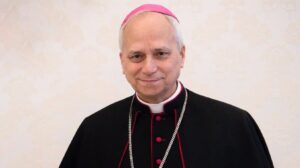
Pope Leo XIV and Immigration

The first American pope has a history of advocating for migrants' rights.

|

Cardinal Robert Prevost (now Pope Leo XIV). (Vatican Media)


I did not expect an American Pope. I thought there was a norm against it, by virtue of the Church wanting to avoid being led by a citizen of the world's most powerful nation. But either I was wrong, or the norm has faded. Today, Cardinal Robert Prevost became the first American pope, taking the name of Leo XIV.

At least on the issue of immigration I am guardedly optimistic this might be a good choice. Cardinal Prevost's (now Leo XIV's) Twitter/X feed includes several posts critiquing Trump and Vance on immigration, such as this one and this one. Conservative Catholic legal commentator Ed Whelan of the Ethics and Public Policy Center has also called attention to these tweets and suggests Cardinal Prevost's positions on this issue might have been instrumental in his selection as pope. I don't know about that. But I hope it's true.

While serving the Church in Peru, Cardinal Prevost advocated for the rights of Venezuelan refugees. We have that cause in common. In a much, much less significant way, I have tried to do the same here in the US, defending the valuable CHNV program (which allows Americans to sponsor Venezuelan and some other migrants fleeing Latin American dictatorships) against attacks by state governments and the Trump Administration, opposing Trump's illegal efforts to use the Alien Enemies Act to deport Venezuelans.  I have also informally advised people and organizations working to sponsor Venezuelans in the CHNV program.

This is just speculation. But perhaps advocating for Venezuelan refugees from socialism has led the new Pope to appreciate how awful that ideology is (a major blind spot for his predecessor). If socialism were all it's cracked up to be, it would not have generated a horrifically oppressive regime whose depredations have led to the biggest refugee crisis in the history of the Western hemisphere. And if socialist policies were actually good for the poor, the poor would not be fleeing them in droves.

Atheist though I am, I will always be grateful to Pope John Paul II for his leadership in the struggle against communism, the greatest evil in the world at that time. Perhaps - just perhaps - the new pope can help lead the struggle against nationalism - the greatest evil of this time; see my article "The Case Against Nationalism" (coauthored with Alex Nowrasteh) on why it's so awful, including in ways that parallel the evils of communism. Immigration is a central front in that vital struggle, though not the only front, by any means. And the leader of the world's biggest universalist religious denomination is well-positioned to help combat it, should he wish to.

Obviously, this pope - like his predecessors - is likely to take many positions I am no fan of. I have no illusions that he's secretly somehow a libertarian. But if he advocates for migrants and works to oppose socialist and nationalist oppression, he could do great good.

It may seem improper to evaluate popes based on their views on social and political issues. But, like it or not, the leader of the world's largest religion is necessarily a political figure, one with great potential influence on political debate. Thus, even those of us who are not Catholic have an interest in considering the Pope's views on on such matters.

Things might be different if popes only sought to influence the internal affairs of their church and its adherents, as do the leaders of some smaller faiths. But the papacy has long sought to influence public opinion and government policy far beyond that.

UPDATE: It is perhaps worth noting that Leo XIII, the last Pope to take the same name as the current one, was highly critical of socialism, writing that "It is evident that the essential principle of socialism, the community of goods, must be completely rejected, as it only harms those it would seem to benefit, is directly contrary to the natural rights of humanity, and would introduce confusion and disorder into the common good." It is sometimes said that a Pope's choice of name indicates an affinity with the previous pope who took the same name.

Academia

Who's More Liberal, Law Professors or Their Students?

An interesting new study on the ideological concordance between law faculty and law students.

|

Several years ago, Adam Bonica (Stanford University), Adam S. Chilton (University of Chicago), Kyle Rozema (Northwestern University) and Maya Sen (Harvard University), published a paper showing that the legal academy is significantly more liberal than the legal profession. As I noted when the paper was first released, this was interesting because the legal profession itself is more liberal than the public at large.

The same authors have a new study, "Ideological Concordance Between Students and Professors," looking at the alignment, or lack thereof, between law professors and law students. The abstract reads:

The largely liberal composition of American university faculties is frequently lamented in academic discourse and public debate, largely out of concern that professors "brainwash" younger generations with left-leaning principles. However, these complaints often fail to acknowledge that university students are also overwhelmingly liberal. It is thus possible that university professors are more liberal than the American public but more conservative than their students. In this article, we develop a measure of student-professor ideological concordance based on the share of faculty members who are more liberal than the students at a given school. We then use data on the ideology of students and professors in American law schools over more than a twenty-year period to estimate the degree of ideological concordance in the legal academy. We find that although professors have become more liberal over time, they have also become more conservative than their students.

Their assessment is largely backward looking, as the study relies upon data between 1988 and 2011, but it is interesting nonetheless. One has to wonder, however, whether anything has changed in the academy over the past fourteen years. Did law professors continue to become more liberal over this time? And, if so, did students as well?

One other thing worth noting is that the authors explicitly consider whether law professors are influencing the ideology of their students, and conclude that this is unlikely. On this point, they write:

Another possible concern with the validity of our results is that the correspondence between student and professor ideology may be driven by professors having a causal impact on their students' ideology. The reason that this is a concern is that students largely make political donations after law school, and any correspondence between professors and students could be driven by the students' ideology being moved by the professors' ideologies.

Although it is certainly possible that professors exert some influence on law students' political views, we believe this is unlikely to be sufficient to drive our results. Importantly, although there is some evidence of peer effects on ideology from college students' roommates (Strother et al., 2021), there is no general evidence suggesting that exposure to a liberal environment in college moves students to become more liberal (Mariani and Hewitt, 2008). Moreover, by the time students attend law school, it is more likely that their ideology is stable (Green et al., 2004; Bonica, 2014). Relatedly, there is evidence that judges do not affect the ideology of their law clerks (Bonica et al., 2019). Although law school is likely an important life experience, clerking is typically thought to be an intense experience where recent law graduates work in extremely close quarters with judges. If clerking does not change a recent law graduate's ideological leanings, it is reasonable to think that law professors also would not have a large influence.

To investigate the possibility that professors may be having a causal impact on their students' ideology in our setting, we compare students' CFscores from donations made during and before law school to CFscores from donations made after law school. More specifically, Column 3 of Table 3 regresses CFscore based on all donations after law school on CFscore of all donations during or before law school, and Column 4 regresses CFscore based on donations within 10 years after law school on CFscore of all donations made during or before law school. We find that CFscores before law school strongly predict the CFscores after law school (a 0.77:1 and 0.70:1 relationship between these measures), suggesting that reverse causation is unlikely to be driving our results.

As with everything this quartet produces, the study is interesting. Alas, one of them has decided to become a Dean, so there may not be too many more of these papers coming.

Free Speech

Reasonable to Deny Pseudonymity to Plaintiff Who Seeks to Conceal That She Has Epilepsy

So holds the Eleventh Circuit.

|

From today's Eleventh Circuit opinion in Tessa G. v. Secretary, decided by Judges Adalberto Jordan, Robert Luck, and Embry Kidd:

In June 2023, Tessa G. filed a pro se complaint against HHS, her former employer, alleging disability discrimination, failure to accommodate, retaliation, illegal disclosure under the Americans with Disabilities Act, and deprivation of due process under the Fifth Amendment. In support of her complaint, Tessa G. explained that she has suffered from several disabilities, including epilepsy, for most of her life. Following surgical intervention that abated her seizures, she earned her law degree and began working with HHS in June 2013.

About a year into her tenure with HHS, Tessa G. disclosed her epilepsy diagnosis to request medical leave and inform her supervisor that she required an accommodation to be driven to any off-site meetings. Soon thereafter, HHS hired someone to replace Tessa G., gave her limited work to complete, and ultimately terminated her in November 2014. Tessa G. asserted that she found it difficult to find new employment and that she gained several new health conditions after her firing.

Tessa G. further explained that, shortly after her termination, she filed an Equal Employment Opportunity Commission ("EEOC") complaint against HHS, challenging her demotion and termination, and alleging that HHS disparaged her to others in her field. Although an administrative law judge ultimately entered default judgment in her favor, her recovery was limited due to the nature of her fixed-term contract with HHS, so she brought the instant case to pursue further relief.

Tessa G. also sought pseudonymity, but the lower court said no, and the Eleventh Circuit upheld that decision:

Read More

Free Speech

"Justice Is Not Served by Allowing This Game of Whack-a-Mole to Continue"

|

From today's decision by Judge Steven McAuliffe (D.N.H.) in Beres v. RELX, Inc.:

After multiple unsuccessful defamation suits against RELX, Inc., d/b/a LEXIS NEXIS USA, and Portfolio Media, Inc., in other courts, Christopher Beres, who is a lawyer proceeding pro se, brought the same claims in Hillsborough County (New Hampshire) Superior Court. Defendants removed the action to this court, but Beres then added Andrew Delaney as a plaintiff to destroy diversity jurisdiction and sought remand to state court.

The court granted the defendants' motion to sever Delaney from the case to preserve diversity jurisdiction, and denied the plaintiffs' motion to remand. Delaney is no longer a party in this case.

In response, Beres filed a notice of voluntary dismissal without prejudice. Defendants move to convert Beres's notice of voluntary dismissal without prejudice to dismissal with prejudice and also seek an award of fees incurred in litigating this case….

The factual backstory:

Delaney was employed in a temporary position at a law firm, where he worked on a project for the firm's client, Toyota, and apparently had access to confidential documents. The project was suspended during the COVID pandemic, resulting in Delaney losing his job. Delaney, through Beres, who was acting as his legal counsel, sent a demand letter to Toyota, but Toyota did not respond. In April of 2020, Beres filed a lawsuit against Toyota on Delaney's behalf in Brevard County, Florida. Beres included allegedly sensitive information about Toyota in that complaint. Delaney later dismissed the suit without prejudice.

Read More

AI in Court

Should a Killer's Victim Be Able to "Speak" at a Sentencing Through AI?

An Arizona trial court judge allowed this innovative approach to presenting a victim impact statement, which seems like a useful step toward justice.

|

Last week, the road-rage killer of an Arizona man was sentenced to 10 1/2 years in prison after his victim "spoke" to the court via a victim impact statement (VIS) created through artificial intelligence. The trial court judge allowed the victim's family to play an AI-generated video with a version of the victim—including his face and body and a lifelike voice—which appeared to ask the judge for leniency. The family has posted the statement here on YouTube. The defendant was apparently sentenced to the maximum term and has promised to challenge the statement on appeal. In my view, this kind of statement seems like a useful technological innovation that should be generally allowed, subject to reasonable limitations imposed by the trial court (which I discuss at the end of this post).

In this post, I discuss this AI-generated victim-impact statement against the backdrop of  the existing legal landscape in this country. All fifty states and the federal system allow victims to deliver victim impact statements, as I outline in this article. (Interestingly, many other countries use some form of victim impact statement as well.) In homicide cases such as this Arizona case, the victim's family members step into his shoes as his representative to deliver the statement. I have made the general case for allowing victim impact statements in two papers, "In Defense of Victim Impact Statements" and "How Victim Impact Statements Promote Justice: Evidence from the Content of Statements Delivered in Larry Nassar's Sentencing" (co-authored with Professor Edna Erez). The U.S. Supreme Court has also approved victim impact statements even in capital cases, in Payne v. Tennessee (1991). To be sure, academics such as Professor Susan Bandes and Professor Mike Vitiello have raised objections to VISs. But for purposes of this post, I will assume that the legitimacy of VISs  and address the narrower question of whether an AI-generated statement should be permitted.

This question should be assessed in light of the recognized purposes of victim impact statements. The first purpose is to provide relevant information to the sentencers, often (as in this Arizona case) a judge. This purpose has been described as the "informational rationale" for victim impact statements. Through a VIS, the victim's family members are allowed to provide "a quick glimpse of the life" the defendant "chose to extinguish," thereby reminding the sentencer that "the person whose life was taken was a unique human being," as Justice O'Connor explained in her concurring opinion in Payne. An AI-generated statement simply builds on that approach.

An AI-generated statement is not too far removed from previously used technologies, which help to provide the glimpse into the victim's life. For example, in homicide trials, it has long been the practice to allow the prosecution to introduce a photograph of the victim taken when the victim was alive. For example, a Utah statute (enacted in 1994 to enforce Utah's Victims' Rights Amendment) provides that "[i]n any homicide prosecution, the prosecution may introduce a photograph of the victim taken before the homicide to establish that the victim was a human  being, the identity of the victim, and for other relevant purposes." Of course, in a criminal case by the time of sentencing, the defendant has been proven guilty beyond a reasonable doubt, and so issues related to potential bias while determining guilt are no longer in play.

At sentencing, appellate courts have approved of video montages of photographs of a victim and even videos of a victim. For example, in 2009, the California Supreme Court considered the admissibility in a death penalty case of an eight-minute video of the victim and his family enjoying a trip to Disneyland. The Court rejected a defendant's challenge, calling the tape an "awkwardly shot 'home movie'" lacking the elements generally designed to stir up emotions." People v. Dykes, 209 P3d 1, 44-45 (Cal. 2009).

However, such videos can go too far. For example, in 2004, a federal district court excluded a victim video in a death penalty case. The court explained that the video, made for a memorial  service, "was about twenty-seven minutes in length and featured over 200 still photographs of the victim, in roughly chronological order, from the time he was born until the time just before his death. The pictures were set to evocative contemporary music, including that of the Beatles and James Taylor." This video, the court concluded, when too far "because its probative value was outweighed by the danger of unfair prejudice, and created a danger of provoking undue sympathy and a verdict based on passion as opposed to reason." United States v. Sampson, 335 F. Supp. 2d 166, 191 (D. Mass. 2004). At the same time, however, the district court noted that other courts had allowed some video clips to be used, but in "each of these cases, the admitted video was brief and found to be probative of some aspect of the victim's life."

An AI-generated statement is simply a technological advance on this tradition of victim videos, and thus helps to address one of the core problems that VIS are designed to address. If no victim statement is allowed, it turns the killer's victim "into a faceless stranger" and thus "deprives the State of the full moral force of its evidence," as the U.S. Supreme Court recognized in Payne. Through the AI-generated statement in this Arizona case, the victim—Christopher Pellkey—was no longer a "faceless stranger" to the proceedings but rather a unique human being whose life the defendant extinguished.

In determining whether an AI-generated statement should be allowed, it is also useful to compare two situations. Suppose the defendant has seriously injured a victim by striking a non-deadly blow. In that case, the victim himself is allowed to deliver a victim impact statement about what happened. For comparison, suppose that the defendant has killed a victim by intentionally striking a lethal blow. In that case, the victim is obviously unavailable to deliver his own statement. An AI-generated statement is simply a technological substitute for the fact that the defendant has criminally chosen to make the victim unavailable. In balancing the equities between an innocent victim and a killer, of course, the equities lie with the victim and his family representatives. Because the defendant has chosen to commit his deadly crime, any doubts should be resolved against him in deciding whether an artificially created substitute for the victim is an appropriate response to the victim's absence . Read More

More