The Volokh Conspiracy

Mostly law professors | Sometimes contrarian | Often libertarian | Always independent | Est. 2002

The Volokh Conspiracy

Constitutional Limits on Environmental Law -- Call for Papers

The Pacific Legal Foundation and Catholic University Law Review are co-sponsoring a symposium on environmental law's constitutional constraints;

|

The Pacific Legal Foundation and Catholic University Law Review have posted a call for papers for a symposium on "Searching for Constitutional Limits on Environmental and Natural Resources Law." Here is the write-up:

Even in its most flattering light, the modern administrative state coexists uneasily with the core constitutional principle that the federal government possesses only limited enumerated powers, while the States and the people retain the remainder. "The Framers could hardly have envisioned today's vast and varied federal bureaucracy and the authority administrative agencies now hold over our economic, social, and political activities," as famously observed by Chief Justice Roberts.

Nowhere is our contemporary regulatory apparatus more pervasive than in the realm of environmental and natural resources policy. Several prominent statutes—including the Clean Water Act and the Endangered Species Act—routinely reach intra-state and non-commercial activity lacking any apparent nexus with interstate commerce. The federal government, moreover, exercises absolute power over 30% of all land, including 46% of the contiguous eleven western States and 61% of Alaska.

At some point, the growing tension between the Framers' design and modern reality must breach the Constitution's boundaries.

Accordingly, they are seeking "papers that explore the limits of Congress's regulatory authority over environmental and natural resources policy."

Papers will be presented at a symposium in Spring 2026 and published in the Catholic University Law Review.  Full details are here.
Free Speech

New Orleans Mayor Wasn't Entitled to Restraining Order Against Woman Who Took Photos of Her in a Public Place

A temporary order had been issued, but the trial court refused to extend it into a permanent order, and awarded $15K in attorney fees; an appellate court has just upheld the trial court's final decision, and added $8K for appellate attorney fees.

|

From Cantrell v. Breaud, decided Monday by Louisiana Court of Appeal Judge Daniel L. Dysart, joined by Judge Karen K. Herman:

On the afternoon of Sunday, April 7, 2024, from the balcony of her residence at the Upper Pontalba Apartments, Ms. Breaud took photographs of Mayor Latoya Cantrell and NOPD Officer Jeffrey Vappie, a member of the mayor's security detail, while the two were seated at a table on the Chartres Street side balcony of the Tableau Restaurant, located in the French Quarter.

By way of background, Nola.com (John Simerman), reporting on the case, stated that, "the snapshots that roiled New Orleans, revealing Mayor LaToya Cantrell enjoying drinks on a French Quarter balcony with her alleged police officer paramour, Jeffrey Vappie." Vappie is also being prosecuted for alleged fraudulent timecard submission and other false statements related to the alleged affair.

On May 9, 2024, Mayor Cantrell filed an official police report setting out the alleged criminal actions of Ms. Breaud of the taking the photos, which took place on April 7, 2024. On May 10, 2024, Mayor Cantrell filed a "Petition for Protection From Stalking or Sexual Assault" (hereinafter referred to as the "Restraining Order") … against Ms. Breaud …. In summary, the petition for the Restraining Order set out that Ms. Breaud had followed her, harassed her and was an uninvited presence.

In her own handwriting, Mayor Cantrell set forth that the "[a]ctions of the defendant have placed me and my family in greater risk of being harmed, jeopardizing my safety especially at places I frequent." She further provided that "[T]he defendant aggressively photographed and harassed me while I was having lunch on a restaurant balcony." The trial court granted the petition and on May 10, 2025, a temporary restraining order/order of protection ("TRO") was issued and a … hearing was set for May 20, 2024, to determine whether the temporary restraining order should be continued.

Read More

Free Speech

Father Sues Newspaper for Not Adequately Covering Son's Basketball Games

|

From Lafayette v. Abrami by Vermont Superior Court (Lamoille County) Judge Benjamin Battles; the case was decided May 20, but just posted on Westlaw:

Plaintiff's pro se complaint alleges the following facts. Plaintiff is the parent of a Vermont high-school basketball player and a "lifelong student of the game." Plaintiff's son, who plays for a school outside of Chittenden County [where Burlington is located], is "one of Vermont's top-performing high school basketball players."

The Burlington Free Press is Vermont's largest newspaper. In 2018, it created and marketed Vermont Varsity Insider as a platform to cover high school sports throughout Vermont…. Despite its claims of statewide coverage, Vermont Varsity Insider focuses on Chittenden County schools, many of which have advertising or other commercial relationships with defendants. While scores from other schools are reported when available, detailed analyses of games or individual players are not.

Although plaintiff's son had multiple 30-point games during the 2024-2025 season, his performances were not reported in Vermont Varsity Insider, despite plaintiff's repeated complaints. This lack of coverage has hurt plaintiff's son's college prospects and caused plaintiff anxiety and stress, leading to uncontrollable vomiting, severe gastrointestinal distress, and panic attacks requiring benzodiazepine treatment. The complaint seeks compensatory and punitive damages and pleads causes of action for (i) violation of the Vermont Consumer Protection Act; (ii) breach of contract; (iii) negligent infliction of emotional distress; and (iv) unjust enrichment….

Read More

Free Speech

Large Libel Models: Small Business Sues Google, Claiming AI Overview in Searches Hallucinated Attorney General Lawsuit

|

The case is LTL LED LLC v. Google LLC (D. Minn.); see pp. 104 of this PDF onwards for the amended complaint. The lawsuit was filed in March in Minnesota trial court, but was just removed to federal court. The plaintiffs are the business and four of its officers, all of whom were also mentioned by name in some Google AI Overviews (assuming the exhibits attached to the Complaint are correct).

The Complaint claims that none of the sites linked to by the Overviews actually reported that Wolf River had ever faced a Minnesota AG lawsuit, or was otherwise sued for the alleged misconduct. According to the Complaint,

Google cited numerous sources in support of its false assertions; however, none of the referenced materials in fact contained the information Google claimed they did.

The Complaint also alleges specific lost business:

On March 3, 2025, a customer … terminated his relationship with Wolf River. The customer referred to lawsuits that appear when he "Googled" Wolf River…. The total contract price was $39,680.00.

Read More

Donald Trump

Federal Circuit Grants Government's Motion for Stay Pending Appeal in Our Tariff Case

It's disappointing. But the court will hear the case on the merits on an expedited basis, and we have a strong case.

|

Earlier tonight, the US Court of Appeals for the Federal Circuit imposed a stay pending appeal temporarily blocking implementation of the Court of International Trade ruling striking down Trump's "Liberation Day" tariffs, in the case filed by the Liberty Justice Center and myself on behalf of five businesses harmed by the tariffs. The stay also applies to the case filed by twelve states led by Oregon, decided in the same CIT ruling. The court's order is available here.

It's an unfortunate decision. As is often the case with stay orders, the court said very little about its reasoning. But it did seem to go out of its way to indicate this is not a ruling on the merits:

Both sides have made substantial arguments on the merits. Having considered the traditional stay factors, see Fed. R. App. P. 8; Nken v. Holder, 556 U.S. 418, 426 (2009), the court concludes a stay is warranted under the circumstances. See also Trump v. Wilcox, 605 U.S. ___, 145 S. Ct. 1415, 1415 (2025) (per curiam) ("The purpose of . . . interim equitable relief is not to conclusively determine the rights of the parties, but to balance the equities as the litigation moves forward….")  The court also concludes that these cases present issues of exceptional importance warranting expedited en banc consideration of the merits in the first instance.

The court also ordered an expedited schedule for consideration of the case, and decided it would hear the case en banc (meaning it will be heard by all members of the court, and not just a three-judge panel), noting that "these cases present issues of exceptional importance warranting expedited en banc consideration of the merits in the first instance."

We have a strong case, and I remain guardedly optimistic that the appellate court will ultimately see that the President's claim of virtually unlimited power to impose tariffs is blatantly illegal - which is what every court to have considered the issue so far has concluded.

Liberty Justice Center Senior Counsel Jeffrey Schwab, with whom I am co-counsel on this case, issued the following statement, with which I agree.

We're disappointed the Federal Circuit allowed the unlawful tariffs to remain in place temporarily. It's important to note that every court to rule on the merits so far has found these tariffs unlawful, and we have faith that this court will likewise see what is plain as day: that IEEPA does not allow the president to impose whatever tax he wants whenever he wants. We are glad the Federal Circuit recognized the importance of this case, and agreed to hear it before the full court on an expedited schedule.

For those interested, a compendium of links my writings on the case is available here.

Free Speech

Draft Amicus Brief in Chiles v. Salazar, the Professional Speech / Minor Conversion Therapy Case

|

I've written an amicus brief on my own behalf in this case (here's the PDF version). I'll be filing it tomorrow, but I thought I'd preview it here, in case there are some corrections or criticisms that I should take into account. Please let me know if you have anything to suggest (though please recall that the brief is aimed at fitting the case within the existing Supreme Court precedents, and not arguing to the Court how existing precedents should be overruled or modified).

Interest of the Amicus Curiae

Eugene Volokh is the Thomas M. Siebel Senior Fellow at the Hoover Institution at Stanford University. He is one of the few professors to have written on the speech integral to illegal conduct exception to the First Amendment, on which the decision below relied in part, Pet. App. 49a-50a. In particular, he is the author of The "Speech Integral to Criminal Conduct" Exception, 101 Cornell L. Rev. 981 (2016); Overbroad Injunctions Against Speech (Especially in Libel and Harassment Cases), 44 Harv. J.L. & Pub. Pol'y 147 (2022); One-to-One Speech vs. One-to-Many Speech, Criminal Harassment Laws, and "Cyberstalking," 107 Nw. U. L. Rev. 731 (2013); and over 50 other law review articles on the First Amendment, as well as a First Amendment casebook.

Amicus hopes that this brief can help explain the proper boundaries of the speech integral to illegal conduct exception, and can show that this Court—unlike the court below—should not rely on that exception in this case.

Summary of Argument

[1.] Amicus takes no position on what First Amendment test this Court should articulate for restrictions on professional-client speech. But this Court should not apply the speech integral to illegal conduct exception to formulate such a test, or to resolve this case.

Speech cannot lose its protection just because it is relabeled conduct and then banned. Indeed, this Court has consistently recognized that making "conduct" illegal or tortious abridges free speech when the conduct consists of speech that supposedly causes harm because of what it communicates.

Rather, the "speech integral to illegal conduct" exception properly applies to speech that sufficiently risks causing or threatening some other nonspeech crime or tort: It is that relationship that makes speech "integral" to the criminal or tortious conduct.

The illegal conduct can consist of physical nonspeech behavior. It can consist of speech that is independently constitutionally unprotected under some other exception. And it can consist of an agreement, which is treated as analogous to physical conduct. But it is not enough that the speech itself be labeled illegal conduct, such as "contempt of court," "breach of the peace," "sedition," "use of illegally gathered information," "treatment," or "professional advice."

Read More

Free Speech

Webinar Conversation on the First Amendment and Requiring Fifth-Graders to Read Pro-Gender-Ideology Books to Kindergarten Students

|

I much enjoyed this conversation with Kayla Ann Toney (First Liberty Institute), who was the prevailing lawyer in S.E. v. Grey:

Encinitas Unified School District required two fifth-grade boys and their assigned kindergarten buddies to read and watch My Shadow is Pink and do an activity, pressuring the kindergartners to choose a color to represent their own shadows. The plaintiffs allege this was designed to make the students question their gender identity. Represented by First Liberty Institute and the National Center for Law and Policy, the families filed a complaint in the Southern District of California and sought a motion for preliminary injunction. On May 12, 2025, Judge M. James Lorenz granted that motion in part, requiring the school district to provide advance notice and opt-outs when gender identity material is taught in mentoring programs. The judge's opinion focused on compelled speech, finding that the plaintiffs were likely to succeed on the merits of that claim. Free speech expert Professor Eugene Volokh and counsel Kayla Toney, who represents the families, broke down the opinion and discussed its ramifications for First Amendment jurisprudence.

Here's an excerpt from Judge James Lorenz's order from last month:

The school activity at issue occurred in the context of the buddy program, a weekly class pairing younger and older students. The buddy program is a mandatory part of the school curriculum. P.D. and S.E., both fifth graders, were each paired with a kindergartener. In this program, "students in the older classroom mentor students in the younger classroom."

Until the buddy class at issue, the buddy program involved art or garden projects, and any books read in the class were selected by the students. The school sent parents a weekly newsletter listing the books the students were reading each week. For the buddy class at issue, the book entitled My Shadow Is Pink was selected by the teachers and was not listed in the weekly newsletter.

My Shadow Is Pink is about a boy who liked to wear dresses and play with toys associated with girls. Because the boy thought he did not "fit in" with his family and peers, his shadow was pink rather than blue. The story involves a conflict between the boy and his father. The father eventually comes to accept his son's "pink shadow" not as a phase but as reflecting the boy's "inner-most self." Although the term "gender identity" does not appear in the book, the author describes it as a children's book on the subject of gender identity. Defendants admit that the book "does address gender identity."

In preparation for the buddy class, the teacher first read the book to P.D. and S.E.'s fifth grade class. The fifth graders then joined their kindergarten buddies, and the teacher showed a read-along video of the book to the fifth graders sitting next to their respective buddies. The video was followed by an "art activity" in which the teacher asked the kindergarteners to "pick a color that represents you," and instructed the fifth graders to trace their respective buddies' shadows on the ground with colored chalk.

Read More

Libertarianism

Liberty Fund Symposium on "The Legacy of David Boaz" Continues

There are now initial contributions by Andy Craig, Tarnell Brown, Aaron Ross Powell, Jonathan Blanks, and myself, plus response essays.

|

David Boaz. (Cato Institute)


The Liberty Fund symposium on "The Legacy of David Boaz" -  prominent libertarian thinker and longtime Cato Institute leader - is continuing. We now have initial essays by all five participants - Andy Craig, Tarnell S. Brown, Aaron Powell, Jonathan Blanks, and myself. Each person will also have two response essays commenting on others' contributions, and some have already been posted, including my own.

Here are the contributions posted so far:

Andy Craig, "David Boaz Understood Liberty and the Rule of Law are Inseparable"

Ilya Somin, " David Boaz on Immigration"

Tarnell Brown, "Perspective Essay Invasive Illiberalism: David Boaz and the Russo-Ukrainian War"

Aaron Ross Powell, "David Boaz and Trans Rights"

Jonathan Blanks, "The Expansion of Liberty makes America Great"

Jonathan Blanks, "Embracing a Liberalism beyond Policy" (Response Essay)

Ilya Somin, "Liberal Universalism and the Menace of Nationalism" (Response Essay)

Here is an excerpt from my response essay:

I have few disagreements with the other contributors to the symposium in honor of David Boaz. But I want to take this opportunity to highlight some common themes that run through all our essays. Most notable is the imperative of extending liberty to as wide a range of people as possible, breaking through morally arbitrary distinctions such as those of race, gender, sexual orientation, and immigrant status. The struggle for liberty also cannot stop at national boundaries, but rather must include liberal states working to oppose oppressive regimes internationally, in some cases by force.

Like most libertarians, David Boaz advocated protecting a wide range of liberties, both "economic" and personal. But he went further than many in emphasizing the importance of extending those rights to all people, without distinction. Central to David's thought was the idea that libertarianism requires both a broad conception of the range of liberties that must be protected, and a broad view of the range of people entitled to that full protection.  As Andy Craig puts it, "[n]othing offended David more than picking and choosing some people as more deserving of freedom than others, treating some people's rights as important and other people's rights as disposable."

Civitas Institute Symposium: Texas and the Future of Legal Education

Five scholars discuss what role, if any, the ABA should play in the regulation of legal education.

|

Recently, the Texas Supreme Court requested comments on "whether to reduce or end the Rules' reliance on the ABA." Perhaps unsurprisingly, all of the Law Deans and nearly all law professors have fallen in line to support the ABA. I thought that the SCOTX would benefit from some alternate views. I helped to coordinate an excellent symposium from the Civitas Institute about the future of legal education in Texas. Here, five scholars discuss what role, if any, the ABA should play in the regulation of legal education.

My essay challenges the orthodoxy that what is good for elite Texas law schools is good for Texas. I am skeptical.

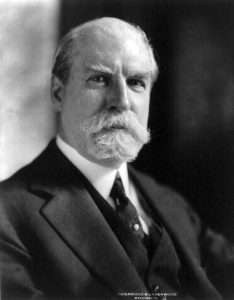
The Texas Supreme Court, and indeed most state courts, have been subject to regulatory capture. Law deans want to attract law students from across the country, even those who do not plan to stay in Texas. Two decades ago, Justice Clarence Thomas lamented that the University of Michigan Law School was little more than "a waystation for the rest of the country's lawyers, rather than a training ground for those who will remain in Michigan." Thomas, as usual, was right. He questioned UM's "decision to be an elite institution [that] does little to advance the welfare of the people of Michigan or any cognizable interest of the State of Michigan."

We can ask the same question about Texas. Why is it in the interest of the Texas Supreme Court to allow students to be educated here and practice elsewhere? President Trump is fond of saying that Americans should put America first. Why shouldn't Texans put Texas first? Certainly, the Texas legislature does not provide benefits to Texans who pledge to leave the state. Why should the Supreme Court of Texas, when acting as a legislative body, behave any differently?

Thankfully, SCOTX now has a chance to correct the course. In 1983, SCOTX delegated to the American Bar Association the authority to accredit law schools. For the past four decades, law students must graduate from an ABA-approved law school to sit for the Texas bar exam. But in April 2025, SCOTX solicited public comments on "whether to reduce or end the . . . reliance on the ABA." This request came on the heels of the Florida Supreme Court's similar request.

The problems with the American Bar Association's Section of Legal Education are well known. The ABA imposes an endless series of "standards" on law schools, without providing any evidence that these standards are actually effective. The organization imposes a one-size-fits-all all policy, without regard to how the missions of elite law schools differ from those of access law schools. And critically, the left-leaning ABA has dragooned all law schools to impose onerous DEI requirements — a step they have only temporarily suspended in response to action from the Trump Administration. Critically, the ABA does not consider the needs of the people of Texas.

Yet, as could be predicted, the Texas Law Deans have rallied in support of the American Bar Association. On May 12, a "conversation" on the ABA's role as accreditor was convened by all of the Texas law schools (including my own). There were eleven speakers, ten of whom wholeheartedly supported the ABA's role as accreditor. Only Professor Seth J. Chandler of the University of Houston offered some critical comments about the organization. However, such groupthink is emblematic of the broader lack of ideological diversity in the academy. Moreover, this monolithic thought is especially unhelpful when deciding whether to change the regulatory regime. (Indeed, this online symposium hosted by the Civitas Institute was occasioned by the glaring one-sided nature of the ABA defense rally.)

The Texas Supreme Court would be well served to consider the entire symposium.


Fourth Amendment

Arresting Someone for Violating a Probation Condition That Doesn't Exist …

would violate the Fourth Amendment, holds the Eleventh Circuit.

|

A short excerpt from the long Gervin v. Florence, decided yesterday by the Eleventh Circuit (opinion by Judge Robin Rosenbaum, joined by Judges Nancy Abudu and Charles Wilson):

DeShawn Gervin has not been a model citizen. But he did do at least one thing right. As Gervin's sole condition of probation, a Georgia court kicked him out of its jurisdiction and banned him from returning. And Gervin followed that instruction. He moved to North Carolina.

But he didn't stay out of trouble there, either. North Carolina imprisoned Gervin for breaking and entering, larceny, and robbery and kidnapping.

Soon after, a probation officer with the Georgia Department of Community Supervision learned of Gervin's North Carolina transgressions. And she sought a warrant for his arrest in Georgia. In support, she swore that Gervin had "failed to report" and "absconded from probation supervision" in violation of his probation conditions. Another probation officer under her supervision then petitioned to revoke Gervin's probation based on his failure to report.

After the probation officer obtained the warrant, police officers in North Carolina arrested Gervin on the Georgia warrant. Then they extradited Gervin to Georgia. And Gervin spent 104 days in jail waiting for the court to resolve his probation-revocation charges.

But as we've recounted, the Georgia court's only probation condition for Gervin required him never to reenter its judicial circuit. And that's the one thing he had not done. So however else Gervin had broken the law, he had not violated his Georgia probation.

Read More

Donald Trump

My New UnPopulist Article on Synergies Between Litigation and Political Action in Resisting Trump

The article describes how the two can be mutually reinforcing, building on lessons from previous episodes in constitutional history.

|

Today, the UnPopulist published my article on synergies between litigation and political action in resisting Trump 2.0's multi-faceted assaults on the Constitution. I explain how the two tracks can be mutually reinforcing.

As I was writing the article,  it occurred to me that - with my role in the tariff case - I am directly involved in implementing these ideas; we are, of necessity, litigating this case in both the court of law and the court of public opinion. That kind of direct involvement in the subject of my own writings is not an accustomed role for an academic, at least not for me. Whether it gives me greater insight, reduces my objectivity or some combination of both, is for readers to judge.

Here is an excerpt from the article:

The Trump administration has launched a multi-faceted assault on many aspects of our constitutional system, ranging from illegal deportations of immigrants to blocking legal migration by unconstitutionally declaring a state of "invasion," to usurpation of congressional authority over federal spending and tariffs. These efforts have, in turn, encountered resistance by means of both litigation and political mobilization. But there has been little consideration of how the two types of resistance to Trumpism relate to each other. There are often important synergies between litigation and political action. Each can bolster the other. Such synergies don't always happen—and there are situations where litigation might actually undermine political efforts. Still, activists and litigators can act in ways that maximize synergies, while mitigating potential downsides.

Throughout modern history, successful constitutional reform movements have generally combined litigation and political action, not relied exclusively on one or the other. That was true of the Civil Rights Movement, the women's rights movement, same-sex marriage, and movements to expand property rights and gun rights, among others. Litigation can bolster political action, and vice versa.

These dynamics are also evident in the early results of litigation against some of Trump's abuses of power, most notably in immigration and trade.

The rest of the article discusses how these synergies have played out over the last few months, and notes some potential lessons we can learn.

Second Amendment Roundup: S&W Sí, Mexico No

“The AR–15 is the most popular rifle in the country.”

|

On June 5, in an unanimous decision by Justice Elena Kagan, the Supreme Court ruled in Smith & Wesson Brands, Inc. v. Estados Unidos Mexicanos that Mexico failed plausibly to plead that the American firearm industry aided and abetted unlawful sales routing guns to Mexican drug cartels.  The decision not only adds teeth to the Protection of Lawful Commerce in Arms Act (PLCAA), it also recognizes that semiautomatic rifles like the AR-15 are in wide use by Americans, verifying that they meet Heller's common-use test.

While the Court does not expressly mention that PLCAA reaffirms Second Amendment rights, it does reference the preamble of the law, which explicitly set forth one primary purpose of PLCAA is to protect the Second Amendment rights of Americans.  The Court then explained how the law protects the firearm industry from civil lawsuits blaming the industry for crimes and torts committed by third parties.  It provides that "a qualified civil liability action" – defined as a civil suit against a manufacturer or seller of a firearm or firearm part (called a "qualified product") – may not be brought in any federal or state court.

Excluded from PLCAA is the "predicate exception," defined as "an action in which a manufacturer or seller of a qualified product knowingly violated a State or Federal statute applicable to the sale or marketing of the product, and the violation was a proximate cause of the harm for which relief is sought…."  That includes acts in which a dealer or manufacturer knowingly makes false entries in records or conspires to sell a firearm to a prohibited person.  If such violation is the proximate cause of harm, then liability arises from a third party's misuse of a gun.

Mexico claimed that Smith & Wesson and other manufacturers aided and abetted the third-party misuse of guns in Mexico.  First, they supplied guns to dealers who sold guns to traffickers.  Second, they allegedly failed to impose extra-legal controls on their distribution networks.  And third, they supposedly make "design and marketing decisions" to stimulate cartel demand, such as production of "'military-style' assault weapons" and use of inscriptions that appeal to cartel members (like the "Emiliano Zapata 1911" pistol).

But Mexico's complaint failed to allege any specific criminal transactions by the manufacturers.  Its claim that they sell guns to "known rogue dealers" (which it did not even identify) did not count as aiding and abetting.  That claim could not be taken at face value, as "Mexico never confronts that the manufacturers do not directly supply any dealers, bad-apple or otherwise. They instead sell firearms to middlemen distributors, whom Mexico has never claimed lack independence."

Read More

Supreme Court

The Divisions Among the Court's Originalists

Professor Joel Alicea on how to understand what may be the most important jurisprudential divisions on the Supreme Court.

|

Professor Joel Alicea has a thoughtful and perceptive op-ed in the New York Times, "The Supreme Court Is Divided in More Ways Than You'd Think," discussing the issues that divide the Supreme Court's five originalist justices. It begins:

When Justices Neil Gorsuch, Brett Kavanaugh and Amy Coney Barrett joined the Supreme Court during President Trump's first term, originalism found itself in an unfamiliar and challenging position.

All three of the court's new members were avowed originalists, holding that judges ought to interpret the Constitution according to the meaning it had when it was ratified. As a result, a majority of the justices, including Clarence Thomas and Samuel Alito, now subscribed to this theory. Originalism, long seen as an insurgent force at the Supreme Court, had become its reigning philosophy.

For the originalists on the court, the shift from backbenchers to decision makers brought new responsibilities and presented new difficulties. Problems that had mostly been hypothetical debates within the court's originalist minority became central questions of constitutional law. How readily should an originalist court overturn a precedent at odds with the original meaning of the Constitution? What should an originalist judge do when the original meaning of the Constitution does not fully address a modern dispute?

As Professor Alicea notes, the five originalist justices often disagree on a range of issues that can affect how cases are decided and how quickly the Court's doctrine changes, including the extent to which the Court should respect non-originalist precedent and whether originalism, on the margin, should be more focused on constraining judicial discretion or on fulfilling the original meaning of the Constitution.

These differences matter because in a fair number of high-profile cases, such disagreements may control case outcomes and the contours of case holdings. Writes Alicea:

For originalists such as myself, these fractious dynamics pose the greatest threat to the urgent effort to restore the rule of law that was so badly damaged by the Supreme Court in the 1960s and '70s under Chief Justices Earl Warren and Warren Burger. But for all observers of the court, regardless of judicial or political inclination, these disputes are key to understanding its decisions.

He concludes:

This Supreme Court, contrary to accusations that it is lawless and political, is more committed to a particular constitutional theory than any Supreme Court has been since at least the 1940s. Understanding the deep theoretical roots of the conservative justices' agreements and their disagreements is crucial to appreciating what has happened since Mr. Trump transformed the court during his first term — and what may happen in the years to come.

Juries

Should the Seventh Amendment Civil Jury Trial Right Apply to the States?

The right to a civil jury trial is far more deeply rooted in American history and tradition than is the right to own guns, which the Supreme Court was right to incorporate.

|

This coming Thursday, June 12th, the Court will decide whether to grant certiorari (or whether to request a response) to the Institute for Justice's petition for certiorari in Thomas v. County of Humboldt, a case which asks the Court to incorporate the Seventh Amendment civil jury trial right through the Fourteenth Amendment against the States.

The Bill of Rights was originally enacted in 1791 to constrain Congress; protections against state overreach were left to state constitutions. But the Fourteenth Amendment was created to provide federal protection against state power; and since the Civil War, the Court has held (through a process called "incorporation") that nearly all the Bill of Rights applies to the states via the Fourteenth Amendment.

The right to civil jury trial was among the three civil rights most deeply rooted in American history and tradition at the time of the framing of the federal Bill of Rights along with the right to criminal jury trial and the right to the free exercise of religion. The right is by far and away the most important right in the Bill of Rights that has not yet been incorporated; the other two unincorporated rights are the Third Amendment's protection against the quartering of soldiers in peoples' homes (a practice that no longer happens) and the right to indictment by a grand jury (which is meaningless since prosecutors can persuade grand juries to indict even "a ham sandwich").

Cases like Thomas v. County of Humboldt, which involve a dispute between the government and a private citizen, where petitioners are challenging millions of dollars of fines assessed against impoverished litigants in administrative proceedings by the government with no right to a civil jury trial, show that incorporation of the Seventh Amendment is as urgent as was incorporation of the Excessive Fines Clause in Timbs v. Indiana, 586 U.S. 146 (2019). As the Supreme Court held last year in SEC v. Jarkesy, 603 U.S. 109 (2024) (requiring the SEC to litigate fraud cases in federal district court with a Seventh Amendment right to a civil jury trial), "[t]he right to trial by jury is 'of such importance and occupies so firm a place in our history and jurisprudence that any seeming curtailment of the right' has always been and 'should be scrutinized with the utmost care.'" Id. at 121. A continuing failure by the Supreme Court to incorporate the civil jury trial right against the States would thus be an embarrassing omission from the Court's caselaw given that this right is even more deeply rooted in American history and tradition than are almost any other right including especially the right to own a gun for one's own self-defense.

The Thomas case seeks to change that, and I think the Court should agree on this with the petitioners.

Read More

Free Speech

No First Amendment Violation in Excluding Associated Press from "the Room Where It Happens"

|

In Friday's AP v. Budowich, the D.C. Circuit stayed the preliminary injunction that required the White House to let the AP back into White House, Air Force One, and Mar-a-Lago briefings. Judge Neomi Rao, joined by Judge Greg Katsas, wrote a statement explaining the ruling; here's a short excerpt from the 27-page opinion.

The Associated Press wants to be in the room where it happens. But in February 2025, White House officials excluded the AP from the Oval Office and other restricted spaces. Officials announced that access was denied because the AP continued to use the name Gulf of Mexico in its Stylebook, rather than the President's preferred Gulf of America. The AP sued, alleging that its exclusion violated the First Amendment. The district court held the AP was likely to succeed on its constitutional claims, and it issued a preliminary injunction prohibiting White House officials from denying, on the basis of viewpoint, access to press events held in the Oval Office, on Air Force One, and at the President's home in Mar-a-Lago.

We grant in part the government's motion for a stay pending appeal. The White House is likely to succeed on the merits because these restricted presidential spaces are not First Amendment fora opened for private speech and discussion. The White House therefore retains discretion to determine, including on the basis of viewpoint, which journalists will be admitted. Moreover, without a stay, the government will suffer irreparable harm because the injunction impinges on the President's independence and control over his private workspaces….

Read More

More