Friday Open Thread
What's on your mind?

Mostly law professors | Sometimes contrarian | Often libertarian | Always independent | Est. 2002
What's on your mind?
My new article on diversity statements in faculty hiring and the First Amendment
In 2024, I was honored to deliver the Roscoe Pound Lecture at the University of Nebraska College of Law. The article based on that lecture is now in print, and until the Nebraska Law Review updates its website with the contents of issue 4 of volume 103 you can find a PDF of the article here.
The article is called "Diversity Statements, Academic Freedom, and the First Amendment." From the abstract:
Diversity statements have become a common component of applications for faculty positions and student admission at universities across the country. They have also become politically controversial, with several states banning the use of such requirements at public universities. The use of diversity statements also raises difficult constitutional questions under the First Amendment at public universities and academic freedom questions at both public and private universities. Although there are versions of such statements that might pass constitutional muster, as commonly designed and implemented the use of diversity statements likely violates both First Amendment and academic freedom principles. Indeed, diversity statement requirements for faculty hiring are inconsistent with multiple lines of constitutional doctrine.
From the introduction:
This Article develops the constitutional case against the use of diversity statements across several parts. Part II describes what is known about how diversity statements are designed and used in universities. Part III outlines the academic freedom principles that are applicable to the use of diversity statements. Part IV reviews the history of the controversy of the use of loyalty oaths in universities in the mid-twentieth century and draws out some lessons from that experience. Part V applies government employee speech doctrine to the diversity statement requirements for faculty positions at state universities. Part VI applies the political patronage doctrine to diversity statement requirements for such positions. Part VII applies compelled speech doctrine to the use of such diversity statements. Part VIII summarizes the argument and concludes.
The thrust of over half a century of First Amendment doctrine is that state universities are to be the home of a wide diversity of thought and that the artificial imposition of intellectual uniformity on state university faculty runs contrary to First Amendment values. When state universities take adverse employment action against scholars, including by denying them employment, on the basis of their political and social ideas, the state bears a very high constitutional burden to justify such action. To sustain such action, the state must be able to demonstrate that it is taking measures that create the least interference with constitutionally protected expression that might be necessary to advance a compelling governmental interest. At the very least, this necessitates that the state be able to demonstrate that policies that burden disfavored political ideas are essential to advancing the genuine educational and scholarly mission of the university. Such speech restrictions should be professionally justifiable and not mere matters of political convenience or preference. Policies that merely serve to reinforce political orthodoxies on college campuses are constitutionally unjustifiable. Taking such principles seriously casts a substantial constitutional shadow over the practice of using diversity statements to exclude from state university faculties individuals with disfavored beliefs and opinions about matters of political and social controversy.
Read the whole thing here.
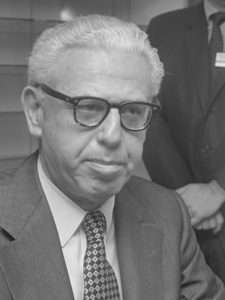
7/25/1965: Justice Arthur J. Goldberg resigns.
"For good reason, the Constitution vests the 'judicial Power' in 'one supreme Court,' to which all others are 'inferior Courts.'"
On a regular basis, district court judges accuse the Trump Administration of flouting the law, and ignoring their orders. The Washington Post counted them up! Yet, at the same time, district court judges are flouting Supreme Court precedent.
Just yesterday, in Boyle (not Moyle), the Supreme Court reversed a district court for not following Wilcox, which "squarely controlled."
Now, the Solicitor General has filed yet another emergency application. Here, a federal judge in Massachusetts ordered the government to pay out certain DEI grants. Under the Supreme Court's decision in Department of Education v. California, these disputes belong in the Court of Federal Claims. But lower federal courts disagreed.
The Solicitor General used especially sharp language to describe this lower-court resistance--no, not resistance of President Trump, but resistance of the Supreme Court itself.
This application presents a particularly clear case for this Court to intervene and stop errant district courts from continuing to disregard this Court's rulings. . . . Notwithstanding this Court's decision in California, the District of Massachusetts declined to stay a materially identical order. . . . When the government pointed out that respondents' challenges to those grant terminations belong in the Court of Federal Claims under California, the district court recognized with serious understatement that California was a "somewhat similar case." App., infra, 221a. Yet the district court dismissed this Court's ruling as "not final" and "without full precedential force," "agree[d] with the Supreme Court dissenters," and "consider[ed] itself bound" by the First Circuit ruling that California repudiated.
As I noted earlier, Boyle makes clear that shadow docket rulings are precedential, though I think that point was established during the COVID free exercise cases. Hell, Chief Justice Roberts's concurrence in South Bay was treated as a super precedent! In July 2022, I wrote about the precedential value of emergency docket rulings.
The Solicitor General writes that this resistance has grown to "epidemic proportions":
Worse, this case is no outlier. District-court defiance of this Court's decision in California has grown to epidemic proportions, as courts have issued nearly two dozen decisions asserting jurisdiction over claims challenging grant or funding terminations since California.
The SG, echoing Justice Kavanaugh's CASA concurrence, explains that the Supreme Court is supreme and the Inferior Courts are inferior.
For good reason, the Constitution vests the "judicial Power" in "one supreme Court," to which all others are "inferior Courts." U.S. Const. Art. III, § 1. As this Court explained yesterday, when lower courts face materially identical stay requests, this Court's emergency orders "squarely control[]." Boyle, slip op. 1. Our judicial system rests on vertical stare decisis, not a lower-court free-for-all where individual district judges feel free to elevate their own policy judgments over those of the Executive Branch, and their own legal judgments over those of this Court.
This application will likely be granted. I think lower courts still will not get the memo. Let's see how long it take Circuit Justice Jackson to call for a response.
The court ruled that a nationwide injunction is the only way to provide complete relief to the state government plaintiffs in the case.
Yesterday, in Washington v. Trump, the US Court of Appeals for the Ninth Circuit ruled that Donald Trump's executive order denying birthright citizenship to children of undocumented immigrants and non-citizens present on temporary visas is unconstitutional. The court also upheld the district court's nationwide injunction against the order. Prominent conservative Judge Patrick Bumatay dissented on the ground that the plaintiff state governments lack standing.
This is the first appellate ruling on the legality of Trump's birthright citizenship order, though four federal district courts have previously ruled the same way. The majority opinion by Judge Ronald Gould does an excellent job of explaining why the order violates the Citizenship Clause of the Fourteenth Amendment, which grants citizenship to anyone "born … in the United States and subject to the jurisdiction thereof." It effectively covers text, original meaning, Supreme Court precedent, and more. It's a compelling demolition of the administration's argument that people who illegally entered the US are not "subject to the jurisdiction" of the United States because they lack the proper "allegiance" and "domicile."
I would add that, if illegal entry by parents excludes a child born in the US from birthright citizenship, that would also have excluded large numbers of freed slaves. As Gabriel Chin and Paul Finkelman have shown in an important article, the freed slaves whose children were covered by the Citizenship Clause included a large population that had entered the US illegally, by virtue of being brought in after the federal government banned the slave trade in 1808. This shows that illegal entry was not considered a barrier to being under US jurisdiction. Granting black former slaves citizenship was the main objective of the Citizenship Clause.
For more on the shortcomings of the "domicile" theory, see this guest post by Evan Bernick.
As a result of the Supreme Court's ruling in Trump v. CASA barring nationwide injunctions, courts can no longer issue such injunctions merely because the government has engaged in large-scale nationwide illegality. But the Supreme Court nonetheless noted that nationwide remedies are permissible in cases where they are the only way to provide "complete relief" to the parties to the litigation. Here, the Ninth Circuit ruled that a nationwide injunction is the only way to provide complete relief to the plaintiff state governments, who otherwise stand to lose various federal grants and benefits allocated based on the number of citizens:
States' residents may give birth in a non-party state, and individuals subject to the Executive Order from non-party states will inevitably move to the States….. To account for this, the States would need to overhaul their eligibility-verification systems for Medicaid, CHIP, and Title IV-E. For that reason, the States would suffer the same irreparable harms under a geographically-limited injunction as they would without an injunction.
These kinds of harms are probably only a small proportion of the losses the states would suffer from implementation of Trump's executive order. But remedying them is still essential for purposes of providing complete relief.
In his dissenting opinion, Judge Bumatay does not consider either the constitutionality of Trump's order, or the proper scope of the injunction. He instead argues the case should be dismissed because the state plaintiffs lack standing. He contends the harms from loss of federal funds and benefits are too unclear, speculative, and indirect.
I won't try to go over the standing issue in detail. But, overall, I think the majority is more persuasive on this issue. It is indeed difficult to predict exactly how much money the states will lose if Trump's order is implemented. Among other things, as Bumatay notes, it will depend in part on exactly how implementation works. But it is virtually certain they will lose at least some funds, and even a small amount of direct economic damage is enough to justify standing.
That said, the Supreme Court's jurisprudence on state government standing is far from a model of clarity. Thus, I cannot be certain what will happen if this issue were to get to the Supreme Court.
I myself have long advocated for broad standing for both state and private litigants, including state governments advancing claims I oppose on the merits. It is vital that illegal federal policies not be immunized from challenge by arbitrary judicially created procedural rules. State standing is especially important in the aftermath of Trump v. CASA's ill-advised evisceration of universal injunctions. States are often entitled to broader remedies than private litigants, given the greater scope of the harms they might suffer.
State standing may not be the only way to secure a universal remedy against Trump's birthright citizenship order. In one of the other cases challenging it, a federal district court has granted a nationwide class action certification. Both this remedy and that upheld by the Ninth Circuit may well end up being reviewed by the Supreme Court when - as seems likely - it takes up the merits of the birthright citizenship litigation.
Trial of the Century! See the Billionaire Media Titans Wrestling in the Mud! Coming to your screens this Fall!
It is, I suppose, an illustration of just how diminished and even sordid our political life has become these days that L'Affaire Epstein is the hot political show of the summer. But there it is. We'll see if it has legs for an extended run into the new fall season.
Here's what we know: Media megastar and ex-"Apprentice" co-producer and host Donald Trump has sued media megamogul Rupert Murdoch and The Wall Street Journal for defamation in federal district court [SD FL]. [The Complaint is available here] The suit is based on a front-page WSJ story asserting that a "letter bearing Trump's name" appeared in a 2003 birthday album celebrating Jeffrey Epstein's 50th birthday. The story described the letter this way:
"The letter bearing Trump's name, which was reviewed by the Journal, is bawdy—like others in the album. It contains several lines of typewritten text framed by the outline of a naked woman, which appears to be hand-drawn with a heavy marker. A pair of small arcs denotes the woman's breasts, and the future president's signature is a squiggly "Donald" below her waist, mimicking pubic hair. The letter concludes: "Happy Birthday — and may every day be another wonderful secret."
Trump says that there is no such letter. The Complaint states:
"[Defendants] falsely claimed that [Trump] authored, drew, and signed a card to wish the late—and utterly disgraced—Jeffrey Epstein a happy fiftieth birthday. . . . [N]o authentic letter or drawing exists. Defendants concocted this story to malign President Trump's character and integrity and deceptively portray him in a false light. . . . [T]he supposed letter is a fake and the Defendants knew it when they chose to deliberately defame President Trump." [emph. added]
Needless to say, I haven't the faintest idea whether the letter does or does not exist. If it does, though, Trump would surely know that it does, and, knowing that, he'd be an absolute madman to file this suit. That makes me think there's no such letter. On the other hand, surely the editors at the WSJ, a newspaper not known for manufacturing fake news, knew that the article was a potential bombshell, and would have taken extra-special precautions to ensure that all facts stated therein were true. That makes me think there is such a letter.
My strong suspicion is that the Journal will be able to produce a salacious letter "bearing Trump's name" – it is inconceivable that the Journal would have proceeded if such a thing did not actually exist - and that Trump will deny authorship or any knowledge of it. His defamation claim will require him to show not only that the letter in the Journal's possession is a fake, but also that the WSJ's investigation of the letter's provenance was inadequate, amounting to a "reckless indifference" to whether or not it was a fake.
The history of high-profile defamation lawsuits is littered with the carcasses of plaintiffs who ended up deeply regretting their decision to sue, from, most famously, Oscar Wilde[1]to Teddy Roosevelt[2] and James Whistler[3] and Henry Ford[4] to Jerry Falwell[5] and Johnny Depp[6]. Not only do these lawsuits often bring unwanted and intense media scrutiny to the allegations that otherwise might have gone completely unnoticed,[7] but because truth is a defense to a defamation claim, the lawsuit exposes to public view whatever evidence the defendant might uncover relevant to the challenged claims, which can expose an enormous amount of the plaintiff's dirty underwear to public view.
Harry Litman over at the New Republic thinks Trump's name is going to be added to this list, and, personally, I hope he's correct (though Trump has defied these kinds of expectations many, many times in the past). One can certainly imagine any number of ways a trial could backfire – bringing to light more information about the letter, the reasons why the WSJ concluded it came from Trump, and, more generally, the close relationship between Trump and Epstein.[8]
Trump, of course, famously said that he could shoot someone on Fifth Avenue in New York and not lose any supporters, and so far there has been nothing to contradict that. But participating in a billionaire's underage girls sex ring – IF the evidence reveals such a participation – might well be the bridge too far for many of his supporters. One would certainly hope so, for the good of the Republic.
I cannot wait to see how this plays out. This is sure to be Must-See TV. My only fear is that the Journal is pressured into settling the claim. So bad for ratings!
[1] Wilde – far and away the most successful author in Europe and quite possibly the world at the time – sued the Marquess of Queensberry for having publicly called him a "posing Somdomite" [sic]. Because truth is a defense to a defamatory libel charge, Queensberry was allowed to introduce a large trove of evidence concerning Wilde's eccentric sexual proclivities, which ultimately led to Wilde's arrest, conviction, and imprisonment on charges of sodomy and gross indecency. It ruined both his career and his life; he died, impoverished and in exile, three years after his release from prison – but not before writing "De Profundis," his remarkable and moving confessional. [See here]
[2]In 1903, TR ordered his Attorney General to institute criminal proceedings against the New York World newspaper for "seditious libel against the government of the United States" for having suggested in several articles that corruption and bribery had tainted Roosevelt's actions in connection with the building of the Panama Canal. The courts – including, ultimately, the Supreme Court – dismissed the indictment on the grounds that there was no statutory authority for a criminal action of this kind. It was an embarrassing defeat for Roosevelt, and was widely viewed as an unprecedented and unwarranted attack on the freedom of the press - as one contemporary history of the affair (still in print here) put it: "The Attempt Of President Roosevelt By Executive Usurpation To Destroy The Freedom Of The Press In The United States."
[3] The well-known American painter James Whistler sued art critic John Ruskin for libel for having written, in reference to one of Whistler's paintings, "I never expected to hear a coxcomb ask two hundred guineas for flinging a pot of paint in the public's face." He won – and was, humiliatingly, awarded jury damages of one farthing.
[4] In 1916 Ford warned employees that they would lose their jobs if they volunteered for National Guard duty in order to participate in a border war with Mexico. Robert McCormick wrote an editorial in the Chicago Tribune complaining of "flivver patriotism," and averred that the policy demonstrated that Ford was "an ignorant idealist [and] an anarchist enemy of the nation which protects his wealth." Ford sued, and testified for nine days at the trial, which revealed that he was something of an ignoramus. He won the case, and was awarded a judgment of six cents (after having spent over $100,000 in 1916 dollars to prosecute the suit).
[5] Rev. Jerry Falwell sued Hustler magazine for publishing an advertisement "parody" which, among other things, portrayed Falwell as having engaged in a drunken incestuous rendezvous with his mother in an outhouse. Falwell lost on both his libel claim and his intentional infliction of emotional distress claim after reaching the Supreme Court, which held that "the interest of protecting free speech, under the First Amendment, surpassed the state's interest in protecting public figures from patently offensive speech, so long as such speech could not reasonably be construed to state actual facts about its subject." The suit, of course, brought a great deal of public attention to the parody which would almost certainly have been ignored had Falwell let it die a natural death.
[6] Johnny Depp sued The Sun newspaper (U.K) for defamation after they called him a "wife-beater" in an article. Amber Heard, Depp's ex-wife, was a key witness in the case, and their tumultuous relationship became the subject of intense media scrutiny. The UK court found that Depp had indeed committed acts of violence against Heard, a finding that greatly injured Depp's reputation and career.
[7] This is a close relative of the well-known "Streisand Effect," a reference to Barbra Streisand's 2003 lawsuit against the photographer Kenneth Adelman. Adelman had taken an aerial photo of Streisand's house as part of a project on documenting coastal erosion. Streisand claimed that publication of the photo on Adelman's website was an invasion of her privacy. The photo, which had been downloaded fewer than 10 times prior to her filing, immediately went viral and was seen by millions of viewers who would surely otherwise have been unaware of its existence.
[8] On the other hand, maybe this is all a huge Murdoch-Trump set-up designed to enhance Trump's standing when the Journal backs down. Maybe that's what JD Vance was talking to the Murdochs about back in June . . .
Is it an abuse of judicial power for a judge to issue an opinion with AI hallucinations?
Eugene blogged about Judge Julien Xavier Neals of the U.S. District Court for the District of New Jersey. Judge Neals issued an opinion that included errors, including made-up quotes and incorrect case outcomes. One of the parties submitted a letter pointing out these errors. It seems pretty clear that the Judge, or at least someone in his chambers, used generative AI to create the opinion. (Judge Neals is sixty years old, so I would suspect a law clerk made this error.) The judge promptly withdrew the opinion.
I suppose this particular case is settled, but I would wager there are more orders on Judge Neals' dockets that have hallucinations. Indeed, I suspect there are many judges throughout the country that have issued opinions with hallucinations. Savvy litigators should start combing through all adverse orders, and try to determine if there are obvious indicia of hallucinations. This will make excellent grounds for reversal on appeal.
But let's take a step back. What do we make of a judge who issues an opinion based on made-up cases? To be sure, judges makes mistakes all the time. Moreover, clerks make mistakes that their judges do not catch. When I was clerking, I made a particularly egregious error that my judge did not catch. The non-prevailing party promptly filed a motion for reconsideration. The opinion was withdrawn, and a new opinion was issued. The outcome of the case was not altered by that error, but at least the opinion was corrected.
Still, one might ask how closely Judge Neals, and other judges, review the work of their law clerks. Do the judges actually check the citations to see if they are hallucinated? I would suspect most judges do not check citations. District Court dockets are very busy, and it is not realistic to expect judges to so closely scrutinize their clerks' work. (Later in Justice Blackmun's career, he apparently limited his review of draft opinions to checking citations.)
I think the more useful frame is to ask whether the judge has failed to adequately supervise his law clerks. Judges invariably have to delegate authority to law clerks, even if the judge ultimately signs all of the orders. That delegation must include what is effectively a duty of care. In other words, the judge should tell the clerk how to go about doing the job, and in particular, how not to go about doing the job. In 2025, I think all judges should tell their clerks to either not use AI at all (my advice), or to use AI responsibly and triple-check any cited cases. The failure to give this advice would be an abuse of discretion.
But is it more than just an abuse of discretion? Does an Article III judge abuse his power when he issues an opinion based on hallucinated cases that no one in his chambers bothered to check? Judges have the awesome power to affect a person's life, liberty, or property, merely by signing their names to a piece of paper. It is the order, and not the opinion, that has the legal effect.
I think we would all agree that a judge would abuse his power by deciding a case by flipping a coin or rolling a dice. I suppose using AI is a bit less reckless than a game of chance, but not by much. Relatedly, is it an abuse of power when a judge grants an ex parte TRO without evening reading the brief? I think we are starting to see some of the boundaries of the judicial power.
I don't know that Judge Neals will receive a misconduct complaint, as he promptly withdrew his opinion. But an enterprising sleuth could do a close analysis of all opinions from Judge Neals, and judges nationwide, and perhaps find a pattern of misconduct. Would that record show a judge cannot be trusted to exercise the judicial power?
And speaking of the District of New Jersey, can we be certain that Judge Neals voted to appoint Desiree Grace as the United States Attorney for the District of New Jersey? Or maybe it was a Chatbot?
I'll leave you with one anecdote I read in a recent article about what AI is doing to students:
My unease about ChatGPT's impact on writing turns out to be not just a Luddite worry of poet-professors. Early research suggests reasons for concern. A recent M.I.T. Media Lab study monitored 54 participants writing essays, with and without A.I., in order to assess what it called "the cognitive cost of using an L.L.M. in the educational context of writing an essay." The authors used EEG testing to measure brain activity and understand "neural activations" that took place while using L.L.M.s. The participants relying on ChatGPT to write demonstrated weaker brain connectivity, poorer memory recall of the essay they had just written, and less ownership over their writing, than the people who did not use L.L.M.s. The study calls this "cognitive debt" and concludes that the "results raise concerns about the long-term educational implications of L.L.M. reliance."
I still refuse to use AI. I may be the last man standing.
Justices Kagan, Sotomayor, and Jackson could have joined Justice Kavanaugh to grant cert in the CPSC case, but they didn't.
In Trump v. Boyle, the Court granted a stay, and allowed President Trump to remove members of the Consumer Product Safety Commission. This order seems to follow from Trump v. Wilcox. The per curiam order states, "the case does not otherwise differ from Wilcox in any pertinent respect." There has been some debate over the years on whether emergency docket rulings are precedential. I think that debate has been settled.
The vote here was (likely) 6-3. Justice Kagan wrote a dissent, joined by Justices Sotomayor and Jackson. Kagan once again complains that the Court "[o]nce again . . . uses its emergency docket to destroy the independence of an independent agency." She writes that the "same majority" granted relief in both Boyle and Wilcox. With emergency docket rulings, it is not known that the same justices joined both majorities, but Kagan confirms the obvious. Kagan says that "majority has also all but overturned Humphrey's Executor v. United States" (she's right). Kagan also cites Justice Barrett's concurrence in Doe v. Mills abut deciding cases "on a short fuse," but I no longer think even Barrett agrees with that opinion. One could say that Moyle cut the fuse short. I'll show myself out. [Update: The case is in fact Boyle, not Moyle, so my bris joke does not work.]
Yet, there is a shortcoming with Justice Kagan's ruling. She is unhappy that the Court is deciding this case on the emergency docket. The obvious rejoinder would be to decide the issue on the regular docket by granting a petition for a writ of certiorari. If the case was granted now, it could be argued in the fall, and settled definitively.
Indeed, there was a fourth vote for cert waiting. Justice Kavanaugh wrote a brief concurrence, explaining why he would have granted certiorari before judgment. Why didn't Justice Kagan and her colleagues join Justice Kavanaugh, and put the case on the regular docket? If Humphrey's Executor is "all but overruled," why not decide the case in the normal order, and settle the issue nationwide? Methinks that Justice Kagan doth protest too much. Then again, does it take four votes or five votes to grant cert before judgment?
Justice Kavanaugh's brief concurrence reiterates his CASA concurrence:
When an emergency application turns on whether this Court will narrow or overrule a precedent, and there is at least a fair prospect (not certainty, but at least some reasonable prospect) that we will do so, the better practice often may be to both grant a stay and grant certiorari before judgment. In those unusual circumstances, if we grant a stay but do not also grant certiorari before judgment, we may leave the lower courts and affected parties with extended uncertainty and confusion about the status of the precedent in question. Moreover, when the question is whether to narrow or overrule one of this Court's precedents rather than how to resolve an open or disputed question of federal law, further percolation in the lower courts is not particularly useful because lower courts cannot alter or overrule this Court's precedents. In that situation, the downsides of delay in definitively resolving the status of the precedent sometimes tend to outweigh the benefits of further lower-court consideration. So it is here. Therefore, I not only would have granted a stay but also would have granted certiorari before judgment.
In short, given the importance of this case, percolation is not very useful, and the Supreme Court should settle the issue definitively sooner rather than later.
It seems that the Court's docket next term will have cases on birthright citizenship, overruling Humphrey's, the Voting Rights Act, transgender athletes, and much more. Things will heat up!
What's on your mind?
Judge Bumatay objects on standing grounds, arguing that courts should not seek to offset narrowing one form of relief by expanding another: "That would be like squeezing one end of a balloon—it just pushes all the air to the other end."
A divided panel of the U.S. Court of Appeals for the Ninth Circuit has affirmed a district court's nationwide injunction against enforcement of President Trump's birthright citizenship Executive Order, concluding that the E.O. is likely unlawful and that a nationwide injunction is necessary to provide complete relief to the plaintiff states. [As I said in today's Civitas Outlook column: "universal injunctions are dead, long live nationwide relief."]
Judge Gould wrote for the panel in Washington v. Trump, joined by Judge Hawkins. Here is how he summarizes the opinion:
Washington, Arizona, Illinois, and Oregon ("States") and individual expectant mothers ("Individual Plaintiffs") challenge as unconstitutional Executive Order No. 14160 ("Executive Order"), which purports to deny citizenship to the children born in United States territory of parents temporarily or unlawfully present in the United States. See Protecting the Meaning and Value of American Citizenship, Exec. Order No. 14,160, 90 Fed. Reg. 8449 (Jan. 20, 2025). The district court entered a universal preliminary injunction which bars implementation of the Executive Order. Defendants appeal, contending that the States lack standing to challenge the Executive Order, that it was error to issue a preliminary injunction, and that the scope of the injunction is overbroad.
We address whether the Executive Order is constitutional and valid. We conclude that the Executive Order is invalid because it contradicts the plain language of the Fourteenth Amendment's grant of citizenship to "all persons born in the United States and subject to the jurisdiction thereof." We have jurisdiction under 28 U.S.C. § 1292(a)(1).
Because the Individual Plaintiffs are covered by a certified class action in another federal court, we decline to exercise jurisdiction over their claims and dismiss them. But because State Plaintiffs have standing and are likely to succeed in demonstrating that the Executive Order is unconstitutional, we affirm the district court's grant of a preliminary injunction and its determination that a universal preliminary injunction is necessary to give the States complete relief on their claims.
Judge Bumatay dissented in part on standing grounds. He argues that the Court is, in effect, making up for the loss of universal injunctions by making it easier for states to establish standing and demand broad relief. His dissent begins:
For good reason, this case elicits strong reactions from all sides. Fewer questions could be more important than deciding who is entitled to American citizenship. And this is understandably so—citizenship in our country is worth fighting for. And it's also worth ensuring that it is only conferred on those legally eligible to receive it. Despite, or perhaps because of, this, courts must be vigilant in enforcing the limits of our jurisdiction and our power to order relief. Otherwise, we risk entangling ourselves in contentious issues not properly before us and overstepping our bounds. No matter how significant the question or how high the stakes of the case—at all times, we must adhere to the confines of "the judicial Power." U.S. Const. art. III, § 2, cl. 1. Exceeding those limits—even to settle a divisive issue—violates the Constitution.
Today's order:
The bench trial scheduled for August 11-13, 2025 will be accessible to members of the public via Zoom pursuant to Civil Local Rule 77-3. (This is a text-only entry generated by the court. There is no document associated with this entry.) (crblc2, COURT STAFF) (Filed on 7/23/2025) (Entered: 07/23/2025)
You can see the Complaint starting with pp. 29 of this PDF; the case has just been removed to federal court. The allegations are complex, and I don't have the time to summarize them. I'm flagging the case chiefly because some of our longtime readers might be interested in Brett Kimberlin from his various appearances on the blog, chiefly stemming from brushes with early bloggers (see, e.g., some of these posts and these ones).
From Bloomberg (Justin Henry) today:
A New Jersey US district court judge withdrew his decision in a biopharma securities case Wednesday after lawyers complained that his opinion contained numerous errors, including made-up quotes and misstated case outcomes.
The judge's order states:
The Court is in receipt of Defendants counsel's letter dated July 22, 2025. On June 30, 2025, the Court issued an Opinion and Order. (ECF Nos. 114, 115.) That Opinion and Order were entered in error. Accordingly, the Court directs the Clerk of Court to remove the Opinion and Order at ECF Nos. 114 and 115 from the docket. A subsequent Opinion and Order will follow.
An excerpt from counsel's letter:
While Defendants do not seek reconsideration of the Opinion pursuant to Federal Rule of Civil Procedure 59(e), we wish to bring to the Court's attention a series of errors in the Opinion—including three instances in which the outcomes of cases cited in the Opinion were misstated (i.e., the motions to dismiss were granted, not denied) and numerous instances in which quotes were mistakenly attributed to decisions that do not contain such quotes—so that the Court may consider whether amendment or any other action should be taken. We also write to alert the Court that these and related issues have been raised in a parallel securities class action lawsuit pending in the District of New Jersey and are the subject of briefing in that case. See In re Outlook Therapeutics, Inc. Sec. Litig., 2:23-cv-21862 (D.N.J.).
Read the letter for more.
Further indication that independent agencies will not be "independent" much longer.
Today the Supreme Court stayed a district court order barring President Trump from removing the three Democratic members of the Consumer Product Safety Commission. The Court's order is not particularly surprising given its prior order staying a similar injunction barring the removal of other appointees to independent agencies. The three justices appointed by Democratic Presidents dissented.
As has become increasingly common, the Court issued the order with minimal explanation and without argument. The unsigned order in Trump v. Boyle suggested that lower courts should take greater cues from such orders than they have been, even though such orders are not precedential. From the order:
The application is squarely controlled by Trump v. Wilcox, 605 U. S. ___ (2025). Although our interim orders are not conclusive as to the merits, they inform how a court should exercise its equitable discretion in like cases. The stay we issued in Wilcox reflected "our judgment that the Government faces greater risk of harm from an order allowing a removed officer to continue exercising the executive power than a wrongfully removed officer faces from being unable to perform her statutory duty." Ibid. (slip op., at 1). The same is true on the facts presented here, where the Consumer Product Safety Commission exercises executive power in a similar manner as the National Labor Relations Board, and the case does not otherwise differ from Wilcox in any pertinent respect.
Justice Kavanaugh wrote separately to note that he would have granted cert before judgment in addition to granting the stay application. He wrote:
When an emergency application turns on whether this Court will narrow or overrule a precedent, and there is at least a fair prospect (not certainty, but at least some reasonable prospect) that we will do so, the better practice often may be to both grant a stay and grant certiorari before judgment. In those unusual circumstances, if we grant a stay but do not also grant certiorari before judgment, we may leave the lower courts and affected parties with extended uncertainty and confusion about the status of the precedent in question. Moreover, when the question is whether to narrow or overrule one of this Court's precedents rather than how to resolve an open or disputed question of federal law, further percolation in the lower courts is not particularly useful because lower courts cannot alter or overrule this Court's precedents. In that situation, the downsides of delay in definitively resolving the status of the precedent sometimes tend to outweigh the benefits of further lower-court consideration.
So it is here. Therefore, I not only would have granted a stay but also would have granted certiorari before judgment.
Apparently he did not have too many takers for this position. The three dissenters object to resolving these sorts of issues on the emergency docket, but did not want to accelerate the Court's resolution of the underlying question. Joining Justice Kavanaugh's call for certiorari would likely hasten Humphrey's Executor's demise.
Justice Kagan penned a brief dissent on behalf of the three liberal justices, lamenting the Court's hostility to Humphrey's, and in particular the justices' willingness to "the President to remove Commissioners for no reason other than their party affiliation." As Kagan notes, this could have the practical effect of eliminating bipartisan commissions with regulatory authority.
From today's decision in Giuffre v. Maxwell, before Second Circuit Judges José Cabranes, Rinna Raggi, and Myrna Pérez:
Following this court's remand in Brown v. Maxwell ("Maxwell I") (2d Cir. 2019), the … District Court … reviewed hundreds of sealed documents in this now-settled defamation action and, after considering the privacy interests of more than a hundred third-parties, issued a series of orders directing that a large number of the documents be unsealed either in whole or in part. Plaintiff Virginia Giuffre, now deceased, and Intervenors the Miami Herald Media Company and Miami Herald reporter Julie Brown … appeal from those parts of the district court's orders declining to unseal certain documents….
This appeal has its origins in a 2015 defamation action brought … by plaintiff Virginia Giuffre, a victim of sexual trafficking by financier Jeffrey Epstein. Giuffre charged defendant Ghislaine Maxwell, an Epstein associate, with defaming her by publicly calling her statements implicating Maxwell in Epstein's trafficking "obvious lies." In the extensive discovery conducted in that action, several hundred documents were produced, prompting multiple sealing motions …, which resulted in "nearly one-fifth of the docket" being filed under seal. Those documents, which included all filings pertaining to Maxwell's summary judgment motion, remained under seal when, on May 24, 2017, the parties executed a settlement agreement, prompting the district court to close the case the following day.
Both before and after closure of Giuffre's defamation action against Maxwell, various third-parties sought to intervene to seek the unsealing of numerous documents filed in that case. Among these parties was the Herald, which so moved on April 6, 2018. The district court allowed most third-parties (including the Herald) to intervene, but denied their motions for unsealing. On a consolidated appeal from those denials, this court ruled that materials submitted in connection with Maxwell's denied summary judgment motion in the defamation action were judicial documents subject to a strong presumption of public access, determined that the presumption was not overcome by countervailing interests, and ordered the materials unsealed (subject to minimal redactions)…. Over the next few years, the district court individually reviewed hundreds of sealed documents, considered the asserted privacy interests of more than a hundred third-parties, conducted additional hearings, and issued further decisions as to unsealing, some of which prompted appeals to this court challenging orders to unseal….
The Second Circuit partly affirms the decision below and partly reverses it, but here are the interesting legal conclusions:
Graber shows that the act used by Trump to federalize the California National Guard does not allow the president to take this step in response to low-level violence and disorder.
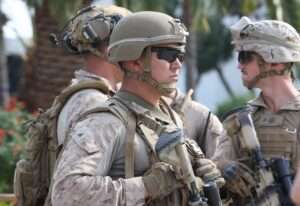
In June, Donald Trump federalized 4000 California National Guard troops and deployed them to Los Angeles, ostensibly for the purpose of combating protests, unrest, and illegality in response to ICE deportation operations. The federal law Trump invoked - the Militia Act of 1903 - can only be used in the event of 1) "invasion" or danger of invasion by a foreign power 2) rebellion, or 3) a situation where the president is "unable with the regular forces to execute the laws of the United States." A district court rightly invalidated Trump's actions on the grounds that none of these three conditions actually existed in LA. But the US Court of Appeals for the Ninth Circuit overruled on the ground that Trump's assessment of the facts on the third issue deserves a high degree of judicial deference (though they did reject the administration's argument that such actions are left to completely unreviewable executive discretion). I criticized the Ninth Circuit ruling here.
In a just-published article, Prof. Mark Graber (Univ. of Maryland), a leading expert on post-Civil War era constitutional issues, has a valuable discussion of the history and original meaning of the Militia At of 1903. He shows that the Ninth Circuit got it wrong. Litigation over these issues continues (the district court and Ninth Circuit rulings only addressed a preliminary injunction). Moreover, the case could sent an important precedent for future executive efforts to use the military for domestic law enforcement - a very dangerous form of emergency power.
Here is Graber's summary of his conclusions:
Americans from the ratification of the Constitution to the passage of the Militia Act of 1903 recognized that Congress could empower the President to federalize state militia only under the wartime or wartime analogue conditions under which Congress could empower the President to impose martial law. These conditions were limited to a foreign invasion, a domestic rebellion, or some other violent uprising that caused judicial proceedings in part of the United States to be suspended. The state militia federalized by the Militia Act were expected to confront troops or the equivalent, not criminals or scattered violent protestors. Interpreting the Militia Act of 1903 or any other federal measure, to give near absolute discretionary power to the president to determine when vast wartime powers may be exercised, [The Supreme Court's ruling in] Ex parte Milligan noted, would subvert the strict limitations of in the militia acts and threaten constitutional democracy in the United States by enabled the president and subordinates to "substitute military force for and to the exclusion of the laws," and govern as they "think right and properly, without fixed and certain rules."
The article isn't long. Anyone interested in this important issue should read the whole thing!
I participated along with Andrew Morris of the New Civil Liberties Alliance.
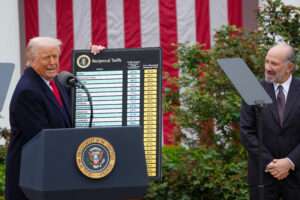
Earlier today, I participated in a Society for the Rule of Law webinar on "Tariffs and the Rule of Law," along with Andrew Morris of the New Civil Liberties Alliance (a conservative public interest law group). We discussed the litigation challenging Trump's massive IEEPA tariffs against imports from almost every nation in the world (including the case filed by the Liberty Justice Center and myself on behalf of five small businesses), and also the broader implications of unconstrained executive tariff power for the rule of law.
The discussion also touched on the implications of unitary executive theory for these issues. As Andrew Morris and I explained, there is a lot of misunderstanding about what unitary executive theory does and does not entail.
Here is the video of the webinar:
Celebrate your independence with a subscription to Reason magazine, your most trusted source of honest, insightful news and analysis.