Fordham Urban Law Journal Symposium on Knick v. Township of Scott
I have a contribution (coauthored with Shelley Ross Saxer) in this symposium on last year's important Supreme Court takings decision.

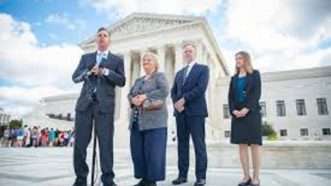
I have a contribution (coauthored with Shelley Ross Saxer) in this symposium on last year's important Supreme Court takings decision.

The brief was filed by the Cato Institute on behalf of both Cato and myself.

The Court's decision follows almost exactly the same line of reasoning as I had expected.
Alternative title: It's Always Locked Down in Philadelphia.

Yes, tenants are losing their jobs because of the COVID-19 shutdown, but forcing businesses to provide services for free would have a ripple effect.
It particularly emphasizes ways in which weak property rights harm the poor and disadvantaged.

Under current Supreme Court precedent, the answer is almost always going to be "no." But some compensation may be morally imperative, even if not legally required.
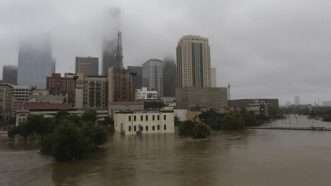
The ruling may well be both correct and consistent with the same court's earlier ruling in favor of a different set of plaintiffs arising from the same events. But the opinion does still have a few notable flaws.

The Chinese Communist Party confiscated a sacred meteorite from Muslim herders. They're suing to get it back.
Gil Cedillo, city councilmember, has introduced a motion asking the city to study its options for seizing the 124-unit Hillside Villa.

The article explains why the Supreme Court was justified in overruling longstanding precedent in this important recent constitutional property rights case.
![featurespace | Shutterstock [detail]](https://d2eehagpk5cl65.cloudfront.net/img/c331x186-w331-q60/uploads/2019/12/featurespace-331x186.jpg)
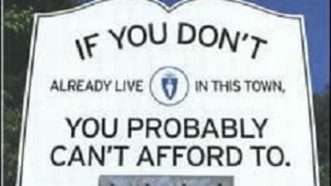
Many jurisdictions are alleviating housing shortgages by cutting back on zoning. Unfortunately, there is also a trend towards expanding rent control, which is likely to have the opposite effect.
The decision is significant in itself and has important implications for other cases where the government deliberately damages private property in the process of coping with natural disasters.
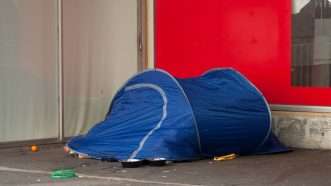
The prominent libertarian public interest firm hopes to get the decision reversed, possibly by the Supreme Court.

The Institute for Justice asks the Supreme Court to block sneaky tactics that prevent victims of property grabs from recovering their legal costs.

I took part in panels on these topics at the recent Federalist Society National Lawyers Convention

The bill, which the state House passed yesterday, says police may seize vehicles in which they find untaxed vaping products.
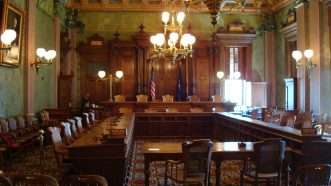
"You have a situation where a person owed $8 and lost their house. I mean, how is that equitable?" asked Michigan Supreme Court Justice Richard Bernstein.
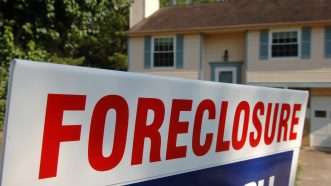
A state law allows counties to effectively steal homes over unpaid taxes and keep the excess revenue for their own budgets.

What happens when preservationists get in the way of a diner owner who is looking to sell his place, retire, and pocket the cash?

The ruling is a continuation of the same case in which the federal Supreme Court ruled that the Excessive Fines Clause of the Eighth Amendment is "incorporated" against state governments and applies to asset forfeitures.

The ruling has considerable backing from precedent. But it is nonetheless based on a deeply flawed doctrine.
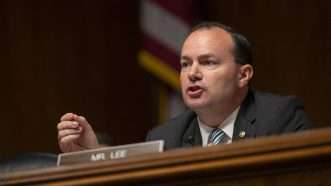
The Drone Integration and Zoning Act seeks to expand private property rights and give localities more say in airspace regulation.
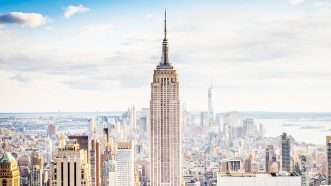
NIMBYs can keep their views. They just have to pay for them.
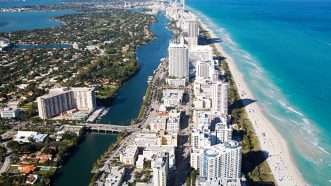
Miami Beach's crackdown on Airbnb is "in jarring conflict" with a state law capping municipal fines at $1,000 per day, Judge Michael Hanzman ruled.
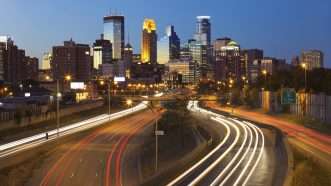
The Minneapolis city council just made the rental business a lot riskier for property owners.
The article is now available for free on SSRN.

Trump is just who he said he'd be four years ago. By rallying around him, Republicans are choosing to brand themselves in his image.
California public accommodations law has been read as banning discrimination based on "political affiliation," but the court concluded that this didn't apply to discrimination based on "political views" more broadly (or based on votes as an elected official).
The federal government continues to deny any liability for deliberately flooding thousands of homes and other property in Houston in the wake of Hurricane Harvey in 2017.

There’s no need to pit property owners against imperiled species.
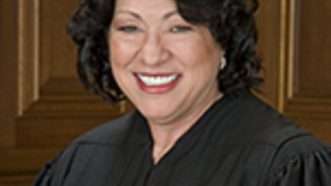
The concerns I expressed about her record on property rights when I testified at her 2009 confirmation hearing were justified. But she has compiled an admirable record on several other issues.

Owners painted the house bright pink and added two funny emojis after neighbors complained about illegal Airbnb rentals.

Under its "crime-free housing program," Granite City, Illinois, holds tenants strictly liable for illegal activity by a household member.

Denver NIMBYs are using historic preservation laws to stop a restaurant owner from selling his diner to a developer so he can retire.
The case was brought on the family's behalf by the Institute for Justice, a prominent public interest law firm.
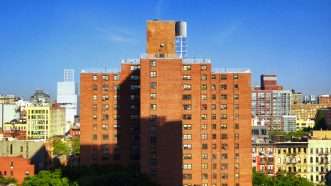
Landlords are suing to overturn state rental regulations that limit how much they can charge tenants and who they can rent to.

The late Supreme Court justice was an inconsistent defender of civil liberties.

The City of Baltimore has dropped its attempt to use eminent domain to take the Preakness Stakes Horse Race. But questions linger about the city's willingness to continue to use the threat of condemnation to force Preakness and other commercial enterprises to stay in the city.

Local governments can't outlaw home vegetable gardens under a new Florida law.

"Historically the answer to that question is yes, and we're sticking with that position here."


A provision of the Taxpayer First Act requires evidence of other illegal activity for seizures based on "structuring" and mandates prompt hearings.



New from Reason: a look into what Javier Milei has accomplished and what it will take to make the most of Argentina’s window for real change. Out now for subscribers.