How Americans Are Fighting a British Censorship Invasion
A new bill in Wyoming aims to defend Americans against the U.K.’s online regulators.


A new bill in Wyoming aims to defend Americans against the U.K.’s online regulators.
A Soho Forum debate on artificial intelligence's potential to deliver widespread societal benefits

FBI Director Kash Patel pays lip service to the First and Second Amendments while casting suspicion on people who exercise their First or Second Amendment rights.
Here's why I believe TikTok.

In the first social media addiction case to reach a jury, K.G.M. claims TikTok, YouTube, and other platforms are responsible for her depression, anxiety, and poor self esteem.
The Trump administration is reportedly moving to ban TP-Link routers, but experts say they're no less secure than other devices.
AI slop and enshittification are making the public social commons unbearable. The alternative pathways are more accessible than you think.
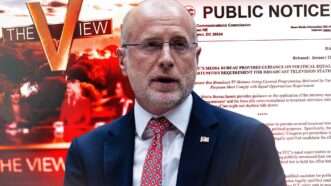
The equal-time rule is an antiquated regulation that becomes more obsolete with each passing year.

Should it matter whether a song was made by a human or a machine?

AI-powered medical wearables and software are flourishing following the FDA’s new regulatory guidance.

After Google refused to take down a video of him, the Kentucky senator suggested upending the legal framework undergirding the internet for three decades.

Plus: The Trump administration wants to roll back "disparate impact" regulations, New York Gov. Kathy Hochul wants to roll back environmental review regulations, and L.A. waives fees for wildfire rebuilds.
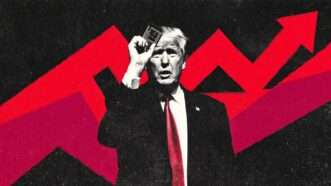
The order imposes duties on China-bound AI chips if chipmakers don't invest in American semiconductor fabrication.

Excluding generative AI from Section 230 could stymie innovation and cut off consumers from useful tools.

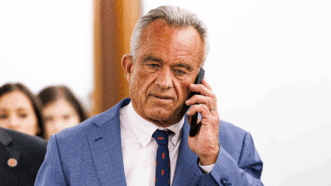
The Department of Health and Human Services is launching a study apparently trying to find otherwise.

The AI boom is showing the limits of our regulated monopoly model for generating electricity.

The DATA Act, introduced by Sen. Tom Cotton, would exempt electrical utilities from federal regulation if they don't touch the electrical grid.


While Europe and Asia have had Stellest glasses for years, the FDA finally approved them for the U.S. in 2025.
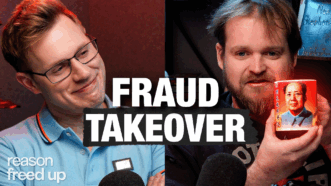
Robby Soave and Christian Britschgi discuss Nick Shirley's viral video about Minnesota day care fraud, then dig deeper into how Tim Walz has little respect for American taxpayers.
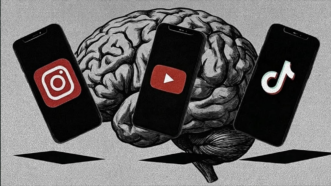
A recent meta-analysis concerning short-form video, mental health, and attention spawned a lot of tech panic. Did critics even read the study?
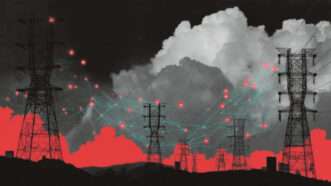
Don't blame AI for your high electricity bill. Blame the politicians who are trying to take AI away.

Sen. Marsha Blackburn’s latest is an anti-tech omnibus, combining years' worth of dangerous policy ideas into one big, bad bill.
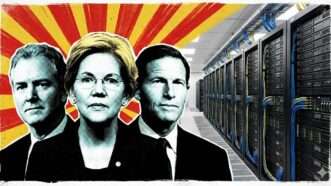
Rising electricity prices are being pinned on data centers, but demand isn’t what makes power expensive.

Progressive censors failed to suppress our political demons. It's finally time to confront them.

Robby Soave and Christian Britschgi are back to break down another unhinged week in the news.

Keonne Rodriguez explains why he built a bitcoin privacy tool, discusses the federal charges that sent him to prison this week, and warns that his case could redefine the legal boundaries of financial privacy.
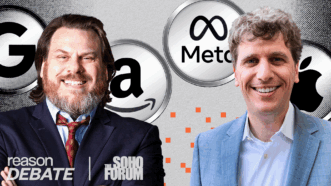
Matt Stoller and Geoffrey A. Manne debate antitrust law and Big Tech.

It's the humans who develop and use AI for malicious ends, not the tech itself, who should worry us.

Larry Bushart's lawyers argue that his arrest for constitutionally protected speech violated the First and Fourth amendments.
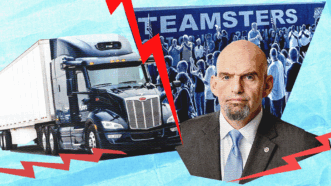
The union isn't pro-growth or pro-consumer. It's a lobby for workers.
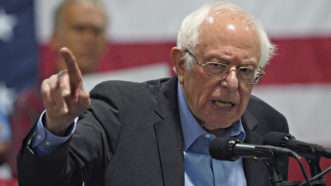
The socialist senator wants a moratorium on new data centers to slow the AI and robotics industries down.

Proponents say such IDs will make life easier and protect kids from dangerous content. But opponents worry they will make you much easier to target.
It's an insane—and frighteningly dystopian—interpretation of the law.
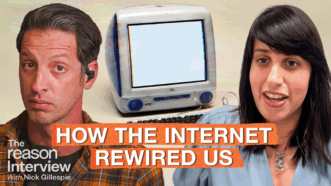
Katherine Dee examines how living online reshapes attention and behavior and makes the case for a more grounded, realistic way of using digital tools.
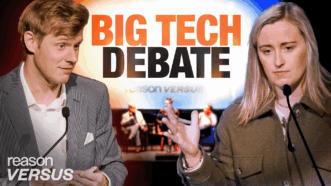
Reason's Robby Soave and Elizabeth Nolan Brown go head to head with Emily Jashinsky and Ryan Grim from Breaking Points in a thought-provoking debate about Big Tech.
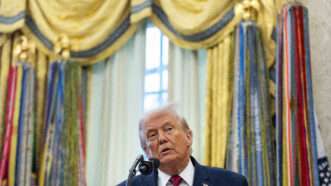
The president failed a not particularly challenging moral test.

When the perceived emotional harm from new development becomes a justification for state intervention, the law gets really arbitrary really quickly.
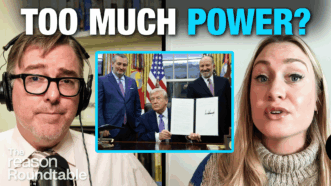
Plus: reclassifying marijuana as a Schedule III drug, mass shootings at Bondi Beach and Brown University, and the U.S. seizes a Venezuelan oil tanker

Depression and anxiety are declining, adding yet more complications to the anti-smartphone and anti–social media narratives.

As traditional gathering places disappear, market-based funding could expand parks, courts, and other spaces that help people reconnect without raising taxes.

The country's transition leader was selected not at the ballot box but on a 100,000-person Discord chat.

Only time will tell if the president's order achieves its stated purpose of checking state laws that threaten to stymie innovation.
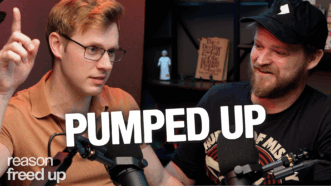
Robby Soave and Christian Britschgi bring you another episode of Freed Up where they talk about RFK Jr.'s airport pull ups, prison gangs, welfare fraud, Avatar, and the most based fonts.

NIMBY opposition is forcing some Big Tech companies to consider locating their data centers in space.

A federal lawsuit argues that the agency's policy of perusing travelers' personal data without a warrant or probable cause violates the Fourth Amendment.
Celebrate your independence with a subscription to Reason magazine, your most trusted source of honest, insightful news and analysis.




