
How Europe Censors What Americans Say Online
Stanford Law professor and former Google attorney Daphne Keller says tech giants are facing pressure from governments worldwide to clamp down on content.

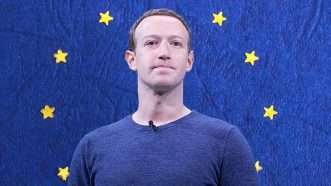
Stanford Law professor and former Google attorney Daphne Keller says tech giants are facing pressure from governments worldwide to clamp down on content.

Plus: Immigration officials confirm Trump tweets about new raids, Elizabeth Warren talks sex work decriminalization, and more...

Hawley is selling it as a way to fight tech-company "bias" against Republicans. Don't believe him.

The tech giant's plan to add 20,000 homes will require lots of government permission slips and other investors' money.

Mark Zuckerberg’s latest venture won't compete with Satoshi Nakamoto’s project for undermining central banking, tyranny, and the financial surveillance state.

I shouted out, who killed online freedom of speech? When after all, it was you and me.

This will fail and more pressing problems will be neglected

Be afraid as more journalists and politicians start calling for stronger policing of online speech.

We already give our kids music lessons, braces, and tutoring. Why not also give them better genes?

Plus: psychedelics research bill moves forward, big companies push back against abortion bans, and more...
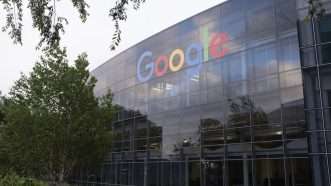
Being a big company is not a crime. What problem are we trying to fix?

Despite scant evidence, everyone wants to believe that social media has a unique ability to control our thoughts and actions.

When Tucker Carlson and Elizabeth Warren agree on trade, regulation, and social media, it's time to rethink a few things.

You might consider buying a hat to cover your face—and hoping you’ll be allowed to wear it.

The video platform temporarily demonetized a conservative comedian's channel, satisfying no one.

In his new book, Fall, the author of Snow Crash, Cryptonomicon, and The Diamond Age, looks to the digital afterlife, and beyond.

Don't worry, a spokesman tells Congress, the agency has "strict policies" for using facial recognition technology.

Censorship inevitably ends up being used to protect the powerful from criticism.

Plus: Spending bill includes pro-marijuana changes, State Department starts collecting social media accounts of visa applicants, and more...

Every kid is special, but not every kid has special needs.

Thanks to the ultimate resource: the human mind

Abroad, legislators are in the mood to theatrically punish social media companies. CEOs shouldn’t play along.


The "blogfather" once touted the internet as the antidote to Big Government, Big Business, and Big Media. Now he wants the feds to crack down on social media.

Government-mandated privacy regulations will allow the most powerful companies to game it to their advantage.


In the best of all possible worlds, such actions wouldn't be necessary. In the current climate, boycotting social media might spark a return to a robust marketplace of ideas.

"I want to be clear that the comments I made are not indicative of who I am or who I've become in the years since."

A new documentary reveals how stable currency leads to prosperity.

There's strong evidence today's teens retain a rebellious streak and the ingenuity to evade control

Social media platforms and governments are "voluntarily" teaming up to ban "violent extremist content." What could go wrong?
The AFL-CIO's Twitter account appears to endorse a workers' revolution.

Historian Jerry Z. Muller says we waste too much time fixating on measurements that lead us astray.

Plus: Sen. Josh Hawley continues anti-tech crusade, Pete Buttigieg on tariffs, "toxic femininity," Gen Z panic, and more...
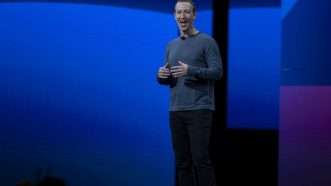
Co-founder Chris Hughes' call for antitrust action is vainglorious and misguided.

Nick Gillespie speaks with author Jordan Shapiro about his book The New Childhood
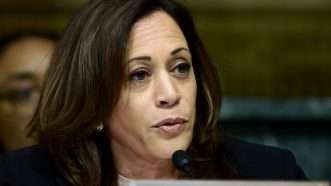
Resist when politicians declare that speech (even radical speech) is a “threat to our democracy.”

As the cryptocurrency continues use, issues of privacy and fungibility crop up.

Private property rights, public squares, "dangerous" speech, and pre-regulatory suck-ups, all debated on the Reason Podcast.

“Neither de facto [GMO] bans nor mandatory labeling can be justified.”

Human Rights Watch and other groups say these systems draw serious concerns.
Classifying heavy internet use as medical addiction leads to bad policy and inferior patient care.

Right after 290 people were killed in a series of Easter Sunday bombings

"Feeling cute, might just gas some inmates today, IDK."

Subreddits on sexual themes will also be banned from running ads.

Prohibiting businesses from going cardless ignores the choices of consumers and businesses alike.
Get food, coffee, medicine, and golf balls (if your aim is just that bad).

They say the social media companies display a bias against conservatives.


New from Reason: a look into what Javier Milei has accomplished and what it will take to make the most of Argentina’s window for real change. Out now for subscribers.

