
Nobody Wants To Be the Pro-Tech Candidate in This New York Race That Could Flip the House
Republican incumbent Mike Lawler and Democratic challenger Cait Conley are trying to tie each other to the AI industry and data centers.


Republican incumbent Mike Lawler and Democratic challenger Cait Conley are trying to tie each other to the AI industry and data centers.

Republicans who want to speak to voters' anger over higher prices without criticizing the president who's caused them are in a bind.

The Trump administration begins the implementation of manufactured housing deregulation.

Property rights in space will attract investment, prevent space serfdom, and allow competition to flourish off-world.

Plus: Talarico and black turnout, an artist trial at the Vatican, hospitals use AI (for ill), and more...
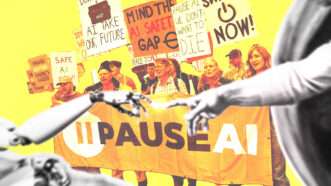
A new poll finds widespread support for slowing advanced AI, but government controls could create risks of their own.

State and federal policymakers are attempting to exclude data centers from run-of-the-mill tax exemptions.

Anthropic's CEO wants federal regulation that would slow down AI (and his competitors' innovations). Has that ever worked?

With their reputation figuratively underwater, data centers might be going literally underwater too.

The pro-AI side must avoid succumbing to paranoia and bad faith.
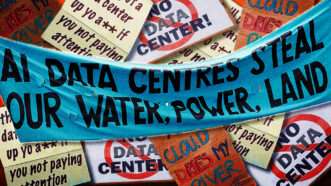
The panic is pretty silly, since these facilities are necessary to power industries that power our economy and fund state budgets.

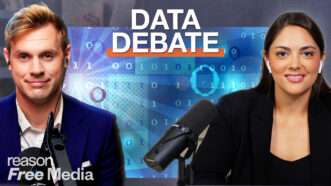
Robby Soave and Amber Duke discuss Trump’s recent comments on data centers, unpacking how his stance diverges from parts of his political base.

State preemption worked for housing. It's unlikely to come to the rescue of incredibly unpopular data centers.

What the simultaneous revolts against Flock and data centers can tell us about the power and risks of populism

Destructively scanning books is making information more accessible to the masses.

Plus: AOC reaffirms her socialism, Russia-Ukraine war gets even deadlier, and more...
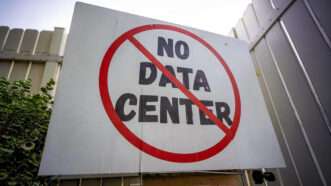
From Texas to Ohio, political candidates are backing voters’ bad arguments for opposing data centers.

Plus: Trump's trade war with Canada, the growing backlash against data centers, and calls to censor journalists in Britain

Their few defenders often misunderstand their benefits.

It's not existential dread about the internet.
The state's plan to attract large infrastructure projects is full of administrative hurdles and concedes many of the bad arguments made by NIMBY critics.

The bipartisan backlash against data centers reaches the Lone Star State.

The Nashville Zoo says the vibrations from next door's planned data center might negatively affect hearing-sensitive animals.

In a committee hearing yesterday, Alexandria Ocasio-Cortez complained about data centers' impacts on rural areas and industrial parks.

Gov. Kathy Hochul’s one-year moratorium buys time for the state to create a convoluted regulatory regime.

Don't impose a moratorium. Produce more energy.

As data centers dominate public debate, two states reveal their approach. Texas has taken a stance in line with market needs, while North Carolina reacts to fear and bad press.

Despite their limited negative externalities and extreme economic importance, people's hatred of data centers is only growing.
So far, electricity prices haven't risen. If and when they do, the solution is more power generation.
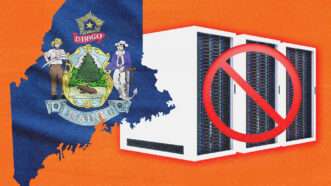
A week after Bernie Sanders introduced legislation to pause AI data center construction indefinitely, Maine is poised to institute the first statewide ban.
This heavy-handed legislation would harm Americans, not protect them.

When water rights are secure and transferable, new demands can be met without harming existing users.

Contrary to the claims of the not-in-my-backyard technophobes, all this growth comes with minimal environmental downsides.
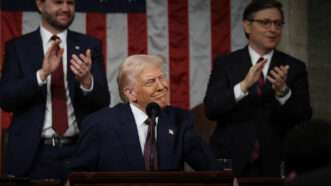
The plan recognizes that public opinion is what's holding data centers back the most.

Is this small modular nuclear power’s moment?
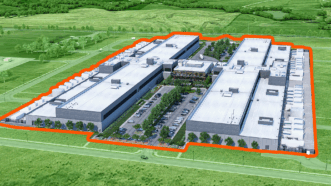
Plus: The Trump administration wants to roll back "disparate impact" regulations, New York Gov. Kathy Hochul wants to roll back environmental review regulations, and L.A. waives fees for wildfire rebuilds.
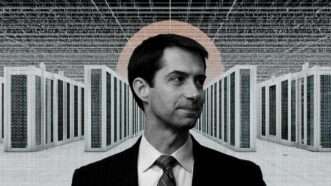
The DATA Act, introduced by Sen. Tom Cotton, would exempt electrical utilities from federal regulation if they don't touch the electrical grid.
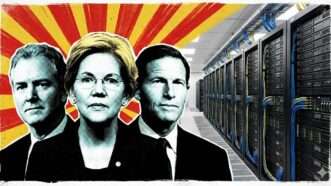
Rising electricity prices are being pinned on data centers, but demand isn’t what makes power expensive.

The socialist senator wants a moratorium on new data centers to slow the AI and robotics industries down.

Local governments love giving sweetheart deals to billion-dollar companies—now data centers instead of football stadiums.
Celebrate your independence with a subscription to Reason magazine, your most trusted source of honest, insightful news and analysis.




