

A Tale of Two Tech Revolts
What the simultaneous revolts against Flock and data centers can tell us about the power and risks of populism
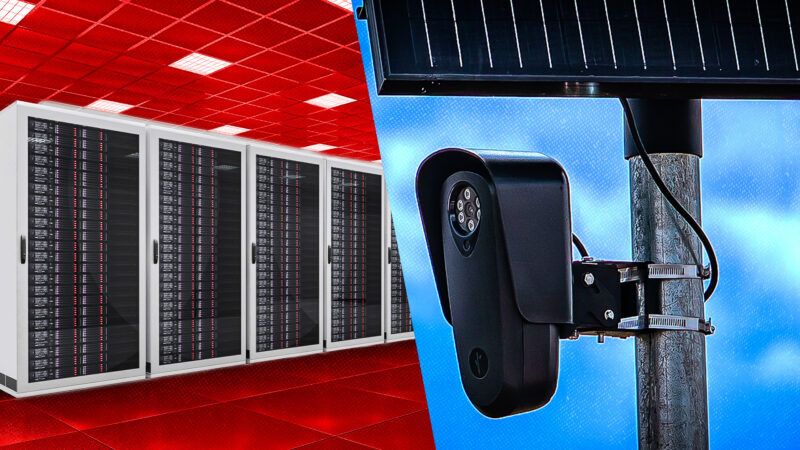
America is in the grip of two targeted anti-tech backlashes.
The first is against automatic license plate readers (ALPRs), which are mostly, but not exclusively, supplied to thousands of local police departments by the company Flock Safety.
The second is against data centers writ large: large boxy facilities housing rows of servers doing everything from hosting streaming services to powering advances in AI.
Neither technology is particularly new. Police departments have been using ALPRs for decades. Data centers predate the internet.
That makes the sudden negative turn against both so startling.
At the end of last year, the public was mostly unaware and unconcerned about data centers. Now up to three-quarters of Americans would oppose their construction in their community. More people say they would rather live next to a steel mill or a nuclear plant than a hyperscale data center.
Newly released YouGov polling reported today by The Washington Post shows a complete 180 in public opinion on ALPRs as well. Last August, 45 percent of people supported the technology and 33 percent opposed. This year, 46 percent are opposed to ALPRs and 38 percent support it.
When progressive polling group Data For Progress asked about Flock specifically, they found the company's tech had a net negative 19 percent favorability rating.
The turn in public opinion follows a wave of reporting on law enforcement's many abuses and misuses of ALPR cameras (including by Reason).
It might be tempting to lump these two backlashes into a generalized revolt against technology.
But polling on AI and tech companies generally shows only a modest cooling of the public's attitude toward them. Nothing like the sharp collapse in public support we've seen for Flock and data centers specifically.
When people are asked why they oppose data centers, environmental concerns are top of the list, not an opposition to technology.
Instead, what we're seeing appears to be popular revolts against two things Americans like to get panicked about: Big Brother and Big Development.
People naturally object to the government spying on them. They're also primed to oppose new construction, regardless of what's being built.
In a country witnessing a massive boom in data center construction and a comprehensive nationwide rollout of ALPRs, a bottom-up, popular revolt was perhaps inevitable.
And to be clear, these are popular, bottom-up revolts.
When Sen. Bernie Sanders (I–Vt.) proposed a national moratorium on data centers last year, even his fellow progressive Democrats rolled their eyes. The sudden shift in public opinion is now prompting once explicitly pro–data center governors from both parties to impose their own data center restrictions (of varying severity).
Ron DeSantis is now Flock's No. 1 critic, despite Florida state police making heavy use of ALPRs for immigration enforcement.
Dozens of localities are canceling Flock contracts early or choosing not to renew them.
That the politicians are lagging indicators of public opinion shows that populism continues to have real juice in American politics. When ordinary citizens get mad about something suddenly all at once, politicians rush to agree with them, even if that means contradicting their own positions from five minutes ago.
If the revolt against Flock and data centers demonstrates the power of populism to move politicians on an issue, it also highlights the limits of populism for protecting liberty.
There's a world of difference between the government tracking citizens in public and landowners developing their private property. An angry populace isn't making those distinctions.
ALPR technology poses serious privacy concerns. Its many misuses and abuses are scandalous. The public's turn against it is provoking a belated conversation about the benefits, costs, and constitutionality of the 120,000 Flock cameras already in the field.
It's far harder to see anything positive in the sudden revolt against data centers.
These facilities' critics are not stopping at demanding more mitigation of their relatively few externalities. Nor are they simply calling for an end to unfair subsidies or tax credits some data center projects receive.
Instead, people's misplaced concerns about data centers' overhyped environmental impacts are leading states and localities to impose some of the tightest land use restrictions on one of the more innocuous forms of development imaginable.
In the more extreme cases, New York has imposed a moratorium on hyperscale data center development, and Nashville is going so far as to try to seize private land via eminent domain in order to stop a data center development.
None of this backlash is proportional to data centers' impacts. None of it considers the immense economic benefits data centers provide. Some of this backlash, like Nashville's land grab, is arguably unconstitutional.
Moral panics are inevitable. In any reasonably free country, those revolts are going to drive policy changes. That's not always a bad thing, but it often is.
There's a reason we have a constitution to temper momentarily flare ups of public opinion. The Constitution would seem to impose a lot of limits on the use of ALPR technology and afford a lot of protections to data center developers.




