
My New Boston Globe Article Making Case for Abolishing ICE and Giving the Money to State and Local Police
It builds on an earlier piece in The Hill.


It builds on an earlier piece in The Hill.
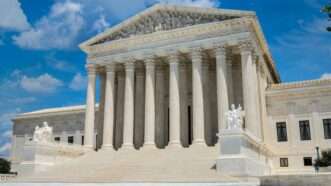
The same legal theory that tripped up Joe Biden's student loan scheme could also sink Donald Trump's tariffs.
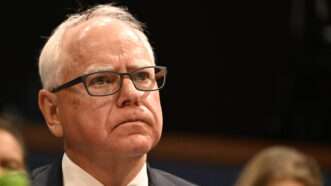
Minnesota's proposed firearm restrictions raise serious constitutional questions—and offer little in return.

Tens of thousands of people die each year in crashes where human error was the cause or a contributing factor.

There is no hard evidence of Gmail discriminating against Republican campaign emails, but that’s no matter to the FTC Chairman.
Justice Kavanaugh on what to call the "shadow docket" now that it is no longer in the shadows.


Killing suspected drug traffickers is both unjust and illegal. And it could be the start of an effort to turn the already awful War on Drugs into something more like a real war, thereby making it even worse.
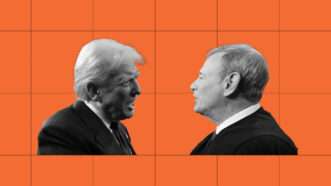
Plus: A momentous date in the life of Frederick Douglass

The 2-1 ruling is in line with most previous court decisions on Trump's invocation of the AEA. Judge Oldham wrote an extremely long, but significantly flawed, dissent.
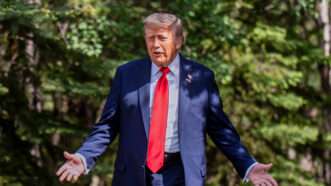
The appeals court blocked the removal of alleged Venezuelan gang members under that law "because we find no invasion or predatory incursion."
Plus: Bombing "narco-terrorists" in the Caribbean, American manufacturing shrinks for the sixth consecutive month, Massie wants the Epstein files, and more...

The federal law relies on a risible reading of the Commerce Clause to restrict a constitutional right.
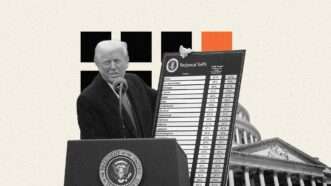
Donald Trump's claim that the appeals court ruled against him for partisan or ideological reasons is hard to take seriously.

An antiquated law gives high school and college football first dibs on Fridays and Saturdays.

"The Federal Reserve is a uniquely structured, quasi-private entity," the Supreme Court wrote in a ruling this year.
Seven judges agreed that the president's assertion of unlimited authority to tax imports is illegal and unconstitutional.

Guatemalans don't wait for the government's permission. They build their own markets through voluntary exchange.

Florida officials can’t agree on whether unpasteurized milk is a health threat or benefit, leaving consumers more confused than if they were left to decide for themselves.

In a 7-4 ruling, the en banc court upheld trial court ruling against all the challenged tariffs. The scope of the injunction against them remains to be determined.
Congress holds the power of the purse in our system of government, and further eroding congressional responsibility for spending decisions will not end well.

Despite improvement, significant barriers remain to working many jobs.
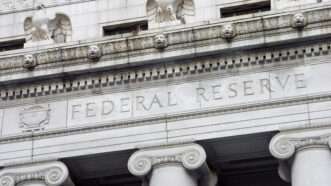
The president's clear attempt to interfere in the Federal Reserve is not a one-off crisis.

Should they brag about raising taxes, like the White House is doing, or try to distance themselves from those same tax increases?

Or will the justices say that Trump fired her for illegal reasons?
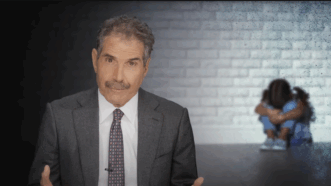
When children are abused, we want government to step in. But Child Protective Services sometimes goes too far.
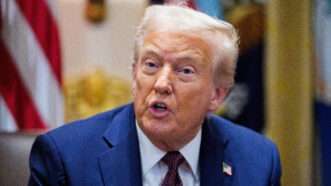
The president's plan to promote public safety by deploying troops in cities across the country is hard to reconcile with constitutional constraints on federal authority.

The use of government force to achieve political advantage is dangerous and sets a bad precedent.

A recent federal appeals court decision underlines the importance of that safeguard.

His executive order directs the Justice Department to deny federal funds to jurisdictions that use cashless bail for suspects for many types of crimes. The plan is another assault on federalism and separation of powers.
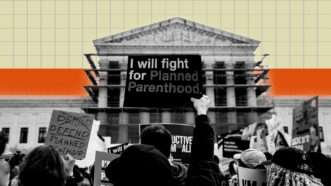
Plus: An impressive book by a Supreme Court justice.
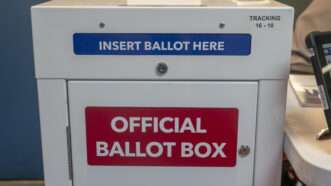
Most voters support submitting ballots by mail, and also voter ID.
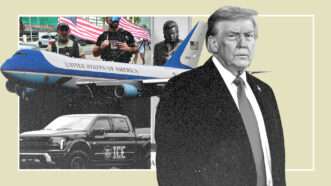
Donald Trump is no stranger to wasteful spending. But these examples are especially egregious.
Property rights, public law, the police power, and the eminent domain power.
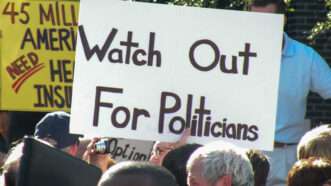
Perversely, distrust may encourage the government to grow bigger and more intrusive.
defendant "was found guilty of criminal mischief and domestic violence"—yet the prosecution "presented no evidence that [she] damaged or destroyed the property of another—an essential element of criminal mischief, which was also the predicate offense for the domestic violence charge."
Asking SCOTUS to hear a case is not the same thing as convincing SCOTUS to hear a case.
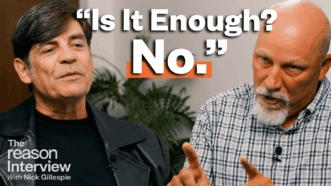
Texas Rep. Chip Roy joins Nick Gillespie to talk about runaway spending, the uphill battle for health care reform, and where immigration fits into the liberty vs. sovereignty debate.
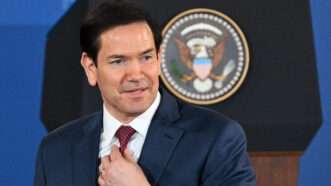
The 2016 brief defended the understanding of the 14th Amendment that the president wants to overturn.
The Court concludes that limitations on the removal of NLRB Board members and NLRB administrative law judges are both unconstitutional.
Foxes, whales, and injustice toward the property claims of aboriginal tribes.
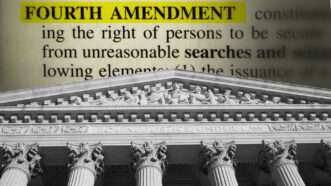
SCOTUS will soon decide.
There are fewer early-term vacancies than one might have expected.
An overview. (Or, what you can learn about property from John Locke and Monty Python's Flying Circus.)
A New York Times column on the Supreme Court offers a misleading picture and errant analysis.
Celebrate your independence with a subscription to Reason magazine, your most trusted source of honest, insightful news and analysis.




