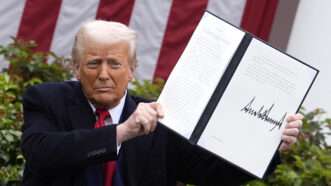
Biden's Final Insult to Our Intelligence
Plus: A listener asks the editors about the libertarian position on doctor-assisted suicide.
The executive order that the president-elect plans to issue contradicts the historical understanding of the 14th Amendment.
Plus: Are tariffs inflationary, RIP to a giant of the free market movement, and more...
Sen. Rand Paul's bill to require congressional consent for tariffs is getting new attention in the final weeks before Trump's return to power.
Brendan Carr’s plans for "reining in Big Tech" are a threat to limited government, free speech, free markets, and the rule of law.
Berry explains why the plan is flawed on legal and other grounds.
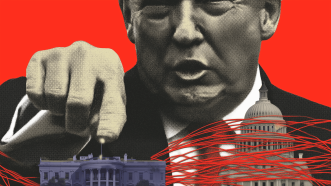
Congress needs to reassert its powers and bring the imperial presidency back down to earth.
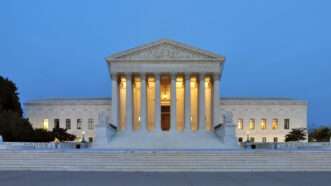
The justices, including Trump's nominees, have shown they are willing to defy his will when they think the law requires it.
In his second term, the former and future president will have more freedom to follow his worst instincts.
The Republican presidential candidate’s views do not reflect any unifying principle other than self-interest.
Legal scholar Michael Ramsey points out another way courts could reject Trump's plan to use the act as a tool for peacetime mass deportation.
The plan is illegal. But courts might refuse to strike it down based on the "political questions" doctrine.
It's fundamentally different from what Republicans have tried to do, but similar enough to be worrisome.
A successful appointments clause challenge to Regional Fishery Management Councils. (Updated to fix block quotes)
Donald Trump's plan for massive tariff increases is particularly dangerous because the White House could likely implement it without any new congressional authorization.
The Supreme Court is considering whether a rule targeting "ghost guns" exceeds the agency's statutory authority.
Contrary to public desires, the presidency should be far less powerful.
The former president's attempts to put a positive spin on the term are consistent with his alarmingly authoritarian instincts.
Reflections on that Twitter dust-up.
The revised indicment is intended to address the Supreme Court's presidential immunity ruling in Trump v. United States.
In charging the former president with illegal election interference, Special Counsel Jack Smith emphasizes the defendant's personal motivation and private means.
The lawsuit deserves to lose. But it may well lead to a prolonged legal battle.
The 2024 Democratic platform devotes five paragraphs to firearm restrictions but does not even allude to the Second Amendment.
Reason's Zach Weissmueller talked with Trump supporters at the Republican National Convention about heated rhetoric, the weaponization of government, and plans for unity.
There’s less reason to fight when one-size-fits-all policies are replaced with local diversity.
We need not conjure "extreme hypotheticals" to understand the danger posed by an "energetic executive" who feels free to flout the law.
I was one of the participants, along with many other legal scholars.
We've now had two consecutive presidential administrations deploy versions of this same argument in response to questions about the fitness of the man allegedly running the federal government.
The Supreme Court's flawed decision largely ignores text and original meaning, and fails to resolve crucial issues.
There is no textual basis for "immunity" as such, but there are structural reasons why some degree of insulation is inevitable.
A thoughtful, sober take on Trump v. United States.
Contrary to progressive criticism, curtailing bureaucratic power is not about protecting "the wealthy and powerful."
By requiring "absolute" immunity for some "official acts" and "presumptive" immunity for others, the justices cast doubt on the viability of Donald Trump's election interference prosecution.
The Supreme Court's recent rulings limiting the powers of the administrative state are a blessing for liberals who might not control the White House for much longer.
It won't end the administrative state or even significantly reduce the amount of federal regulation. But it's still a valuable step towards protecting the rule of law and curbing executive power.
The Court says Chevron deference allows bureaucrats to usurp a judicial function, creating "an eternal fog of uncertainty" about what the law allows or requires.
The decision rejects a system in which the agency imposes civil penalties after investigating people and validating its own allegations.
Both rulings were by Democratic-appointed judges - a result that bodes ill for the plan's future.
Justice Amy Coney Barrett's majority opinion includes significant errors, and violates some of her own precepts against excessive reliance on questionable history.
The case hinged on the ATF’s statutory authority, not the Second Amendment.
It's a good policy, authorized by the law. But it will likely face lawsuits, nonetheless, potentially leading to a prolonged legal battle.
Six justices agreed that federal regulators had misconstrued the statutory definition of a machine gun.
The decision allows the lawsuit to proceed, albeit with fewer plaintiffs.
Fifth in a series of guest-blogging posts.
Fourth in a series of guest-blogging posts.
I cover both liberal immigration sanctuaries and conservative gun sanctuaries, and the more general principles behind them.
Most of the justices seem skeptical of granting Donald Trump complete immunity from criminal prosecution for "official acts."
The Supreme Court will decide whether former presidents can avoid criminal prosecution by avoiding impeachment and removal.
Help Reason push back with more of the fact-based reporting we do best. Your support means more reporters, more investigations, and more coverage.
Make a donation today! No thanksEvery dollar I give helps to fund more journalists, more videos, and more amazing stories that celebrate liberty.
Yes! I want to put my money where your mouth is! Not interestedSo much of the media tries telling you what to think. Support journalism that helps you to think for yourself.
I’ll donate to Reason right now! No thanksPush back against misleading media lies and bad ideas. Support Reason’s journalism today.
My donation today will help Reason push back! Not todayBack journalism committed to transparency, independence, and intellectual honesty.
Yes, I’ll donate to Reason today! No thanksSupport journalism that challenges central planning, big government overreach, and creeping socialism.
Yes, I’ll support Reason today! No thanksSupport journalism that exposes bad economics, failed policies, and threats to open markets.
Yes, I’ll donate to Reason today! No thanksBack independent media that examines the real-world consequences of socialist policies.
Yes, I’ll donate to Reason today! No thanksSupport journalism that challenges government overreach with rational analysis and clear reasoning.
Yes, I’ll donate to Reason today! No thanksSupport journalism that challenges centralized power and defends individual liberty.
Yes, I’ll donate to Reason today! No thanksYour support helps expose the real-world costs of socialist policy proposals—and highlight better alternatives.
Yes, I’ll donate to Reason today! No thanksDonate today to fuel reporting that exposes the real costs of heavy-handed government.
Yes, I’ll donate to Reason today! No thanks