
Review: Ben Franklin, Frankenstein, and the Wonders of Electricity
Minnesota's Bakken Museum celebrates the spark of imagination that brings new ideas to life.


Minnesota's Bakken Museum celebrates the spark of imagination that brings new ideas to life.
Anthropic's CEO wants federal regulation that would slow down AI (and his competitors' innovations). Has that ever worked?

The state's plan to attract large infrastructure projects is full of administrative hurdles and concedes many of the bad arguments made by NIMBY critics.
The authors recognize the need to reconsider policies that make it hard to innovate and build, but do not ask why they and their allies were blind to such concerns for so long.
Yet another broken campaign promise.

A new GAO report attributes the delays to onerous regulations and poor coordination among government agencies.

The continent’s political class needs to get over its aversion to life-saving technology.
European countries are stubbornly refusing to adapt to warming weather, with deadly results.
A market-friendly ruling party, abundant energy, and ample talent could jumpstart a new tech hub in the Himalayas.
Don't impose a moratorium. Produce more energy.
This week, Wes Moore blamed grid operators for high electricity costs, but the problem has worsened because of his own policies
So far, electricity prices haven't risen. If and when they do, the solution is more power generation.
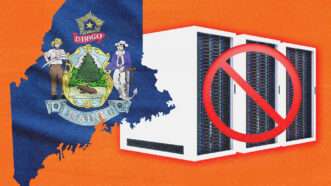
A week after Bernie Sanders introduced legislation to pause AI data center construction indefinitely, Maine is poised to institute the first statewide ban.

Contrary to the claims of the not-in-my-backyard technophobes, all this growth comes with minimal environmental downsides.
The plan recognizes that public opinion is what's holding data centers back the most.
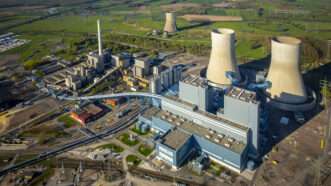
The Trump administration excludes advanced nuclear power reactors from excessive National Environmental Policy Act requirements.
The AI boom is showing the limits of our regulated monopoly model for generating electricity.
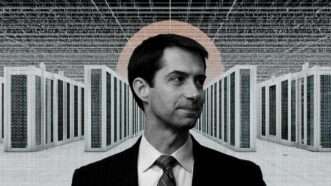
The DATA Act, introduced by Sen. Tom Cotton, would exempt electrical utilities from federal regulation if they don't touch the electrical grid.
Don't blame AI for your high electricity bill. Blame the politicians who are trying to take AI away.

Rising electricity prices are being pinned on data centers, but demand isn’t what makes power expensive.
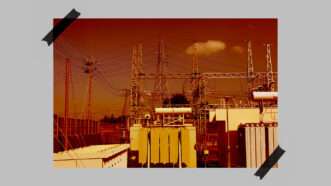
The Trump administration recently expanded its list of tariffs to include grid transformers, parts of nuclear reactors, and parts for offshore oil drilling.
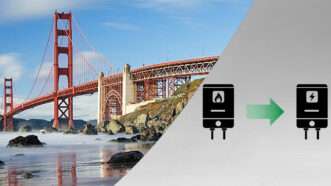
San Francisco’s new ordinance would impose all-electric building standards for new construction projects or buildings undergoing “major renovations.”

The city’s police consider “high” power consumption evidence of cannabis cultivation.

A massive blackout in Spain shows what happens when energy policy ignores the physics of electricity.
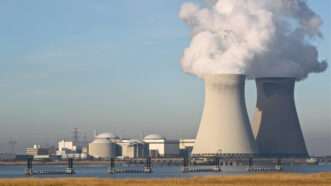
The lawsuit will hopefully make stringent regulations for nuclear power a relic of the past.

Northeastern states import massive amounts of electricity from Canada while strangling domestic energy production with regulations.

In this latest skirmish between the future and its enemies, the future won.

Coal and natural gas are more reliable but they can't compete with massively subsidized wind and solar. That's a problem.

Some politicians and environmentalists want to tear down Snake River dams in Washington state, even though they generate tons of electricity.
Enjoy your conveniences. But don’t let yourself become helpless in their absence.
The bill would banish insurance companies from the state if they invest in companies profiting from oil and gas.
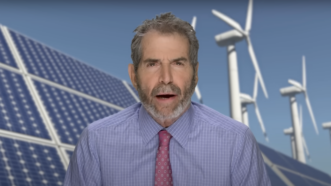
In California, which has a slew of renewable energy regulations, the cost of electricity increased three times faster than in the rest of the U.S.—and the state still doesn't even get reliable energy.

Abundant, emissions-free energy was once the promise of a nuclear-powered future. What happened?
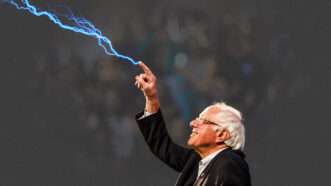
A plan to have the state take control of Maine's two private electric utility firms has divided the political left.

The popularity of e-bike subsidies doesn't mean these programs are creating more e-bike riders.
And it undercuts energy efficiency investments already made by millions of Californians.
The Fiscal Responsibility Act falls well short of solving America's permitting crisis.
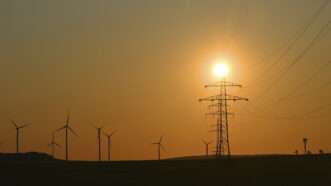
If you want to keep the lights on, it might be a good time to shop for a generator.
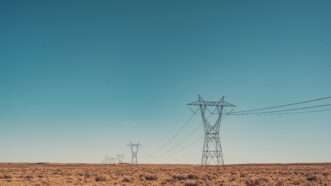
It'll be another five years before it's operational.
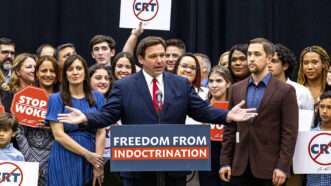

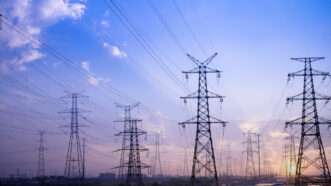
Deregulated states may spend more on transmission, but that part of the market is still heavily regulated.
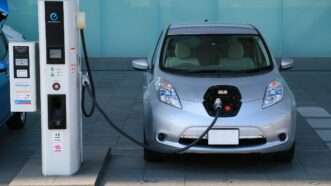
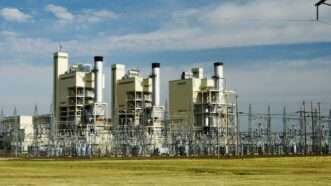
"Engineers are really good at making things better, but they can't make them better than the laws of physics permit."
Celebrate your independence with a subscription to Reason magazine, your most trusted source of honest, insightful news and analysis.




