First Amendment Generally Protects Speech in the U.S. by Non-U.S.-Citizens/Residents
An interesting, though unsurprising, decision in a case brought by prominent Russian businessmen over the Fusion GPS Steele Dossier.

An interesting, though unsurprising, decision in a case brought by prominent Russian businessmen over the Fusion GPS Steele Dossier.

The department will update its training to remind officers that citizens should not be arrested for exercising their First Amendment rights.
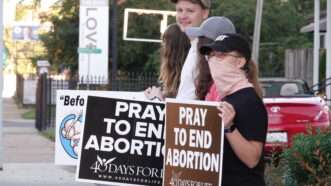
Plus: More losses for the Trump campaign, a win for cannabis delivery services, a ban on LGBTQ conversion therapy violates First Amendment rights, and more...
The University rightly responds: "At the core of this demand is a disconnect between the law and First Amendment freedoms guaranteed by our Constitution, and the desire by many in the campus community to punish those whose comments are hurtful to others."

The legal doctrine is a free pass for rampant government abuse.

If governments stand in the way of vaccine production and distribution for the world market, the costs will be high in lives and in wealth.
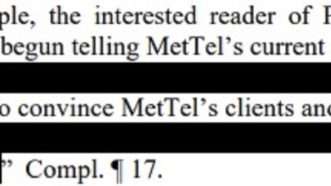
So says the Delaware Court of Chancery: "If the information currently redacted remains so, the public will have no means to understand the dispute MetTel has asked the Court to adjudicate."
Louisiana is one of about a dozen states that has a criminal libel statute; my sense is that, throughout the country, there are likely about 20-30 criminal libel prosecutions per year.
"So what?." asks David Harsanyi at the National Review, quite correctly.
A mayoral candidate, a supposed Aryan bicyclist, a video, a newspaper story, and a libel lawsuit.
It's hard to take seriously complaints that there are no alternatives to Facebook when they're made on Twitter.
Richard Stengel published that argument in the Washington Post last year.

But what one side likes, the other side hates. There's no way Twitter and Facebook can appease them both.

By lowering the “travel rule” threshold to $250, the government could access more of our financial data.
That's Judge John Sinatra (W.D.N.Y.), holding that a N.Y. restriction on live music was unconstitutional.
Past perfect, libel-proof plaintiffs, substantial truth, “actual malice,” statutes of limitations, and more.
But I think the First Amendment prohibits such pretrial injunctions, and in any event the injunction targets opinions and not just false factual assertions.
It will review a Ninth Circuit decision holding that there is no taking when the government forces property owners to grant union organizers temporary access to their property.
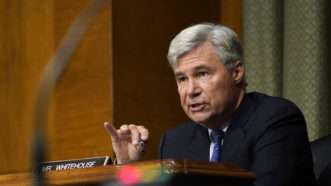
The senators warned that the Court might have to be "restructured" if it did not reach the conclusion they preferred in a Second Amendment case.
When "fundamental rights are restricted" during an emergency, he says, the courts "cannot close their eyes."
Plus: Homeland Security says this election was "the most secure in American history," Chicago asks residents to stay home again, and more...
Other excluded books: Huckleberry Finn, The Cay, and Roll of Thunder, Hear My Cry.
The court finds that the Trump campaign didn't offer enough facts suggesting that CNN knew the statement was false (or was likely false); the campaign is allowed to file an amended complaint if it can make more specific allegations.

It's unclear what Biden will ultimately be able to accomplish as president, but he has been trying to bring transformative change since the 1970s.
The new president could weaken due process protections for accused students, but it won't be easy.
"The state may restrict a convicted felon's right ... to possess a firearm," so a state may order a civil case defendant to stop saying things online about plaintiff that "severe[ly] emotional distress" that plaintiff.
"Plaintiffs decided to file a publicly available case and then ask the Court to protect them because defendant might say horrible things about them throughout the course of this litigation.... But harsh words are not a basis to seal a case, especially where it appears that both sides have no qualms about tearing each other down."
But unlike the Sedition Act of 1798, the federal seditious conspiracy statute doesn't focus on antigovernment speech (such as alleged lies about the government).
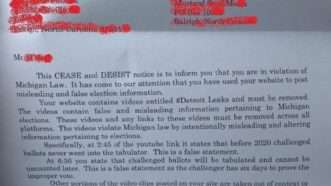
The AG is threatening criminal prosecution because the videos allegedly contain "false and misleading information" about Michigan elections' vulnerability to fraud.
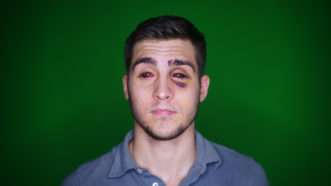
According to the government, a law aimed at helping victims like King prevents him from holding his assailants accountable.
So holds a Minnesota trial court, because ordinary public access is precluded as a result of the epidemic.

Portland’s protesters aren’t going to fade away after the election, but are they stuck in a rut?
"Plaintiffs have sufficiently alleged that the code they must draft to comply with the Dealer Law communicates substantively with the user of the program" and thus implicates the First Amendment.


Constitutional amendment overwhelmingly passes.
so long as the user's true identity is unknown to the audience, and the pseudonym has no "legally cognizable independent reputation" (as when the pseudonym is used by an author to sell books).

Help Reason push back with more of the fact-based reporting we do best. Your support means more reporters, more investigations, and more coverage.
Make a donation today! No thanks
Every dollar I give helps to fund more journalists, more videos, and more amazing stories that celebrate liberty.
Yes! I want to put my money where your mouth is! Not interested
So much of the media tries telling you what to think. Support journalism that helps you to think for yourself.
I’ll donate to Reason right now! No thanks
Push back against misleading media lies and bad ideas. Support Reason’s journalism today.
My donation today will help Reason push back! Not today
Back journalism committed to transparency, independence, and intellectual honesty.
Yes, I’ll donate to Reason today! No thanks
Support journalism that challenges central planning, big government overreach, and creeping socialism.
Yes, I’ll support Reason today! No thanks
Support journalism that exposes bad economics, failed policies, and threats to open markets.
Yes, I’ll donate to Reason today! No thanks
Back independent media that examines the real-world consequences of socialist policies.
Yes, I’ll donate to Reason today! No thanks
Support journalism that challenges government overreach with rational analysis and clear reasoning.
Yes, I’ll donate to Reason today! No thanks
Support journalism that challenges centralized power and defends individual liberty.
Yes, I’ll donate to Reason today! No thanks
Your support helps expose the real-world costs of socialist policy proposals—and highlight better alternatives.
Yes, I’ll donate to Reason today! No thanks
Donate today to fuel reporting that exposes the real costs of heavy-handed government.
Yes, I’ll donate to Reason today! No thanks