The Volokh Conspiracy

Mostly law professors | Sometimes contrarian | Often libertarian | Always independent | Est. 2002

The Volokh Conspiracy

Puerto Rico

Justice Gorsuch Calls for Overruling the Insular Cases

In a forceful concurring opinion, he argues the Supreme Court should overrule longstanding precedents denying many constitutional rights to residents of Puerto Rico and other "unincorporated" US territories. Gorsuch is absolutely right. But he would do well to cast the same critical gaze on the very similar precedents that exempt immigration restrictions from normal constitutional scrutiny.

|

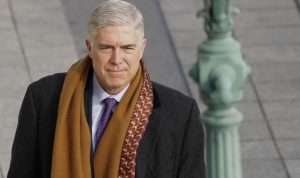
Justice Neil Gorsuch. (CNP/AdMedia/Sipa)


Earlier today, in United States v. Vaello-Madero, an 8-1 Supreme Court ruled that Congress can exclude residents of Puerto Rico and other federal territories from SSI benefits extended to residents of the fifty states. The ruling is consistent with precedent under which, among other things, Congress also exempts residents of Puerto Rico from most federal income, estate, and excise taxes. But Justice Neil Gorsuch took the opportunity to author a concurring opinion urging the Supreme Court to reverse the Insular Cases - longstanding precedents under which residents of Puerto Rico and other "unincorporated" territories are excluded from the protection of many of the constitutional rights that apply to residents of the states and conventional federally administered territories (including Washington DC).

As Gorsuch points out, this double standard has no basis in the text and original meaning of the Constitution, but is rooted in the racial and ethnic bigotry prevalent widely prevalent in the late 19th and early 20th centuries:

A century ago in the Insular Cases, this Court held that the federal government could rule Puerto Rico and other Territories largely without regard to the Constitution. It is past time to acknowledge the gravity of this error and admit what we know to be true: The Insular Cases have no foundation in the Constitution and rest instead on racial stereotypes. They deserve no place in our law…

The Insular Cases were the product of what John Hay called a "'splendid little war.'" … Ostensibly waged to liberate Cuba and avenge the sinking of the Maine, the Spanish-American War proved a boon for the country's burgeoning colonial ambitions….. The aging Spanish empire was in no position to defend its island possessions, and several fell to American forces in quick succession….

But these acquisitions, hard on the heels of the annexation of Hawaii, soon ignited a fierce debate. Some argued that our republican traditions prevented the United States from governing distant possessions as subservient colonies without regard to the Constitution. Others sought to devise new theories by which Congress could permanently rule the country's new acquisitions as a European power might, unrestrained by domestic law….

The debate over American colonialism made its first appearance in this Court in the form of a tax dispute in Downes v. Bidwell, 182 U. S. 244 (1901). Pursuant to the Foraker Act, Congress erected a civil government in Puerto Rico and imposed a tax on goods exported to, or imported from, the new Territory. See Act of Apr. 12, 1900, ch. 191, §§ 2–3, 31 Stat. 77–78. After incurring a $659.35 tax bill, an importer challenged the Act as inconsistent with the Constitution's Tax Uniformity Clause, which provides that"all Duties, Imposts, and Excises shall be uniform throughout the United States." Art. I, § 8, cl. 1….

To answer the question whether the Act complied with the Constitution, the Court resolved that it first had to decide whether the Constitution applied at all in Puerto Rico….

Justice Brown saw things in the starkest terms. Applying the Constitution made sense in "contiguous territor[ies] inhabited only by people of the same race, or by scattered bodies of native Indians." Id., at 282. But it would not do for islands "inhabited by alien races, differing from us in religion, customs, laws, methods of taxation, and modes of thought." Id., at 287. There, Justice Brown contended, "the administration of government and justice, according to Anglo-Saxon principles, may for a time be impossible…." On his view, the Constitution should reach Puerto Rico only if and when Congress so directed.

Justice White offered a different theory….. To Justice White, the Constitution's application depended on "the situation of the territory and its relations to the United States." Downes, 182 U. S., at 293 (concurring opinion). In some cases, Congress might express an intention to "incorporate" a Territory into the United States at a future date; in a Territory like that the Constitution must apply fully and immediately. Id., at 339. But in other cases, Justice White argued, only "fundamental" (if unspecified) aspects of the Constitution should have force… In his judgment, Puerto Rico fell into this second category and remained "foreign to the United States" because, unlike Territories in the American West, Congress had not done enough to indicate its intention to "incorporate" the island… Still, it would be a mistake to overstate the gap between the theories advanced by Justice White and Justice Brown. At bottom, both rested on a view about the Nation's "right" to acquire and exploit" an unknown island, peopled with an uncivilized race . . . for commercial and strategic reasons"—a right that "could not be practically exercised if the result would be to endow" full constitutional protections "on those absolutely unfit to receive [them]." Id., at 306 (White, J., concurring)….

The flaws in the Insular Cases are as fundamental as they are shameful. Nothing in the Constitution speaks of "incorporated" and "unincorporated" Territories. Nothing in it extends to the latter only certain supposedly "fundamental" constitutional guarantees. Nothing in it authorizes judges to engage in the sordid business of segregating Territories and the people who live in them on the basis of race, ethnicity, or religion.The Insular Cases can claim support in academic work of the period, ugly racial stereotypes, and the theories of social Darwinists. But they have no home in our Constitution or its original understanding.

Gorsuch is right that the Insular Cases were ultimately rooted in the racial bigotry of the time. It is no accident that Justice Henry Brown - author of the most extreme opinion in Downes v. Bidwell, also wrote the Court's opinion in Plessy v. Ferguson, a few years earlier.

Most of the points Gorsuch makes are not new.  He echoes longstanding criticisms of the Insular Cases, some of which - as he notes - go back to forceful dissenting opinions in those cases themselves, by Justice John Marshall Harlan, and Chief Justice Melville Fuller. But it is nonetheless significant that these points are made by a prominent conservative Supreme Court justice. So far, only Justice Sotomayor, the sole dissenter in today's ruling, has expressed support for Gorsuch's position. But perhaps he can win over more justices in the future.

Over time, residents of "unincorporated" territories have been given the protection of some constitutional rights, either because Congress has legislated to that effect, or because the Supreme Court - following the reasoning of Justice White - declared them to be "fundamental." But some still don't apply to Puerto Rico and other similar territories. Gorsuch notes the example of the right to trial by jury, which most Americans would consider to be fundamental, but still isn't extended to Puerto Rico under current Supreme Court precedent.

Overruling the Insular Cases would not bring an end to all legal distinctions between residents of states and residents of federal territories. Congress could still make distinctions with respect to federal benefits and other government policies that do not touch on constitutional rights or structural constraints on federal power. For example, it could still exempt residents of Puerto Rico from some federal taxes and welfare programs. Thus, under Gorsuch's approach, today's ruling would likely come out the same way (unless there is proof that Congress denied Puerto Ricans SSI benefits for some constitutionally suspect reason, such as their race or ethnicity). But Congress would no longer be able to deny them constitutional rights, or circumvent other constitutional limits on federal power.

Justice Gorsuch would do well to extend his critique of the Insular Cases to the "plenary power" cases of the same era, which exempt immigration restrictions from most constitutional constraints, thereby, for example, allowing exclusion of potential migrants based on suspect classifications such as race, ethnicity, religion, and political speech. Much like the Insular Cases, they have no basis in the text and original meaning of the Constitution, and were the product of the bigotry of the exact same era - and most of the same Supreme Court justices - as those who gave us Plessy v. Ferguson and the Insular Cases.

Sadly, Gorsuch himself has helped perpetuate and extend the plenary power doctrine by voting with the majority in Trump v. Hawaii (2018), the "travel ban" case, in which the  double standard exempting immigration restrictions from ordinary constitutional scrutiny was particularly egregious. In virtually any other context, the overwhelming evidence of bigoted motivation behind the policy in question would have led the Supreme Court (including Gorsuch himself) to invalidate it. I hope Gorsuch will rethink this position in light of his own compelling critique of the Insular Cases.
Free Speech

Supreme Court on What Counts as a Content-Based Speech Restriction

Today's decision in City of Austin v. Reagan National Advertising makes this test somewhat fuzzier.

|

Over the last 50 years, the Supreme Court's First Amendment cases have treated content-based speech restrictions very differently from content-neutral ones. Even a relatively modest content-based restriction, generally speaking, must either fit within a First Amendment exception (such as for true threats or for defamation) or must pass the very demanding "strict scrutiny" test. But a relatively modest content-neutral restriction—such as a restriction on sound amplification, or a limit on the number of people who can picket in a particular place—is generally constitutional if it passes the considerably less demanding "intermediate scrutiny" test. (Harsher restrictions, which fail to leave open "ample alternative channels" for speech, are generally harder to justify, even if they are content-neutral.)

This of course means that it's crucial to define what's content-based and what's content-neutral. That's often clear: Restrictions that turn on the viewpoint of speech (e.g., even modest restrictions on racist speech or anti-government speech or some such) are certainly content-based. So are subject matter restrictions, for instance ones that restrict picketing but exempt labor union picketing, or ones that treat political signs different from other signs. So are restrictions on saying particular words (e.g., vulgarities), or restrictions that turn on whether the speaker conveyed certain facts (e.g., the names of rape victims, or the name of the author of a leaflet). But sometimes the matter is less clear.

In two cases in the mid-2010s, the Court set forth two rules that seemed to define content discrimination quite broadly: Under those rules (which also had ample precedent in past cases), a restriction is content-based if it

  • "on its face" draws distinctions based on the "communicative content" of what a speaker conveys, Reed v. Town of Gilbert (2015), or
  • "require[s] 'enforcement authorities' to 'examine the content of the message that is conveyed to determine whether' a violation has occurred." McCullen v. Coakley (2014).

But in today's City of Austin v. Reagan National Advertising, a 5-4 majority of the Court (Justice Sotomayor, joined by Chief Justice Roberts and Justices Breyer, Kagan, and Kavanaugh) cut back on this broad definition of content discrimination, though likely only a bit.

Read More

Ukraine War Music

"You Forgot, Brother …"

A Russian song about the fratricidal Russia-Ukraine war.

|

I came across this song by Vitaliy Aksenov, a prominent Russian singer, and I thought I'd blog about it. You'll see that the words aren't clear: Is the narrator the now-Ukrainian brother faulting his now-Russian brother? (The narrator notes that both brothers were born in Ukraine.) The now-Russian brother faulting his now-Ukrainian brother? (The references to World War II are characteristic of Russian patriotic sentiment, and the audience will know that the singer himself is Russian, not Ukrainian.) Is it deliberately noncommittal? (Though some Ukrainians at least initially supported the Nazis in World War II, millions fought against them alongside the Russians; the World War II iconography is likely to work for many in both countries.)

Is it secretly pro-Ukrainian but framed as noncommittal or pro-Russian to evade punishment by the Russian authorities? Is it something else? The one thing that does seem clear is that it's not pro-war (or, as Putin would put it, "pro-special-operation"), which seems to make it at least somewhat opposed to the official Russian position. And even if it is intended by the author to support the Russian side, it seems to me that its lyrics work at least as well (indeed, much better) from the Ukrainian perspective.

In any event, I found it quite interesting, and thought it worth passing along, for whatever insight it might offer about what at least some people in Russia are thinking and saying about all this. The song seems to have gotten a good deal of play in Russia—at least 300K views for its various YouTube versions.

I also found it emotionally quite affecting, despite its ambiguity. (I think the situation is quite unambiguous, and Russia is clearly in the wrong.) Of course, there are perfectly plausible moral arguments that fratricide isn't the right theme: Invading a country and killing its defenders and civilians for no good reason is wrong regardless of whether it's a "brotherly" country or not. But human nature being what it is, the fratricidal conflicts do seem especially tragic, and I think this song captures that well.

Note also some links, whether deliberate or not, to other recent songs and poems related to the Russia-Ukraine war: for instance, to "Together We Christened Our Children" (the past christening of each other's children and the now-irretrievable sundering of those bonds) and to the apparently immensely popular 2014 Hymn of the Defense of Ukraine [text] ("we are against brothers going to fight their brothers").

Finally, it seems to me in many ways a man's song—a brother singing to a brother, with the most prominent sound being a deep man's voice, framing the entire moral and emotional message around the two men's relationship—from a singer who had indeed been described in the past as having an interest in manliness. It put me in mind of Sergey Babkin's revised "I'm a Soldier," which seemingly unironically begins with the narrator's singing how he is "nourished with manly strength by my native land under my feet." Again, whether you like this focus or not (and for a less male-focused approach, see the two songs linked to at Bella Ciao / Ukrainian Fury (Furies)), it struck me as a feature worth noting.

Read More

Servant of the People

Volodymyr Zelensky's TV series makes for interesting viewing.

|

Netflix is now streaming two seasons of "Servant of the People," the 2015-2018 Ukrainian comedy series created and produced by (and starring) Volodymyr Zelensky as Vasily Goloborodko, a high-school history teacher who is catapulted to the presidency of Ukraine after his profane rant against government corruption and incompetence is filmed by one of his students and goes viral on social media. This is the show, as everyone knows by now, that catapulted Zelensky himself to the presidency of Ukraine in real life.

It's worth watching.  It is much funnier that I expected - Zelensky is a very talented comic actor. And the "production values" are much higher than I expected, too; I think that I was, rather stupidly, expecting it to look like one of those films from Eastern Europe in the 60s - all grainy black-and-white, badly lit, dull and depressing backdrops, etc. - but in fact it looks a lot more like "Friends" or "Parks and Recreation." Very professionally put together, well-directed, well-acted, nicely-paced.

The current events in Ukraine, needless to say, add a terribly somber subtext to what was originally a very light-hearted show. It gives the show a very strange emotional resonance, unlike anything I've ever experienced before. A number of episodes take place out of doors, as "President Goloborodko" travels from one part of Kyiv to another, and the scenes of life on the streets of Kyiv are simultaneously lovely - it looks to me like all of the filming was done in springtime, and the city is gloriously awash in flowers and flowering trees - and heart-breaking, given the recent images showing the savagery that the Russians have unleashed in and around the city.

It's a better show, by a good margin, than its US counterpart, "Celebrity Apprentice: The White House Years." To be sure, "CA:TWHY" was, at times, pretty hilarious; who can forget the episode where "President Trump" is tearing up all of the classified documents on his desk, and his aides are crawling around on the floor collecting the fragments so that they could tape the documents back together? Or the one with the Sharpie? Or the "Drink Your Bleach!" episode. Or the one where head consigliere "Rudy Guliani" holds his press conference in the driveway of the Four Seasons Landscaping Company (mistaking it for the Four Seasons hotel in downtown Philadelphia), to unveil their crack legal team's bombshell evidence of election fraud?

It gave new meaning to the phrase "You couldn't make this up."

But overall, the guy who played "President Trump" didn't have Zelensky's gift for comedy.  There was too much anger behind his humor, too much snarl behind the smile, for my taste.

And, like so many shows, CA:TWHY got progressively more outlandish and less believable - more desperate to hang onto those eyeballs - as it went into season four and beyond. The whole premise of Season Five - that "President Trump" would foment the storming of the Capitol to overturn the results of the 2020 election and pay no price, political or otherwise, for having done so, but would instead emerge from the debacle as the titular head of the once-respectable Republican Party - was just too absurd to be credible. And satire, to be any good, has to have some foundation of credibility.

And if you've seen any of the more recent episodes from Season 6 - and ratings are way down, so you probably missed them - you know exactly what I'm talking about. Could anyone possibly believe that "Ex-President Trump" would, in a rare one-on-one interview in the midst of a brutal attack on Ukraine and its people, call on the Russian President - with whom he has had fairly cordial relations - not to cease fire, or to allow for more humanitarian corridors, or to stop murdering civilians, but to send him some dirt on Hunter Biden?!  I mean, really. It calls to mind Tom Lehrer's memorable comment that "political satire became obsolete the moment Henry Kissinger won the Nobel Prize."

Academic Freedom

The Academic Freedom Podcast #14 on Controversial Public Speech

A conversation with David Rabban about the scope of protections for extramural and intramural speech

|

A new episode of The Academic Freedom Podcast from the Academic Freedom Alliance is now available. Subscribe through your favorite platform so you don't miss an episode.

In this episode I talk with David Rabban about controversial public speech by professors and the scope of protection that such speech should have and does have under common university policies. Whether such speech should be protected at all was a source of debate among those advancing academic freedom principles and protections in the United States in the early twentieth century, but the major policy statements of the American Association of University Professors included protections for political speech in the public arena by professors. David and I have both argued that the logic of protecting such speech is better understood in relation to free speech policies than academic freedom policies. My article on this is here.

Extramural speech remains a frequent point of contention on college campuses. The rise of social media has created many new opportunities for professors to say controversial things in public and for critics of professorial speech to organize themselves to put pressure on universities. The AFA has intervened in several extramural speech controversies, including those involving Amy Wax at the University of Pennsylvania, Ilya Shapiro at Georgetown University Law Center, Stephen Kershnar at SUNY-Fredonia, Allyn Walker at Old Dominion University, Robert Mann at Louisiana State University, Tom Smith at the University of San Diego, and Lynne Chandler Garcia at the Air Force Academy.

David Rabban is professor at the University of Texas Law School and an expert on the First Amendment and academic freedom. He previously served as the general counsel to the American Association of University Professors, and he now serves on the academic committee of the Academic Freedom Alliance.

The episode provides a deep dive into the history of extramural speech protections and controversies, the principles protecting such speech, and the related protections for faculty speech in university meetings. Listen to the whole thing here.

Free Speech

Prof. Michael Dorf (Cornell), Andrew Koppelman (Northwestern), and Me on Texas Anti-BDS Law

|

We just filed this amicus brief in A&R Engineering and Testing, Inc. v. Paxton, which is much like the briefs we filed in a couple of previous cases (Arkansas Times LP v. Waldrip and Amawi v. Pflugerville Independent School District). Here's the Summary of Argument and the Conclusion:

Decisions not to buy or sell goods or services are generally not protected by the First Amendment. That is the necessary implication of Rumsfeld v. FAIR, 547 U.S. 47 (2006), and it is the foundation of the wide range of antidiscrimination laws, public accommodation laws, and common carrier laws throughout the nation.

Thus, for instance:

  • A limousine driver has no First Amendment right to refuse to serve a same-sex wedding party, even if he describes this as a boycott of same-sex weddings (or part of a nationwide boycott of such weddings by like-minded citizens).
  • A store has no First Amendment right to refuse to sell to Catholics, even if it describes this as a boycott of people who provide support for the Catholic Church.
  • An employer in a jurisdiction that bans political affiliation discrimination has no First Amendment right to refuse to hire Democrats, even if it describes such discrimination as a boycott.
  • An employer that is required to hire employees regardless of union membership has no First Amendment right to refuse to hire union members on the grounds that it is boycotting the union.
  • A cab driver who is required to serve all passengers has no First Amendment right to refuse to take people who are visibly carrying Israeli merchandise.

Of course, all these people would have every right to speak out against same-sex weddings, Catholicism, the Democratic Party, unions, and Israel. That would be speech, which is indeed protected by the First Amendment. For this reason, this Court should interpret "otherwise taking any action that is intended to penalize, inflict economic harm on, or limit commercial relations," Tex. Gov. Code § 808.001(1), as covering only commercial conduct such as that listed in the preceding phrases ("refusing to deal with" and "terminating business activities with"), and not extending to advocacy.

But as a general matter, a decision not to do business with someone, even when it is politically motivated (and even when it is part of a broader political movement), is not protected by the First Amendment.

Read More

Guest Essay in the New York Times on Section 3 and Disqualification

|

S.B. Tillman and I have published a Guest Essay in the New York Times on Section 3 of the Fourteenth Amendment and disqualification. It is titled, Only the Feds Could Disqualify Madison Cawthorn and Marjorie Taylor Greene.

Here is the introduction:

The events of Jan. 6, 2021, are casting a long shadow over the midterm elections. Voters in North Carolina are seeking to bar Representative Madison Cawthorn from running for re-election to his House seat, and those in Georgia are trying to do the same to Representative Marjorie Taylor Greene.

These voters have filed complaints with state elections officials arguing that Section 3 of the 14th Amendment disqualifies members of Congress who engage in insurrection from appearing on the congressional ballot. (Challenges to other elected officials have also begun.)

But these challenges face an intractable problem: Only the federal government — not the states — can disqualify insurrectionists from congressional ballots. States cannot unilaterally create procedures, unless authorized by federal statute, to keep accused insurrectionists off the congressional ballot.

If these members of Congress engaged in insurrection, then the U.S. House of Representatives may exclude them, or federal prosecutors may charge them with the federal crime of insurrection. But in light of an important 1869 judicial decision, the cases against Mr. Cawthorn and Ms. Greene — which are currently mired in both state and federal proceedings — cannot remove the candidates from the congressional ballot.

Free Speech

When Is It Unethical to Publicly Identify an Anonymous Speaker?

The @LibsOfTikTok controversy brings up this question, though the broader question is an old one.

|

The recent controversy about the Washington Post's Taylor Lorenz publishing the name of the Twitter @LibsOfTikTok account reminds me of this question, though it has of course also come up before. Two things seem to me quite clear:

  1. Publicizing such names can sometimes lead to the user (a) receiving threats (from a tiny fraction of the people who learn the name), (b) potentially being targeted for physical attacks (likely from even a tinier fraction), and (c) losing jobs and other economic opportunities (whether because the employers or others disapprove of the person's speech, or are just afraid of lost business if they deal with someone controversial). This in turn can cause these people to stop speaking; and it can deter other people from speaking, for fear that they will be identified this way.
  2. Publicizing such names can sometimes help people understand the possible biases of the previously-anonymous speaker, the possible relationships between various sources of online information, and the like. In some situations, it can also help readers figure out if the speaker has said or done things inconsistent with the speaker's anonymous persona, and help readers further investigate the credibility or the motivation of the speaker.

On the second point, such identification differs some of what is called "doxxing," such as publishing people's highly private information or even their home addresses (though mere identification of a person's name is indeed often labeled "doxxing" as that term appears to be used these days). It has some value—sometimes modest, sometimes substantial—to many readers, though it can also cause harm as the result of the actions of a few readers.

Read More

CDC

Federal Court Rules Against CDC Transportation Mask Mandate

The decision holds that the CDC exceeded its legal authority. But it may be vulnerable to reversal on appeal.

|

iStock

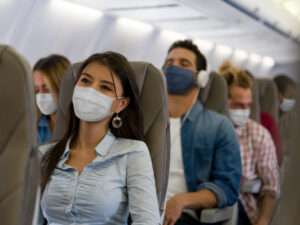
On Monday, US federal district Judge Kathryn Kimball Mizelle issued a ruling holding that the Centers for Disease Control (CDC) mask mandate for airplanes, airports, and other transportation settings is illegal. At least for the moment, the federal government has announced that the mask mandate is no longer in effect, and most airlines have lifted it.

I am deeply opposed to the mask mandate, for reasons I summarized here. Nonetheless, I have doubts about the legal reasoning of today's opinion. If the Biden Administration decides to appeal, it's entirely possible the decision will be reversed.

The CDC claims that the mask mandate policy is authorized by 42 USC Section 264(a), the very same law that agency used to try to justify its nationwide eviction moratorium, which was invalidated by the Supreme Court in August. While I argued against the legality of the eviction moratorium from the very beginning, it seems to me that the transportation mask mandate rests on firmer grounds.

Section 264(a) gives the CDC the following powers:

The Surgeon General, with the approval of the [Secretary of Health and Human Services], is authorized to make and enforce such regulations as in his judgment are necessary to prevent the introduction, transmission, or spread of communicable diseases from foreign countries into the States or possessions, or from one State or possession into any other State or possession. For purposes of carrying out and enforcing such regulations, the Surgeon General may provide for such inspection, fumigation, disinfection, sanitation, pest extermination, destruction of animals or articles found to be so infected or contaminated as to be sources of dangerous infection to human beings, and other measures, as in his judgment may be necessary. [a later statute gives this authority to the CDC rather than the Surgeon General]

As described in my previous post on the mask mandate issue, the key difference between the eviction moratorium case and the present one is that the mask mandate doesn't have to rely on an ultra-broad interpretation of the catch-all "other measures" provision of the law. It can instead be defended as a "sanitation" measure. It seems to me that mandatory masking to prevent the spread of a respiratory virus at least plausibly fits within the meaning of "sanitation."

Judge Mizelle recognizes that this is the key issue in the case, and she relies on a narrower definition of sanitation. It's worth noting that the implication of her approach is that the CDC never had the power to impose a mask mandate. It's not a matter of the effectiveness of masking or the extent of the threat posed by the disease:

[S]anitation as used in the [Public Health Services Act] could have referred to active measures to cleanse something or to preserve the cleanliness of something. While the latter definition would appear to cover the Mask Mandate, the former definition would preclude it. Accordingly, the Court must determine which of the two senses is the best reading of the statute….

The context of § 264(a) indicates that "sanitation" and "other measures" refer to measures that clean something, not ones that keep something clean. Wearing a mask cleans nothing. At most it traps virus droplets. But it neither "sanitizes" the person wearing the mask nor "sanitizes" the conveyance….

Start with the immediate context. Sanitation travels in company with "inspection,
fumigation, disinfection, . . . pest extermination, [and] destruction." § 264(a). These terms.involve measures aimed at "identifying, isolating, and destroying the disease itself." Ala. Ass'n of Realtors, 141 S. Ct. at 2488. And though "sanitation" is "susceptible of multiple and wide-ranging meanings," it is "given more precise content by the neighboring words with which it is associated." United States v. Williams, 553 U.S. 285, 294 (2008). What these words have in common is that they involve identifying and eliminating known sources of disease. See Tiger Lily, LLC v. U.S. Dep't of Hous. & Urb. Dev. (Tiger Lily I), 992 F.3d 518, 523 (6th Cir. 2021) (summarizing subsection (a) as "government intrusions on property to sanitize and dispose of infected matter"). They do not maintain the status of being "disinfected" or "fumigated." Instead, they all change an object's status….

Customary usage at the time agrees. One method to assess the ordinary meaning of
a term is to search a database of naturally occurring language. A search returns the desired word as well as its context and, with a sufficient sample size, search results permit inferences on how a word was used. This method is known as corpus linguistics… The Court here searched the Corpus of Historical American English (COHAY) to find uses of "sanitation" between 1930 and 1944 [when Section 264 was enacted]. Of the 507 results, the most frequent usage of sanitation fit the primary sense described above: a positive act to make a thing or place clean. Common examples referred to sanitation in the context of garbage disposal, sewage and plumbing, or direct cleaning of a dirty or contaminated object. In contrast, by far the least common usage—hovering around 5% of the data set—was of sanitation as a measure to maintain a status of cleanliness, or as a barrier to keep something clean.

The above analysis is very thorough. But I remain skeptical. The broader definition of "sanitation" strikes me as more intuitive and more in accordance with ordinary usage than the narrow one. Among other things, the narrow definition would lead to some counterintuitive results. For example, if the CDC enacted a regulation barring defecation on the floor of a plane or train, that would not qualify as "sanitation" under Judge Mizelle's approach because it does not clean anything, but merely "keep[s] something clean" (in this case, the floor). Yet, I think, most ordinary people - both today and in 1944 - would agree that a ban on defecating on the floor qualifies as a "sanitation" policy. And, as Judge Mizelle notes, courts are generally required to follow the ordinary meaning of words in a federal statute, unless there is some strong evidence to the contrary.

I think Judge Mizelle's best argument against the broad definition of "sanitation" is this one:

Recall that Congress listed "fumigation" and "disinfection" and "destruction" alongside "sanitation." § 264(a). If the government is correct that sanitation allows for the CDC's Mask Mandate because it promotes hygiene and prevents the spread of disease, then the remaining words in § 264(a), such as disinfection and fumigation are unnecessary. Every act necessary to prevent disease spread would be possible under sanitation. It would thus be impossible to give effect "to every clause and word of [the] statute," Moskal v. United States, 498 U.S. 103, 109-10 (1990), because these separate words would all be subsumed under the umbrella of "conventional 'sanitation' measure[s]"…. Such a reading renders most of the second sentence mere surplusage, an untenable result when other interpretations are available. See United States v. Butler, 297 U.S. 1, 65 (1936) ("These words cannot be meaningless, else they would not have been used."). Instead, sanitation more likely refers—consistent with its most common usage at the time—to acts that remove refuse or debris from an area or object, a reading that preserves independent meaning for the other terms in § 264(a).

The canon against redundancy is a longstanding rule of interpretation, and it does seem like the broad definition of "sanitation" might make "disinfection," destruction," and "fumigation" redundant. But I'm not sure that a plausible definition of  sanitation broad enough to include the mask order must necessarily be so broad as to render the other terms superfluous. "Sanitation" could be interpreted to refer to ordinary cleaning measures - both those that "remove refuse and debris" and those that help prevent it from arising in the first place (as with the rule against defecation!). By contrast, terms like "fumigation" and "disinfection" might refer to the use of chemical agents and other more sophisticated techniques to forestall (in the case of "fumigation") or eliminate (in the case of "disinfection") infection. "Destruction" also has a distinct meaning, of course, as even a broad definition of the other terms doesn't necessarily allow complete destruction of possibly dangerous articles.

There are lots of other issues in the opinion. For example, Judge Mizelle argues that the CDC violated the Administrative Procedure Act (APA) by failing to go through the "notice and comment" rule-making procedure. That argument strikes me as plausible; at the very least, it seems strange that such a consequential and sweeping rule can be in place for many months without going through normal rule-making procedures. But I will leave it to APA experts to address. Less persuasively, she claims the mask mandate amounts to a "conditional release" of would-be travelers, rather than a "sanitation" measure, and that 264(a) does not give the CDC any power to restrict the "liberty" of individuals.

At times, Judge Mizelle's opinion reads as if she is taking a kitchen sink approach to defending her ruling - throwing out every argument she can, good, bad, or indifferent. This strategy makes sense in high school debate, and perhaps for some legal briefs. But it isn't a good idea for judges ruling on a case, especially an important one.

That said, the judge does make some good points, most notably with respect to the canon against redundancy. I think she's probably wrong about the bottom line. But the ruling is far more defensible than critics on lawprof Twitter, and elsewhere, are willing to admit.

I would add that the ruling might have been influenced by the decline in the CDC's credibility caused by the agency's overreaching in cases like the eviction moratorium and Title 42 "public health" expulsions, and the increasingly incoherent nature of its position on masks, with the transportation mandate at odds with its recommendations in other settings.

Such factors, ideally, should not influence courts. But, at the margin, judges may be reluctant to defer to the supposed expertise of an agency with such a dubious track record.

Skepticism of the CDC is particularly evident in a section of the decision where Judge Mizelle concludes that the mask mandate violates the APA  by being "arbitrary and capricious" because it "provides little or no explanation for the CDC's choices," including the many exceptions to the mandate. The Judge pointedly rejects the argument that courts must simply defer to the agency's scientific judgement, emphasizing that the agency "needed to explain why it acted as it did."

At this point, it's unclear whether the Biden Administration will appeal the ruling. If they do, it's very possible the court of appeals will stay the trial court ruling, and ultimately reverse it. If so, we may not be free of the transportation mask mandate for long. But I, at least, plan to enjoy it while it lasts!

UPDATE: It's worth noting that this is not the only case challenging the transportation mask mandate. It's actually one of the less prominent ones (filed by a small nonprofit organization and two individual travelers. There are other lawsuits on this issue, as well, including one filed by 21 state governments, which raises some of the same issues, but also some that are different (such as claims that the mandate violates constitutional restrictions on federal "commandeering" of state governments).

UPDATE #2: I have made a few minor additions to this post.

The Mask-Mandate Remedy

|

Whether someone praises or disdains today's decision vacating the mask mandate is likely to be driven by what the person thinks of the merits of mask mandates. But remedies matter too, and we should be able to think about them without merits-driven analysis. This decision from the U.S. District Court for the Middle District of Florida is one more in a series of highly consequential district decisions that are, or at could be considered, national injunctions. That "could be considered" caveat matters here, for reasons that will become clear.

A few thoughts on the remedy:

First, the opinion works through different arguments but places central reliance on circuit precedent in favor of vacatur of rules under the Administrative Procedure Act. I think the position reflected in those precedents is wrong. But for a district court, that's the safest ground to locate this remedies decision.

Second, the current stage we're in is one where district courts routinely give national injunctions, but usually with some hand-wringing about their existence. Here we have the conventional concern: "the Court recognizes the criticism about nationwide injunctive relief and admittedly shares some of the skepticism about it" (p. 55).

Third, the current stage is also one where the courts are wrestling with whether to draw a sharp distinction between APA and non-APA remedies, and specifically with how to handle  "vacatur" and "injunction." With the possible exception of footnote 4 on p. 56, this opinion strongly separates the two and says this is vacatur not an injunction, and it also emphasizes that it's not a preliminary injunction but rather a remedy after a judgment on the merits. Even so, the court addresses arguments and cites authorities related to national injunctions, so the two remedies get somewhat intertwined.

(How this question gets resolved is going to be very consequential, because "vacatur" is not a traditional equitable remedy, and so if a wedge is driven between it and the injunction then it isn't clear that the various equitable considerations that govern the latter have relevance for the former, as well as the flexibility courts have to phase in or phase out injunctions or to condition them on other actions. But that's another discussion . . . .)

Given the attempt to put this remedy just in the "vacatur" box, it's understandable that the court would rely on the circuit court precedent in favor of vacatur of a rule as to all people and not just the parties. But the court never addresses the question of whether this is actually right. John Harrison's powerful arguments that there is no "set aside" remedy under the APA--the "set aside" language is not even in the APA section on remedies--need to be considered. The leading analysis on the other side is Mila Sohoni's recent APA article.

Judge Sutton made an important point about this question in his concurrence last week in Arizona v. Biden:

The Administrative Procedure Act, it is true, says that a reviewing court may "hold unlawful and set aside" agency actions that violate the law. 5 U.S.C. § 706(2). But that raises a question; it does not answer it. The question is whether Congress meant to upset the bedrock practice of case-by-case judgments with respect to the parties in each case or create a new and far-reaching power through this unremarkable language. We presume that statutes conform to longstanding remedial principles. Nken v. Holder, 556 U.S. 418, 433 (2009); Weinberger v. Romero-Barcelo, 456 U.S. 305, 320 (1982). And it is far from clear that Congress intended to make such a sweeping change. Compare Bray, supra, at 438 n.121; and John Harrison, Section 706 of the Administrative Procedure Act Does Not Call for Universal Injunctions or Other Universal Remedies, 37 Yale J. Reg. Bull. 37, 41–47 (2020); with Mila Sohoni, The Power to Vacate a Rule, 88 Geo. Wash. L. Rev. 1121, 1191–92 (2020). Use of the "setting aside" language does not seem to tell us one way or another whether to nullify illegal administrative action or not to enforce it in the case with the named litigants. For that reason, I would be inclined to stand by the long-understood view of equity—that courts issue judgments that bind the parties in each case over whom they have personal jurisdiction.

Perhaps it's understandable for a district court to stop with controlling circuit court precedent, at least if it weren't such a significant case. But the circuit court judges--and certainly the justices--should think about whether this approach has any basis in the text, structure, and historical context of the APA.

Fourth, I have referred to the court's reliance on circuit precedent, but there is one eyebrow-raising citation to a recent Supreme Court case (from p. 54): "see also Barr v. Am. Ass'n. of Pol. Consultants, Inc., 140 S. Ct. 2335, 2351 n.8 (2020) (explaining that, when 'a provision [of law] is declared invalid[,]' the invalid provision 'cannot be lawfully enforced against others'--not just 'against the plaintiff')."

There are several problems with this citation. It's not an opinion of the Court; this part is the opinion of only three justices, and that should have been indicated. Moreover, this footnote is not about the APA but is about statutes and severability, so as support for an APA-specific argument it proves too much. Additionally, the cited footnote from Barr is careful to talk only about the implications of the Court itself--the Supreme Court--deciding that a provision of a statute is unconstitutional. There is a huge missing premise that district courts are like the Supreme Court for this purpose. Finally, and perhaps most significant, although the footnote distinguishes two views of severability (the plurality's and Justice Thomas's), it is at pains to treat them as "different paths" that "in many cases . . . lead to the same place." The footnote cites the major canonical cases for saying that a judicial decision does not erase an unconstitutional statute. The footnote is carefully hedged, but it arguably provides just as much reason to reject the district court's remedy of vacatur as it does to support it.

Fifth, the court gives as an "independent reason" for vacatur of the rule that doing so "is necessary to grant complete relief." It is a canard that equity requires courts to give complete relief to plaintiffs. A court of equity can do so, and it sometimes goes to great lengths to ensure that the injustice against a plaintiff is righted. But equity has a myriad of reasons not to do that, including the conduct of the plaintiff, the difficulty of enforcement, the balance of hardships, all the principles reflected in the equitable maxims, and so on. Here's the way I put it on p. 468 of Multiple Chancellors (and footnote 297 has supporting citations):

Finally, the complete-relief principle hardens the remedial choices of equity, treating the equitable remedy as corresponding precisely to the underlying right. To the contrary, the scope of an equitable remedy is not at all automatic. There are a number of situations in which equitable remedies go beyond, or stop short of, the strict right of the plaintiff.297 Equity is concerned with justice not only for the plaintiff but also for the defendant.298 Complete relief is thus the starting point for equitable relief, but it is not and never has been the sole desideratum for the scope of equitable remedies.299

The court's argument on this point depends entirely on the proposition that it's too hard for the government to distinguish the plaintiffs from other travelers. That may be true, and that may be a reason the government would prefer to withdraw the mask mandate entirely instead of enforcing against everyone but the plaintiffs, at least during the pendency of appeals. But that decision isn't the district court's to make. Judge Sutton's concurrence in Arizona v. Biden addressed this point: "Relatedly, the district court worried that the Guidance could not 'be applied on a state-by-state basis.' R.44 at 78. But that is initially the National Government's problem, not ours, and it indeed acknowledged that severed policy enforcement remains a feasible alternative."

And it's not even clear from the court's opinion how many plaintiffs there are. Footnote 5 simply says that the court takes judicial notice that the organizational plaintiff "has members throughout the country." If the propriety of a national remedy turns on this factual premise, given how significant this case is, we should at least know what the factual premise is. But regardless, this decision about administrative feasibility for non-parties is one that should belong, at least in the first instance, to the government--the court's job is to give a remedy to the plaintiffs.

Much more could be said on the remedies front about this case, including the lack of a stay pending appeal and the question of the role of the declaratory judgment. But this post is overlong. I'll close with this point--this is a deeply broken system. Amid this pandemic that has killed hundreds of thousands of Americans, not to mention millions around the world, there are strong disagreements about the best policy at any particular point in time. These decisions inevitably entail not only scientific judgments but also political judgments about tradeoffs and cost, all of which should be subject to Bayesian updating. There are strong disagreements about who is the constitutionally right actor to make these policies in various settings (i.e., the national government or the states). There's plenty of room for disagreement on the policy questions and the institutional questions. And it can be the duty of federal courts, in deciding the cases before them, to decide whether an agency has outrun its legislative authorization to make these decisions (as the court decided in this case). But it is a deeply broken system when the action and inaction of the various federal actors--House, Senate, President, agency reporting to the President--can be immediately swept aside by a single district court judge who chooses a remedy that is not only for the plaintiffs but for everyone.

This isn't the way it worked for most of our history. None of the Founders could have imagined this. Brutus, the Antifederalist critic of federal judicial power, was apoplectic when he thought about the federal courts having equity jurisdiction--can you imagine what he would have said if he thought this was even a possibility? Nor is this the way it worked when the APA was enacted. It doesn't have to be this way.

But it will stay this way if conservatives object to "nationwide" remedies only against Republican presidents, and liberals object to them only against Democratic presidents. Selective outrage and what-about-ism on the other side's inconsistency are a recipe for continued stalemate. If you object to these remedies on principle, stick to your principle, no matter who is President and no matter what you think of the merits.

Taxes

Supreme Court Definitively Ends the SALT Tax Deduction Case

The highly dubious lawsuit filed by four blue states against the the law capping federal tax deductions for state and local taxes is now truly dead in the water.

|

As Jonathan Adler points out, today the Supreme Court refused to review a lower-court decision upholding the 2017 tax law's caps on the federal tax deduction for state and local taxes. The law, enacted by a GOP-controlled Congress, limits this $10,000 for individual taxpayers and married couples filing jointly, and $5000 for married people filing separately.  Jonathan rightly notes that the case never had much merit, which is why it was uniformly rejected by the lower-court judges who considered it (all of them Democratic appointees).

I have followed this case from its inception. The claims the plaintiffs raised about coercion, the Tenth Amendment, and other issues, are important for anyone who follows constitutional federalism issues, and would have set a dangerous new precedent had they succeeded. Here is a list of my posts about it. The first is a critique of the lawsuit when initially filed, while the others consider the district court and Second Circuit rulings on the case:

  1. "Four Blue States File Dubious Lawsuit Against Cap on Federal Tax Deduction for State Tax Payments," July 19, 2018.

2. "Federal Court Rules Against Blue-State Lawsuit Challenging Constitutionality of Cap on Federal Tax Deduction for State and Local Tax Payments," Oct. 7, 2019.

3."The (Likely) End of the SALT Tax Deduction Litigation," Oct. 6, 2021.

While the courts reached the correct decision here, I am disappointed we won't get to see University of Iowa tax law scholar Andy Grewal "post a video of [him]self eating every single page of the Internal Revenue Code, one-by-one," as he promised to do, if this lawsuit had succeeded. I myself need not make good on my pledge to use my SALT tax deduction savings to buy the four state attorneys general behind the suit a free dinner at a restaurant of their choice.

I'm part of the small minority of (mostly wealthy) Americans who would have saved money had the lawsuit succeeded. For those keeping score, you can add this to the list of cases where my position on a legal issue conflicts with my self-interest!

Today's airplane mask mandate decision (about which I hope to write more later) is likely another example. See also my earlier analysis of the issues raised by the latter litigation.

UPDATE: I put up a post on the mask mandate ruling here.

Confirmation bias meets the Ukraine war and Elon Musk

Episode 403 of the Cyberlaw Podcast

|

Whatever else the pundits are saying about the use of cyberattacks in the Ukraine war, Dave Aitel notes, they all believe it confirms their past predictions about cyberwar. And in fact, not much has been surprising about the cyber weapons the parties have deployed, Scott Shapiro agrees. The Ukrainians have been doxxing Russia's soldiers in Bucha and its spies around the world. The Russians have been attacking Ukraine's grid. What's surprising is that the grid attacks have not seriously degraded civilian life, plus how hard the Russians have had to work to have any effect at all. Cyberwar isn't a bust, exactly, but it is looking a little overhyped. In fact, Scott suggests, it's more like a confession of weakness than of strength: "My military attack isn't up to the job, so I'll throw in some fancy cyberweapons to impress The Boss."

Would it have more impact in the U.S.? We can't know until the Russians (or someone else) gives it a try. We should certainly have a plan for responding, and Dmitri Alperovitch and Sam Charap have offered theirs: Shut down Russia's internet for a few hours just to show we can. It's better than no plan, but we're not ready to say it's the right plan, given its limited impact and high cost in terms of exploits exposed.

Much more surprising, and therefore more interesting, is the way Ukrainian mobile phone networks have become an essential part of Ukrainian defense. As discussed in a good blog post, Ukraine has made it easy for civilians to keep using their phones without paying, no matter where they travel in the country and no matter which network they find there. At the same time, Russian soldiers are finding that the network is a dangerous honeypot. Dave and I think there are lessons there for emergency administration of phone networks in other countries.

Gus Hurwitz draws the short straw and sums up the second installment of the Elon Musk v. Twitter story. We agree that Twitter's poison pill probably kills Musk's chances of a successful takeover. So what else is there to talk about? In keeping with the confirmation bias story, I take a short victory lap for having predicted that Musk would try to become the Rupert Murdoch of the social oligarchs. And Gus helps us enjoy the festschrift of hypocrisy from the Usual Sources declaring that the preservation of democracy depends on internet censorship, administered by their friends.

Scott takes us deep on pipeline security, citing a colleague's article for Lawfare on the topic. He thinks responsibility for pipeline security should be moved from Transportation Security Administration (TSA) to the Federal Energy Regulatory Commission (FERC), because, well, TSA. The Biden administration is similarly inclined, but I'm not enthusiastic; TSA may not have shown much regulatory gumption until recently, but neither has FERC, and TSA can borrow all the cyber expertise it needs from its sister agency, CISA. An option that's also open to FERC, Scott points out.

You can't talk pipeline cyber security without talking industrial control security, so Scott and Gus unpack a recently discovered ICS malware package that is a kind of Metasploit for attacking operational tech systems. It's got a boatload of features, but Gus is skeptical that it's the best tool for causing major havoc in electric grids or pipelines. Also, remarkably, it seems to have been disclosed before the nation state that developed it could actually use it against an adversary. Now that's defending forward!

As a palate cleanser, we ask Gus to take us through the latest in EU cloud protectionism. It sounds like a measure that will hurt U.S. intelligence but do nothing for Europe's effort to build its own cloud industry. I recount the background story, from subpoena litigation to the CLOUD Act to this latest counter-CLOUD attack. The whole thing feels to me like Microsoft playing both sides against the middle.

Finally, Dave takes us on a tour of the many proposals being launched around the world to regulate the use of Artificial Intelligence (AI) systems. I note that Congressional Dems have their knives out for the face recognition vendor, id.me. And I return briefly to the problem of biased content moderation. I look at research showing that Republican Twitter accounts were four times more likely to be suspended than Democrats after the 2020 election, which seems at first glance like a smoking gun for moderator bias. But I find myself at least tentatively persuaded by further research showing that the Republican accounts were four times as likely to tweet links to sites that a balanced cross section of voters considers unreliable. Where is confirmation bias when you need it?

Download the 403rd Episode (mp3)

You can subscribe to The Cyberlaw Podcast using iTunes, Google Play, Spotify, Pocket Casts, or our RSS feed. As always, The Cyberlaw Podcast is open to feedback. Be sure to engage with @stewartbaker on Twitter. Send your questions, comments, and suggestions for topics or interviewees to CyberlawPodcast@steptoe.com. Remember: If your suggested guest appears on the show, we will send you a highly coveted Cyberlaw Podcast mug!

The views expressed in this podcast are those of the speakers and do not reflect the opinions of their institutions, clients, friends, families, or pets.

Explaining Vacatur Of The Mask Mandate On The Tarmac

The flight attendant said, "No more masks!"

|

Shortly before my flight boarded, Judge Mizelle had vacated the mask mandate rule. As I boarded, United announced that it would continue to enforce the mask mandate. To avoid private sanctions, I kept my mask on. A few minutes before I landed, United reversed policy, and announced that it would not enforce the mask mandate.

At that moment, I took my mask off. When we landed, I had a few moments to speak to the flight attendant before the door was opened. I explained that a judge had declared the mandate was illegal, and that United announced that it would not enforce the policy. I showed the flight attendant the tweet--it came from a blue check mark account, so it must be official! In a moment, it hit her. She said, "No more masks!" As I got off the plane, I saw a smattering of people without their masks in the terminal. The barista at Starbucks screamed out "Freedom!"

Most APA rulings are arcane, and only affect small communities in obscure way. Even so-called nationwide injunctions are barely perceptible for most people. But this decision from Tampa was immediately felt from coast to coast. Judge Mizelle's ruling may be one of the most popular vacaturs in the history of the APA.

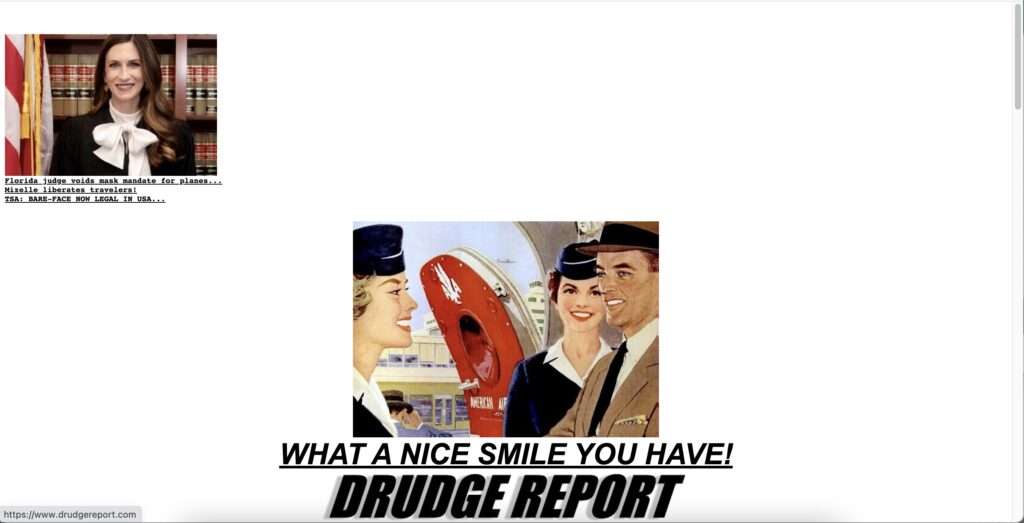
Update: Judge Mizelle made the lede of the Drudge Report:

And a colleague wrote on a law professor list serve:

 I am currently on a flight somewhere between DC and Denver and the pilot just made an announcement that a judge struck down the federal mask mandate a few hours ago and we were free to remove our masks. The entire flight erupted into applause and masks started flying like graduation caps. And we complain there's no respect for the courts! (tongue in cheek)

Free Speech

Florida's Supposed "Don't Say Gay" Law

|

I was on a couple of podcasts about this, taking the view that the law—which restricts "classroom instruction by school personnel or third parties on sexual orientation or gender identity … in kindergarten through grade 3 or in a manner that is not age appropriate or developmentally appropriate for students in accordance with state standards"—doesn't violate the First Amendment (or likely any other part of the Constitution). I think we had an interesting, constructive, and friendly conversation on each:

  1. On The Dispatch, with Gabriel Malor, moderated by Declan Garvey.
  2. On The National Constitution Center's We The People, with Joshua Matz, moderated by Prof. Jeff Rosen.
More