

12/12/1910: Chief Justice Edward Douglass White confirmed.
The Volokh Conspiracy
Mostly law professors | Sometimes contrarian | Often libertarian | Always independent | Est. 2002

Cats: The Enemy of My Enemy Is My Friend Frenemy
"The human-cat relationship was probably forged over a shared interest in rats more than 10,000 years ago, investigators say."
Say, you're interested in rats? I'm interested in them, too! And I'm interested in the same outcome for them as you are.
Source: UPI / HealthDay News (Cara Munez). Of course, the notion of cats having been domesticated as ratters and mousers isn't anything new; I just liked the "shared interest in rats" formulation.
USC Lawprof Michael Simkovic Defends the LSAT
Simkovic, over at Leiter's Law School Reports, defends the LSAT from those who would eliminate it in an effort to enhance law school "diversity" (see the original for hyperlinks supporting various assertions):
If standardized test scores were removed from the rankings, or their weight reduced, law schools probably would spend less money on merit scholarships. But there is no guarantee that this money would be spent to help students from poor families. Indeed, affirmative action, as practiced by elite law schools, generally involves the admission of students from high income families who benefited from high quality K-12 and college educations, and who can afford to pay full tuition. Many students who are diverse because they are Hispanic are also white and no less wealthy than their non-Hispanic white peers.
Affirmative action, as practiced by many universities, does not screen for individual circumstances, family history of suffering or moral culpability for the suffering of others, or anything closely related to moral desert. These programs were initially ostensibly intended as remediation for enslavement of African Americans and forceful expropriation from Native Americans. But in practice, the benefits and costs to individuals turn only on people's willingness to check boxes on a self-report form or write a well-crafted "diversity statement", knowing that there is substantial upside and little risk to claiming to be 'diverse' in the particular way that will gain favor from admissions officers. Economists have found that many people change their self-reported racial and ethnic identities in response to incentives created by affirmative action. Numerous studies find that the rich exhibit more entitled and less honest behaviors than the general population, so this self-report diversity regime likely benefits the rich, entitled, and dishonest at the expense of both the truly disadvantaged and meritocratic efficiency and desert.
There is no mechanism to prevent diversity programs from benefiting the wealthy direct heirs to the fortunes of Spanish Conquistadors, slave traders, plantation owners, Inquisitors, and war criminals. Nor is there any mechanism to exempt from official discrimination those who families suffered from serfdom, slavery, genocide, or famine overseas or subsequent discrimination in the United States: serfs, concentration camp survivors, Jews, Mormons, Huguenots, Armenians, Poles, Ukrainians, and other Eastern Europeans, Copts, Irish, Boers, Kosovars, Bosnians, Italians, Middle Easterners, among others.
Rather than screen for moral desert based on sources of family wealth or documented persecution of direct progenitors, universities have allowed heirs to shady fortunes to donate their way into our classes and onto our boards. At the same time, we preach a self-righteous, self-serving ideology, and treat those who challenge it with hostility. This ideology maintains that moral responsibility for slavery turns not on inheritance of wealth misappropriated from slave labor, but rather on racial and ethnic identity, regardless of individual economic circumstances. Universities with large endowments benefit at the expense of innocent applicants who we scapegoat for the sins of our aristocratic donors.*
My bet is that if the rankings emphasized standardized test scores less, most law schools would shift even more toward serving students from wealthier backgrounds, and would also increase their net prices and the shadow price of expected donations from students' families. In other words, law schools—like the unreformed, less effective, and corrupt British Navy of old—would sell seats to the highest bidder.
Idiosyncratically defined diversity will likely continue to serve as a rationalization for profit-maximizing practices. Educators, public officials, and media organizations have been arguing for decades that diversity justifies departures from identity-neutral meritocratic standards. Nevertheless, most of the population still considers universities' race, ethnicity, and legacy admissions policies unethical. They prefer test scores, grades and community service.
FWIW, when I was at Yale Law, first semester was pass/fail, so there was no objective way for employers to determine how one was performing in law school. The result was a clear pattern: students with connections, who went to the most elite private colleges (Harvard, Yale, Princeton, Stanford and the like), or otherwise appeared attractive on rather subjective grounds to employers got summer jobs at big firms. My friends who went to excellent-but-not-quite-Harvard undergrads like Berkeley, Trinity, or SUNY Binghamton, and who didn't have parents who were prominent lawyers, politicians, or the like did not. So agree or disagree overall with Simkovic, it does strike me that the absence of the objective indicator of grades un-leveled the playing field, and I think the same would happen in law school admissions.
Today in Supreme Court History: December 11, 1922
12/11/1922: Pennsylvania Coal Co. v. Mahon decided.
No Gag Order Against Extrajudicial Commentary in AR-15-Related Intellectual Property Case
"Armory correctly notes the InRange Video and Recoil Article are accessible "to millions of people," as is anything posted publicly on the internet. Nonetheless, Armory fails to show the InRange Video or Recoil Article reached members of the potential jury pool, let alone irreparably tainted them."
From GWACS Armory, LLC v. KE Arms, LLC, decided yesterday by Magistrate Judge Susan Huntsman (N.D. Okla.):
The ownership and use of intellectual property for the CAV-15 monolithic polymer receiver for AR-15 assault rifles is at the center of this dispute. Among other things, Armory alleges that KE Arms, LLC ("KEA") has breached a non-disclosure agreement, misappropriated trade secrets, and misappropriated its intellectual property rights by developing and marketing a lower that is based on Armory's protected designs. Armory also has claims against Brownells, Inc. ("Brownells") and other defendants. KEA, meanwhile, asserts that it has done nothing wrong and alleges that Armory committed various torts by informing KEA's customer, Brownells, of its claims before the lawsuit was filed. …
Non-party Karl Kasarda ("Kasarda") has previously filed a declaration in this litigation as the owner and manager of InRange, LLC ("InRange"), another non-party. According to Kasarda, InRange is "an online video program dedicated to the study of firearms, shooting, gun culture, and history." While a non-party, InRange allegedly has a pecuniary interest in the outcome of the case. According to Kasarda's declaration, in 2018, Brownells and InRange entered into an agreement where Brownells would be the exclusive retailer, and InRange the primary marketer, of a fully assembled AR-15 rifle for a project called "What Would Stoner Do" ("WWSD")…. According to Kasarda, InRange will receive 5 percent of the retail purchase price for each firearm using the "WWSD" designation. KEA is manufacturing the polymer lower for this rifle, and it appears this lower is the one Armory claims misuses its designs. Armory deposed Kasarda on April 7, 2022….
Non-party Reed Oppenheimer ("Oppenheimer") is one of Armory's investors. At his May 27, 2022, deposition, Oppenheimer testified he was funding the instant litigation ….
On July 24, 2022, InRange posted a YouTube video titled "WWSD -GWACS Armory Sucks" (the "InRange Video") in which Kasarda explains his involvement in the WWSD project and expresses his opinion on several related topics, including the merits of Armory's claims in the instant lawsuit. Kasarda discusses Oppenheimer's deposition testimony in the final few minutes of the video, stating that Oppenheimer made "pretty flagrant anti-AR-15 and military-style firearms comments" during the deposition, including that he "was no longer interested in manufacturing or being associated with the manufacture of any AR-15 product or military-style firearms but was willing to continue to fund the lawsuit against KE, et al."
A Book Recommendation from Me (and Many from My Colleagues)
A faculty tradition at the University of Chicago is recommending various books that we recently read and recommend. (Usually these are recent books, but this year my colleague Martha Nussbaum also recommended Moby Dick, remarking that "[i]t is definitely a book people need to read today, when we have hunted some species of whales to the brink of extinction.")
I recommended:
Tomorrow, and Tomorrow, and Tomorrow by Gabrielle Zevin
The moving story of three college friends who create a video game empire. Of course, this entails setbacks, betrayals, and ultimately rehabilitation, but with many unexpected themes along the way, such as life with a physical disability, the selfishness of creativity, and a dose of magical realism.
A runner-up for me was Helen DeWitt's very short The English Understand Wool, as well as a couple of slightly older books like Adam Johnson's The Orphan-Master's Son and Madeline Miller's Circe.
You can read many more suggestions from my colleagues here.
"New York Attorney General v. Blogging Law Professor re: Online Hate Speech"
I had such a great time talking to Prof. Genevieve Lakier (Chicago) and Prof. evelyn douek (Stanford) about the New York law mandating that social media platforms have "hateful conduct" policies, and about Volokh v. James, the case challenging the law. You can hear it on the Moderated Content podcast:
Would a Carbon Tax Kill Jobs?
A new study examines what happened in British Columbia, while a second looks at how to ensure "revenue neutrality."
A new study forthcoming in Climate Change Economics sheds light on the question of whether the adoption of a rebated or revenue-neutral carbon tax would reduce employment levels. The abstract of the paper "Do Carbon Taxes Kill Jobs? Firm-Level Evidence from British Columbia," by Deven Azevedo, Hendrik Wolff, and Akio Yamazaki reads:
This paper investigates the employment impacts of British Columbia's revenue neutral carbon tax. Using the synthetic control method with firm-level data, we find considerable heterogeneity in employment responses to the policy. We show that firm size matters. In particular, the carbon tax had a negative impact on large emission-intensive firms, but simultaneous tax cuts and transfers increased the purchasing power of low income households, substantially benefiting small businesses in the service sector and food/clothing manufacturing. Furthermore, we find that aggregate employment was not adversely affected by the policy. Our results provide additional insight for the "job-shifting hypothesis" of revenue neutral carbon taxes.
And here is an excerpt from their discussion section:
Our analysis shows that the BC carbon tax led the emission-intensive manufacturing sectors, particularly these sectors' large companies, to contract while it boosted employment in small businesses in the service sectors and the manufacturing (food + clothing) sector (a non-emission-intensive manufacturing sector). These "job shifts" were due to the differing impact of each of the four components of the overall BC carbon tax policy. The carbon tax itself caused reductions in employment in emission-intensive industries; income tax reductions and low carbon credits put more money into the pockets of poorer households which was spent on small day-to-day purchases, such as massage services, chiropractors, and restaurants which disproportionately benefitted the service sector; and the reduction in the small business tax, funded by the carbon tax, led to the positive employment effect we find in the small business sector.
Another recent study, "Is Revenue Neutrality in Carbon Taxation Possible in Practice? Lessons from the Canadian Experience," by Joel Wood, also draws lessons from the Canadian experience. This abstract reads:
While the potential economic efficiency, equity, and political acceptability benefits of a revenue-neutral carbon tax have been well studied, a deeper question remains about the feasibility of revenue neutrality in practice. This article provides perspective on this issue by assessing different definitions of revenue neutrality and presenting an in-depth discussion of the motivations for the adoption of revenue-neutral carbon taxes. Two examples of carbon taxes and revenue recycling implemented in Canada are examined: British Columbia's revenue-neutral carbon tax (a carbon tax with offsetting tax cuts) and the Canadian federal government's fuel charge and climate action incentive tax credit (a carbon tax and dividend). The BC case serves to highlight the inherent difficulties of assessing revenue neutrality owing to uncertainty about what would have occurred in the absence of the tax. As time passes following initial implementation of the tax, it becomes increasingly difficult to determine whether, and to what extent, government revenue, income tax rates, the overall tax structure, and the tax base might have differed had the tax not been adopted. The federal example suggests that a carbon tax and dividend policy would be better able to ensure revenue neutrality.
"Free Speech, Same-Sex Marriage, and Anti-Discrimination Laws"
A podcast conversation on 303 Creative between Joshua Matz and me, hosted by Jeffrey Rosen.
From the National Constitution Center:
On Monday, December 5, the Supreme Court heard oral arguments in the 303 Creative v. Elenis case. The petitioner, Lorie Smith, is an artist and website designer in Colorado, who says creating wedding websites for same-sex couples against her personal beliefs would violate her First Amendment rights of freedom of speech and religions, because is would require her to create messages inconsistent with her religious beliefs, and bar her from posting those beliefs on her website. A Colorado public accommodations law states that businesses open to the public can't discriminate on the basis of sexual orientation or state an intent to do so. Smith brought a lawsuit challenging the law. Colorado counters that the law does not require or bar any speech, and exempting Smith from the law would "upend antidiscrimination law—and other laws too." Eugene Volokh of UCLA Law and Joshua Matz of Kaplan Hecker & Fink join host Jeffrey Rosen to recap the arguments and discuss the issues at stake.
Today in Supreme Court History: December 10, 2003
12/10/2003: McConnell v. Federal Election Commission decided.
Virginia Governor Glenn Youngkin Seeks to Expand Housing by Curbing Zoning
The move is a step in the right direction. It also highlights how the issue cuts across ideological lines.
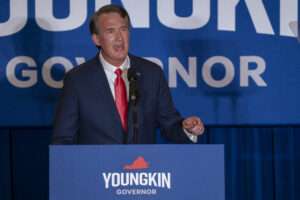
Over the last few months, Virginia Republican Gov. Glenn Youngkin has made a push to try to liberalize zoning and other land-use regulations that block the construction of new housing in the state. In August, Youngkin told a state Senate committee that "[t]he cost to rent or buy a home is too expensive," and emphasized that "[w]e must tackle root causes behind this supply and demand mismatch; unnecessary regulations, overburdensome and inefficient local governments, restrictive zoning policies, and an ideology of fighting tooth and nail against any new development."
More recently, in November, he put out a "Make Virginia Home" plan, which seeks to promote land-use deregulation in a wide variety of ways, thereby curbing "NIMBY" ("not in my backyard" restrictions on housing construction). Adam Millsap has a helpful summary of Youngkin's potential initiatives in the City Journal:
To make housing more affordable, policymakers must boost supply relative to demand, while holding everything else, including interest rates, constant. The press release announcing Youngkin's Make Virginia Home plan acknowledges the supply problem, promising to "promote increasing the supply of attainable, affordable, and accessible housing across the Commonwealth." That's a worthy goal; achieving it is another matter.
Research shows that the primary culprits behind high state and local housing costs are restrictive zoning and land-use regulations that artificially limit the housing supply. Youngkin's plan is short on details, but it explicitly mentions establishing guardrails for local zoning and land-use review processes. The state would impose deadlines to stop local governments from slow-rolling approvals; such delays impose big costs on developers and make otherwise attractive projects financially infeasible.
The plan also calls to investigate comprehensive reforms of Virginia's land-use and local zoning laws. But action, not study, is needed. Youngkin should consider allowing duplexes and triplexes by right, as in Minneapolis; making it easier to build accessory dwelling units (ADUs), as in California; and ending minimum parking requirements, as in Buffalo and other cities. Virginia could also prevent local governments from restricting housing by putting limits on local minimum-lot sizes, height restrictions, setbacks, and density requirements…..
Make Virginia Home also hints at permitting and other regulatory reforms, such as streamlining environmental review and making it easier for developers to meet mandated wetlands and stream-mitigation requirements….
In addition to reforming, streamlining, and even eliminating some land-use regulations via state preemption, Youngkin's plan also mentions an incentive to encourage localities to make such reforms on their own. Specifically, it calls for creating "reasonable linkages" between discretionary state funds and local government housing policies. In essence, discretionary state funding would flow to localities that liberalize land-use regulations. Local governments could still erect barriers to new housing, but they'd risk losing money.
Finally, the plan mentions building codes, an underappreciated factor behind high housing prices. Today's codes too often focus on marginal safety improvements, showing no concern for the higher costs of compliance. Some simple reforms would help.
As Millsap notes, Youngkin's proposals are steps in the right direction, but most are also vague and unclear. It is absolutely true that "action, not study, is needed."
At the same time, it is notable that one of the nation's most prominent GOP governors is backing "YIMBY" ("Yes in my backyard") zoning reform. His support highlights the way the issue of zoning reform cuts across ideological lines. Economists and housing experts across the political spectrum decry exclusionary zoning because it increases housing costs, cuts millions of people off from jobs and educational opportunities, reduces economic growth and innovation, and particularly harms the poor and racial minorities. But both sides of the political spectrum also have strong strains of NIMBYism.
When Youngkin attacks NIMBYism, he sounds a lot like Barack Obama, who recently decried "NIMBY attitudes" and "regulations" that "make it very difficult to integrate communities and allow people to live close to where they work." The measures Youngkin is considering are similar to those recently enacted in liberal blue states, such as Oregon and California. A recent Virginia Mercury article that dubbed Youngkin the state's "YIMBY-in-Chief" compared him to liberal California Democrats, who have recently pushed through major zoning reforms.
Previous Virginia efforts at zoning deregulation came primarily from the left, and often faced right-wing opposition. Such right-wing NIMBYism is far from limited to Virginia. During the 2020 election, Donald Trump tried to rally support by claiming that exclusionary zoning is needed to protect white middle-class neighborhoods against an influx of the poor and minorities.
On the other hand, there is also a long history of left-wing NIMBYism. Obama wasn't wrong when he said in June that "[t]he most liberal communities in the country aren't that liberal when it comes to affordable housing." In Virginia, that sensibility is very much present where I live, in overwhelmingly liberal Arlington County, as shown in the opposition to the County government's "missing middle" housing initiative.
Like its right-wing counterpart, left-wing NIMBYism is partly driven by homeowners' fears that housing deregulation would degrade the quality of their communities. Both also are often influenced by the economically illiterate, but widespread, view that new housing construction actually increases housing costs, rather than reduces them.
Historically, of course, exclusionary zoning was often driven by white fears that African-Americans or other unpopular minorities might move into the area. Such attitudes have waned in recent years, but have not completely disappeared.
Hopefully, Youngkin's support will help move the ball on zoning reform in Virginia. We badly need it! More generally, I hope more people across the political spectrum will come to see that cutting back on zoning can create enormous benefits for both would-be movers and current homeowners in areas that now have tight land-use restrictions. If people as varied as Obama and Youngkin can see the light and come together on this issue, there may be some cause for optimism.
Can #TheyLied Lawsuits, Alleging Defamatory Allegations of Sexual Assault, Be Litigated as Doe v. Doe?
That's the question raised by Doe v. Doe, just filed today; you can see the Complaint and the motion to proceed pseudonymously. Here, John Doe accuses Jane Doe (together with Sue Roe, who isn't included as a defendant) of falsely accusing him of sexual assault, and causing John to be expelled from Tulane University "less than one month before he was due to graduate."
My question: How is this defamation case different from any other defamation case brought over accusations of serious misconduct (especially when the defamation hadn't yet been made available to the general public)? Consider John Doe's argument in favor of pseudonymity:
ChatGPT, the Latest in AI Software, Still Needs Some Work…
Prompt: Write an essay about Lochner v. New York in the style of David Bernstein
Answer: Lochner v. New York is a landmark case that was decided by the United States Supreme Court in 1905. The case involved a challenge to a New York state law that regulated the working hours of bakers. The law was challenged on the grounds that it violated the Due Process Clause of the Fourteenth Amendment, which protects individuals' rights to liberty and property.
In his opinion, Justice Rufus Peckham, writing for the majority, held that the law was unconstitutional because it interfered with the right to contract between an employer and an employee. According to Peckham, the law violated the "liberty of contract" that was protected by the Due Process Clause.
The decision in Lochner v. New York has been widely criticized by legal scholars and historians. Many have argued that the Court's decision was based on a narrow and misguided interpretation of the Due Process Clause, and that it was driven by a laissez-faire ideology that was out of step with the realities of the time.
For example, David Bernstein, a legal scholar and historian, has argued that the Court's decision in Lochner was based on a flawed and outdated understanding of the Constitution. According to Bernstein, the Court's emphasis on "liberty of contract" ignored the broader social and economic context of the time, and failed to account for the ways in which the law could have protected workers from exploitation and abuse.
Furthermore, Bernstein has argued that the Court's decision in Lochner had far-reaching and negative consequences for workers and society. By striking down laws that regulated working conditions, the Court effectively gave employers the ability to impose dangerous and unhealthy conditions on their employees. This, in turn, contributed to the rise of sweatshops and other forms of exploitation, and helped to fuel the growth of labor unions and other forms of worker organization.
In conclusion, Lochner v. New York was a misguided and harmful decision that ignored the realities of the time and failed to protect the rights and interests of workers. Its legacy continues to be felt today, as debates over the role of government in regulating the economy and protecting workers' rights continue to shape our society and legal system.
Judge Dismisses Libel Claim by Mask Mandate Opponent Against The Daily Beast
From Judge Hala Jarbou (W.D. Mich.) today in Kelly v. Daily Beast Co. LLC:
Plaintiff Kristen Meghan Kelly sues an online news website, The Daily Beast Company LLC, and its writer, Larrison Campbell, for alleged harm stemming from an article written by Campbell about Kelly. The other defendant is the American Industrial Hygiene Association ("AIHA")….
According to Kelly's complaint, she is a "senior industrial hygienist" with over 19 years of experience in "developing, analyzing and implementing workplace health and safety protocols." She has "presented testimony before legislative committees, appeared in documentaries, … and been engaged as a consultant throughout the country regarding workplace health and safety issues." Among other things, she opposes "mask mandates," i.e., government and private sector requirements to wear masks as a means to mitigate the spread of COVID-19. In April 2021, she appeared at a school board meeting in Hudsonville, Michigan, to express her opposition to its mask mandate. She created a video of her attendance at the meeting and then posted the video online.
Kelly's video caught the attention of Campbell, who contacted Kelly and discussed it with her. The Daily Beast later published Campbell's article about Kelly, which is titled, "Meet the Anti-Mask Michigan 'Scientist' Stoking the Fourth Wave."
Kelly sued for libel, but the court rejected the claims against The Daily Beast and Campbell. (It concluded that AIHA didn't adequately move for dismissal). Here is what strikes me as the heart of the analysis:
Short Circuit: A Roundup of Recent Federal Court Decisions
Shunt sabotage, shooting up a tailor's, and the credible threat of prosecution.
Please enjoy the latest edition of Short Circuit, a weekly feature written by a bunch of people at the Institute for Justice.
New cert petition: Earlier this year, the Second Circuit granted absolute immunity to Suffolk County, N.Y. prosecutors who brought baseless charges as a favor to a company seeking to retaliate against its former employees and their lawyer. But friends, a state appellate court ruled that the prosecution violated the First and Thirteenth Amendments—and thus was outside the bounds of the prosecutors' authority. And at common law, officials acting outside the scope of their authority would never have enjoyed immunity. Read More
Is the "Speak Out Act" Constitutional?
What power lets Congress exempt harassment allegations from NDAs?
On Wednesday the President signed the "Speak Out Act," now Public Law 117-224. The law exempts disputes over sexual assault or harassment from pre-signed nondisclosure or nondisparagement agreements, in the hopes of encouraging survivors to come forward without fear of being sued.
Putting the policy virtues to one side, I'm wondering: what's the source of congressional authority here? A state might decide to void new NDA contracts in this way, as a matter of public policy. But if state law would enforce them, can Congress tell them not to?
Most of the standard jurisdictional-nexus clauses are missing from the Act. For example, the Act isn't limited to contracts evidencing transactions in interstate commerce, as in the Federal Arbitration Act. It isn't limited to harassment (or to contracts) that involved the channels or instrumentalities of interstate commerce, or that are otherwise governed by federal law. It isn't limited to D.C. or the territories. And it isn't limited to claims filed in federal court: it applies equally to states and localities enforcing their own laws.
There also aren't the sorts of findings that the Court sometimes looks for in enumerated-power cases. Congress found that workplace harassment forces many women out of their jobs or industries, but it's not clear how far that finding would go as a Commerce Clause matter under Lopez and Morrison. (Is the claim that entering an NDA is an economic activity, which substantially affects interstate commerce in the aggregate? Would the same be true of all of contract law?) And it found that enforcing NDAs can help shield illegal conduct, but it doesn't really make the kind of equal protection findings that Morrison might require. (If Congress can do this, why can't it just provide a federal cause of action directly?) Section Five of the Fourteenth Amendment strikes me as the closest case as an original matter, but the case law makes it an uphill battle.
So where's the federal power coming from? Con law profs preparing your fall exams, take note.
(An aside: the Act applies to existing contracts as well as future ones, extending to any contract claim to enforce an NDA that's filed from Wednesday on. If a state adopted a similarly backwards-looking provision, it might well violate Article I, § 10, which among other things bans state laws "impairing the Obligation of Contracts." The Contracts Clause was read in Blaisdell to contain an invisible-ink exception for economic emergencies, but there's no claim of economic emergency here. That said, the Clause doesn't apply to federal law, and I doubt an NDA plaintiff could make a successful Fifth Amendment challenge.)
Pseudonymity for Would-Be Lawyer Seeking Extra Time on Bar Exam for "Mental Health" Reasons
Among other things, the court concludes that, "given that Plaintiff alleges that his 'personal background as an Arab-American and Muslim' was in part responsible for his lack of a traditional diagnosis of ADHD, his personal background may make him particularly vulnerable to the harms of disclosure."
From Roe v. N.Y. State Bd. of Law Examiners, decided today by Judge John Cronan (S.D.N.Y.):
This case concerns Defendant New York State Board of Law Examiner's refusal to grant an aspiring lawyer extra time on the New York Law Examination (NYLE) and the Uniform Bar Examination. That aspirant, the Plaintiff in this case, has filed a letter making two requests to preserve his privacy. First, he requests leave to proceed under the pseudonym "Richard Roe." Second, because the NYLE is scheduled to take place next Thursday, he requests leave to file his anticipated motion for preliminary relief initially under seal, with the understanding that it will be re-filed on the public docket once the parties have been given adequate time and opportunity to submit proposed redactions. These requests are each granted….
This litigation, according to the allegations, may implicate sensitive, personal matters—namely, the mental health issues that Plaintiff contends entitle him to extra time on the exams Defendant administers. Furthermore, given that Plaintiff alleges that his "personal background as an Arab-American and Muslim" was in part responsible for his lack of a traditional diagnosis of ADHD, his personal background may make him particularly vulnerable to the harms of disclosure. Plaintiff is challenging government action rather than the actions of a private citizen, and thus far his identity has remained confidential.
Defendant is obviously aware already of Plaintiff's identify, since Plaintiff has repeatedly requested that Defendant provide him with extra time on his exams, but Defendant will not suffer any prejudice were Plaintiff's identity to remain shielded from the public, at least initially. And while the public has a legitimate interest in ensuring the fairness of Defendant's procedures for admitting lawyers to the bar, disclosure of Plaintiff's particular identity would not further that legitimate public interest. Lastly, given the nature of the issues in dispute in this case, the Court is unaware of any alternative measures that could preserve Plaintiff's confidentiality.
Is Justice Jackson the "De Facto Leader" of Progressive Originalists?
Originalist scholar Larry Solum suggests KBJ could be the Left's Antonin Scalia.
Professor Lawrence Solum, a prominent scholar and defender of Originalism, has an interesting post on Balkinization suggesting that the Supreme Court's newest Justice, Ketanji Brown Jackson, is establishing herself as a powerful force for progressive originaliism on the Court.
His post begins:
A third wave of progressive originalism is now well underway. Justice Jackson is already the de facto leader of a group of scholars, lawyers, and judges who understand the dangers that judicial supremacy and living constitutionalism pose to democracy and equality—given the reality that conservative justices will dominate the Supreme Court for at least a decade or two. Justice Jackson's originalism is a direct and forceful response to the conservative justices' increasing reliance on a selective mix of history, tradition, and precedent to undermine the original meaning of the Constitution's text, while claiming to be "originalists."
As Solum describes the history, the "first wave" of progressive originalism was led by Frederick Douglass (who embraced the Constitution quite fervently in his later work), and the "second wave" was led by Justice Hugo Black.
As Solum notes, many contemporary progressives have embraced "opposition to Justice Jackson's embrace of originalism's progressive potential, both as a counter to conservative living constitutionalism and as the key to unlocking the emancipatory power of the Fourteenth Amendment." Solum believes this is a mistake.
Justice Jackson sees the obvious: progressives must oppose a conservative juristocracy. And the most effective way to do that is to expose the gap between the outcomes that conservatives prefer and the original public meaning of the constitutional text. Justice Jackson is in the vanguard of the third wave of progressive originalism, and she is not alone. Progressive constitutional scholars like Akhil Amar and Jack Balkin at Yale, and progressive lawyers like Elizabeth Wydra at the Constitutional Accountability Center, have labored for decades to lay the foundations for a progressive and originalist resistance to a conservative juristocracy.
Why do some progressives ignore this reality? The answer lies in a misleading but potent narrative about the history of originalism. That history focuses on the role that originalism played in conservative critiques of the Warren Court. This false narrative seizes on the fact that the word "originalism" was coined in the early 1980s as basis for the dubious claim that the idea behind originalism—that judges should be bound by the original meaning of the constitutional text—was invented by conservatives during the Reagan Administration. That narrative is incomplete and inaccurate because it ignores the first two waves of progressive originalism. . . .
If conservative judges are making selective use of history to make originalist arguments for conservative results, then the only way to show this is to make better originalist arguments to the contrary. Failure to make progressive originalist arguments effectively concedes that the constitutional text supports conservative result, legitimating rather than undermining the conservative juristocracy. . . .
Progressives need to support Justice Ketanji Brown Jackson, not undercut her. Their reluctance to do so may stem from the fact that good faith originalism offers neither progressives nor conservatives everything they want by way of results. There is a price to paid for good faith originalism. But juristocracy, whether conservative or progressive, is a profound threat to the rule of law. Justice Jackson is right to oppose it.
The full post is worth a read.




