The Volokh Conspiracy

Mostly law professors | Sometimes contrarian | Often libertarian | Always independent | Est. 2002

The Volokh Conspiracy

Religion and the Law

North Dakota A.G.: Teacher Training Funds Program Open to Teachers at Private (Including Religious) Schools

|

From a formal Attorney General opinion (no. 2022-L-07) responding to a query by the North Dakota Education Standards and Practices Board; it is dated Nov. 29, but was just posted on Westlaw:

… [Y]ou ask (1) whether private school teachers who are also mentors may participate in the Teacher Support System, and (2) whether private school teachers who are also mentors may receive grants to participate in the Teacher Support System. Nowhere in the applicable statute or administrative code are non-public school teachers prohibited from participating in the Teacher Support System.

However, the context of your question indicates the key issue underlying these questions is whether Article VIII, Section 5 of the North Dakota Constitution ("the Blaine Amendment") prohibits teachers at sectarian schools from receiving grants from the Teacher Support System. It is my opinion that the Blaine Amendment is not enforceable under United States Supreme Court caselaw, and therefore teachers at sectarian schools may receive grants from the Teacher Support System….

Read More

Free Speech

One of the Criminal Charges Against the Loudoun County Superintendent Is Likely Unconstitutional

|

AP reports:

The former superintendent of a northern Virginia school system [Scott Ziegler] has been indicted on three misdemeanor charges by a special grand jury that investigated the response to two sexual assaults committed by a student last year….

The three misdemeanors against Ziegler include one count of false publication, one count of prohibited conduct related to alleged retaliation against a teacher, and one count of penalizing an employee for a court appearance.

The indictments, unsealed Monday, include few details, but the false publication count appears to relate to a statement Ziegler made in June 2021 denying that there had been any assaults occurring in school bathrooms. In fact, the first sexual assault occurred a month earlier in a bathroom stall at Stone Bridge High School, and emails show Ziegler had been made aware of it.

Ziegler later said he misunderstood the question….

The trouble is that the false publication statute likely violates the First Amendment (see also this article by Quin Hillyer [Washington Examiner]). The statute reads,

Read More

A Holiday Present for Your Friendly Neighborhood Volokh Conspirators

|

Ilya has already done his annual post on Conspirator-authored books you can give your friends and loved ones as holiday gifts. Allow me to make an additional suggestion. If you appreciate our blogging and have benefited from reading one of your books, why not ask your local library, especially if it's a university library, to purchase a copy? The monetary benefits to the authors are tiny, but authors love an audience, and we all like to know that our books are readily available to students, researchers and other interested parties. All you need to do is figure out who the acquisitions librarian is, and send a polite email request.

About the Restaurant Revitalization Fund's Minority Preferences…

|

In a very unsympathetic portrait of America First Legal, founded by former Trump administration official Stephen Miller, the Washington Post notes the following:

Three weeks after AFL challenged the aid to minority farmers, it turned to an even larger federal program: the Restaurant Revitalization Fund, which gave women, minorities and veterans a head start to submit applications for nearly $29 billion in pandemic relief. The suit argued that the fund was likely to run out of money before White restaurant owners got a chance to apply and thus discriminated against them.

A federal court in Texas agreed in late May of 2021, as did an appeals court in Tennessee that reviewed a similar lawsuit. At the same time, Gregory León, the son of a Venezuelan immigrant and the owner of Amilinda restaurant in Milwaukee, received notice that he would receive $285,000 from the fund to help him get through the pandemic-related downturn. Just two weeks later, as León struggled to pay vendors, he was among about 3,000 restaurant owners who got another government letter: The fund had been quashed by litigation.

León said he seriously considered closing down.

"I know the pandemic didn't care what your race was, but it definitely affected certain people harder than others. This country was built on the backs of immigrants," he said. "I find it quite shocking that people like Stephen Miller don't see that … The message is that if you're not White you're not welcome in this country and you do not deserve opportunity."

Below is Mr. Leon, from a picture on his restaurant's website. Mr. Leon's father is from Venezuela; his mother is Jewish and from Wisconsin. Note that under federal law, "Hispanics" are, for rather obvious reasons, deemed an ethnicity who could be of any race. Is there is a good reason Mr. Leon's restaurant should be ahead in line for government aid over one owned by the child of a Bulgarian, Moroccan, Finnish, or Irish immigrant, or for that matter anyone else?

Guns

"Plain Text"

When the Second Amendment's plain text covers conduct, it is presumptively protected.

|

The Supreme Court's decision invalidating New York's law giving discretion to officials to deny licenses to carry handguns for insufficient "need" held that "when the Second Amendment's plain text covers an individual's conduct, the Constitution presumptively protects that conduct." A restriction may be found valid only if the government demonstrates that it "is consistent with this Nation's historical tradition of firearm regulation." New York State Rifle & Pistol Association, Inc. v. Bruen (2022).

Fortunately, the plain text analysis is not difficult because the Supreme Court has already defined the key terms of the guarantee that "the right of the people to keep and bear arms, shall not be infringed." Here are some of those definitions:

  • "The people" facially means "all Americans." District of Columbia v. Heller (2008).
  • "Arms" facially means "all instruments that constitute bearable arms."
  • "Keep Arms" facially means "have weapons." Heller.
  • "Shall not be infringed" facially means that the right conferred by the Second Amendment is an "unqualified command." Bruen.

The Supreme Court has long held that the constitutional text also encompasses necessarily-included matters that are required for the exercise of a right and thus includes rights "implicit in enumerated guarantees." Richmond Newspapers v. Virginia (1980).

The right to keep and bear arms thus presupposes the right to acquire a firearm, to obtain ammunition, to train, and to make a firearm operable. See Luis v. United States (2016) (Thomas, J., concurring in judgment); see also Heller (government cannot require firearms to be made inoperable).

Read More

ChatGPT Successfully Imitates a Talented Sociopath with Too Many Lawyers

Episode 434 of the Cyberlaw Podcast

|

It's been a news-heavy week, but we have the most fun in this episode with ChatGPT. Jane Bambauer, Richard Stiennon, and I pick over the astonishing number of use cases and misuse cases disclosed by the release of ChatGPT for public access. It is talented – writing dozens of term papers in seconds. It is sociopathic – the term papers are full of falsehoods, down to the made-up citations to plausible but nonexistent URLs for New York Times stories. And it has too many lawyers – Richard's request that it provide his bio (or even Albert Einstein's) was refused on what are almost certainly data protection grounds. Luckily, either ChatGPT or its lawyers are also bone stupid, since reframing the question tricks the machine into subverting the legal and PC limits it labors under. I speculate that it beat Google to a PR triumph precisely because Google had even more lawyers telling their Artificial Intelligence what not to say.

In a surprisingly undercovered story, Apple has stopped pretending to care about child pornography. Its phone encryption already makes the iPhone a safe place to record child sexual abuse material (CSAM); now Apple will encrypt users' cloud storage with keys it cannot access, allowing customers to upload CSAM without fear of law enforcement. And it has abandoned its effort to identify such material by doing phone-based screening. All that's left of its effort to stop such abuse is a feature allowing parents to force their kids to activate an option that prevents them from sending or receiving nude photos. Jane and I dig into the story, as well as Apple's questionable claim to be offering the same encryption to its Chinese customers.

Nate Jones brings us up to date on the National Defense Authorization Act, or NDAA. Lots of second-tier cyber provisions made it into the bill, but not the provision requiring that critical infrastructure companies report security breaches. A contested provision on spyware purchases by the U.S. government was compromised into a more useful requirement that the intelligence community identify spyware that poses risks to the government.

Jane updates us on what European data protectionists have in store for Meta, and it's not pretty. The EU data protection supervisory board intends to tell the Meta companies that they cannot give people a free social media network in exchange for watching what they do on the network and serving ads based on their behavior. If so, it's a one-two punch. Apple delivered the first blow by curtailing Meta's access to third-party behavioral data. Now even first-party data could be off limits in Europe. That's a big revenue hit, and it raises questions whether Facebook will want to keep giving away its services in Europe.  

Mike Masnick is Glenn Greenwald with a tech bent – often wrong but never in doubt, and contemptuous of anyone who disagrees. But when he's right, he's right. Jane and I discuss his article recognizing that data protection is becoming a tool that the rich and powerful can use to squash annoying journalist-investigators. I have been saying this for decades. But still, welcome to the party, Mike!

Nate points to a post pleading for more controls on the export of personal data from the U.S. It comes not from the usual privacy enthusiasts but from the U.S. Naval Institute, and it makes sense.

Jane and I take time to marvel at the story of France's Mr. Privacy and the endless appetite of Europe's bureaucrats for serial grifting, as long as it combines enthusiasm for American technology with hostility to the technology's source.

Nate and I cover what could be a good resolution to the snake-bitten cloud contract competition at the Department of Defense. The Pentagon is going to let four cloud companies -- Google, Amazon, Oracle And Microsoft – share the prize.

You didn't think we'd forget Twitter, did you? Jane, Richard, and I all comment on the Twitter Files. Consensus: the journalists claiming these stories are nothingburgers are driven more by ideology than their nose for news. Especially newsworthy are the remarkable proliferation of shadowbanning tools Twitter developed for suppressing speech it didn't like, and some considerable though anecdotal evidence that Twitter's many speech rules were often twisted to suppress speech from the right -- even when the rules did not quite fit, as with LibsofTikTok -- while similar behavior on the left went unpunished. Richard tells us what it feels like to be on the receiving end of a Twitter shadowban. 

The podcast introduces a new feature: "We Read It So You Don't Have To," and Nate provides the tl;dr on an New York Times story: How the Global Spyware Industry Spiraled Out of Control.

And in quick hits and updates:

Download the 434th Episode (mp3) 

You can subscribe to The Cyberlaw Podcast using iTunes, Google Play, Spotify, Pocket Casts, or our RSS feed. As always, The Cyberlaw Podcast is open to feedback. Be sure to engage with @stewartbaker on Twitter. Send your questions, comments, and suggestions for topics or interviewees to CyberlawPodcast@steptoe.com. Remember: If your suggested guest appears on the show, we will send you a highly coveted Cyberlaw Podcast mug! The views expressed in this podcast are those of the speakers and do not reflect the opinions of their institutions, clients, friends, families, or pets.

Update: Corrected a typo and toned down criticism of Apple that the commenters persuaded me was unfair.

A Likely Win for Free Speech

Last week's argument at the Supreme Court in 303 Creative v. Elenis.

|

Last week, the Supreme Court heard argument in 303 Creative v. Elenis, the latest wedding vendor case--this time concerning a web designer who does not wish to design sites for same-sex weddings. The wedding vendor cases typically present a conflict between free speech, including religiously-motivated speech, and equality in the marketplace for goods and services. Based on last week's argument, it seems the Court is ready to rule in favor of free speech this time, as I explain in a post today at First Things:

Resolving [the designer's] claim requires the Court to answer a basic, conceptual question under the Court's precedents: As applied to Smith's web design business, does CADA regulate speech or conduct? If the former, CADA would have to satisfy a test known as "strict scrutiny." Colorado would have to show that prosecuting Smith was "necessary" to promote a "compelling" state interest. By contrast, if the law regulates conduct and only incidentally affects speech, Colorado would have to satisfy a more lenient test known as the O'Brien standard. Colorado would have to show only that CADA "furthered" an "important" or "substantial" state interest unrelated to the suppression of speech.

At last week's argument, Colorado's lawyer argued that CADA is directed principally at conduct. Were Colorado to prosecute Smith, he explained, it would be because Smith had discriminated against customers based on sexual orientation, not because she expressed an opinion on same-sex marriage. Smith could not be required to praise same-sex marriage expressly—but she would have to design websites for all comers. Appearing on behalf of the Biden Administration as amicus curiae, Deputy Solicitor General Brian Fletcher agreed. Declining categorically to design websites for same-sex weddings, he told the justices, would be "a form of status-based discrimination properly within the scope of public accommodations laws."

This argument appeared to persuade progressives like Justice Sonia Sotomayor—but not the Court's conservatives. For example, Justice Neil Gorsuch stressed that Smith had said repeatedly that she would "serve everyone," straight, gay, or transgender, and would decline to design websites for same-sex weddings no matter who requested them. She objected to expressing a message with which she disagreed, not to serving customers of different sexual identities. When it came to designing wedding websites, Gorsuch emphasized, "the question" for Smith wasn't "who," but "what."

Justice Gorsuch didn't mention it, but a recent case from the UK Supreme Court, Ashers Bakery, supports his argument. In that case, decided four years ago, a bakery in Northern Ireland refused to bake a cake with a pro-gay marriage message. The UK court ruled that the bakery had not violated UK anti-discrimination law because it had drawn a distinction based on the message conveyed, not the identity of the customer--the "what," not the "who," in Gorsuch's terms. Ashers Bakery isn't exactly analogous to 303 Creative. In the UK case, the bakery declined to bake a cake with an express pro-gay marriage message, whereas the designer in 303 Creative doesn't wish to design any website for a gay wedding, even a generic one without an express message. And, anyway, this Court probably won't feel comfortable relying on a foreign decision in a First Amendment case. But the cases are awfully close, and the reasoning in Ashers Bakery may ultimately control the outcome here as well.

If the Court does decide that CADA regulates speech and so must pass strict scrutiny, it seems unlike the Court will uphold the law. I explain why in my post. The Court's decision is expected by summer.

Administrative Law

Divided D.C. Circuit Reaffirms F.E.C.'s Enforcement Discretion

A split U.S. Court of Appeals for the D.C. Circuit denied an en banc petition challenging the Federal Election Commission's failure to pursue claims against New Models.

|

Today the U.S. Court of Appeals for the D.C. Circuit denied a petition for rehearing en banc in CREW v. FEC. In April 2021, a divided panel of the court rejected CREW's attempt to challenge the Commission's decision not to take enforcement action against New Models. The FEC cited legal reasons for its decision, but also invoked its "prosecutorial discretion" to not pursue enforcement actions where doing so would not be an appropriate use of agency resources. Splitting 2-1, the court concluded the FEC's reliance on prosecutorial discretion made the decision unreviewable.

CREW filed a petition for en banc rehearing, supported by various political and academic amici. Today, that petition was rejected. Judge Rao, who authored the initial panel decision, wrote a brief opinion concurring in the denial, joined by Judges Henderson, Katsas and Walker. Judge Millett, who had dissented from the initial panel decision, dissented, joined by Judge Pillard. There is no indication of how Chief Judge Srinivasan or Judge Wilkins voted. Judges Childs and Pan did not participate.

Here is how Judge Rao' opinion begins:

The Federal Election Commission's decision to dismiss a complaint on the grounds of prosecutorial discretion is not judicially reviewable, and I therefore concur in the denial of the petition for rehearing en banc. As explained in detail in the panel opinion, courts cannot review the exercise of enforcement discretion committed to executive agencies, including the Commission. See Citizens for Resp. & Ethics in Wash. v. FEC ("New Models"), 993 F.3d 880 (D.C. Cir. 2021). In our structure of separated powers, "an agency's refusal to institute proceedings" falls within "the special province of the Executive Branch"—a province the judiciary cannot invade. Heckler v. Chaney, 470 U.S. 821, 831 (1985); U.S. CONST. art. II, § 1. The Administrative Procedure Act ("APA") enshrines this principle by explicitly withholding judicial review of matters "committed to agency discretion by law." 5 U.S.C. § 701(a)(2). The Federal Election Campaign Act ("FECA") leaves such executive discretion in place, consistent with the Constitution and the APA. FECA importantly provides for judicial review of decisions "contrary to law," 52 U.S.C. § 30109(a)(8)(C), but the Commission may decline to move forward with an enforcement action for reasons of prosecutorial discretion and such decisions cannot be reviewed by this court.

Read More

Student Loans

Supreme Court Decides to Hear Second Case Challenging Legality of Biden's Loan Forgiveness Plan

Like the first case, it will be argued in February. In the meantime, the plan remains blocked.

|


Today the Supreme Court decided to hear Department of Education v. Brown, a second case challenging the legality of President Biden's $400 billion loan forgiveness plan. In a brief order, the Court indicated that the case will be argued in February, probably at the same time as the the other loan forgiveness case accepted by the justices: Biden v. Nebraska, a lawsuit brought by six Republican-controlled state governments. In the meantime, as in the other case, the Supreme Court refused to stay the lower court ruling against the plan, thereby ensuring it will remain blocked, at least until the oral argument, and probably until the Court issues a final decision on the merits. For reasons explained in my post about Biden v. Nebraska, the Justices' refusal to stay the lower-court decisions probably doesn't bode well for the Biden Administration.

The two cases are also similar in that both involve a dispute over standing, as well as one over the merits (the Supreme Court will consider both issues). But Brown is notable for being the only a case - so far - in which a court has reached a decision on the merits:

I summarized the Brown case here:

[Brown was] brought by the conservative Job Creators Network (JCN) on behalf—somewhat ironically—of  two plaintiffs who contend the program isn't generous enough. In what was likely an effort to forestall lawsuits by ensuring there are no potential plaintiffs with standing, the administration excluded from its plan borrowers whose federal student loans are held by private commercial lenders. The latter were seen as more likely to sue than other student loan servicers.

One of plaintiffs in the JCN case is among the borrowers excluded from the Biden plan as a result of this move. The other qualifies for only $10,000 in relief, as opposed to the $20,000 he would get if he were a Pell Grant recipient. They argue they have standing because administration adopted the plan without going through the "notice and comment" procedure normally required by the Administrative Procedure Act, which would have given them an opportunity to criticize their exclusion, and urge that the program be broader in scope. The plaintiffs cite precedent indicating that deprivation of a procedural right can sometimes qualify as an "injury" for standing purposes….

In a ruling issued on November 10, federal District Court Judge Mark T. Pittman accepted this procedural rights standing theory. He therefore addressed the merits of the case—becoming the first judge to do so. On the merits, he concluded that the 2003 HEROES Act, the legislation the Biden Administration relies on, does not authorize the program…

Judge Pittman concludes that, under current Supreme Court precedent, the loan forgiveness program qualifies as a policy addressing a "major question" and therefore requires clear congressional authorization, which the HEROES Act doesn't grant….

On the basis of this reasoning, Judge Pittman issued a ruling vacating the loan forgiveness policy, thereby effectively barring its implementation nationwide….

Judge Pittman is on more questionable ground in his ruling on standing. Even if deprivation of a procedural right is potentially a sufficient injury, it's not clear that a ruling holding that the program is unconstitutional provides redress for that injury…. If I understand him correctly, he gets around this problem by arguing that, if the court strikes down the HEROES Act rationale for the policy, the Biden administration might go back to the drawing board and try to find some other way to implement loan forgiveness, perhaps one that is subject to the APA, and therefore will give the two plaintiffs a chance to participate in the notice and comment process.

This strikes me as highly speculative. But I admit I am not expert on the highly specialized doctrine of procedural rights standing.  So perhaps I'm missing something….

As noted in my previous post discussing Brown, I think the plaintiffs' standing argument in this case is weaker than the one in Biden v. Nebraska. But perhaps a majority of Supreme Court justices disagrees. Regardless, I think it likely they will conclude that at least some of the plaintiffs in at least one of these cases do have standing. If so, I think it is also likely (though not certain) the Court will rule against the Biden Administration on the merits.

I have previously discussed Biden v. Nebraska and the associated lower court decisions here, here, here, here, and here. For my more general critique of the legal rationale for the loan forgiveness program—which has much in common with Donald Trump's attempt to divert funds to build his border wall—see here. For an overview of the issue of standing, which has, at least to this point, been the main obstacle to getting courts to strike down the plan, see here.

Some defenders of the program have argued that it can be better justified under the 1965 Higher Education Act, instead of the HEROES Act. I criticized this alternative rationale (which - so far, at least - has not been adopted by the Biden Administration) here.

Call for Papers: Free Speech, Civil Rights & Social Progress

|

Voices for Liberty: Free Speech, Civil Rights & Social Progress

Submission:

December 31, 2022 — 5 p.m. EST Priority Deadline

Paper proposals must be submitted by December 31, 2022, for full consideration and will be considered after the priority deadline on a rolling basis.

All proposals should include a summary of issues to be addressed, the proposed methodology, and the feasibility of a completed draft by June 2023 and final submission by September 2023. Voices for Liberty will notify those selected by January 31, 2023. Please find the selection criteria and submission guidelines on page 3 of this document.

Full Details:

The Liberty & Law Center at the Antonin Scalia Law School requests paper proposals for its initiative: Voices for Liberty: Free Speech, Civil Rights & Social Progress.

What role has freedom of speech played when it comes to the legal and social progress of groups that have been historically disadvantaged and/or socially marginalized? In the current public debate, some view freedom of speech as detrimental to minority groups, while others champion it as a necessary condition for protecting underrepresented voices. The former view is more often espoused in both the academy and the popular press. As a result, freedom of speech is frequently seen as a countervailing force in tension with civil rights. But is it?

Voices for Liberty aims to:

• Highlight and focus attention on important contributions to the welfare of minority and underrepresented groups made by the ability to speak throughout history;
• Analyze the effects of restricting speech;
• Assess the argument that limiting speech will help minority groups achieve greater equality; and
• Share evidence of the impact of robust speech protections on current and future civil rights movements.

Original scholarship of specific interest includes, but is not limited to:

• A historical examination of the relationship between social progress on minority concerns and freedom of speech for groups and movements such as (but not limited to) abolition, women's suffrage, women's liberation, religious minorities, the Civil Rights Movement and LGBTQ rights.
• The role free speech plays in advancing the causes of contemporary social movements such as Black Lives Matter, transgender rights, the MeToo movement, etc.
• The role of free speech in making possible new and future civil rights movements.
• The impacts of speech regulation, including hate speech provisions, on civil rights movements and underrepresented groups.
• The impacts of social media and technology on the relationship between civil rights of minority and underrepresented groups and free speech.

Author Requirements:

1. Research Roundtable, Antonin Scalia School of Law, Arlington, VA (June 2023, Date TBD)

The Initiative will host a research roundtable for the papers, which will bring together scholars and experts to provide feedback on the paper drafts prior to completion. Authors will receive expert feedback to improve the final product. The Liberty & Law Center shall pay for reasonable travel costs to attend the roundtable.

2. Voices for Liberty Symposium (September 22, 2023)

The papers will be presented at a public symposium to be held in Arlington, VA. The structure will consist of each author presenting their findings as part of a panel discussion regarding the paper. Authors are expected to attend the Symposium. In addition to the authors, the panelists and moderators will include experts in free speech and other relevant fields from a variety of backgrounds and perspectives. The Liberty & Law Center shall pay for reasonable travel costs to attend the Symposium. The event will be both live-streamed and recorded.

3. Publication of Working Draft on SSRN (September 2023)

Authors are expected to revise their paper based on feedback from the Research Roundtable and have a working draft suitable for publication on SSRN by Sept. 1, 2023. Papers will also be housed on the Initiative's and Center's website.

4. Completion of Final Draft and Submission to an Academic Journal (Sept. 2023-Apr. 2024)

The papers will be published on SSRN by the Liberty & Law Center in September 2023 and in academic journals. Authors are responsible for securingplacement in a law review or academic journal by April 15, 2024. The Liberty & Law Center may arrange to have the papers published in a symposium issue of a law journal.

5. Op-Ed, Webinars, and Other Media. (Sept. 2023-Apr. 2024)

Each paper will be accompanied by at least one op-ed written by the author and placed in a prominent news outlet. The Initiative work with the author on placing the op-ed.

Application Process:

Paper proposals must be submitted by December 31, 2022, for full consideration and will be considered after the priority deadline on a rolling basis.

To submit a paper proposal for Voices for Liberty please email your application to VFLI@gmu.edu. All proposals are treated confidentially. Within the proposal, please include submitter information including: first and last name, position title, email, organization, and a brief bio. All proposals should include a summary of the issue to be addressed, the proposed methodology, and the feasibility of a completed draft by June 2023 and final submission by September 2023.

The Initiative will notify those selected by January 31, 2023. The Liberty & Law Center will offer substantial honoraria to paper authors.

Important Notes Regarding Application:
• On your application, please include your citizenship status (confirmation of current U.S. citizenship or current visa status). Please note that there is a difference in the honorarium payment process and travel processing for authors without U.S. citizenship; this will vary based on the individual's visa status.
• All interested applicants must check with their university or employer before applying to ensure that the individual is cleared to participate in the program and so that their university or employer understands the program's requirements.
• Accepted applicants will be required to sign an agreement confirming they understand the program requirements and payment details.


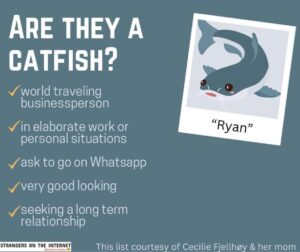
"Strangers on the Internet" Ep. 16: Exclusive Interview with Tinder Swindler Victim Cecilie Fjellhøy (Part 2)

This episode delves into the details of what went wrong on the international law enforcement side

|

The sixteenth episode (Apple Podcasts link here and Spotify link here) of Strangers on the Internet with co-host and psychologist Michelle Lange is part 2 of our exclusive interview with Tinder Swindler star victim Cecilie Fjellhøy. If you missed the previous episode, part 1 is available here.

Find out what fraudster Simon Leviev is up to these days (spoiler: it involves additional alleged crimes!). In this episode, we dig into the legal side of things and why the swindler remains at large, but why Cecilie thinks that his days as a free man may be numbered. Could he end up in an Israeli jail before we know it or will he successfully continue his lucky streak? Hear what Cecilie has to say about Simon, victim blaming, and everything else that has happened in this incredible story!

You can hit "Follow" here to receive our future episodes on your preferred platform.

Guns

America's Rifle

The AR-15 is protected by the Second Amendment.

|

Thanks to Eugene for inviting me to post about some of the developments in the wake of the Supreme Court's decision in New York State Rifle & Pistol Association v. Bruen. Bruen held that New York's limitation of the issuance of permits to carry a handgun to those who officials decide have a special need violates the Second Amendment, which protects from infringement "the right of the people to … bear arms." The government may not limit that right to a privileged class.

One of the hot-button issues that is being relitigated after Bruen is whether banning semiautomatic rifles such as the AR-15 violates the Second Amendment. I argue that it does in my new book America's Rifle: The Case for the AR-15. It covers text and precedent, English and colonial history, the Founding, and how the constitutional right to arms kept pace with the development of firearms. The expired federal ban of 1994 was a true aberration from a Congress that has almost never actually banned a type of firearm.

When Bruen was decided, six states restricted permits to carry handguns—California, Hawaii, Maryland, Massachusetts, New Jersey, and New York. Five of those states (excluding Hawaii) plus Connecticut also prohibited possession of rifles they derogatorily call "assault weapons." A week after Bruen was handed down, the governor of Delaware signed a law adding that state to the list.

In most of the 20th century, the antigun movement focused on banning handguns. Rifles and shotguns were said to be good, pistols and revolvers bad. The Colt AR-15 Sporter rifle hit the civilian market in 1964, the same year that Colt made its first deliveries of the M-16 to the Air Force. The AR-15 is semiautomatic, requiring a separate function of the trigger for each shot, while the M-16 is automatic, meaning it fires continuously as long as the trigger is pulled back. Despite that basic difference, they looked similar on the outside, causing the Violence Policy Center see the potential for confusion in the public. The idea of labeling the AR-15 and like rifles "assault weapons" and banning them was born.

Read More

Guns

Stephen Halbrook Guest-Blogging on Second Amendment Law

|

I'm delighted to report that Stephen Halbrook will be guest-blogging this week on Second Amendment law. Halbrook is both a prominent gun rights lawyer and a leading legal scholar: He argued Printz v. United States (the anti-commandeering case) in the Supreme Court, as well as Castillo v. United States and United States v. Thompson/Center Arms Co., and has filed briefs in a vast number of other cases, including the NRA's party brief in McDonald v. City of Chicago and many amicus briefs in the Supreme Court and in other courts. On the scholarship side, his many articles and books have been cited in over 30 cases (including Heller and McDonald) and over 500 law review articles; his most recent book is America's Rifle: The Case for the AR-15. He is part of a long tradition of lawyer-scholars outside the legal academy (as of course was Don Kates, another tremendously important exemplar in the same field), though that tradition has regrettably sharply waned in recent decades.

Halbrook is currently a Senior Fellow with the Independent Institute; he represented the National African American Gun Association as amicus curiae in Bruen, and has also recently filed briefs in Duncan v. Bonta (9th Cir.), Rupp v. Bonta (9th Cir.), State v. City of Weston (Fla. Ct. App. 2021), and many other cases. I very much look forward to his posts.

Judiciary

What Happened When Mark Joseph Stern Interviewed Judge William Pryor

Slate's legal correspondent questioned the Chief Judge of the U.S. Court of Appeals for the Eleventh Circuit about the Federalist Society.

|

The Honorable William Pryor, Chief Judge of the U.S. Court of Appeals for the Eleventh Circuit, delivered an introductory address at this year's Federalist Society National Lawyers Convention. The speech was a hit with attendees, quoting and responding to common (mis)characterizations and criticisms of the Federalist Society from folks like Senator Sheldon Whitehouse and various progressive pundits.

One of the those quoted (some would say "mocked") in the speech was Slate's Mark Joseph Stern. A week after the speech, Stern decided to ask Judge Pryor for an interview. To Stern's surprise, Judge Pryor agreed on the spot, on the condition that Slate publish a complete transcript of the exchange. Stern agreed and Slate has published the exchange. Although the sub-hed of the story promises a "rare look inside the elusive and influential group," there is very little in the interview that is not well known to those familiar with FedSoc itself, as opposed to the villianous caricature commentators like Stern tend to draw.

As Judge Pryor explained, many claims about FedSoc reflect a misunderstanding of how the organization operates, and fail to distinguish between the actions of the Society and the actions of its members. From the interview:

I think sometimes the criticisms of the Federalist Society frankly are a reflection of a misunderstanding that really is rooted in a different way of thinking about how the world works. I think sometimes a lot of people on the left side of the political and philosophical spectrum view the world and social change and political action and other kinds of activity as being top-down, centrally planned. Command and control. That the way to make things happen is to do it in a top-down fashion. From the right or libertarian side of the spectrum, I think people see more of a bottom-up view of the world and how things happen. It's more Adam Smith and invisible hand. Friedrich von Hayek would call it spontaneous order.

The secret of the Federalist Society is that it's much more of a bottom-up organization. It has created this forum and this marketplace for ideas of debate and discussion. As a result of that, a lot of relationships are formed. Connections are made through a network. A lot of people who would not necessarily know each other end up doing other things together that are not what the Federalist Society does. Criticisms of individuals affiliated with the Federalist Society, and imputed to the Federalist Society itself, are a reflection of that different kind of worldview.

I quite agree with this assessment. As I have noted before (including in an anonymous dispatch from the first American Constitution Society conference in 2003), those viewing the Federalist Society form the outside do not understand how it can be so influential without someone planning and orchestrating things.

Stern raises the fact that some Federalist Society members were involved in the effort to prevent certification of the 2020 election results. But he could also have noted that other Federalist Society members founded Checks & Balances and called for Trump's impeachment. By the common account, the outlier actions of John Eastman are more illustrative of what FedSoc is about than the efforts of George Conway or Steven Calabresi.

Stern does note that Judge Pryor was "one of three judges who recently ended the disruptive reign of a special master over the criminal investigation into Donald Trump," but makes no mention of all the other significant decisions by other Federalist Society-associated judges who have ruled against Trump's interests, including many whom Trump appointed to the federal bench. Apparently that would disrupt the narrative.

One particular exchange addressed Stern's accusation that the Federalist Society serves as a "radicalization machine" for judges and clerks.

[STERN] It seems to me there's this cycle where students push further and further to the right to prove their ideological purity and attract the attention of judges who are looking for very specific kinds of work. And that is fueling what I called the radicalization machine. I think this cycle rewards and incentivizes the adoption of certain unyielding views among current law students, who then become clerks who may eventually become judges. So I'm curious for your view on why I'm wrong about that.

[Pryor] I picked the quote because it was over-the-top rhetoric and a caricature and I thought people would find that humorous. I think that perspective demeans both the students and the judges. First of all, the students—I think the students are adults and take ideas and legal philosophy seriously. I think really what the Federalist Society ends up doing is providing an organization where a lot of students who are really into nerdy debates about the law can gather and do that. Those kinds of students are attractive to judges. It used to be, I think, that a lot of law clerks were drawn from who made the best grades, who was on the Law Review, who was active in political campaigns. But legal philosophy and legal methodology really matter. And as that was taken more seriously, both law clerks and judges were more attracted to each other. I have no reason to think that the law students are changing their views and becoming more radical. I think we end up getting law clerks who are just much more interested in law as law. A lot of those students become members of the Federalist Society.

So you don't think there's an unfair advantage for conservative students at law schools today in terms of landing prestigious federal clerkships?

I didn't say that. Many judges, me included, are interested in having law clerks who in a very broad sense share a perspective about what the judicial role is. Judging is an objective enterprise. I think there are right and wrong answers to the cases that come before us. And the right or wrong answer depends on what the law actually is. Not everyone shares that perspective. I'm interested in law students as potential law clerks who do, in a general sense, share that perspective. My law clerks often have a variety of political views and support a variety of political perspectives and candidates. Some vote for Democrats. That's not what I care about. I care about their view of judging and how law works. Many different kinds of law clerks are attracted to the Federalist Society. It promotes an idea that law is an objective enterprise.

As the interview highlights, the Federalist Society serves as a useful foil for legal progressives seeking to blame unfavorable legal developments to sinister forces. Senator Whitehouse, in particular, likens the Society to a conspiracy.  Such characterizations are nothing new, and despite Judge Pryor's candid exchange with Stern, I doubt they are going away. The exchange may not have revealed too much about FedSoc, but it certainly was revealing about one of the Society's more persistent critics.

Criminal Law

Crime Victims' Rights Now Integrated Throughout the Arizona Rules

The Arizona Supreme Court becomes the first state Supreme Court to thoroughly incorporate crime victims' rights in its rules of criminal procedure. Others should follow.

|

Last week, capping a five-year effort by Arizona crime victims' rights advocates, the Arizona Supreme Court amended its rules of criminal procedure to provide crime victims' rights throughout the criminal justice process. Because Arizona's decision is the first thorough integration of victims' rights in a state's rules of criminal procedure, it is worth attention. I hope that Arizona's approach will be followed by other states and, ultimately, by the drafters of the federal rules of criminal procedure.

Some background: Over the last several decades, many state legislatures and Congress have adopted constitutional and statutory reforms protecting crime victims' rights in the criminal justice process. Victims now commonly have the rights, for example, to notice of court hearings and be heard at hearings involving bail, plea, and sentencing (as I discuss here, here, and here).

But a challenge with enforcing these rights is making them part of day-to-day criminal justice processes. Often procedural steps are set out in the court rules--rules that were written at a time when crime victims were not part of the process. As a result, in too many cases, crime victims' rights are ignored because criminal practitioners do not see any reference to victims' rights in the criminal rules.

In 2005, I wrote about this problem of implementing crime victims' rights in connection with the Federal Rules of Criminal Procedure. I argued for a comprehensive revision of the federal rules to integrate crime victims' rights:

Crime victims are virtually absent from the Federal Rules of Criminal Procedure. The sixty federal rules comprehensively cover every aspect of federal criminal proceedings--from initial appearance through preliminary hearing, arraignment, acceptance of pleas, trial, and sentencing. Yet the rules substantively mention victims only once, briefly recognizing the right of some victims to speak at sentencing.

The federal rules can no longer leave victims unmentioned. In October 2004, Congress passed and President Bush signed into law the Scott Campbell, Stephanie Roper, Wendy Preston, Louarna Gillis, and Nila Lynn Crime Victims' Rights Act (CVRA). The CVRA transforms crime victims into participants in the criminal justice process by (among other things) guaranteeing them notice of court hearings, the right to attend those hearings, and the opportunity to testify at appropriate points in the process. These new victims' rights will reshape the federal criminal justice system and force significant changes to the Federal Rules of Criminal Procedure to reflect the victim's expanded role. This Article offers comprehensive proposals for changing the federal rules to both implement the CVRA and reflect sound public policy. The CVRA dictates changes like these to the Federal Rules of Criminal Procedure because only by integrating victims into the federal rules will Congress's goal of making victims participants in the process be fully realized.

I presented my proposed comprehensive rule changes to the Advisory Committee on Rules of Criminal Procedure. Ultimately, however, the Committee disagreed with my recommendations for a thoroughgoing revision of the federal criminal rules, opting instead for a single, brief rule covering victims' rights. The resulting rule -- Rule 60 -- was, in my view, a desultory and limited effort to protect victims rights. The rule briefly recapitulated the federal statute (the Crime Victims' Rights Act) on victims' rights. The rule made little effort to explain how the CVRA's statutory rights applied in any particular federal proceeding. And, as a result, Rule 60 has been little-cited and has been of little use furthering victims' rights in federal criminal processes.

The same issue that exists in the federal criminal rules also exists in state criminal rules. Beginning in 2017, crime victims' rights advocates in Arizona began pressing for comprehensive revisions of the state's rules to incorporate crime victims' rights. The proposal went through various iterations along the way. In 2020, Arizona Voice for Crime Victims filed a comprehensive petition proposing a series of individual rule changes to Arizona's rules, protecting victims' rights at each stage of Arizona's criminal proceedings. As the process moved forward, in 2021, I testified in favor of changing Arizona's rules and in 2022 I wrote a letter in support of the changes. Arizona's prosecutors also supported the changes.

After reviewing the issues carefully, last week the Arizona Supreme Court adopted comprehensive rule changes, bringing the expansive changes to criminal rules that are necessary to make crime victims' rights part of the day-to-day architecture of criminal proceedings. In a twenty-five page order entered on December 8, 2022, the Arizona Supreme Court amended the state's rules of criminal procedure to specifically incorporate crime victims rights throughout the state's criminal justice proceedings. The Court's order briefly recounts the procedure history leading up to this rule change as follows:

On January 10, 2020, Colleen Clase on behalf of Arizona Voice for Crime Victims filed a petition, R-20-0031, proposing to amend the Rules of Criminal Procedure ("the Rules") to enhance the rights of victims under Arizona's rules of court. The petition in R-20-0031 proposed to fully integrate the rights guaranteed to victims under the Arizona Constitution and implementing legislation, which had previously been codified primarily in Rule 39 of the Rules, into the Rules as a whole. The petition proposed to relocate each specific victims' rights provision into the rule governing the applicable situation or proceeding. The avowed goal of this proposal was to assure that trial courts, litigants, and attorneys would be more aware of what victims' rights are mandated in each specific situation.

At its August 2020 Rules Agenda, the Court continued the petition in R-20-0031 "pending the work of a Restyling Committee to be formed to carry out this proposal's goal of integrating selected provisions of Rule 39 of the Rules of Criminal Procedure into other related provisions of the Rules of Criminal Procedure where they more logically belong and where they will safeguard the rights of victims in the criminal justice system."

Thereafter, the Committee on Criminal Rules Regarding Victims was empaneled to carry out the Court's mandate. On July 12, 2022, Justice John R. Lopez, as Chair, filed this petition, proposing amendments to over forty of the Rules. … The matter was circulated for public comment under an expedited schedule. …

IT IS ORDERED that the Rules of Criminal Procedure are amended in accordance with the attachment to this order, effective July 1, 2023.

The Court's order changes approximately 40 of the state's rules of criminal procedure. These changes usefully add victims' rights on a rule-by-rule basis rather than merely in one general victims' rights rule. As the Order adopting the rule explains: "The Court adopted Rule 1.3 and the section (v) provisions of these rules to give victims' rights greater visibility in the Criminal Rules. Integrating victims' rights, as reflected in the Arizona Constitution, Arizona statutes, and Rule 39, into these rules is an attempt to assure their application to the hearing or proceeding in which those rights arise, so that victims, judges, and attorneys are aware of those rights and victims' rights are not overlooked." It is important to underscore that the recent rule changes do not substantively expand crime victims' right. Instead, the changes simply place victims' rights within each rule where application issues might arise. Arizona is leading the way for what should become the conventional approach to drafting criminal rules--an approach that recognizes that crime victims have rights throughout criminal justice processes.

Free Speech

Journal of Free Speech Law: "Intimate Privacy's Protection Enables Free Speech," by Prof. Danielle Keats Citron (Virginia)

|

Just published, at 2 Journal of Free Speech Law 3 (2022), as part of the "Non-Governmental Restrictions on Free Speech" symposium; the Abstract:

The protection of intimate privacy isn't at odds with free expression. At times, we prioritize one value over the other, but, more often, intimate privacy is an essential precondition for self-expression. Intimate privacy allows us to experiment with ideas, identities, and love. It secures space for us to figure out who we are and who we want to become. It frees us to forge close relationships. Intimate privacy enables us to trust others with our innermost thoughts, feelings, and past experiences so that we can come to know them, and they can come to know us. Mutual self-revelation is at the heart of love. The fight for intimate privacy is the fight for free speech.

This short essay highlights intimate privacy's significance for free speech. I explore how intimate privacy violations undermine the ability to engage in self-expression and to forge close relationships. I end with a high-level overview of empirical studies that I have been conducting with Jonathon Penney and Alexis Shore. Our preliminary findings suggest that the protection of intimate privacy—both in law and in the policies of social media platforms—inculcates trust necessary for victims to speak.

Free Speech

Journal of Free Speech Law Symposium on Non-Governmental Restrictions on Free Speech

|

From the Introduction, which was just published:

On March 19, 2022, Arizona State University's Sandra Day O'Connor College of Law hosted a day-long symposium titled "Non-Governmental Restrictions on Free Speech." The Symposium was funded by a gift from the Stanton Foundation, and was organized by Professors Ash Bhagwat (UC Davis), Vince Blasi (Columbia), Thomas Healy (Seton Hall), and Jim Weinstein (ASU). The Symposium explored contemporary free speech controversies that generally do not involve repression or censorship by a state actor, and therefore do not implicate the First Amendment.

Professor Danielle Keats Citron of the University of Virginia presented the Symposium's keynote address, and was followed by four separate panels: "Social Restraints and Free Speech Theory," "Restrictions on Campus Speech," "Private Employer Sanctions on Free Speech," and "Speech Regulation by Online Platforms." In this issue of the Journal of Free Speech Law we publish the papers that resulted from the Symposium.

We'll be publishing the articles in the days and weeks to come, as we finish up the final proofreads. We begin today with Prof. Citron's article, Intimate Privacy's Protection Enables Free Speech, and will proceed to the articles in the general principles panel, the Internet platforms panel, the private universities panel, and the private employment panel.

More