The Volokh Conspiracy

Mostly law professors | Sometimes contrarian | Often libertarian | Always independent | Est. 2002

The Volokh Conspiracy

Corporate Law

Court Rejects Disney Shareholder's Demand for Corporate Documents Related to Controversy over Florida Law

|

From Simeone v. Walt Disney Co., decided Tuesday:

This books and records action originates from The Walt Disney Company's response to Florida House Bill 1557. Disney initially took no public position on the bill, which limits instruction on sexual orientation or gender identity in Florida classrooms. After facing criticism from its employees, Disney reversed course and spoke out against the legislation. Florida's Governor took issue with Disney's stance and Florida's legislature voted to dissolve a special tax district encompassing the Walt Disney World Resort.

Afterwards, the plaintiff—a longtime Disney stockholder—was solicited by counsel to serve a books and records demand. The demand asserts that Disney's directors and officers may have breached their fiduciary duties to the company and its stockholders by opposing HB 1557. The plaintiff's theory of wrongdoing is that Disney's fiduciaries either put their own beliefs ahead of their obligations to stockholders or flouted the risk of losing rights associated with the special district.

Disney told the plaintiff that he lacked grounds to obtain books and records because its directors and officers had not engaged in mismanagement. Nevertheless, Disney produced certain board minutes and corporate policies to the plaintiff. The plaintiff was unsatisfied and filed litigation.

Weighty public policy questions surround the margins of this lawsuit. But when they are stripped away, the case becomes quite simple. The court must determine whether the plaintiff has demonstrated a proper purpose to inspect books and records. He decidedly has not.

Delaware law vests directors with significant discretion to guide corporate strategy—including on social and political issues. Given the diversity of viewpoints held by directors, management, stockholders, and other stakeholders, corporate speech on external policy matters brings both risks and opportunities. The board is empowered to weigh these competing considerations and decide whether it is in the corporation's best interest to act (or not act).

This suit concerns such a business decision by the Disney board—a decision that cannot provide a credible basis to suspect potential mismanagement irrespective of its outcome. There is no indication that the directors suffered from disabling conflicts. Nor is there any evidence that the directors were grossly negligent or acted in bad faith. Rather, the board held a special meeting to discuss Disney's approach to the legislation and the employees' negative response. Disney's public rebuke of HB 1557 followed.

The plaintiff and his counsel may disagree with Disney's position on HB 1557. But their disagreement is not evidence of wrongdoing. Regardless, the plaintiff has all necessary and essential documents relevant to his purpose. Judgment must be entered for Disney….

Read More

Law & Government

The Unsurprising Affirmative Action Decision in Students for Fair Admissions v. Harvard

The Court's core ruling is unsurprising, but its future effects are uncertain.

|

Today in Students for Fair Admissions v. Harvard, the Supreme Court effectively ended the current regime of diversity-justified-race-based affirmative action in higher education. As the opinion for the Court by Chief Justice Roberts puts it:

University programs must comply with strict scrutiny, they may never use race as a stereotype or negative, and—at some point—they must end. Respondents' admissions systems—however well intentioned and implemented in good faith—fail each of these criteria. They must therefore be invalidated under the Equal Protection Clause of the Fourteenth Amendment.

While the majority opinion is somewhat cagey about the extent to which it is overturning its prior precedents such as Grutter and Fisher as a formal matter, it does seem clear that going forward current practices at many elite universities will now be held unlawful. Here is the Court's conclusion:

For the reasons provided above, the Harvard and UNC admissions programs cannot be reconciled with the guarantees of the Equal Protection Clause. Both programs lack sufficiently focused and measurable objectives warranting the use of race, unavoidably employ race in a negative manner, involve racial stereotyping, and lack meaningful endpoints. We have never permitted admissions programs to work in that way, and we will not do so today.

At the same time, as all parties agree, nothing in this opinion should be construed as prohibiting universities from considering an applicant's discussion of how race affected his or her life, be it through discrimination, inspiration, or otherwise. See, e.g., 4 App. in No. 21–707, at 1725–1726, 1741; Tr. of Oral Arg. in No. 20–1199, at 10. But, despite the dissent's assertion to the contrary, universities may not simply establish through application essays or other means the regime we hold unlawful today. (A dissenting opinion is generally not the best source of legal advice on how to comply with the majority opinion.) "[W]hat cannot be done directly cannot be done indirectly. The Constitution deals with substance, not shadows," and the prohibition against racial discrimination is "levelled at the thing, not the name." Cummings v. Missouri, 4 Wall. 277, 325 (1867). A benefit to a student who overcame racial discrimination, for example, must be tied to that student's courage and determination. Or a benefit to a student whose heritage or culture motivated him or her to assume a leadership role or attain a particular goal must be tied to that student's unique ability to contribute to the university. In other words, the student must be treated based on his or her experiences as an individual—not on the basis of race.

Many universities have for too long done just the opposite. And in doing so, they have concluded, wrongly, that the touchstone of an individual's identity is not challenges bested, skills built, or lessons learned but the color of their skin. Our constitutional history does not tolerate that choice.

The majority opinion is generally unsurprising to anybody who has followed the issue and the litigation, and the same is generally true of the other separate opinions and dissents in the case as well. That said, many of them are still worth reading. I would particularly highlight Justice Thomas's concurring opinion which offers—I think for the first time on the modern Court—"an originalist defense of the colorblind Constitution" and Justice Gorsuch's concurring opinion which highlights the way these cases could and should be resolved more simply on the basis of Title VI of the Civil Rights Act.

Three additional observations:

Read More

Religion and the Law

S. Ct. Unanimously Broadens (Somewhat) Employees' Rights to Religious Exemptions from Neutral Work Rules

The decision, which interprets Title VII's reasonable accommodation provision (enacted in 1972), applies to private employees as well as government employees.

|

From Justice Alito's opinion in today's Groff v. DeJoy:

Since its passage, Title VII of the Civil Rights Act of 1964 has made it unlawful for covered employers "to fail or refuse to hire or to discharge any individual, or otherwise to discriminate against any individual with respect to his compensation, terms, conditions, or privileges [of] employment, because of such individual's … religion."  As originally enacted, Title VII did not spell out what it meant by discrimination "because of … religion," but shortly after the statute's passage, the EEOC interpreted that provision to mean that employers were sometimes required to "accommodate" the "reasonable religious needs of employees." … [But] EEOC decisions did not settle the question of undue hardship. In 1970, the Sixth Circuit held (in a Sabbath case) that Title VII as then written did not require an employer "to accede to or accommodate" religious practice because that "would raise grave" Establishment Clause questions….

Responding to [this] …, Congress amended Title VII in 1972. Tracking the EEOC's regulatory language, Congress provided that "[t]he term 'religion' includes all aspects of religious observance and practice, as well as belief, unless an employer demonstrates that he is unable to reasonably accommodate to an employee's or prospective employee's religious observance or practice without undue hardship on the conduct of the employer's business."

This thus created a duty on employers to exempt religious objectors from generally applicable rules (e.g., work schedules, dress and hairstyle codes, particular job tasks, etc.) when that can be done "without undue hardship," but what does that mean? The Court's leading precedent interpreting this, Hardison v. Trans World Airlines (1977), has been requiring only accommodations that would involve only "a de minimis cost"—i.e., a very small cost—but the Court's opinion today concludes that this was an offhanded remark that didn't capture the true scope of the Title VII provision:

Read More

Supreme Court

Steve Calabresi on Moore v. Harper

Leading originalist constitutional law scholar comments on the Supreme Court's recent rejection of independent state legislature theory.

|

The Supreme Court. (NA)

I am putting this post up on behalf of Northwestern University law Prof. Steven Calabresi, at his request. While Steve is a contributor to the Volokh Conspiracy blog, he has been having difficulty accessing his account. In the interests of getting this post up as quickly as possible, I am posting it for him. Everything that follows this sentence was written by Steve, not me (Ilya Somin):

In Moore v. Harper, 600 U.S. ____ (2023), the Supreme Court in a landmark opinion issued yesterday rejected the Independent State Legislature Doctrine.  At issue was the meaning of the word "legislature" in the Elections Clause of Article II.  That Clause provides that: "The Times, Places and Manner of holding Elections for Senators and Representatives, shall be prescribed in each State by the Legislature thereof; but the Congress may at any time by Law make or alter such Regulations, except as to the Places of chusing Senators"

Proponents of the Independent State Legislature Theory believed that after President Trump's rejection by the voters in the 2020 presidential election in Pennsylvania, Georgia, Wisconsin, and Arizona, the Republican State Legislatures of those four states, acting alone without the Governor or judicial review by the State Supreme Court, could have awarded Pennsylvania's, Georgia's, Wisconsin's, and Arizona's Electoral College votes to Trump, which would have caused him to win a second term in 2020.  Article II, Section 1, Clause 2 in the Presidential Electors Clause says that "Each State shall appoint, in such Manner as the Legislature thereof may direct."

The issue for the Supreme Court in Harper v. Moore is does the word "legislature" in these two clauses mean "the state senate and house of representatives" or does it mean "the lawmaking process in the state including the governor, who in all 50 states has a veto; the state supreme court, which in all 50 states have the power of judicial review under state constitutions; and popular initiatives and referenda, which exist in about half the states, and which in some states have set up Non-Partisan Redistricting Commissions, which would be unconstitutional under the Independent State Legislature Theory."

The original public meaning of the word "Legislature" in 1787 and 1788, when the U.S. Constitution was ratified, is set out in Samuel Johnson's 1755 Dictionary of the English Language. Here it is, with examples of the correct usage in Italics:

"Legisla'ture. n.s. 

 [from legislator, Latin.] The power that makes laws.

Without the concurrent consent of all three parts of the legislature, no law is or can be made.
Hale's  Com. Law.

In the notion of a legislature is implied a power to change, repeal, and suspend laws in being, as well as to make new laws.
Addison's  Freeholder, №. 16.
"

The Hale's Com. Law definition refers to the fact that in Great Britain, in 1755, the enactment of a law required the approval of the House of Commons, the House of Lords, and the King.  The Addison's Freeholder, No. 16 definition makes it clear that in half of the United States popular initiatives and referenda are legislatures, because they can change, repeal, and suspend.as well as to make new laws.

Samuel Johnson's 1755 Dictionary of the English Language makes it crystal clear that the Independent State Legislature Doctrine is just plain wrong on originalist grounds.

Chief Justice Roberts' superb opinion for six justices of the Supreme Court emphasized that state senates and state houses of representatives are merely creatures of state constitutions.  They share the power to make laws with governors who in all 50 states have the veto power and with state supreme courts, which in all 50 states have the power of judicial review.  In addition, in half the states elections laws can be made by popular initiatives and referenda.  By 1787 and 1788, state supreme courts had, as Chief Justice Roberts points out, exercised the power of judicial review.  Executive vetoes were also constitutionally provided for in Massachusetts and New York.

It is thus inconceivable that the conventions that ratified the Constitution would have meant the word "Legislature" to mean only state senates and state houses of representatives as opposed the whole lawmaking process of a state.  Chief Justice Roberts also notes that the Independent State Legislature Doctrine conflicts with several Supreme Court precedents and finds support only in a three-justice concurrence in Bush v. Gore, 531 U.S. 98 (2000), an opinion that was written with great haste and insufficient briefing.

Chief Justice Roberts' opinion notes that ordinarily the Supreme Court defers to state supreme courts as having the last word on questions involving the meaning of state law as was held in Murdock v. City of Memphis, 87 U.S. 590 (1875).  Quite importantly, however, Chief Justice Roberts qualified the deference federal courts should give to state court interpretations of state law by suggesting that such state court decisions must be the product of an ordinary course of judicial review.  Cf Bush v. Gore?  I wrote an amicus brief in this case with Yale Sterling Professor of Law, Akhil Reed Amar and Professor Vikram D. Amar, which is linked here.

Reproductive Freedom

When Couple Is Divorcing, What Should Happen to Their Fertilized Pre-Embryos?

|

From Jocelyn P. v. Joshua P., decided yesterday by the Maryland Appellate Court (nonprecedential opinion by Judge Andrea Leahy, joined by Justices Christopher Kehoe & Terrence Zic):

"Promises are the uniquely human way of ordering the future, making it predictable and reliable to the extent that is humanly possible." -Hannah Arendt ….

The parties, Jocelyn P. … and Joshua P. …, resorted to the IVF process during the course of their marriage after they attempted, unsuccessfully, to conceive a child by natural means. The couple managed to produce three viable pre-embryos for uterine implantation after Jocelyn gave up her job and endured years of emotional and physical pain and suffering. The implantation of the first pre-embryo resulted in a miscarriage, while implantation of the second happily culminated in the birth of the parties' first child, F.P. Unfortunately, after F.P.'s birth, Jocelyn and Joshua's relationship deteriorated and the parties ultimately sought dissolution of the marriage. After agreeing to settlement terms on all other matters, the fate of the parties' third pre-embryo—which Jocelyn desires to use for implantation and Joshua desires to destroy—remained in dispute.

[The trial court] took … testimony and entered a memorandum opinion and order (1) finding that the parties' oral agreement only contemplated disposition of the pre-embryos during their marriage, and (2) awarding the pre-embryo to Joshua after balancing the parties' interests….

We hold that the trial court erred in finding that the parties' prior oral agreement did not control the disposition of the parties' remaining pre-embryo. While Jocelyn and Joshua certainly contemplated using all of the pre-embryos within the confines of an intact marriage, Jocelyn has consistently testified that they both agreed to give each pre-embryo an opportunity to be born "no matter what." Joshua—who testified after Jocelyn—did not testify to having placed any limitations or conditions on that unequivocal mandate and acknowledged that they had "agree[d] to give all the embryos a chance at life." In reliance on that agreement, and as consideration thereunder, Jocelyn:

Read More

Property Rights

Qualified Immunity Meets the Takings Clause

A Sixth Circuit decision holds qualified immunity protects a state elevator inspector from being sued for taking a hotel's property.

|

The doctrine of qualified immunity is best known - and most notorious - for protecting police officers from being held liable even for many very egregious violations of citizens' rights. The issue came to public consciousness in the aftermath of the killing of George Floyd by Minnesota police officers in 2020. But qualified immunity also protects a wide range of other government officials. In Sterling Hotels v. McKay, a recent ruling by the US Court of Appeals for the Sixth Circuit, qualified immunity enabled a state elevator inspector to avoid Takings Clause liability for shutting down a hotel elevator for reasons not authorized by state law, as understood by the state's Elevator Safety Board. Here is an excerpt from the court's summary of the facts.

Sterling Hotels operated the Wyndham Gardens Hotel in Sterling Heights, Michigan….

On the morning of November 5, 2019, ThyssenKrupp tested the battery-lowering devices and found that they functioned as intended. Later that day, a state elevator inspector, Scott McKay, visited the Wyndham to verify that Sterling had brought the elevators into compliance. But McKay "failed" every elevator, purportedly on the ground that, in case of emergency, the elevators should have been programmed to descend to the hotel's basement—notwithstanding that it lacked an exit. Although the [Michigan Elevator Safety] Board never told Sterling to program his elevators to reach the basement, McKay sealed the elevators that same day. As a result, Sterling could no longer rent rooms on five of the Wyndham's six floors….

Sterling requested relief via email from the Board, unsuccessfully, and then brought this suit against McKay, asserting federal equal protection, takings, and due process claims…

In an opinion by Judge Raymond Kethledge, the Sixth Circuit ruled that qualified immunity protected McKay because there is no "clearly established law" saying that state officials could be held personally liable for Takings Clause violations:

Sterling next argues that McKay engaged in an unconstitutional regulatory taking when
he sealed the elevators. At the time of the alleged taking, however, no court in this circuit had yet decided whether an officer could be liable for a taking in his individual capacity—which is the capacity in which Sterling sued McKay here—and at least one case suggested the contrary. See Viceroy v. Walton, 730 F.2d 466, 467 (6th Cir. 1984) ("Plaintiff cites no case, and we can find none, that suggests that an individual may commit and be liable in damages for a 'taking' under the Fifth Amendment"). McKay's potential individual liability for a regulatory takings claim was not clearly established when he sealed the elevators. That means McKay is entitled to qualified immunity on this claim.

This whole situation may seem laughable, particularly McKay's conclusion that emergency exit procedures required the elevator to be able to reach the basement, even though there is no exit from there. But it was no laughing matter to the hotel chain, which probably lost a significant amount of money - or to travelers whose reservations had to be cancelled.

To my mind, it is entirely reasonable to expect a government official to understand that severely restricting property owners' use of their land without proper legal justification might result in a takings claim. Unlike some situations involving police officers, McKay didn't have to make a split-second decision in the heat of the moment. He could have taken time to check with his agency (and its counsel) about the relevant legal issues.

I'm far from certain that the hotel would have prevailed on the takings claim. While I think this kind of regulatory restriction should indeed be considered a taking (at least in  situation where it doesn't meaningfully protect public safety, and therefore doesn't fall within the "police power" exception to takings liability), current Supreme Court takings precedent arguably doesn't go that far.

Because the restriction on property rights didn't involve a physical invasion of the owner's land, did not destroy 100% of the property's economic value, and wasn't necessarily a permanent constraint, McKay's order probably doesn't qualify as a "per se" (automatic taking). It would likely be subject to the vague and overly deferential Penn Central balancing test, under which it might well have been ruled not a taking. But the hotel should at least have been permitted to raise the takings issue.

I would add that the Vicory v. Walton, the 1984 case cited by the Sixth Circuit (it's Vicory, not "Viceroy," as Judge Kethledge mistakenly spelled it), isn't much of a precedent, because it was merely a denial of a petition for rehearing en banc. The ruling on the merits in that case does not address the Takings Clause, but does include a concurring opinion by Judge Bertelsman suggesting that officials can in fact be held liable for Takings Clause claims in some situations.

Whether they be cops, inspectors, or even state university professors (like the present author!), government officials should not be allowed to escape liability for constitutional violations by relying on the bogus, judicially invented doctrine of qualified immunity. On that point, see critiques of qualified immunity by leading legal scholars, such as Joanna Schwartz, and co-blogger Will Baude.

The Sixth Circuit ruling is a reminder that police are not the only state officials who can hide behind qualified immunity.

While the Sixth Circuit dismissed the takings claim based on QI, it denied McKay qualified immunity on the hotel's  Due Process Clause claim. Here, there was enough "clearly established" precedent to overcome even the ridiculous requirements of QI doctrine.  The due process issue has been remanded to the district court.


Supreme Court

"Dormant Commerce" and Corporate Powers

Some reflections on the decision in Mallory.

|

Yesterday the Court reversed in Mallory v. Norfolk Southern Railway Co., upholding personal jurisdiction under consent-by-registration statutes. Importantly, the Court distinguished between two different legal questions. Whether a state can use consent as a basis for personal jurisdiction is reviewed under the Due Process Clause of the Fourteenth Amendment. But whether it can offer particular inducements to secure that consent, like the right to conduct local business, is reviewed under other doctrines such as dormant commerce. Justice Alito expressed serious skepticism about Pennsylvania's law on the latter point, but he joined the majority of the Court in leaving the issue open (see footnote 3), to be decided (if at all) on remand.

All that seems quite right to me.  As I've argued here before, the relevant source of law for personal jurisdiction isn't the Fifth or Fourteenth Amendments, but rules of general and international law. Taking away someone's property under a jurisdictionless judgment is a deprivation without due process, so the Fourteenth Amendment's Due Process Clause let federal courts review how a state had applied the general rules.

Under those rules, each state had jurisdiction over its own corporations. It also might have jurisdiction over other corporations allowed to operate within its borders, given that doing so required the state's consent. But once the Court recognized a dormant commerce right for corporations to operate across state borders, consent or no, this theory no longer worked. The doctrine changed to an amorphous notion of "corporate presence," which  soon fell apart under its own weight and was replaced by International Shoe. That quieted these sorts of dormant-commerce questions for a long time, until Pennsylvania's law finally pressed the consent issue in Mallory.

So what should happen if "Mallory II," returning from remand, poses the dormant commerce problem directly?

Read More

Chief Justice Roberts Calls Out Counsel In Moore v. Harper

This opinion continues a trend where the Court faults lawyers for making certain arguments, not making other arguments.

|

In Brackeen, Justice Barrett repeatedly faulted counsel for Texas and the adopting families. She wanted a "theory for rationalizing this body of law," and was not willing to connect the dots plotted by the lawyers. In Moore v. Harper, Chief Justice Roberts found that counsel for the legislative defendants failed to adequately argue that the decision of the North Caroline Supreme Court violated the Elections Clause. And the failure to present this argument allowed the Court to avoid deciding what standard ought to apply to the Election Clause. Roberts wrote this argument wasn't in their briefs:

We decline to address whether the North Carolina Supreme Court strayed beyond the limits derived from the Elections Clause. The legislative defendants did not meaningfully present the issue in their petition for certiorari orin their briefing, nor did they press the matter at oral argument.

And the position was disclaimed during oral argument:

Counsel for the defendants expressly disclaimed the argument that this Court should reassess the North Carolina Supreme Court's reading of state law. Tr. of Oral Arg. 7 ("We're not asking this Court to second-guess or reassess. We say take the North Carolina Supreme Court's decision on face value and as fairly reflecting North Carolina law . . . ."). When pressed whether North Carolina's Supreme Court did not fairly interpret its State Constitution, counsel reiterated that such an argument was "not our position in this Court." Id., at 54.

Roberts even faulted counsel for pivoting to the argument during rebuttal!

Although counsel attempted to expand the scope of the argument in rebuttal, such belated efforts do not overcome prior failures to preserve the issue for review. See this Court's Rule 28 ("[C]ounsel making the opening argument shall present the case fairly and completely and not reserve points of substance for rebuttal.").

Talk about persnickety--knocking counsel for raising an argument during rebuttal. When the Chief wants to reach an issue, he will do pirouettes. When he doesn't want to reach an issue, he will don a straightjacket. The Court of late has had a very fluid approach to oral argument. Top-side counsel may hold an argument in reserve for rebuttal, or the seriatim round. But Rule 28 is still on the books.

I am going to make an unpopular prediction about the affirmative action cases. Counsel for Students for Fair Admission declined to argue that the Title VI standard was different from the Equal Protection standard. This decision was strategic. They could have argued that Title VI imposed a more stringent standard, and dicta from Grutter suggesting the standard was the same should be overruled. But they did not choose this path. I think the Court will rely on Title VI to (a) reaffirm Grutter and Bakke on stare decisis ground, (b) hold Title VI is subject to the Grutter standard because the parties did not ask the Court to apply a different standard, and (c) rule for Harvard and UNC. I know, my prediction is very uncomfortable, but there it is. I have seen far too many criticisms of prominent conservative lawyers in decisions by conservative Justices. If this outcome happens, conservative lawyers will need to have a serious moment of reflection. Having a "6-3" Court is not enough. Arguments must cohere at all levels, and more narrow relief must be sought. Yes, there is an asymmetry, but those are the rules of the road for conservative cases. Governor DeSantis is not wrong. And progressives should thank President Trump.

What Is The Effect Of The "Judgment" From Harper I?

Chief Justice Roberts, and regrettably Justice Barrett, keep the case alive by succumbing to the writ of erasure fallacy.

|

There is much to say about Moore v. Harper. I'll start with the threshold issue: was there still a live controversy that the Court could decide? The majority opinion by Chief Justice Roberts answered the question yes; the dissent by Justice Thomas answered the question no. I won't even attempt to describe the tortured legal posture of this case. The Chief Justice somehow made the complicated litigation history straightforward. I think he cut a few corners here and there in the service of simplicity, but he illustrated once again why he is still, pound for pound, the best writer on the Court.

Here, I want to focus on one particular aspect of the mootness inquiry. The Court held that it could vacate the "judgment" from Harper I. Ultimately, the Court did not vacate that judgment, but it could have. Therefore, because the possibility of vacatur existed, the controversy was not moot. But what would have been the effect of vacating the judgment from Harper I? Chief Justice Roberts writes that if the Court vacated the judgment from Harper I, "the 2021 plans enacted by the legislative defendants would again take effect." Roberts further quoted from counsel for the legislative defendants that the North Carolina Supreme Court "overruling Harper I [would] not negate the force of its order striking down the 2021 plans." In these two sentences, Chief Justice Roberts succumbed to the writ of erasure fallacy.

A judgment does not operate against a statute; a judgment operates against parties.  Justice Thomas spelled out the "deeper" problems with the Court's analysis.

But the error that actually drives the majority's conclusion is much deeper. The majority evidently thinks that when Harper I held the 2021 Act unconstitutional, it entered a "judgment" affecting the 2021 Act as a statute, independent of its application to the legal rights of the litigants in this case. And the majority thinks that to reverse Harper I 's "judgment" would "negate the force of its order striking down" the Act, thus "alter[ing] the presently operative statutes of North Carolina." But, of course, the judicial power does not "operate on legal rules in the abstract"; it operates on the rights and liabilities of contending parties with adverse legal interests. California v. Texas (2021). The majority's reasoning cannot be squared with the judicial power vested by the Constitution, the case-or-controversy requirement, or the nature of judicial review.

Yes, California v. Texas. I remember that case well. The Supreme Court could not issue any order that ran against the Affordable Care Act. The judgment could only run against plaintiff's who have injuries that can be remedied.

Justice Thomas illustrates the profound problems with the majority's analysis:

Instead, its animating idea (uncritically borrowed from petitioners) is that Harper I 's "judgment" operated against the 2021 Act as a statute. The majority describes Harper I's "judgment" interchangeably as "enjoining the use of the 2021 ma[p]" and "striking down the 2021 pla[n]." It then reasons that reversing that "judgment" would "negate the force of its order striking down the 2021 pla[n]," thus "alter[ing] the presently operative statutes of North Carolina" such that the 2021 Act would "again take effect." . . .

This reasoning bears no connection to the judicial power of this Court or the court below. . . . Thus, a judgment binds the rights of the parties in that case, see Taylor, and it awards remedies that "operate with respect to [those] specific parties," California. In deciding any case, the court must "ascertai[n] and declar[e] the law applicable to the controversy"; this duty, in turn, implies "the negative power to disregard an unconstitutional enactment" in deciding the case. Massachusetts v. Mellon (1923); accord, Nicholson; Marbury v. Madison (1803). But this negative power of judicial review is not a "power per se to review and annul acts of [legislation] on the ground that they are unconstitutional," Mellon; "to change or to repeal statutes," or to issue orders that "operate on legal rules in the abstract," California. Courts of law simply do not render "judgments" that toggle statutes from "operative" to "inoperative" and back again, as if judicial review were some sort of in rem jurisdiction over legislative Acts.

Roberts has no response to Justice Thomas on this foundational point. If Justice Thomas is right, then the case was moot, and should have been dismissed.

I am disappointed that Justice Barrett joined this analysis. The Chief will do jurisdictional pirouettes like Baryshnikov to reach the result he wants. But Justice Barrett knows better.

Sen. Schumer Tackles AI Regulation

Episode 464 of the Cyberlaw Podcast

|

Sen. Schumer (D-NY) has announced an ambitious plan to produce a bipartisan AI regulation program in a matter of months. Jordan Schneider admires the project; I'm more skeptical. The rest of our commentators, Chessie Lockhart and Michael Ellis, also weigh in on AI issues. Chessie lays out the case against panicking over existential AI threats, this week canvassed in the MIT Technology Review. I suggest that anyone complaining that the EU or China is getting ahead of the US in AI regulation (lookin' at you, Sen Warner!) doesn't quite understand the race we're running. Jordan explains the difficulty the US faces in trying to keep China from surprising us in AI.

Michael catches us up on Canada's ill-advised effort to force Google and Meta to pay Canadian media whenever a user links to a Canadian story.  Meta has already said it would rather ban such links. The end result could be that even more Canadian news gets filtered through American media, hardly a popular outcome north of the border.

Speaking of ill-advised regulatory initiatives, Michael and I comment on Australia's threatening Twitter with a fine for allowing too much hate speech on the platform post-Elon.

Chessie gives an overview of the DELETE Act, a relatively  modest bipartisan effort to regulate data brokers' control of personal data.

Michael and I talk about the growing tension between EU member states with real national security responsibilities and the Brussels establishment, which has enjoyed a 70-year holiday from national security history and expects the next 70 to be more of the same. The latest conflict is over how much leeway to give member States when they feel the need to plant spyware on journalists' phones.  Remarkably, both sides think government should have such leeway; the fight is over how much.

Michael and I are surprised that the BBC feels obliged to ask, "Why is it so rare to hear about Western cyber-attacks?" Because, BBC, the agencies carrying out those attacks are on our side and mostly respect rules we support.

In updates and quick hits:

  • I bring listeners up to date on how things turned out for the lawyers who filed a ChatGPT-hallucinated brief in federal court: Not well.
  • Chessie flags the creation of a new Justice Department section in the National Security Division: Natsec Cyber
  • Chessie also welcomes the growing recognition, some of it in cold, hard cash, for cyber security clinics.

Download Episode 464 (mp3).

You can subscribe to The Cyberlaw Podcast using iTunes, Google Play, Spotify, Pocket Casts, or our RSS feed. As always, The Cyberlaw Podcast is open to feedback. Be sure to engage with @stewartbaker on Twitter. Send your questions, comments, and suggestions for topics or interviewees to CyberlawPodcast@gmail.com. Remember: If your suggested guest appears on the show, we will send you a highly coveted Cyberlaw Podcast mug! The views expressed in this podcast are those of the speakers and do not reflect the opinions of their institutions, clients, friends, families, or pets.

Free Speech

S. Ct. Decides: "True Threats" Exception Requires Showing that Speaker Was "Reckless," i.e.,

"consciously disregarded a substantial risk that his communications would be viewed as threatening violence."

|

The Supreme Court has long recognized that "true threats" of illegal conduct are excluded from First Amendment protection. But what mental state does the government have to show to prove that something is a true threat?

  1. Is it enough to show that a reasonable person would have recognized it as threatening (a mental state generally labeled "negligence")?
  2. Does the government have to show that the speaker recognized it was quite likely to be perceived as threatening, and ignored that risk (generally called "recklessness")?
  3. Does the government have to show that the speaker knew it was nearly certain to be perceived as threatening (generally called "knowledge")?
  4. Does the government have to show that the speaker specifically had the aim of making people feel threatened (generally called "purpose")?

Oddly enough, the Court has never resolved this question, though such "mens rea" elements are key parts of many other First Amendment tests:

Read More

Download Edited Version Of Moore v. Harper From Barnett/Blackman Supplement

About half the case is on jurisdiction/mootness, and the other half is on election law.

|

I have finished editing Moore v. Harper for the Barnett/Blackman supplement. I trimmed 65 pages down to 22 pages. You can download the opinion here.

This case will be useful for two separate topics: jurisdiction/mootness and election law. I suspect professors interested in the former will be less interested in the latter, and vice versa. To make things easier, the discussion on mootness appears in Part II of the majority opinion and Part I of the dissent. And the discussion of election law appears in Parts III and IV of the majority opinion and Part II of the dissent.

I'll have much more to say about this decision in future writings.

Supreme Court

Why a Supreme Court Justice Who Always Votes for One Type of Litigant isn't Necessarily Biased

Justice Gorsuch has never voted against Native American interests in a Supreme Court case. But that probably isn't because he's biased in favor of Indians. He simply believes that much existing precedent in this field is biased the other way.

|

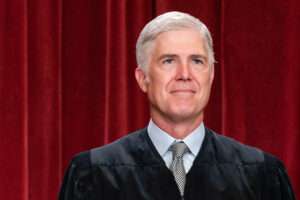
Supreme Court Justice Neil Gorsuch
Supreme Court Justice Neil Gorsuch. (Pool/ABACA/Newscom)


In a recent post, co-blogger Josh Blackman notes that Supreme Court Justice Neil Gorsuch has never ruled against Indian tribes or their members since getting on the Court in 2017. Because of this record, Josh goes on to write in a follow-up post, he is "skeptical of any Gorsuch opinion that rules for an Indian tribe or member." The implication is that Gorsuch is biased in cases involving Indian interests and rights. His consistent record of ruling in favor of Indian interests proves it.

But does it?  A Supreme Court justice who always or almost always rules in favor of one type of litigant could well have unbiased reasons for doing so. Consider a Supreme Court justice 100 years ago who virtually always ruled in favor of black litigants in civil liberties and antidiscrimination cases. Perhaps such a justice acted as he did because he had a bias in favor of blacks (or against whites). But the more likely explanation is that the justice thought existing precedent on these issues was itself biased against black rights (which was in fact the case!).

Supreme Court cases are not a random sample of the possible universe of legal issues. Most are chosen by the justice because they involve matters where existing precedent is unclear on the issue in question or does not cover it, or (less often) attempts to reverse or limit current precedent. If existing precedent is heavily biased towards one side, it makes sense for a justice who objects to that bias to always (or almost always) rule for the other.

In Gorsuch's view, what was true of precedent on black civil rights a century ago is true of Indian issues today. He believes existing precedent shortchanges Indian tribes and other Indian interests on a wide range of fronts. And, as in the case of blacks back then, the bias is the outgrowth of a long history of discrimination and oppression. Gorsuch sets out much of that history in his lengthy concurring opinion in Haaland v. Brackeen.

I think Gorsuch is right about the horrific history, but perhaps wrong about some of the implications for legal doctrine. Among other things, I am skeptical that Congress's power over Indian issues should be as broad as Gorsuch suggests, and I am particularly opposed to provisions of the Indian Child Welfare Act that authorize extensive racial and ethnic discrimination in making adoption decisions respecting children with Indian ancestry. On that latter point, I agree with co-blogger David Bernstein. But the issue here is not whether Gorsuch is right about these issues, but whether his votes in Indian cases are the result of bias.

Although Gorsuch may be wrong, it seems clear he has a principled stance on how existing doctrine gives short shrift to Indian tribes and other Indian interests, and seeks to correct that bias. It's not a matter of special favoritism for Indians, as such.

In the same way, I think property rights claims deserved to prevail in almost every Takings Clause case involving property rights in land, or personal property, that reached the Supreme Court over the last several decades. Do I have a special bias in favor of landowners' interests? Maybe. But my position is that it is existing Supreme Court precedent that is biased against property rights in various ways, for historical reasons arising from the Progressive and New Deal eras. I set out some of the relevant history in my book The Grasping Hand. While things have improved somewhat over time, it is still true that property rights often get weaker protection than most other constitutional rights, and takings cases that reach the Supreme Court are therefore still almost always ones the property owners deserve to win.

Could I be wrong about that? Sure. But if so, it's not because of a special bias in favor of landowners. To the contrary, much of my work emphasizes that the biggest victims of judicial neglect of property rights are often people who don't themselves own land, such as victims of exclusionary zoning and renters forced from their homes due to abusive use of eminent domain.

Things are different if we focus on lower court judges, rather than Supreme Court justices. If a district court or circuit judge virtually always votes for Indians, blacks, whites, landowners, or some other identifiable social group's interest, that is much stronger (though not conclusive) evidence of bias. Or at least that's true if the judge has heard any significant number of cases involving members of those groups.

Lower court cases are a much less carefully selected sample than those that reach the Supreme Court. Many lower court cases involve highly dubious claims or "Hail Marys" that have little or no merit under any plausible legal theory.

There are a number of areas of constitutional law where serious arguments can be made that current precedent is unjustifiably biased in one direction. A justice who believes existing doctrine is flawed in that way may have good reason to act as Gorsuch does in Indian cases. At the very least, the justice's voting pattern cannot easily be dismissed as biased in favor of a particular group.

More