The Volokh Conspiracy

Mostly law professors | Sometimes contrarian | Often libertarian | Always independent | Est. 2002

The Volokh Conspiracy

Immigration

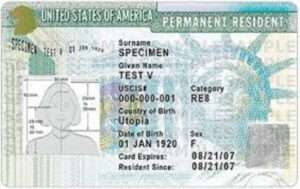
Cato's Green Card Game Dramatizes the Incredible Difficulty of Legal Immigration

The game enables you to develop a would-be immigrant character with a wide range of possible characteristics and see whether you can get him or her admitted into the United States.

|

In June, I wrote about a Cato Institute study outlining how legal immigration into the United States is nearly impossible for the vast majority of those who want it. Now, Cato has introduced its Green Card Game, which makes this point in a different way, and enables people to interactively explore how the US immigration system works. Cato Institute immigration analyst Alex Nowrasteh explains the game and the rationale for it:

Today the Cato Institute released The Green Card Game, a free online interactive game where players attempt to go through the legal immigration system. Click on the link to play. After you click on the link, you select an avatar, enter a name, and choose your biographical information, which includes your occupation, country of birth, and other characteristics.

You can even ask the game to auto-populate a random biography. The game uses your entered information to create a passport for your character. Then you are ready to start answering questions to attempt to immigrate to the United States legally…..

The Green Card Game is an unusual product for the Cato Institute, but we decided to take a chance and make it for several reasons. First, we hypothesize that many people oppose immigration liberalization because they don't know how complex and restrictive the immigration system is. Many years ago, I spoke to a conservative audience in Arizona about immigration. Afterward, an elderly woman asked, "I understand the benefits of immigration, but why don't the illegals just go to the Post Office to register and become legal? What are they hiding?"

Those questions are reasonable if you know nothing about the legal immigration system. Her question was spurned by ignorance, not by malice. As a result, we've identified ignorance of the actual laws as a significant problem in liberalizing immigration. Just imagine how hard it would be to talk about tax policy with someone who doesn't know that the U.S. has an income tax or even what it is. That's about where we are in terms of the immigration debate. Our game will teach people some of the basic facts so we can then have a better discussion.

Second, gamification can enhance learning. We produce great policy research at Cato, but only some people want to read blog posts, research papers, listen to an event with experts, delve into policy podcasts, or enjoy our other scholarly content. Some people, even members of Congress, want to learn on the go, and a game like this is a great way to learn that the legal immigration system is complex and restrictive….

Alex also gives some useful suggestions on how to play:

There are several ways to play The Green Card Game. For American players, I recommend starting by playing as yourself. Create a character with your age, education level, occupation, income, savings, and family with one critical change: Choose to be from another country. Many of us won the birth lottery by being born in the United States. See if you could have come here legally if you lost that lottery, but all else remained the same.

Another way to play is to enter the name of an ancestor. Pick a relative when they immigrated to the United States and choose their level of education, occupation, and country of origin. If they're from the Austro-Hungarian Empire, you've got a choice of countries. See if your ancestor could come to the United States legally today.

You could also play as a living immigrant family member or friend. Enter their biographical information best as possible and get a sense of what they went through to come here. At a minimum, it will give you a new respect for what they went through to become an American. You could even share the game with them to see if you could conjure any memories in them.

If you already have a strong opinion about immigration policy, try to create an immigrant character whom you think should be admitted or who absolutely should NOT be admitted. See if you can guide this individual through the legal immigration system. Use the result as evidence for whichever position you hold.

Relatedly, recreate the biographies of exceptional immigrant individuals like Andrew Carnegie, Katalin Karikó, Albert Einstein, Geisha Williams, John von Neumann, Qian Xuesen, Oscar de la Renta, or others to see whether they'd be able to immigrate legally. Some of them may be able to. Others wouldn't. You could also choose the "stereotypical" immigrant from your perspective, especially an illegal immigrant, and see if that person can come legally. You'll quickly understand why people pay smugglers to cross deserts instead of wasting their time on a legal system that often prevents them from even applying in the first place.

As noted in my post on the previous Cato study, ignorance of current law is far from the only reason for opposition to immigration. If you're a committed restrictionist on the grounds that immigrants damage the economy, undermine political institutions, or degrade American culture, you might even come away from the game happy to know that immigration is far more difficult than you might have previously thought. Nowrasteh and and I have addressed many of these issues in various books and articles. But they can't be resolved merely by understanding how the current immigration regime works.

But understanding the daunting nature of the legal immigration system does undercut oft-heard arguments that would-be immigrants should just "get in line" or "wait their turn." For many, there is no line available or their "turn" will never come. The earlier Cato study and the Green Card Game also highlight the irrational and inconsistent nature of many immigration rules.

Affordable Housing

Valuable Mercatus Center Study Surveys Progress and Setbacks in the Struggle Against Exclusionary Zoning

Eli Kahn and Salim Furth provide overview of developments in the states, and lessons that can be learned.

|

Photo: Kate Collins/Ithaca Journal

Exclusionary zoning is the most important property rights issue of our time, a stifler of economic growth, and a major obstacle to opportunity for the poor and disadvantaged. While liberals, conservatives and libertarians all have compelling reasons to oppose it, there are also powerful NIMBY factions on both right and left defending it.

Despite daunting political obstacles, zoning reform has made some important progress in recent years. In an important new Mercatus Center study, housing policy experts Eli Kahn and Salim Furth survey the successes and failures of the last year. Here is an excerpt summarizing some of their conclusions:

In an article published six months ago, one of us flagged a "housing revolution brewing" among state legislatures in 2023.1 With over 200 bills related to housing supply introduced so far, there has certainly been no lack of would-be revolutionaries. And in four states—Montana, Rhode Island, Vermont, and Washington—these efforts have clearly succeeded on a large scale. Elsewhere, results have been mixed. High-profile reform efforts sputtered in Arizona, Colorado, and New York. More quietly, significant reforms have been passed in several other states….

With half the year spent, most states have concluded their legislative sessions, allowing us a moment for retrospection. With help from colleagues, we read and tracked about 200 state-level bills that touched on housing supply policies, from accessory dwelling unit (ADU) regulations to minimum lot sizes to permit process streamlining. Our analysis was limited in two notable ways: we did not track bills related to housing finance, such as affordable housing funding and tax policy, and we set aside California entirely…..

While the small size of our dataset makes it hard for us to draw firm conclusions, we have observed a few themes in the data:

  1. Four states passed ambitious "housing packages," significantly revising (if not fully revolutionizing) their housing supply regimes.
  2. In three additional states where housing omnibus bills were introduced, the bills faced high-profile public debate and vigorous opposition. In these states, the major package ultimately failed.
  3. The most common legislative successes were permit streamlining and allowing residential uses in commercial zones.
  4. Political alignment on housing supply remains chaotic: in different states considering similar legislation, the same party ended up opposing it in one state and supporting it in another. (This can be said of both major parties.)….

Genuine progress on housing supply is happening throughout the country, in states red and blue; urban and rural; northeastern, southern, midwestern, and western. The book isn't closed: some states, most notably California, are just getting into the heart of their legislative season. Others, such as Massachusetts, hold two-year legislative sessions and may act later on ambitious bills. In a year marked by well-known disappointments in Colorado and New York, it's worth emphasizing how much more was politically possible this year than in previous years. In the recent past,California and Oregon have arguably been alone in enacting sweeping statewide zoning reforms; four more states joined them in just the first half of 2023. Many other states passed narrower housing supply reforms. Even in states that experienced high-profile failures, the issue of housing supply has become an ongoing priority.

In assessing the causes of success and failure, Kahn and Furth emphasize a number of factors, most notably the need for bipartisan support, which was crucial to this year's most striking YIMBY ("yes in my backyard") victory, the new reforms enacted in Montana. Faced with unified opposition by the out party, the majority often has difficulty overcoming its on NIMBY faction, even if the latter is a relatively small minority within the party. As the authors describe, unified Republican opposition in Colorado played a key role defeating reforms in that Democratic-controlled state, and unified Democratic opposition helped achieve a similar result in GOP-ruled Texas. Only in Rhode Island (where the minority Republican Party is incredibly weak) did a majority party manage to pass major reforms despite unified opposition from the minority.

Overall, I am impressed that zoning reform has made as much progress as it has, given the forces arrayed against it, including widespread public ignorance about the basic economics of housing.

The Mercatus Center study won't be the last word on the zoning reform movement. Among other things, we need more systematic analysis of how public and elite opinion interact in various states to further or stifle YIMBY policies. In addition, the political struggle over these issues is far from over. States that narrowly failed to pass reforms this year might reconsider in the future, as California did after some initial failures there. But Kahn and Furth have produced a valuable and insightful overview of recent developments. And their emphasis on bipartisanship is a particularly useful lesson.

asylum

Ninth Circuit Stays Ruling Against Biden Asylum Restrictions

The 2-1 ruling (divided along surprising ideological lines) is a win for the administration. But they may well still end up losing in the end.

|

Yesterday, the US Court of Appeals for the Ninth Circuit stayed a district court ruling against a Biden administration policy severely restricting asylum applications by migrants crossing the southern border. The decision is a notable victory for the administration. But it is still only a stay pending appeal, and the government might still end up losing the case on the merits.

The most unusual aspect of the ruling is the alignment of votes. Two liberal judges - Fletcher and Paez - voted to stay the ruling. By contrast, conservative Trump appointee Judge Lawrence VanDyke dissented, arguing that the Biden rule is similar to Trump-era asylum restrictions struck down by the Ninth Circuit, and therefore there is no reason to stay the district court ruling against them.

The majority offered no explanation of its ruling beyond saying that "[t]he motion to stay the district court's July 25, 2023, order and judgment…. is granted" and citing a Supreme Court case outlining standards for stays pending appeal. But Judge VanDyke wrote a forceful dissent:

My colleagues in today's majority grant a stay pending appeal of a district judge's order vacating a recently promulgated immigration rule. Only a few years ago, these same colleagues affirmed the same district judge enjoining the Trump administration's rule restricting asylum eligibility for immigrants who entered the United States outside a designated port of entry (the Port of Entry Rule)….

Quickly thereafter, one of my colleagues in today's majority penned another published, precedential decision again affirming a Judge Tigar decision striking the Trump administration's rule restricting asylum eligibility for aliens who passed through another country on the way to the United States without seeking asylum in that country (the Transit Rule)….

The Biden administration's "Pathways Rule" before us in this appeal is not meaningfully different from the prior administration's rules that were backhanded by my two colleagues. This new rule looks like the Trump administration's Port of Entry Rule and Transit Rule got together, had a baby, and then dolled it up in a stylish modern outfit, complete with a phone app. Relying on this court's rationales in our prior decisions rejecting the Trump administration's rules, Judge Tigar concluded that this new rule is indistinguishable from those rules in any way that matters. He's right. For those who value the rule of law, following precedent, and predictability, one must conclude Judge Tigar had no choice but to vacate the current administration's Pathways Rule for the reasons that he first provided and my colleagues then established as binding precedent during the Trump Administration.

Judge VanDyke goes on to say he believes the Ninth Circuit was wrong to rule against the previous Trump policies. But so long as those precedents are on the books, the court must also rule against this very similar Biden policy.

Judge VanDyke is right to highlight the similarity between the two administration's rules. Although the Biden rule is somewhat less restrictive than the Trump rules were (a point VanDyke should have acknowledged), ultimately both run afoul of the text of the 1980 Refugee Act in much the same way. Judge Tigar's district court opinion goes into these similarities in detail.

On the other hand, I think VanDyke is wrong to think the rulings against the Trump policies were incorrect. It's worth noting that one of the key Ninth Circuit decisions against them was written by prominent conservative Judge Jay Bybee. Like Judge Tigar (a Democratic appointee), Bybee noted the incompatibility between these kinds of draconian asylum restrictions and statutory text. That said, Judge VanDyke deserves credit for fairly applying precedents he obviously dislikes. He notes he would "love to join my two colleagues in staying Judge Tigar's ruling," but cannot do so, given the Trump-era precedent.

The key question going forward is whether the majority's decision here prefigures their ruling on the merits. The criteria for a stay pending appeal are vague: "(1) whether the stay applicant has made a strong showing that he is likely to succeed on the merits; (2) whether the applicant will be irreparably injured absent a stay; (3) whether issuance of the stay will substantially injure the other parties interested in the proceeding; and (4) where the public interest lies."

The fact that one of them is whether the applicant has "made a strong showing that he is likely to succeed on the merits" suggests the majority judges believe the Biden rule is legal. However, it's also possible they believe a relatively weak showing on this factor was outweighed by a strong one on the other three, particularly the "irreparable injury" prong (this policy is a key component of the Biden Administration's new border control strategy).

Moreover, in the same ruling the majority also put the case on an expedited briefing schedule. That means a decision will come relatively quickly, and therefore asylum seekers might (in the court's estimation) suffer relatively little "substantial injury" because they won't have to wait long.

On the whole, I think there is still a good chance that at least one of the liberal judges will side with the plaintiffs (and with Judge VanDyke, whose dissent telegraphs his position) when the case is heard on the merits. Ultimately, it's just too difficult to differentiate the Biden policy from the Trump rules those same judges voted to strike down.

I think the liberal judges on the panel will see that, or at least one will. Could I be wrong about that? Of course. We are likely to find out soon enough.


Free Speech

College Ban on "Inappropriate or Offense Language or Themes" in Bulletin Board Postings Struck Down

The case involved Young Americans for Freedom postings about "Leftist Ideas" and about abortion.

|

From Flores v. Bennett, decided today by Ninth Circuit Judges Kim McLane Wardlaw and Milan Smith, and District Judge Douglas L. Rayes (D. Ariz.), apropos a case I blogged about last year:

Defendants … appeal a district court order enjoining [Clovis Community College's] "Flyer Policy" that prohibited "inappropriate or offense [sic] language or themes" in postings on interior bulletin boards. [The policy was challenged by three] then-Clovis students …, as well as the Young Americans for Freedom ("YAF") student chapter at Clovis ….

The district court did not abuse its discretion when it concluded that Plaintiffs were likely to succeed on the merits of their claim that the "inappropriate or offense language or themes" provision was facially overbroad. To prevail on an overbreadth challenge, a party must demonstrate that the policy "'prohibits a substantial amount of protected speech' relative to its 'plainly legitimate sweep,'" such that "society's interest in free expression outweighs its interest in the statute's lawful application." United States v. Hansen (2023).

As the district court concluded, "a prohibition on 'inappropriate or offense language or themes' does not have a core of readily identifiable, constitutionally proscribable speech." The Supreme Court has consistently held that "[s]peech may not be banned on the ground that it expresses ideas that offend," Matal v. Tam, 582 U.S. 218, 223 (2017), including in the university context. See, e.g., Papish v. Bd. of Curators of Univ. of Missouri (1973) (holding that a graduate student could not be expelled for publishing an obscene cartoon).

Read More

AI in Court

Federal Judge Warns Lawyers About Using ChatGPT, But Doesn't Prohibit Such Use

|

From the standing orders of Judge Arun Subramanian (S.D.N.Y):

F. Use of ChatGPT and Other Tools. Counsel is responsible for providing the Court with complete and accurate representations of the record, the procedural history of the case, and any cited legal authorities. Use of ChatGPT or other such tools is not prohibited, but counsel must at all times personally confirm for themselves the accuracy of any research conducted by these means. At all times, counsel—and specifically designated Lead Trial Counsel—bears responsibility for any filings made by the party that counsel represents.

For more on such matters, see these posts. Thanks to Jake Karr for the pointer.

Free Speech

"Providing Information About or Referring Patients to Legal Out-of-State Abortion Services" Is Protected …

by the First Amendment, even if the abortion would be illegal in the state, holds a federal judge in Idaho.

|

From Planned Parenthood Greater Northwest v. Labrador, decided Monday by Judge B. Lynn Winmill (D. Idaho) (and already appealed):

This case involves a challenge to Attorney General Raúl Labrador's interpretation of Idaho's criminal abortion statute, Idaho Code § 18-622. Earlier this year, Attorney General Labrador drafted a letter interpreting this sentence of Section 18-622: "The professional license of any health care professional who … assists in performing or attempting to perform an abortion … shall be suspended …." That letter interprets the "assisting" language to include providing information about or referring patients to legal out-of-state abortion services….

Interestingly, the State did not engage [plaintiffs' First Amendment] argument in any way, relying instead entirely on its jurisdictional challenges [which the court rejected -EV]…. [T]he Court finds that the Medical Providers are likely to succeed on their First Amendment cause of action.

Read More

Free Speech

Scholar of Dishonesty Accused of Research Dishonesty Sues for Libel, Claiming Accusers Were Dishonest

|

Prof. Francesca Gino, a celebrated scholar studying dishonesty, was recently put on unpaid leave by Harvard, based on allegations that she had fabricated data in her studies; the allegations had been raised and discussed by three professors who run Data Colada (Uri Simonsohn of ESADE Business School in Barcelona, Leif Nelson of the University of California, Berkeley, and Joseph Simmons of the University of Pennsylvania). Yesterday, in Gino v. Harvard Univ., Gino sued Harvard for employment law violations (basically, discrimination and breach of contract) and both Harvard and Data Colada for libel. The complaint is long, and I won't try to summarize it in any more detail here; but those interested in the controversy (or in such controversies generally) may want to read it, of course recognizing that it's just Gino's side of the story. I expect to write more about this as the defendants raise their objections, likely in motions to dismiss.

Academic Freedom

Expert Witness Redux in California

State tries to bar Stanford researchers from testifying against it

|

An interesting new expert witness controversy has broken out; this time in California. You will recall the Florida fiasco recounted here and here and here.

A group of parents are suing the state over the learning losses that that the state's pandemic response imposed on children. Plaintiff attorneys recruited expert witnesses from Stanford University to support their case. The California education department claims that the researchers signed an agreement to not testify against the state as a condition of accessing the state's data on k-12 schools during the pandemic. The prohibition, the state argues, extends to any testimony against the state, even when that testimony does not rely on the state's own data.

From the state's letter to one of the researchers:

This letter is to remind you of your obligations as the CDE's authorized representative performing research for and on behalf of the CDE. As CDE's authorized representative, in both paragraph 16 of the Agreement and paragraph 6 of the confidentiality provisions in Exhibit D, you agreed that you would not "testify, advise or consult" for any party other than the CDE or the State Board of Education. This prohibits any work for Plaintiffs in Cayla J.

The ACLU is now involved, arguing that any such provision in the data access agreement would amount to an unconstitutional condition.

From the ACLU letter to the California Department of Education:

The contract condition at issue is viewpoint discriminatory. LPI's contract with CDE specifies that, for the duration of the agreement, "LPI's employees, executives, and other representatives shall not voluntarily testify for, consult with, or advise a party in conjunction with any mediation, arbitration, litigation, or other similar proceeding" where the LPI-associated individual "knows that the party is adverse to CDE, the State Superintendent of Public Instruction or the State Board of Education." There is no similar restriction on an LPI-associated individual's ability to testify, advise, or consult in a proceeding on behalf of CDE. Indeed, the contract clearly permits testifying as an expert for the CDE or other state agencies. CDE may only terminate the contract and impose penalties if a contractor testifies for or advises parties who hold interests adverse to it or other listed state educational entities.

Therefore, the provisions keep out of court, mediation, arbitration, or other similar proceedings viewpoints and opinions that might harm CDE's and other state government entities' interests in litigation, while allowing viewpoints and opinions that would serve the government's interests and positions. Moreover, by preventing individuals associated with LPI from even advising or consulting with a party adverse to the government in the listed circumstances, these provisions hamper the ability of the adverse party to assess information, data, or research on its own. Therefore, the provisions do what the Court in R.A.V. expressly prohibited by "proscribing only [speech] critical of the government." R.A.V., supra, 505 U.S. at 384.1

If the government were to try to institute this restriction on its own, outside of the context of a contract, it would be clear unconstitutional viewpoint discrimination. It may not achieve the same result by conditioning a benefit on a provision that has the effect of preventing experts from testifying against the state. See Perry, 408 U.S. at 597.

News coverage of the case here and here.

How Can Jack Smith Prove That Trump Knew He Lost the Election?

We don't know what Jack Smith knows, but here's some speculation.

|

One of the questions raised by the indictment of former President Trump in the District of Columbia, on charges involving the 2020 election aftermath, is whether the prosecution, headed by Special Counsel Jack Smith, can prove beyond a reasonable doubt that Trump knew he had lost the election.  The narrative of the prosecution is that Trump knew perfectly well what he was told over and over again by his own advisors and GOP officials: He had lost. He was trying to overturn that result, the argument goes, by using political influence on others in his party to get them to declare he won, despite knowing that he lost. Meanwhile, Trump defenders say that Trump legitimately thought he won.  On that view, Trump was told repeatedly that he lost, sure, but those assertions did not persuade him.  On that narrative, Trump was on a quixotic but legal journey to see his rights vindicated.

One question this raises is, how might Smith try to prove Trump knew?

The indictment focuses mostly on what Trump was told, and the overall implausibility of him thinking he had won.  But I wonder if Smith might have more direct evidence than the indictment lets on.

In particular, there have been reports of Trump telling other people that he lost.   Here are some of the more prominent examples from the public record:

  1. "I don't want people to know we lost, Mark. This is embarrassing. Figure it out. We need to figure it out. I don't want people to know that we lost." — President Trump in December 2020, according to Cassidy Hutchinson.
  2. "A lot of times he'll tell me that he lost, but he wants to keep fighting it, and he thinks that there might be enough to overturn the election." — Trump Chief of Staff Mark Meadows, according to Cassidy Hutchinson.
  3. "Can you believe I lost to this guy?" — Trump while watching Biden on TV after the election, according to Alyssa Farah Griffin,
  4. "I've had a few conversations with the president where he acknowledged he's lost. He hasn't acknowledged that he wants to concede, but he acknowledges that he lost the election." — Trump Director of National Intelligence John Ratcliffe, according to Cassidy Hutchinson.
  5. "When I didn't win the election. . . . " — Trump in 2021, on video, referring to how happy a foreign official was when Trump didn't win in 2020.

Granted, the indictment does include a tiny bit of this.  Perhaps the most notable is Paragraph 83's Trump quote that "it's too late for us. We're going to give that to the next guy." But there's much less in the indictment than in the public record.

And for all we know, what is in the public record is only part of the story.  For example, of the five examples above, two are hearsay. They are Cassidy Hutchinson's reports of what Meadows and Ratcliffe told her Trump had said.  But Smith probably knows more than we do.  There have been reports that Mark Meadows cooperated and testified before the grand jury investigating Trump's post-election conduct. There have also been reports that John Ratcliffe cooperated and testified before that grand jury.

We can't be sure, but it seems likely that Jack Smith has testimony directly from Meadows and Ratcliffe of what Trump told them.  And if they were talking to Trump every day about this stuff, they presumably know a lot.  And there may be other witnesses who talked to Trump at the time, and who are ready to testify about it at trial. We don't know.

Given this, it seems at least possible to me that Smith has more evidence of Trump's state of mind than he's letting on. He may be able to put a witness like Mark Meadows on the stand and have direct testimony of what Trump said to Meadows.  It's true that Smith didn't signal this in the indictment. But then he didn't have to, and I would think there are some plausible reasons (preventing witness intimidation, etc.) for why he might not want to include it.

This all is just speculation, of course. It's possible Smith doesn't have this evidence.  Perhaps Meadows and Ratcliffe testified before the grand jury that Trump never suggested he believed he lost. Maybe they testified that Hutchinson remembered incorrectly or was otherwise not telling the truth.  Perhaps Smith tried to get evidence that Trump knew he lost, but Smith didn't come up with much he could use.  Entirely possible.

The upshot of all this, it seems to me, is that it's too early to know what evidence Smith has about what Trump knew.   Maybe it will be hard for Smith to prove Trump's mental state.  Or maybe Smith has very good evidence of Trump's mental state.  At this early stage, we don't know what Jack Smith knows.

UPDATE: I have fiddled a bit with the post for a few minutes after posting it.

"Strangers on the Internet" Podcast Episode 37: The Internet Law Scholar Seeking Love Online

How Derek Bambauer thinks we can make online dating less painful

|

The thirty-seventh episode (Apple Podcasts link here and Spotify link here) of "Strangers on the Internet" with co-host and psychologist Michelle Lange features Prof. Derek Bambauer from the University of Florida Levin College of Law.

We catch up with our Internet law scholar guest as he reviews his dating life in Tucson, Arizona before his big move across the country to Gainesville, Florida. Derek talks about his mostly positive experiences meeting people online, his penchant for women in academia, and the challenges of making schedules work when both daters have kids.

Michelle Lange

He also uses his scholarly expertise to discuss dating app algorithms, online safety, and possible tweaks to current technology. Come join us for an episode where the professional is the personal!

Free Speech

Ninth Circuit Rejects Claim that University Libeled Students and Coaches by Falsely Accusing Them of Blackface Skit

|

From Day v. California Lutheran Univ., decided yesterday by Ninth Circuit Judges Gabriel Sanchez and Salvador Mendoza, Jr., and District Court Judge Brian Jackson (M.D. La.) (reversing a decision I blogged about last Fall):

In January 2020, a group of students from the California Lutheran University ("CLU") women's softball team performed a lip-sync routine to the theme song from The Fresh Prince of Bel-Air, allegedly wearing "hip-hop clothing," dark makeup to portray facial hair, and curly wigs. After the team posted the performance on social media, CLU's leadership received a complaint that the performance was "blackface."

In the following weeks, CLU's leadership addressed the performance in emails to the CLU students, campus-wide community forums, and a meeting with the softball team and their parents. These communications characterized the performance as a "racist incident," remarked that "blackface" "evoke[s] white supremacy" and "anti‑blackness," and expressed the view that "students were recorded doing performances in which there were exaggerated characterizations of black people and culture" and that "[m]any viewers in [the] campus community took offense and identified" the images as "blackface." Plaintiffs sued CLU and certain officers for defamation, false light, and other state law claims arising from these assertedly false statements.

The court held that defendants' speech wasn't legally actionable:

[T]he common-interest privilege … [protects] "… a communication, without malice, to a person interested therein, by one who is also interested" …. The privilege applies "where the communicator and the recipient have a common interest and the communication is of a kind reasonably calculated to protect or further that interest."

Read More

Right of Access

Unusual Denial of Pseudonymity to Plaintiff Suing Over Alleged Anti-Trans Discrimination

|

Courts are generally inclined to allow litigants to remain pseudonymous to conceal their being transgender (see The Law of Pseudonymous Litigation, p. 1406); but they are also inclined to deny pseudonymity once the plaintiff had already identified himself or herself, and this is what made the difference in yesterday's decision by Judge John Gallagher (E.D. Pa.) in T.D.H. v. Kazi Foods of N.J., Inc.:

Plaintiff, a transgender woman, seeks to proceed anonymously on claims against her former employer arising out of alleged discrimination, harassment, and assault in the workplace. Although Plaintiff's status as a transgender woman of color places her at risk of violence and discrimination, the factors considered by Third Circuit courts in deciding motions to proceed anonymously weigh against anonymity, largely due to Plaintiff's failure to keep her identity confidential in both the Complaint and a similar lawsuit filed last year. As such, the Court does not find this is one of the "exceptional cases" warranting a breach of "the public's common law right of access to judicial proceedings" where Plaintiff should be permitted to proceed anonymously….

Although "[p]roceeding under a fictitious name is an unusual measure reserved for exceptional cases," this Court takes seriously the "private and intimate nature of being transgender as well as the widespread discrimination, harassment, and violence faced by these individuals." Doe v. Shawnee Holding, Inc., No. 3:21-cv-01037, 2022 U.S. Dist. LEXIS 46042 at *2-3 (M.D. Pa. Mar. 15, 2022) (quoting Doe v. Ind. Black Expo, Inc., 932 F. Supp. 137, 139 (S.D. Ind. 1996))[;] … Doe v. Genesis Healthcare, 535 F. Supp. 3d 335, 339 (E.D. Pa. 2021). Accordingly, despite Plaintiff's failure to seek leave to proceed under a pseudonym, as noted in Defendants' Motion to Dismiss, the Court instructed Plaintiff to file a motion to proceed under pseudonym at the Initial Rule 16 Conference, which Plaintiff did file on June 21, 2023. The Court carefully considers Plaintiff's Motion according to the nine factors identified by Third Circuit courts.

This first factor, the extent to which the identity of the litigant has been kept confidential, weighs strongly against proceeding anonymously. Plaintiff's Complaint reveals Plaintiff's last name and initials in the case caption, and then Plaintiff's preferred first name in paragraph 11. Moreover, as Defendants' Response identifies, Plaintiff filed a similar employment discrimination lawsuit against a different defendant in January 2022, wherein she did not proceed under a pseudonym. See Response at pg. 2 of 11. Plaintiff's decision not to keep her identity confidential in a similar lawsuit filed last year, along with Plaintiff's decision to reveal her last name, middle initial, and preferred first name in this action's Complaint, strongly weigh against proceeding anonymously. See B.L. v. Featherman, No. 22-3471, 2023 U.S. Dist. LEXIS 21118 at *8-9 (D. N.J. Feb. 8, 2023) (denying Plaintiff request to proceed in pseudonym where complaint detailed events that identified plaintiff).

Read More

Free Speech

Journal of Free Speech Law: "The Application of the New York Anti-SLAPP Scheme in Federal Court,"

by Matthew L. Schafer & Tanvi Valsangikar, just published, through our normal blind review process.

|

The article is here; here is the Abstract:

In 2020, the New York Legislature broadly expanded the State's original 1992 anti-SLAPP scheme that had been meant to discourage strategic lawsuits against public participation (SLAPPs). Judicial reception of the 2020 amendments has been mixed. Notably, despite federal courts' uniformity in applying the 1992 law in federal court, several federal courts have now declined to apply the amended law. Their failure to do so takes on pressing importance in the face of proliferating, politically motivated defamation lawsuits and of calls to overrule New York Times v. Sullivan that, if successful, will leave anti-SLAPP laws as the strongest defense against retaliatory, speech-based lawsuits.

This Article argues, contrary to this recent trend, that most of New York's amended anti-SLAPP scheme applies in federal court. The law's provisions providing a cause of action for damages and modifying the elements of a SLAPP plaintiff's claims apply in federal court as they are quintessentially substantive state laws. The law's seemingly procedural provisions may well apply too, depending on how courts read Shady Grove Orthopedic Associates, P.A. v. Allstate Insurance Co. Throughout, this Article identifies courts' recent analytical errors and explains how they are irreconcilable with the text and structure of the anti-SLAPP scheme. While it focuses on New York's law, this Article provides a guide for any litigant or judge in federal cases implicating anti-SLAPP laws.

Matthew L. Schafer is an adjunct professor at Fordham University School of Law; Tanvi Valsangikar is a media lawyer at Springer Nature.

Donald Trump

Retribution, Deterrence, and the Case for Prosecuting Trump for Conspiring to Overturn the 2020 Election

His attempt to stay in power despite losing an election is well worthy of prosecution and punishment, on grounds of retribution and deterrence.

|

Trump
Donald Trump. (PEDRO PORTAL/TNS/Newscom)


Donald Trump was recently indicted for his efforts to use fraud and coercion to overturn the result of the 2020 election and stay in power despite the fact that he had lost. The four counts in the indictment filed by Special Counsel Jack Smith all arise from various ways in which Trump conspired to nullify the election result through fraud and deception, including by conspiring to replace duly chosen electors with fraudulent ones, and pressuring state and federal officials - including Vice President Mike Pence - to illegally overturn election results.

Reason's Eric Boehm has a helpful summary of the charges:

The first charge is focused on the attempt, allegedly organized within the White House, to have Trump-friendly state lawmakers appoint alternate slates of electors to the Electoral College as part of a scheme that would see Trump named as the winner of states where President Joe Biden received more votes.

The second and third charges are aimed at Trump's (and his allies') behavior on and near January 6, 2021, when Congress was scheduled to certify the election results. That includes the pressure allegedly applied to Vice President Mike Pence, who refused to go along with the Trump-backed plot to discard the electoral votes from some states.

Finally, the third alleged conspiracy includes a civil rights charge that strikes at how Trump's machinations aimed to rob Americans of their right to choose the president.

More specifically, Trump is charged with:

a. A conspiracy to defraud the United States by using dishonesty, fraud, and deceit to impair, obstruct, and defeat the lawful federal government function by which the results of the presidential election are collected, counted, and certified by the federal government, in violation of 18 U.S.C. § 371;

b. A conspiracy to corruptly obstruct and impede the January 6 congressional proceeding at which the collected results of the presidential election are counted and certified ("the certification proceeding"), in violation of 18 U.S.C. § 1512(k);

c. A conspiracy against the right to vote and to have one's vote counted, in violation of 18 U.S.C. § 241.

It is important to recognize that Trump isn't being charged simply because he wrongly claimed he won the election. In and of itself, that is no crime. Rather, he went far beyond that and organized a wide-ranging conspiracy to overturn the result using fraud and deception, and by attempting to enlist state and federal officials to assist him. The indictment goes into the means he and his co-conspirators used, in great detail.

It's worth taking a step back and asking why we punish crimes at all. The most widely accepted reasons are retribution and deterrence. In other words, we seek to punish criminals because they deserve it due to the heinous nature of their deeds, and because it's important to deter others from engaging in similar wrongdoing.

If these are the justifications for punishment, there are many situations where inflicting it is unnecessary or unjust, even if the defendant has violated the law. That may happen if the law in question is itself unjust, or if the violation is insignificant and there is little value to deterring it. Trump's indictment by New York prosecutors earlier this year may well be an example of such a dubious case. The later federal indictment for taking and refusing to return classified documents is a much more defensible prosecution.

Trump's attempt to overturn the 2020 election well deserves punishment from the standpoint of both retribution and deterrence. For the head of state in a democracy, there are few more serious crimes than using fraud to try to stay in power after losing an election. If successful, such action would transform the nation into a despotism, usually a deeply illiberal one to boot.  Subversion of the republic by the very person who has a special duty to defend it is obviously deserving of severe retribution, given the extraordinarily serious nature of the crime.

It is also important to deter future presidents and other high-ranking officials from similar misconduct in the future. Here too, there is a strong case for severe punishment, given the enormous magnitude of the harm this kind of crime can cause. Severe punishment is also justified by the need for sanctions great enough to outweigh the potential gains of this kind of criminal activity in the eyes of would-be perpetrators. Becoming dictator for life is a major prize for unscrupulous power-hungry politicians. To outweigh that temptation, we need an appropriately severe punishment, one that will strike fear in the hearts of even the kinds of ruthless risk-takers who too often reach high political office.

Trump's most obvious defense to these charges is that he didn't engage in fraud and deception because he honestly believed he had won the election, and that the Democrats had "stolen" it from him. If so, one could argue he didn't deserve retribution, because he didn't know he was doing anything wrong. And, likewise, there is arguably no point to trying to deter people who don't know they are committing a crime.

But the indictment recounts extensive evidence indicating that Trump in fact knew he had lost. Among other things, it notes numerous occasions when his own advisers, law enforcement officials, and election experts told him there was no fraud anywhere near large enough to change the election result. He also could have learned he lost from the numerous court decisions rejecting his legal challenges to the election results, including some issued by judges he himself had appointed.

In addition, there are instances where Trump himself actually admitted he had lost. For example, the indictment notes an incident in which Trump berated Vice President Pence for being "too honest" after the latter noted there was no legal basis to overturn the results. The report of the January 6 Committee (pg. 20 of the executive summary) recounts how Trump told his chief of staff that "I don't want people to know we lost." That obviously implies Trump himself did know he lost, but was trying to hide that fact from the public.

Even if Trump did manage to delude himself into believing he had actually won the election, his conduct was still culpable. If I steal your valuable ring because I have persuaded myself (despite overwhelming evidence to the contrary) that I am its true owner, I am still guilty of theft. The same logic applies here. Trump had every reason and opportunity to learn he had lost. If instead he chose to indulge in self-delusion, which he then used to justify his scheme to overturn the election, he is guilty for much the same reasons as the thief who - without any justification - imagines himself to be the rightful owner of the object he steals.

Perhaps that reasoning doesn't apply to a defendant who is simply incapable of understanding the truth, as in the case of people suffering from some types of mental illness. But Trump is not sick, just evil. Still, the option of pursuing an insanity defense is open to him, and perhaps he can attempt it at trial.

Some philosophers and legal theorists deny that either retribution or deterrence is a justifiable ground for punishment. If that's your view, I'm not going to suggest you make an exception for Trump. But if, like most people, you believe that prosecution and punishment are sometimes justified on one or both of these grounds, than this case is a particularly compelling one. Jack Smith is right to prosecute Trump over his schemes to overturn the 2020 election because the man deserves severe punishment, and because it is important to deter future leaders from following in his footsteps.

In a previous post, I have addressed claims that prosecuting Trump is an example of "banana republic" behavior, and the idea that it is wrong to go after him when others, such as Biden, Pence, and Hillary Clinton may also be guilty of wrongdoing. The points made there also apply to claims that it is wrong to prosecute Trump because President Biden's son Hunter Biden apparently got off lightly for his own offenses. Even if it is true that Hunter Biden got an unjustified sweetheart deal, that in no way justifies letting Trump off the hook for vastly more serious crimes.

More