The Volokh Conspiracy

Mostly law professors | Sometimes contrarian | Often libertarian | Always independent | Est. 2002

The Volokh Conspiracy

Immigration

Immigration, Invasion, and Habeas Corpus

If Texas is right to argue that illegal immigration and cross-border drug smuggling qualify as "invasion," then the writ of habeas corpus can be suspended at any time - thereby enabling executive detention without trial.

|

In my last post, I criticized Texas's argument that illegal migration and cross-border drug smuggling qualify as "invasion" under Article I of the Constitution, thereby authorizing state governments to "engage in war" to stop them. If Texas and other advocates of this theory are correct, it has an additional radical implication: the federal government can suspend the writ of habeas corpus at pretty much any time it wants.

The writ of habeas corpus protects people from being detained by the government without trial. If federal or state officials detain you, the writ gives you the right to challenge the legal basis for that detention in court. But the Suspension Clause of the Constitution (Article I, Section 9, Clause 2) states that "The Privilege of the Writ of Habeas Corpus shall not be suspended, unless when in Cases of Rebellion or Invasion the public Safety may require it" (emphasis added).

If illegal migration and drug smuggling qualify as "invasion" for purposes of triggering state and federal authority to resist invasion under the invasion clauses, they surely also qualify as such under the Suspension Clause. And there is a significant amount of illegal migration and smuggling of contraband goods going on at virtually all times in modern history. Thus, presto! The federal government can suspend the writ of habeas corpus virtually any time it wants!

In fairness, even when there is a "Rebellion or Invasion" going on, the Clause says the writ many only be suspended if "the public Safety may require it." But this is the kind of issue on which courts are likely to defer to Congress and the executive. That's especially true since the Clause permits suspension even if public safety only "may" require it. Certainty isn't necessary.

At least in border areas (where many millions of people live), it's almost always possible to argue that "public safety" will be improved by suspension. If law enforcement can indefinitely detain anyone who looks like they might be a drug smuggler or an undocumented immigrant, surely that would help combat the "invaders"! Or at least it's plausible to argue that it "may" do so. Moreover, the suspension power is not limited to recent immigrants, but applies to US citizens, as well. Historically, suspension has indeed been used against citizens, as was the case during the Civil War and other conflicts. And, obviously, US citizens can and do smuggle drugs across the border, and sometimes help undocumented immigrants cross, as well.

There is a longstanding debate over whether the power to suspend the writ of habeas corpus can be exercised by the President acting on his own, or only with congressional authorization. The Supreme Court has never definitively resolved the issue. Abraham Lincoln famously advocated the former view during the Civil War, while Chief Justice Roger Taney backed the latter. I think this is a rare case where the historical bad guy (Taney) had the better of the argument.

If the suspension power does belong to the president and illegal migration and drug smuggling qualify as "invasion," that means whoever occupies the White House can suspend the writ of habeas corpus anytime he wants, thereby wielding the power of detention without trial. Even if you believe Joe Biden would never abuse that power, I suspect you don't have the same confidence in whoever the next Republican president might be. If you trust Republican presidents to wield such authority responsibly, I bet you probably don't trust the Democratic ones. Personally, I don't think any politician can be trusted with such sweeping detention authority.

Matters are somewhat less dire if suspension requires congressional authorization. At least the power would not be in the hands of any one person. Still, Congress would now be able to enact such authorization at virtually any time. And, historically, Congress is often willing to overdelegate to the executive, especially when the White House is controlled by the same party as Capitol Hill.

In sum, if illegal migration and drug smuggling qualify as "invasion," that implies the writ of habeas corpus can be suspended at virtually any time. And the suspension could be continued so long as the illegal migration and smuggling themselves continue (which is likely to be as long as we have significant immigration restrictions and the War on Drugs). This absurd and dangerous implication of Texas' argument strikes me as yet another reason for courts to reject it.

NOTE: The main point advanced in this post was suggested to me by my Cato Institute colleague David Bier. He deserves credit for the idea, but not blame for any mistakes I may have made in developing it further!

Donald Trump

Trump Is Disqualified from Being on Any Election Ballots

|

Section Three of the Fourteenth Amendment bans anyone from holding any federal office who has taken an oath to uphold the Constitution and who then breaks that oath by engaging in "insurrection or rebellion against the same." Donald J. Trump is precisely such a person.

Trump took the Presidential oath of office at noon on January 20, 2017. Then, knowing that he had lost the 2020 election, he engaged in an "insurrection" on January 6, 2021.

Trump tried to persuade Vice President Mike Pence and Members of Congress not to count certain state electoral votes, which had been validly cast. He lied to the American people for years that the election had been stolen and continues to repeat those lies even to the present day.

Section Three of the Fourteenth Amendment is self-enforcing. It is "the supreme Law of the Land" binding on each of the 50 State Secretaries of State and their subordinates who draw up primary or general election ballots.

State Secretaries of State and their subordinates may not list on their election ballots as candidates for President anyone who is not eligible to hold the office of President. To be eligible to hold the office of President, one must be: 1) a natural born Citizen; 2) thirty-five years or older; 3) a Resident of the United States for fourteen years; and 4) a person who has not broken their oath of office to support the Constitution by engaging "in insurrection or rebellion against the same."

No jury verdict is required to determine whether a candidate who seeks to run for the presidency on a primary or general election ballot is: a natural born citizen, who is 35 years of age, and fourteen years a resident of the United States. Likewise, no jury verdict or act of Congress is required to keep a Secretary of States and their subordinates from printing ballots with the name "Donald J. Trump" on them.

Keeping Trump off the ballot after his conduct on January 6, 2021 does not deprive him of life, liberty, or property in the same way that a criminal or a civil jury verdict could. It is a privilege to be eligible to run for President of the United States and that privilege does not extend to constitutional oath breakers who engage "in insurrection or rebellion against the same."

Webster's 1828 Dictionary of American English defines "insurrection" as follows:

INSURREC'TION, noun [Latin insurgo; in and surgo, to rise.] 1. A rising against civil or political authority; the open and active opposition of a number of persons to the execution of a law in a city or state. It is equivalent to sedition, except that sedition expresses a less extensive rising of citizens. It differs from rebellion, for the latter expresses a revolt, or an attempt to overthrow the government, to establish a different one or to place the country under another jurisdiction. It differs from mutiny, as it respects the civil or political government; whereas a mutiny is an open opposition to law in the army or navy, insurrection is however used with such latitude as to comprehend either sedition or rebellion.

Read More

Immigration

Texas is Wrong to Equate Immigration and Drug Smuggling with "Invasion"

The argument is contrary to the text and original meaning of the Constitution, goes aginst precedent, and would have absurd consequences if accepted by courts.

|

What a real invasion looks like. Russian armored vehicle in Ukraine. March 2022.


The federal government is suing the state of Texas for installing floating buoy barriers in the Rio Grande River, thereby creating a safety hazard and potentially impeding navigation. The claimed purpose of the buoys is to prevent undocumented migration and drug smuggling across the US-Mexican border. The Biden Administration argues Texas's action violates the federal Rivers and Harbors Act, which restricts placement of barriers in navigable waters.

As Josh Blackman notes, Texas' brief in response to the lawsuit makes various statutory arguments, but also cites one of the "invasion" provisions of the Constitution as justification for the state's actions. Texas relies on Article I, § 10, cl. 3 of the Constitution, which provides, "[n]o state shall, without the Consent of Congress, . . . engage in war, unless actually invaded, or in such imminent Danger as will not admit of delay." Texas contends that illegal migration and drug smuggling qualify as "invasion," and therefore the Constitution gives the state the power to take military action in response, including placing buoys that would otherwise violate federal law.

Equating immigration and drug smuggling with "invasion" is not a new idea. It has long been advanced by immigration restrictionists as a legal justification for both federal and state measures against migration. I recently criticized these kinds of theories here:

[S]ome have argued that the Guarantee Clause of the Constitution, gives state and federal governments the authority to use military force to block such migration. The  Clause states that "The United States shall guarantee to every State in this Union a Republican Form of Government, and shall protect each of them against Invasion; and on Application of the Legislature, or of the Executive (when the Legislature cannot be convened) against domestic Violence…."

As a matter of logic and common sense, the equation of illegal migration and invasion makes little sense. Invasion involves large-scale use of force (or at least threat of force) to seize territory. Russia's attack on Ukraine is an invasion. Migrants crossing a border in search of freedom and opportunity are not….

The text of the Guarantee Clause suggests that it refers to violent attack. "Invasion" is paired with "domestic Violence" (which here obviously means uprisings against the state government, not the modern use of the term to denote violence in family and intimate relationships). [Andrew] Hyman also cites the provision of the Constitution indicating that "No State shall, without the Consent of Congress … engage in War, unless actually invaded, or in such imminent Danger as will not admit of delay." But the "invasion" referred to here is pretty obviously an armed attack. Otherwise, it would not make sense to "engage in War" as a response to it. I think it obvious that the "war" referred to here is a literal war against a foreign power, not a metaphorical war, such as the War on Drugs or the War on Poverty. This Clause is an exception to the constitutional requirement that only Congress has the power to declare war….

It might be argued that any illegal movement from one place to another qualifies as an "invasion." By that standard, however, an invasion occurs anytime someone smuggles in contraband, violates tariff regulations, and so on. In the pre-Civil War era, some states, such as Indiana, enacted laws banning the in-migration of free blacks from other states [as explained elsewhere in my earlier post, the Clause applies to interstate, as well as international invasions]. But it would be absurd to claim that black migrants who violated these laws were thereby "invading."

Similarly, one can argue that an "invasion" occurs anytime at least some migrants engage in violence…. But by that standard, one state has "invaded" another anytime criminals cross a state border to engage in any violent action. A real "invasion" requires a large-scale attack on the territorial or political authority of the state. Small-scale, nonpolitical private violence doesn't qualify.

It's worth emphasizing the fact that, if illegal immigration or drug smuggling really do qualify as an "invasion," then the Constitution authorizes states to "engage in War" as a response. In other words, Texas would be authorized to take such actions as sending its National Guard to invade Mexico, in order to attack drug cartels or forestall undocumented migration. Even if current Texas Governor Greg Abbott wouldn't do such a thing, a future governor perhaps would, if he thought it might be politically advantageous. This absurd - and dangerous - implication of Texas's argument is an additional reason to reject it.

Later in the same piece, I critique efforts to ground the invasion theory in various statements by James Madison, including the same ones Texas relies on in its brief, such as passages in Federalist 43, and one of Madison's speeches during the Virginia debate over the ratification of the Constitution.

Those who cite Madison in support of equating immigration and invasion ignore the one time he directly addressed this very question: the Report of 1800, which rebutted claims that the Alien Friends Act of 1798 (which gave the president broad power to expel non-citizens) was authorized by the Invasion Clause. There, Madison explicitly rejected the idea that immigration qualifies as invasion, emphasizing that "Invasion is an operation of war." I discuss Madison's Report of 1800 in greater detail later in the piece, and also in follow-up posts responding to Andrew Hyman and Rob Natelson (see here and here).

It may be true, as Texas claims, that an "invasion" need not be an attack by a foreign government. But it does have to be a large-scale armed assault. Immigration or smuggling don't qualify.

Finally, it's worth noting  this is not the first case in which federal courts have had to address this kind of argument. In the 1990s and early 2000s, various states filed lawsuits where they tried to use the invasion provision of the Guarantee Clause as a rationale for forcing the federal government to crack down more on illegal migration or compensate states for immigration-related expenses.

Most of the resulting decisions held that the Invasion Clause  is a nonjusticiable political question. But two federal appellate court rulings also held that illegal migration does not qualify as an invasion. In Padavan v. United States, 82 F.3d 23(1996), the US Court of Appeals for the Second Circuit held that "In order for a state to be afforded the protections of the Invasion Clause, it must be exposed to armed hostility from another political entity, such as another state or foreign country that is intending to overthrow the state's government. See The Federalist No. 43 (James Madison) (stating that the reason for the Invasion Clause is to protect the states from "foreign hostility" and from "ambitious or vindictive enterprises" on the part of other states or foreign nations)." The Third Circuit reached the same conclusion in New Jersey v. United States, 91 F.3d 463 (3d Cir. 1996).

For some reason, Texas failed to cite these precedents. Its brief also neglects Madison's Report of 1800, even as it relies on other, far less relevant statements by Madison to try to buttress its case.

These two earlier circuit court precedents are not binding on the district court adjudicating Texas' claim, which is located in the Fifth Circuit. But they are obviously relevant. The district court and Fifth Circuit judges should know they would create a circuit split if they endorse Texas' invasion argument.

In my earlier piece on this topic, I predicted that "we are unlikely to see any significant litigation over the meaning of 'invasion' as it relates to immigration, anytime soon," because in the Chinese Exclusion Case (1889), the Supreme Court held (very wrongly, in my view) that the federal government has a nearly unlimited "inherent" power to restrict immigration, without relying on the invasion clauses. I also noted that states have broad power to use military forces for law enforcement purposes even aside from the Invasion Clause of Article I, Section 10. Clearly, I didn't foresee a case like this one!

Perhaps Texas deserves to prevail in this case based on purely statutory arguments under the Rivers and Harbors Act. I take no position on that part of the issue. But courts should reject the wrongheaded and dangerous "invasion" theory.

UPDATE: In a follow-up post, I explain why Texas's position has dire implications for the writ of habeas corpus, which the federal government would have the power to suspend at virtually any time.

Politics

Journal of Free Speech Law: "Authorbots," by Profs. Derek E. Bambauer & Mihai Surdeanu

Just published, in our symposium on Artificial Intelligence and Speech; more articles from the symposium coming in the next few days.

|

The article is here; here is the Introduction:

ChatGPT has exploded into the popular consciousness in recent months, and the hype and concerns about the program have only grown louder with the release of GPT-4, a more powerful version of the software. Its deployment, including with applications such as Microsoft Office, has raised questions about whether the developers or distributors of code that includes ChatGPT, or similar generative pre-trained transformers, could face liability for tort claims such as defamation or false light. One important potential barrier to these claims is the immunity conferred by 47 U.S.C. § 230, popularly known as "Section 230."

In this Essay, we make two claims. First, Section 230 is likely to protect the creators, distributors, and hosts of online services that include ChatGPT in many cases. Users of those services, though, may be at greater legal risk than is commonly believed. Second, ChatGPT and its ilk make the analysis of the Section 230 safe harbor more complex, both substantively and procedurally. This is likely a negative consequence for the software's developers and hosts, since complexity in law tends to generate uncertainty, which in turn creates cost. Nonetheless, we contend that Section 230 has more of a role to play in legal questions about ChatGPT than most commentators do—including the principal legislative drafters of Section 230—and that this result is generally a desirable one.

Free Speech

Journal of Free Speech Law: "Section 230 Won't Protect ChatGPT," by Prof. Matt Perault

Just published, in our symposium on Artificial Intelligence and Speech; more articles from the symposium coming in the next few days.

|

The article is here [UPDATE: link corrected]; the Introduction:

The emergence of products fueled by generative artificial intelligence (AI) such as ChatGPT will usher in a new era in the platform liability wars. Previous waves of new communication technologies—from websites and chat rooms to social media apps and video sharing services—have been shielded from legal liability for user-generated content posted on their platforms, enabling these digital services to rise to prominence. But with products like ChatGPT, critics of that legal framework are likely to get what they have long wished for: a regulatory model that makes tech platforms responsible for online content.

The question is whether the benefits of this new reality outweigh its costs. Will this regulatory framework minimize the volume and distribution of harmful and illegal content? Or will it stunt the growth of ChatGPT and other large language models (LLMs), litigating them out of mainstream use before their capacity to have a transformational impact on society can be understood? Will it tilt the playing field toward larger companies that can afford to hire massive teams of lawyers and bear steep legal fees, making it difficult for smaller companies to compete?

In this article, I explain why current speech liability protections do not apply to certain generative AI use cases, explore the implications of this legal exposure for the future deployment of generative AI products, and provide an overview of options for regulators moving forward.

Texas Invokes Invasion Clause In Rio Grande Case

"In view of this constitutional authority, this Court should construe the Rivers and Harbors Act narrowly to avoid the constitutional questions presented by the interaction between the State’s constitutional authority to repel invasions and the Rivers and Harbors Act."

|

Recently, Texas installed a 1,000-foot-long floating buoy system in the Rio Grande. The United States filed suit against Texas. (For those playing at home, the suit was field in Austin, where the Capitol sits, and not in the Rio Grande valley, where the case arose.) DOJ argues that Texas has violated the Rivers and Harbors Act, which prohibits placing certain structures in navigable waters. Texas has now filed its reply. Texas makes several arguments based on the statute:

The segment of the river where the buoy system has been deployed is not navigable; even if it were, the buoy system does not decrease the navigable capacity of the river; and the buoy system is not a boom or other structure prohibited under the Act.

However, Texas also makes an alternative argument based on constitutional avoidance:

Because Texas has a federal constitutional right to defend itself against invasion from even non-state actors, the Court should construe the Rivers and Harbors Act narrowly to avoid a collision between that constitutional right and the federal statute.

The constitutional provision at play here is somewhat obscure. Article I, § 10, cl. 3 provides, "[n]o state shall, without the Consent of Congress, . . . engage in war, unless actually invaded, or in such imminent Danger as will not admit of delay." The Invasion Clause, on its face, seems to give the states additional authorities when they are "actually invaded." Governor Abbott argues that he, as the Commander in Chief of the state, has the power to determine whether there is an invasion. And Abbott has made such a declaration.

The brief provides some history about the Invasion Clause:

Texas's sovereign power is not limited to repelling invasions by state actors. By its terms, Article I, § 10, Clause 3 applies to all types of invasions, including invasions from non-state or quasi-state actors, like the cartels. Indeed, throughout American history, States have had to use military force to respond to hostile non-state actors. For example, James Madison explained at the Virginia Ratifying Convention how state militia were customarily utilized: "There were a number of smugglers, who were too formidable for the civil power to overcome. The military quelled the sailors, who otherwise would have perpetrated their intentions." 11 James Madison, Debate From Virginia Ratifying Convention (June 16, 1788). And in 1792, Congress exercised its power "[t]o provide for calling forth the Militia to execute the Laws of the Union, suppress Insurrections and repel Invasions," U.S. Const. art. I, § 8, by authorizing the President to call forth the militia "whenever the United States shall be invaded, or be in imminent danger of invasion from any foreign nation or Indian tribe." An Act to provide for calling forth the Militia to execute the laws of the Union, suppress insurrections, and repel invasions, 1 Stat. 264, 2d Cong., Sess. I, Ch. 28 (1792) (emphasis added). Congress reenacted the same provision in 1795. See An Act to provide for calling forth the Militia to execute the laws of the Union, suppress insurrections, and repel invasions; and to repeal the Act now in force for those purposes, 1 Stat. 424, 3d Cong., Sess. II, Ch. 36 (1795) ("imminent danger of invasion from any foreign nation or Indian tribe"). Any notion that "invasion" somehow hinges on the difference between state actors and non-state actors would seem wholly artificial to the Framers: After all, the Constitution gives Congress power to "grant Letters of Marque and Reprisal" authorizing private actors to cross international borders to commit hostile acts. U.S. Const. art. I, § 8, cl. 11.

The brief also cites several founding-era dictionaries to define the word "invade" and "invasion."

Texas argues that the court should avoid any reading of the Rivers and Harbors Act that would run afoul of the Invasion Clause.

In view of this constitutional authority, this Court should construe the Rivers and Harbors Act narrowly to avoid the constitutional questions presented by the interaction between the State's constitutional authority to repel invasions and the Rivers and Harbors Act. See United States v. Hansen, 143 S. Ct. 1932, 1946 & n.3 (2023) (applying constitutional avoidance in immigration context). "Under the doctrine of constitutional avoidance, '[w]here an otherwise acceptable construction of a statute would raise serious constitutional problems, the Court will construe the statute to avoid such problems unless such construction is plainly contrary to the intent of Congress.'" Hersh v. U.S. ex rel. Mukasey, 553 F.3d 743, 753–54 (5th Cir. 2008) (quoting Edward J. DeBartolo Corp. v. Fla. Gulf Coast Bldg. & Constr. Trades Council, 485 U.S. 568 (1988)). Here, the State has deployed the buoy system to prevent cartels from trafficking an unprecedented number of aliens, an unknown number of terrorists, and illegal drugs such as fentanyl across the Rio Grande. To prevent a collision between the Rivers and Harbors Act and the State's constitutionally guaranteed right to protect itself, the Court should hold that the terms of the Rivers and Harbors Act do not apply here.

I have not given much thought to the Invasion Clause. Nor have the courts--until now.

Free Speech

Political Activist Brandon Straka Loses Jan.-6-Related Libel Lawsuit Against NBC

"The material challenged in the plaintiff's complaint cannot be understood by a reasonable person as anything but substantially, if not literally, true."

|

From Judge Joseph Bataillon's decision Tuesday in Straka v. NBC Universal Media, LLC (D. Neb.):

In his complaint, the plaintiff, Brandon Straka, alleges that NBC Universal published statements on primetime cable television that singled out Straka and falsely accused him of criminal conduct in connection with events that occurred on January 6, 2021, at the Capitol in Washington, D.C…. {Specifically, the plaintiff alleges NBC Universal employees Chris Hayes and Ari Melber made materially false statements on cable television programs that that Straka committed the "Federal crime of storming the Capitol;" that NBC Universal misattributed statements to Straka that he never made; that NBCU falsely stated that Straka "[broke] into the Capitol" on January 6, 2021; and that NBCU falsely stated or implied that Straka was "convicted" of "trying to help attack police officers" and that he "confessed" and was found "guilty" of "helping attack police."} …

[Public records] show that the plaintiff entered a plea of guilty to count one of an information charging him with Engaging in Disorderly and Disruptive Conduct in the Capitol Building or Grounds, in violation of 40 U.S.C. § 5104(e)(2)(D). In the plea agreement, he acknowledged that the attached Statement of Offense fairly and accurately described his actions and involvement in the offense. He agreed and stipulated to the factual basis for his guilty plea and agreed that if the case were to proceed to trial, the United States could prove the agreed-to facts beyond a reasonable doubt. The Statement of Offense provides that Straka "knowingly entered the restricted area at the U.S. Capitol Grounds." It further provides:

While in the restricted area, knowing he was not authorized to be there, Straka observed the crowd yelling and U.S. Capitol Police trying to prevent people from going into the U.S. Capitol and to manage the unruly crowd. Amongst other things, he engaged in disruptive conduct by participating, along with others, in yelling "go, go, go" to encourage others to enter the U.S. Capitol while the U.S. Capitol Police were making their best efforts to prevent people from doing so. Straka also observed others yelling to take a U.S. Capitol Police Officer's shield. He recorded a video of what was happening, and in the video, he chimed in with the crowd, saying "take it, take it." He did this between 2:30 and 2:45 p.m. on January 6 while outside the entrance to the U.S. Capitol in the restricted area on the Capitol Grounds. Straka left the U.S. Capitol Grounds at approximately 3:00 p.m.

Read More

Free Speech

"Denmark and Sweden's Commitment to Free Speech Is Wilting in the Face of Quran Burnings"

|

Here's an excerpt from the article, by free speech historian Jacob Mchangama, writing in Time:

On July 30, Danish Foreign Minister Lars Løkke Rasmussen announced that the government will seek to enact legislation for "special situations where other countries, cultures, and religions could be insulted, potentially resulting in significant negative consequences for Denmark." Sweden is mulling over similar actions….

The next day after the Danish government´s promise to explore legal remedies against Quran burnings, the OIC [Organization of Islamic Cooperation] released a strongly worded statement admonishing Denmark and Sweden for failing to immediately criminalize them and pledging to continue to pursue the matter…. [O]nce democracies yield from principle, authoritarian states will not respond with gratitude and conciliatory attitudes but demand that the self-imposed restrictions on free speech be expanded more broadly. …

Earlier this month, the OIC managed to secure a crucial win at the U.N.'s Human Rights Council with a resolution that calls on member states to, among other things, "address, prevent and prosecute acts and advocacy of religious hatred" as a direct response to the Scandinavian Quran burnings. The OIC argues that defamation of religious ideas and symbols constitutes incitement to religious hatred—a category of speech prohibited under international human rights law and in most European democracies. This would not just legitimize but also give legal teeth to the suppression of religious dissent, and would remove the stigma from countries where blasphemy and apostasy is severely punished.

This marks a radical departure from back in 2011, when the Obama Administration rallied democracies around the world and spearheaded a pivotal Human Rights Council Resolution to halt the OIC´s long-standing efforts to internationalize blasphemy laws….

Free Speech

Journal of Free Speech Law: "Negligent AI Speech: Some Thoughts About Duty," by Prof. Jane Bambauer

Just published, in our symposium on Artificial Intelligence and Speech; more articles from the symposium coming in the next few days.

|

The article is here; here is the Introduction:

Careless speech has always existed on a very large scale. When people talk, they often give bad advice or wrong information. The scale was made more visible by the public Internet as the musings and conversations of billions of participants became accessible and searchable to all. This dynamic produced a set of tort and free speech principles that we have debated and adjusted to over the last three decades. AI speech systems bring a new dynamic. Unlike the disaggregated production of misinformation in the Internet era, much of the production will be centralized and supplied by a small number of deep pocket, attractive defendants (namely, OpenAI, Microsoft, and other producers of sophisticated conversational AI programs). When should these companies be held liable for negligent speech produced by their programs? And how should the existence of these programs affect liability between other individuals?

This essay begins to work out the options that courts or legislatures will have. I will explore a few hypotheticals that are likely to arise frequently, and then plot out the analogies that courts may make to existing liability rules. The essay focuses on duty—that is, whether under traditional tort principles (which have historically accommodated and absorbed First Amendment principles)—courts should even entertain a case. Where there is no duty, a claim will fail early even if the plaintiff would be able to prove a lack of reasonable care, factual and legal causation, and damages.

In the end, I conclude that existing duty rules, if not modified for the AI context, could wind up missing the mark for optimal deterrence. They can be too broad, too narrow, or both at the same time, depending on how courts decide to draw their analogies.

ABA House of Delegates Adopts Resolution Opposing Single-Judge Divisions (Updated)

Long before Judges Kacsmaryk and Tipton, there was Judge William Wayne Justice.

|

This week, the American Bar Association held its annual meeting. The House of Delegates adopted a resolution that opposed single-judge divisions:

RESOLVED, That the American Bar Association urges federal courts to eliminate case assignment mechanisms that predictably assign cases to a single United States District Judge without random assignment when such cases seek to enjoin or mandate the enforcement of a state or federal law or regulation and where any party, including intervenor(s), in such a case objects to the initial, non-random assignment within a reasonable time; and

FURTHER RESOLVED, That the American Bar Association urges that, in such situations, case assignments are made randomly and on a district-wide rather than division-wide basis.

These resolutions have no force on their own. Indeed, I have written how the ABA's influence has waned significantly, so it is difficult to put much stock in these sorts of statements.

On the merits, the resolution does not explain why these sort of assignments should be avoided. It simply takes it as a given that single-judge divisions are bad. But this issue is not self-evident. Absent allegations of bias, whether actual or perceived, what exactly is the reason for objecting to the assignment? The Department of Justice has attempted to make this argument in several Texas district courts. But, in my view at least, DOJ never actually makes the case. The most they can say is that "judge-shopping" affects how the public perceives the judiciary, and that perception problem warrants reassignment. That argument only works, though, if the judges who are shopped are behaving improperly. If the judges are neutral--as DOJ concedes they are--then any perception problem is just that, a perception. Indeed, DOJ can't even say what that perception is.

The bigger underlying issue is a simple fact: judge-shopping is not new. Every lawyer who has ever noticed a "related case" was trying to shop for a judge. Sure, there are issues of economy when a judge, already familiar with an issue, hears a "related" case. But that doctrine is malleable, and allows litigants to request a judge who, based on past practice, will be favorable.

More importantly, progressives have long taken advantage of judge-shopping in single-judge divisions. In a recent decision, Judge Wesley Hendrix of the Northern District of Texas-Lubbock Division denied DOJ's motion to transfer a case. His opinion explains that "single-judge divisions are not new." To no one's surprise, lawyers have long brought "suit in their preferred forum." Judge Hendrix writes about Judge William Wayne Justice:

In fact, history is replete with examples of plaintiffs repeatedly litigating in the same court. For example, the federal government chose to bring numerous Texas public-school desegregation cases before the same judge in the Eastern District of Texas. [FN3]

[FN3] See United States v. Tatum Indep. Sch. Dist., 306 F. Supp. 285 (E.D. Tex. 1969); United States v. Texas, 321 F. Supp. 1043 (E.D. Tex. 1970); United States v. Texas, 342 F. Supp. 24 (E.D. Tex. 1971); United States v. Texas, 356 F. Supp. 469 (E.D. Tex. 1972); Doe v. Plyler, 458 F. Supp. 569 (E.D. Tex. 1978); United States v. Texas, 498 F. Supp. 1356 (E.D. Tex. 1980); United States v. Texas, 523 F. Supp. 703 (E.D. Tex. 1981); United States v. Texas, 506 F. Supp. 405 (E.D. Tex. 1981); United States v. Texas, 628 F. Supp. 304 (E.D. Tex. 1985); see also Frank R. Kemerer, William Wayne Justice: A Judicial Biography 118 (University of Texas Press, 1st ed. 1991).

Never heard of Judge Justice? You should have. Perhaps his most familiar decision was the Supreme Court case that came to be known as Plyler v. Doe. He also single-handedly controlled the Texas prison system for nearly two decades. His obituary in the New York Times observed that "he came to be called the most powerful man in Texas by those who agreed with his largely liberal decisions and the most hated by those who differed."

How did Judge Justice attract so many significant cases? He long held court in single-judge divisions. And civil rights litigants routinely filed cases in his court. David Richards, a civil rights litigator, observed in the Texas Observer how liberals judge-shopped to Judge Justice:

In the not so secret world of lawyers, venue is frequently the linchpin of success in litigation.  Where a case is tried may be the most important factor in outcome. In short order the handful of Texas civil rights lawyers began to beat a path to Tyler, where the Judge heard every case filed in federal court.  He issued landmark decisions on reform of the Texas juvenile justice system, the Texas prison system and the education of alien school children, to name just a few.  Predictably, the Tyler docket became overcrowded and a new judge was assigned to hear a portion of the cases.  We were forced to scramble a bit in our venue search, for a while one was assured of getting Judge Justice if you filed in Sherman, Texas then that forum became uncertain.  In my last filing before him I had to pursue the Judge to Paris, Texas, where for a short time he had the entire docket.

It is not a secret that Judge Justice took steps to ensure that he maintained single-judge divisions. Mark Barringer wrote a book about case assignments on the Eastern District of Texas. It seems that between 1968 and 1970, Judge Justice had 100% of the filings in Tyler, Sherman, Paris, and Marshall. Between 1970 and 1979, Judge Justice maintained 100% of the cases filed in Paris. I could not determine the status of Judge Justice's docket between 1979 and 1982. In 1982, the Paris division was divided, so that Judge Justice would hear 2/3 of those cases. In 1984, Judge Robert Parker, a Carter appointee, was given 100% of the cases in Marshall and Paris. And in 1985, Judge Parker was given 100% of the assignments in Marshall, Texas. In 1992, Judge Justice was once again given 100% of all pending and new Paris division cases. A 1995 order preserved Judge Justice's 100% assignment of Paris cases. Judge Justice would take senior status in 1998, and he moved to Austin. That year, his case assignments were removed. The Paris division was removed by Congress in 2003.

Here is a summary that I think is complete. (Please e-mail me if I'm missing something; subtweets with screenshots are less helpful). Judge Justice appears to have had all of at least one division's case filings for the following periods:

  • 1968-1970: 100% of Tyler, Sherman, Paris, and Marshall
  • 1970-1979: 100% of Paris
  • 1979-1982: Inconclusive
  • 1982-1992: No 100% divisional assignment
  • 1992-1997: 100% of Paris
  • 1997-1998: No 100% divisional assignment

Today, Judge Justice is valorized on the left. The University of Texas named its public interest law center after Justice. Imagine that? The University of Texas honors a judge who sat in a single-judge division for decades, and routinely issued rulings in favor of like-minded litigants. Thankfully, there was no Twitter in the 1980s. Not everyone was so pleased. Professor Lino Graglia of the University of Texas said that Justice "wreaked more havoc and misery and injury to the people of Texas than any man in the last 25 years."

Long before Judges Kacsmaryk and Tipton, there was Judge William Wayne Justice. And Judge Justice is not alone. I have written about Judge Frank Johnson, who held a single-judge division in Montgomery, Alabama. Johnson, like Judge Justice, is lionized as a hero of the civil rights movement. I'm sure there are others.

As far as I am aware, the ABA did not adopt a resolution opposing Judge Justice's single-judge divisions. Judge-shopping is not new.

Update: The ABA also released a report in support of the resolution.

Guns

Fifth Circuit Holds That People Who Use Marijuana Don't Lose Second Amendment Rights (At Least When Sober)

|

Title 18 U.S.C. § 922(g)(3) bans gun possession by anyone "who is an unlawful user of or addicted to any controlled substance," including marijuana; the ban applies not just while a person is intoxicated, but also while the person is sober. Today's decision in U.S. v. Daniels, written by Judge Jerry Smith and joined by Judges Stephen Higginson and Don Willett, holds that this violates the Second Amendment:

Just as there was no historical justification for disarming a citizen of sound mind, there is no tradition that supports disarming a sober citizen who is not currently under an impairing influence. Indeed, it is helpful to compare the tradition surrounding the insane and the tradition surrounding the intoxicated side-by-side. The Founders purportedly institutionalized the insane and stripped them of their guns; but they allowed alcoholics to possess firearms while sober. We must ask, in Bruen-style analogical reasoning, which is Daniels more like: a categorically "insane" person? Or a repeat alcohol user? Given his periodic marihuana usage, Daniels is firmly in the latter camp. If and when Daniels uses marihuana, he may be comparable to a mentally ill individual whom the Founders would have disarmed. But while sober, he is like the repeat alcohol user in between periods of drunkenness….

[T]here is a considerable difference between someone who is actively intoxicated and someone who is an "unlawful user" under § 922(g)(3). The statutory term "unlawful user" captures regular users of marihuana, but its temporal nexus is vague—it does not specify how recently an individual must "use" drugs to qualify for the prohibition. Daniels himself admitted to smoking marihuana fourteen days a month, but we do not know how much he used at those times, and the government presented no evidence that Daniels was intoxicated at the time he was found with a gun. Indeed, under the government's reasoning, Congress could ban gun possession by anyone who has multiple alcoholic drinks a week from possessing guns based on the postbellum intoxicated carry laws. The analogical reasoning Bruen prescribed cannot stretch that far….

The government suggests that, in the spirit of the drafts of the Second Amendment and the Militia Act, marihuana users threaten the public "peace." But at the time of the Founding, that notion referred specifically to violence or rebellion, not generalized public harm. And § 922(g)(3) is not limited to those with a history of violent behavior—not all members of the set of "drug users" are violent. As applied in this case, the government has not shown how Daniels's marihuana use predisposes him to armed conflict or that he has a history of drug-related violence.

Furthermore, even as the Founders were disarming Catholics and politically disaffected citizens, they left ordinary drunkards unregulated. The government has no meaningful response to the fact that neither Congress nor the states disarmed alcoholics, the group most closely analogous to marihuana users in the 18th and 19th centuries. As with the government's analogy to mental illness, we must ask: Which are marihuana users more like: British Loyalists during the Revolution? Or repeat alcohol users? The answer is surely the latter.

Read More

Donald Trump

The Dangers of Giving Trump Impunity are Far Worse than those of Prosecuting Him

Giving presidents impunity for using force and fraud to try to nullify election results is far worse than any potential risk of prosecuting Trump.

|

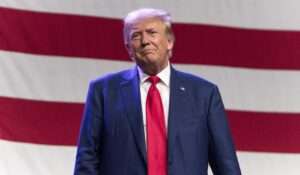
Donald Trump in front of a large American flag
Donald Trump. (Brian Cahn/Zuma Press/Newscom)


Some criticisms of the indictment of Donald Trump for his efforts to overturn the outcome of the 2020 election turn on specific legal arguments to the effect that Trump may not actually be guilty of the crimes charged. I address some of those issues here and here. But there are also consequentialist concerns to the effect that prosecuting Trump might weaken confidence in the criminal justice system or trigger a slippery slope where other former presidents and high officials get prosecuted. In my view, such concerns are overblown. More importantly, they downplay or ignore the potentially awful consequences of not prosecuting Trump.

Harvard law Prof. Jack Goldsmith expresses slippery slope concerns about the prosecuting Trump in a recent New York Times op ed. He worries that the prosecution will deepen Republicans' already negative view of the Justice Department and  "inspire ever more aggressive tit-for-tat investigations of presidential actions in office by future Congresses and by administrations of the opposing party, to the detriment of sound government." Josh Blackman agrees, and predicts future GOP administrations will try to prosecute Democratic politicians. He warns the consequences "will likely be terrible."

Maybe. But letting Trump off the hook is likely to be far worse. If Trump - or any president - is granted impunity for using force and fraud to try to stay in power after losing an election, future presidents could well repeat Trump's experiment. Lots of ambitious politicians would love to stay in power indefinitely. And if there are no penalties for trying, why not have at it? Some of those future leaders might even contrive to put together a more effective scheme of election nullification than the ramshackle scheme pursued by Trump.

If one of the reasons for not prosecuting Trump is that he has millions of followers who would be angry or lose confidence in the justice system as a result, that would incentivize future losing presidents to repeat Trump's Big Lie tactics. The more you rile up your supporters, the greater the chance of getting impunity for any crimes you might commit in office! That, in turn, would lead to more delegitimation of political and legal institutions, not less.

It is sometimes argued that Trump's misdeeds should be subject to political accountability, not criminal sanctions.  This argument has a number of general flaws, including its neglect of the need for retribution for heinous crimes (merely losing office is not punishment enough), and the problems of polarization and widespread voter ignorance (which may prevent the electorate from assessing the situation correctly and acting on that knowledge). Partisan bias and polarization often lead voters to be excessively tolerant of the misdeeds of their own party's leaders, especially if punishing them means handing a victory to the opposing party.

Exclusive reliance on political accountability is particularly inappropriate in the case of Trump's election-related wrongdoing. The whole point of Trump's crime was in fact to undermine electoral accountability - the very process that is supposed to keep him in check. The threat of losing an election is not much of a deterrent for schemes to overturn elections.

Compared to this danger, the concerns raised by Goldsmith and Blackman are minor. We already have plenty of investigations of the executive by Congress, when the latter is controlled by the opposing party. Some are meritorious, others not. Increasing their number strikes me as not much of a problem. It might even have some good effects if it uncovers more executive wrongdoing.

Politically motivated prosecution is a more serious concern. But if the charges lack merit, powerful politicians have the resources and connections to secure topnotch lawyers who can help them beat the (unjustified) rap. If, on the other hand, they are justified, punishing more politicians may not be a bad thing. There is too much impunity in high places.

I do recognize the danger created by a situation where we have far too many laws on the books, and as a result almost anyone can potentially be charged with something. Democratic and Republican politicians could potentially endlessly prosecute each other for various petty offenses.  I suspect, however, mutual deterrence will limit this problem, because members of the political class don't want to end up with mutually assured destruction. Moreover, truly petty prosecutions (e.g. - prosecuting a president for minor tax violations or for using marijuana in violation of federal law) are likely to backfire politically.

In addition, high-ranking politicians can reduce their exposure by being especially careful to avoid illegality. If political leaders start having to lead squeaky-clean lives, I will not shed many tears for them. Alternatively, fear of petty prosecution might even lead political leaders to repeal some of the many dubious criminal laws on the books. If so, that would be a great outcome - and a win for the rule of law.

Finally, the concern that prosecuting Trump will lead his supporters to take a more negative view of the Justice Department and the justice system generally is outweighed by the likely impact on public confidence of giving Trump impunity for his crimes. If the holder of the most powerful office in the land isn't punished for trying to nullify election results through fraud, that cannot but damage public confidence in the legal system among the large majority of Americans who recognize Trump did in fact lose the 2020 election. And if Trump gets off even as relatively low-level January 6 rioters get punished, that is likely to  create (justified) perceptions that there is a double standard under which the powerful get more lenient treatment than ordinary citizens.

Perhaps, as Goldsmith and conservative commentator Ramesh Ponnuru argue, it would have been  better if Trump had been convicted at his second impeachment trial. I myself advocated conviction, and agree with Ponnuru that the Senate committed a grave error in acquitting Trump.

But the failure of the impeachment process makes it all the more necessary to pursue criminal charges. Indeed, GOP Senate leader Mitch McConnell held out the possibility of criminal prosecution as one justification for his vote to acquit Trump in the impeachment process:

Impeachment, conviction, and removal are a specific intra-governmental safety valve. It is not the criminal justice system, where individual accountability is the paramount goal.

Indeed, Justice Story specifically reminded that while former officials were not eligible for impeachment or conviction, they were "still liable to be tried and punished in the ordinary tribunals of justice."

We have a criminal justice system in this country. We have civil litigation. And former Presidents are not immune from being held accountable by either one.

Time for some "individual accountability" for Trump through the criminal justice system!

In sum, the risks of not prosecuting Trump are far more severe than those of holding him accountable for his election-related crimes.

These considerations may not matter much if you think Trump is legally innocent of the charges against him. But if not, it would be a terrible mistake to grant him impunity from prosecution out of dubious consequentialist concerns. The risks of letting him off the hook are far worse.

Free Speech

Alleged "Psychic Intuition" Isn't Enough to Make a Federal Claim "Plausible" Enough to Withstand Dismissal

An allegedly psychic "Internet sleuth" alleged a professor was involved in the University of Idaho student murders; the professor sued; then the "sleuth" countersued.

|

From yesterday's decision in Scofield v. Guillard, written by Chief Magistrate Judge Raymond E. Patricco (D. Idaho); see here for more on the plaintiff's libel lawsuit (this decision is about the defendant's counterclaims):

This case arises out of the tragic murder of four University of Idaho students in November 2022. Plaintiff Rebecca Scofield is a professor at the University of Idaho. She alleges that she never met the students and was not involved with their murders in any way. Notwithstanding, Plaintiff alleges Defendant Ashley Guillard posted over 100 sensational TikTok videos falsely claiming that she had an inappropriate romantic affair with one of the victims and then ordered the murders to prevent the affair from coming to light. In turn, Plaintiff initiated this action on December 21, 2022 (Dkt. 1), asserting two defamation claims against Defendant. One is premised upon false statements regarding Plaintiff's involvement with the murders themselves. The other premised upon false statements regarding Plaintiff's romantic relationship with one of the murdered students….

Within her Answer and Counterclaims, [the self-represented] Defendant denies that she defamed Plaintiff because the accusations made against Plaintiff in Defendant's TikTok videos are "substantially true." Defendant maintains that she "used her spiritual brain, intuition, spiritual practice, and investigative skills to uncover the truth regarding the murder of the four University of Idaho students; and published her findings on her TikTok social media platform." Relevant here, Defendant also affirmatively asserts 11 counterclaims against both Plaintiff and her legal counsel.

Defendant's counterclaims rely on two premises: (i) Plaintiff "initiated, planned, and executed the murders" of the four University of Idaho students to cover up an affair she had with one of the victims; and (ii) Plaintiff sought to "evade suspicion" for these murders by conspiring with her counsel to file a "frivolous" Complaint with "falsified factual allegations" that (a) supported the defamation claims against Defendant, and (b) deprived Defendant of her constitutional rights. Defendant further asserts that the conspiracy between Plaintiff and her counsel extended beyond the mere filing of Plaintiff's Complaint. It also included Plaintiff's counsel's defamatory statements to the media about Plaintiff's underlying lawsuit against Defendant….

Plaintiff (Scofield) moved to dismiss the counterclaims, and the court agreed:

Read More

The Trump Indictment Hangover

The high may feel good, but the hangover will be terrible.

|

In politics, as in nature, every action has an equal and opposite reaction. When congressional Democrats impeached President Trump, twice, it was inevitable that Republicans would seek to use impeachment against democrat politicians. And now that the Democratic presidential administration has indicted President Trump, it will inevitably come to pass that Republicans will seek to indict Democratic politicians. Two recent pieces in the New York Times reflect these Newtonian reactions.

First, Carl Hulse writes that impeachments and censures, once rare, have become the new normal in Congress. There are currently investigations to impeach the Secretary of Homeland Security, the Attorney General, and even President Biden himself.

Proposals to censure lawmakers and impeach members of the Biden administration are piling up quickly in the House in an illustration of how once-solemn acts are becoming almost routine as the two parties seize on these procedures as part of their political combat. And the trend is only likely to intensify given the enmity between Republicans and Democrats over a new federal indictment brought against Mr. Trump for his efforts to overturn the 2020 election, and the G.O.P.'s desire to even the score.

The proliferation of censures and cries for impeachment is troubling to some who see it as a threat to the standing of the institution as well as diminishing the weight such punishments are supposed to carry. Censure is the congressional penalty just below expulsion.

These reactions were entirely foreseeable:

But it is a truism of the contemporary Congress that once one party does something the other sees as a breach, the aggrieved party will return fire once it gets the chance — and perhaps even take things up a notch. Tit for tat is the coin of the congressional realm. . . .

"I said two years ago, when we had not one but two impeachments, that once we go down this path it incentivizes the other side to do the same thing," said Senator Mitch McConnell, Republican of Kentucky and the minority leader.

"Impeachment ought to be rare," he said, adding, "This is not good for the country."

In December 2019, I warned in the Atlantic that Trump's first impeachment could set a dangerous precedent:

Without question, Congress can convict a president for conduct that is not criminal. This process is not bound by the strictures of the United States Code. Moreover, Congress can begin impeachment proceedings for conduct that is inconsistent with the president's duty to faithfully execute the laws. This inquiry, though subjective, is a necessary feature of the American constitutional order. But the predicates of the Trump articles will set a dangerous precedent, as impeachment might become—regrettably—a common, quadrennial feature of our polity.

Just because Trump could have been impeached does not mean he should have been impeached. The same goes for indictment.

There is a second piece in the Times that speaks to our downward spiral. Jack Goldsmith writes that the D.C. indictment of Trump "may have terrible consequences."

There is no getting around the fact that the indictment comes from the Biden administration when Mr. Trump holds a formidable lead in the polls to secure the Republican Party nomination and is running neck and neck with Mr. Biden, the Democratic Party's probable nominee.

This deeply unfortunate timing looks political and has potent political implications even if it is not driven by partisan motivations. And it is the Biden administration's responsibility, as its Justice Department reportedly delayed the investigation of Mr. Trump for a year and then rushed to indict him well into G.O.P. primary season. The unseemliness of the prosecution will most likely grow if the Biden campaign or its proxies use it as a weapon against Mr. Trump if he is nominated.

Goldsmith adds that Republicans already hold a dismal view of DOJ in light of the Russia-Russia-Russia saga, in tandem with Hunter Biden's apparent sweetheart deal. Goldsmith explains that Republicans, when in power, will seek to exact payback:

The prosecution may well have terrible consequences beyond the department for our politics and the rule of law. It will probably inspire ever more aggressive tit-for-tat investigations of presidential actions in office by future Congresses and by administrations of the opposing party, to the detriment of sound government.

And such charges won't be difficult. Smith's prosecution, at bottom, accuses Trump of lying to aggrandize his power. Virtually every person who achieved high office engaged in related conduct.

It may also exacerbate the criminalization of politics. The indictment alleges that Mr. Trump lied and manipulated people and institutions in trying to shape law and politics in his favor. Exaggeration and truth shading in the facilitation of self-serving legal arguments or attacks on political opponents have always been commonplace in Washington. These practices will probably be disputed in the language of, and amid demands for, special counsels, indictments and grand juries.

Back in August 2022, I explored the dilemma facing Merrick Garland. Ultimately, he chose to indict--that decision was his, and not that of Jack Smith. In some regards, this decision was Newtonian as well. In an alternate reality, Justice Garland would be on the Supreme Court, Roe v. Wade would still be on the books, President Hillary Clinton would be halfway through her second term in office, and Donald Trump, well, he would probably still be under indictment in New York. But that timeline did not happen. We do not know where Trump's indictment will lead. But I agree with Goldsmith that it will likely be terrible.

Justice Barrett's Shadow Docket Policy: Do The Opposite Of Whatever The Fifth Circuit Did (Updated)

Forget Doe v. Mills. Justice Barrett will grant relief on the shadow docket when the Fifth Circuit steps out of line.

|

Garland v. Vanderstok presented a challenge to the "Frame or Receiver" rule. (The press has dubbed it the "Ghost Gun" regulation.) The district court vacated the rule, and the Fifth Circuit denied a stay. The Solicitor General then petitioned for a stay of the lower-court ruling on the Supreme Court's emergency docket. Circuit Justice Alito entered a temporary administrative stay. When that time expired, Circuit Justice Alito extended the administrative stay for another four days, until Tuesday, August 8. What did this shadow docket delay mean? On Sunday, I observed that the extension was designed to allow dissenters to prepare a written dissent, or to allow more time for a majority to coalesce.

On Tuesday, the Supreme Court stayed the lower court's ruling. The vote was 5-4, with Chief Justice Roberts and Justice Barrett in the majority. Justices Thomas, Alito, Gorsuch, and Kavanaugh noted their dissent, but they did not prepare a dissent. The four-day extension was apparently not granted to allow the dissenters time to prepare a dissent. (It is possible a draft dissent was circulated but was never published.) Rather, it seems the purpose of the extension was to try to cobble together a fifth vote to deny a stay. But a fifth vote was not to be had. Why? Because Justice Barrett declined to cast that vote.

Now Justice Barrett has told us that we should "read the opinion" to understand the Court's shadow docket rulings. But there was no analysis here. Just an unsigned order with no analysis.

What should we make of Justice Barrett's decision here? Well, by my count, since Doe v. Mills in October 2021, Justice Barrett has (likely) voted to grant or deny a stay on the shadow docket six times, where certiorari before judgment was not granted. (I have a few caveats noted below). Those six cases are Austin v. U.S. Navy Seals 1-26 (likely granting stay), NetChoice v. Paxton (vacating stay), United States v. Texas (granting stay), FDA v. Alliance for Hippocratic Medicine (likely granting stay), Danco Laboratories v. Alliance for Hippocratic Medicine (likely granting stay), and now Garland v. Vanderstok (granting stay).

All six cases share something in common: Justice Barrett did the opposite of whatever a conservative Fifth Circuit panel did. When the Fifth Circuit granted a stay, Justice Barrett vacated the stay. When the Fifth Circuit granted an injunction, Justice Barrett stayed the injunction. And all of those Fifth Circuit panels included well-known conservative jurists. Indeed, the first three cases were presided by Edith Jones, whom I've described as the conservative lodestar of the Fifth Circuit.

By my count, with a few caveats, since Doe v. Mills, Justice Barrett has not granted shadow docket relief on any application from any other circuit. I am omitting Glossip v. Oklahoma and Mountain Valley Pipeline v. Wilderness Society, as no dissents were noted, and it is not feasible to count unrecorded dissents. And cert before judgment was granted in Arizona v. Mayorkas and Department of Education v. Brown.(Please e-mail me if I am missing a case).

Meanwhile, Justice Kavanaugh, who joined the Doe v. Mills concurrence, voted with Justices Thomas, Alito, and Gorsuch in United States v. Texas and in Garland v. Vanderstock. I don't think there is much point parsing Doe v. Mills further. (I wrote about Barrett's concurrence in Mills here and here). If Justice Barrett thought there was some reason to grant a stay in Vanderstock, she could have told us. But she said nothing--even with an extra four days to think about it. Doe v. Mills was simply a restatement of the defining feature of Justice Barrett's jurisprudence: caution. And especially cautious where the Fifth Circuit steps out of line.

Progressives should be grateful that the Supreme Court is not the Fifth Circuit.

Update: Steve Vladeck identified eight cases that I did not discuss. I was not looking for death penalty cases, which accounts for Hamm and Crow.

I did not include Ohio v. Department of Labor and NFIB v. OSHA as those cases were decided following oral argument, with a reasoned opinion--not your typical shadow docket fare.

In Milligan, certiorari was granted before judgment. In Ardoin v. Robinson, certiorari was granted before judgment, and the case was held in abeyance while Milligan was pending. This is the case from the Fifth Circuit panel Steve mentioned. In Merrill v. Caster, certiorari was also granted before judgment.

Louisiana v. American Rivers was a stay of an application arising from the Ninth Circuit Clean, without a grant of cert before judgment. I missed that one.

More