
8/15/1938: Justice Stephen Breyer's Birthday.

Mostly law professors | Sometimes contrarian | Often libertarian | Always independent | Est. 2002

[UPDATE 8/23/24: UCLA has just dropped the appeal.]
As yesterday's post noted, the injunction provides,
[1.] Defendants [UCLA officials] … are prohibited from offering any ordinarily available programs, activities, or campus areas to students if Defendants know the ordinarily available programs, activities, or campus areas are not fully and equally accessible to Jewish students.
[2.] Defendants are prohibited from knowingly allowing or facilitating the exclusion of Jewish students from ordinarily available portions of UCLA's programs, activities, and campus areas, whether as a result of a de-escalation strategy or otherwise.
[3.] On or before August 15, 2024, Defendants shall instruct Student Affairs Mitigator/Monitor ("SAM") and any and all campus security teams (including without limitation UCPD and UCLA Security) that they are not to aid or participate in any obstruction of access for Jewish students to ordinarily available programs, activities, and campus areas.
[4.] For purposes of this order, all references to the exclusion of Jewish students shall include exclusion of Jewish students based on religious beliefs concerning the Jewish state of Israel.
[5.] Nothing in this order prevents Defendants from excluding Jewish students from ordinarily available programs, activities, and campus areas pursuant to UCLA code of conduct standards applicable to all UCLA students.
[6.] Absent a stay of this injunction by the United States Court of Appeals for the Ninth Circuit, this preliminary injunction shall take effect on August 15, 2024, and remain in effect pending trial in this action or further order of this Court or the United States Court of Appeals for the Ninth Circuit.
For more on the District Court's reasoning, see here. Under Ninth Circuit rules, appeals of preliminary injunctions are generally heard within several months.
From Judge Jeffrey Schmehl's decision in Manco v. St. Joseph's University (E.D. Pa.):
On February 25, 2021, Loue tweeted at SJU as follows: "but are you gonna fire Greg Manco who has done nothing but contribute to a hostile learning environment with his racism, sexism, and transphobia??????" SJU responded to Loue's tweet by saying, "Saint Joseph's continues to strive to be a welcoming, diverse and inclusive community. The University acts quickly to investigate reports of bias, harassment, and other incidents. Plaintiff then alleges that "Loue was never a student of Dr. Manco and knew this tweet to be false."
Similar to the motions to dismiss previously filed by the other student defendants and decided by this Court in an opinion dated January 25, 2024, Loue argues that her tweet of February 25, 2021, enjoys absolute privilege as she conveyed information that commenced an investigation pursuant to federal statute or regulations. However, the instant tweet of Loue is distinguishable from the privileged communications between students and specific individuals at SJU who were involved in the investigation process. A general tweet directed to a private university cannot be found to have intended to commence an investigation.
The examples in the January 25, 2024, opinion where I found student communications were entitled to immunity were emails and direct correspondence to specific individuals at SJU, not just random public tweets. Loue's tweet is not entitled to immunity for that reason.
Also, I find that her tweet was capable of a defamatory meaning as a person reviewing SJU's Twitter account could read it and believe that Plaintiff is racist, sexist and/or transphobic. Accordingly, Loue's Motion to Dismiss as to her February 25, 2021, tweet based upon immunity is denied.
The court is discussing orders "enjoining protected speech or conduct ... without an adversarial hearing or adjudication on the merits that the speech or conduct is not protected."
From today's decision by Chief Judge Hala Jarbou (W.D. Mich.) in Booth v. Fink; seems correct to me, and applicable to other states besides Michigan:
Booth, who worked as a corrections officer for the MDOC [Michigan Department of Correcitons], alleges that in January 2022, Fink investigated him for a purported violation of the MDOC's social media policy after Booth posted a video on his Facebook account showing him being "sucker punched" by a prisoner. Booth alleges he filed a lawsuit against [MDOC internal affairs investigator] Fink challenging Fink's interpretation of the policy.
Later, in May 2023, the Michigan State Police arrested Fink in connection with a criminal investigation. On June 27, 2023, Fink was arraigned at the Livingston County District Court due to criminal charges against him related to prostitution. Booth made a post on Facebook regarding these events. The post consists of a video of Fink leaving his vehicle and walking into the county courthouse, as well as a copy of a docket sheet showing that Fink was scheduled for a probable cause hearing in a criminal case against him. In the post, Booth wrote, "Someone doesn't look to happy!!!" Booth is the one who took the video of Fink….
The day after the court hearing, Fink applied for an ex parte personal protection order ("PPO") against Booth from the Clinton County Circuit Court. According to the petition, Booth and Fink were both employees of the MDOC at the Charles Egeler Reception and Guidance Center. Booth had filed a federal lawsuit against Fink regarding Fink's investigation of Booth. Fink claimed that he was ordered to not have contact with Booth due to that lawsuit. Fink also contended that the MDOC had suspended Booth from work in April 2023 due to a "threatening" Facebook post in which Booth named Fink and other MDOC employees.
According to Fink, Booth also attended a court hearing involving Fink that had "nothing to do with [Booth], the MDOC, or [Fink's] employment with the MDOC." Fink contended that, at the hearing, Booth placed a camera in Fink's face, followed him around the courtroom taking pictures, stood next to him while Fink sat at a table, entered the courtroom when Fink did, and later followed Fink out of the courtroom. Booth then filmed Fink as he walked out of the courthouse and filmed him walking toward his vehicle and then driving away.
As further evidence to support his petition for the PPO, Fink provided a copy of a "stop order" from the MDOC prohibiting Booth from entering MDOC grounds, which Booth had posted on his Facebook page. Fink appears to have also provided the court a printed copy of the Facebook post by Booth with the comment "Someone doesn't look to happy!!!" The printed copy included one frame of the video showing Fink standing outside the county courthouse.
The state court issued the ex parte PPO on June 29, 2023, prohibiting Booth from "following or appearing within sight of" Fink, appearing at Fink's residence, "approaching or confronting [Fink] in a public place or on private property," or "photographing or videotaping" Fink. The ex parte PPO also prohibited Booth from "posting a message through the use of any medium of communication, including the Internet or a computer or any electronic medium, pursuant to [Mich Comp. Laws §] 750.411s." …
With a petition for review now pending before the Supreme Court of California.
18 U.S.C. § 2702, part of the Stored Communications Act, is one of those laws that you rely on every day but you have probably never heard of before. The law blocks Internet communications and storage providers from disclosing the contents of your online accounts. Think about the really private stuff you store online, like your emails, photos, text messages, and other communications. Section 2702 is basically the Internet's privacy wall for all of those stored contents. Unless an explicit exception to the statute applies, such as the government coming with a warrant, your provider is not allowed to share your private account contents with others.
Or so everyone has thought.
On July 23, 2024, the California Court of Appeal handed down a surprising ruling in Snap, Inc. v. Superior Court (Pina), holding that the SCA does not apply to most remotely-stored online messages. The court interpreted the law's privacy bar to not apply if providers have a right of access to customer data for their own business purposes. In the court's view, the § 2702 disclosure bar can only apply if the companies have no right of access to user accounts beyond the access required for providing storage and processing. The court then applied that standard to the contents at issue in the case—a Facebook account, an Instagram account, and a Snapchat account—to hold that § 2702(a) does not bar their disclosure.
The case arose in a criminal prosecution, in which the defendant is trying to compel companies to turn over user messages from the victim's accounts. The defendant, Adrian Pina, is accused of murdering his brother Samuel. Samuel purportedly had accounts with Instagram, Snapchat, and potentially other providers. To help prepare his defense, the defendant wants the contents of his brother's accounts. To that end, his counsel served subpoenas on Snap (which operates Snapchat) and Meta (which operates Facebook and Instagram) seeking disclosure of account contents.
Snap and Meta declined to produce account contents, however, invoking the privacy bar imposed by § 2702. According to Snap and Meta, the privacy wall of § 2702 applies and protects their users' messages and account contents. That's where the new ruling comes in: The Court of Appeal rejected the arguments of Snap and Meta, ordering them to comply with the subpoenas on the ground that the § 2702 privacy wall does not apply to Instagram accounts or Snapchat accounts—and perhaps lots of other kinds of accounts.
This is, I hope, not the end of the story.
I have joined the legal team representing Snap. We have filed this Petition for Review asking the Supreme Court of California to review the Court of Appeal's decision and to reject its reasoning. We hope that the Court will restore the proper role of § 2702 in protecting the privacy of everyone's online accounts. Meta has also filed a Petition for Review, which you can read here.
I don't plan to blog about this case again, given my role as counsel for Snap. But I did want to flag the case for interested readers.
From In re TEGNA v. Sandoval, decided yesterday by the Minnesota Court of Appeals (Chief Judge Susan Segal, joined by Judges Bratvold and Larson); seems right to me:
KARE 11 obtained a copy of [a] sentencing memorandum [in Sandoval's criminal case] from Minnesota Court Records Online (MCRO). The district court subsequently determined that the sentencing memorandum had been incorrectly designated as a public document and granted the defendant's request for a protective order, which provides that:
- No additional copies of the Sentencing Memorandum or any portion of the Sentencing Memorandum shall be made by parties who had accessed it, or any other representative or agent of the parties who accessed it;
- Said Sentencing Memorandum shall not be used for any purpose other than consideration by the court and the parties for sentencing;
- Said Sentencing Memorandum shall not be publicly exhibited, shown, displayed, used for educational, research or demonstrative purposes, or used in any other fashion, except in judicial proceedings in the above-referenced action; and
- Said Sentencing Memorandum may be viewed only by the parties; their counsel and their counsel's employees, investigators, and experts; and as directed by the Court for judicial proceedings in the above-referenced action.
In addition to signing the written order, the district court ordered on the record that "if there were any copies that were reproduced … those should be destroyed and are not to be distributed." We refer to the district court's written and oral orders together as "the July 19 order." …
He was wrong to think "You cannot simultaneously have a welfare state and free immigration."
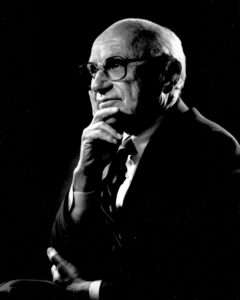
Immigration restrictionists love to quote Milton Friedman's line that "[y]ou cannot simultaneously have a welfare state and free immigration." There are lots of other rationales for immigration restriction. But this one has obvious resonance to people who otherwise favorite free markets. In a helpful recent post, economist Bryan Caplan, a leading expert on immigration policy, outlines why Friedman was wrong on this point. As Caplan points out, evidence indicates that most immigrants actually contribute more to the public fisc than they take out. The Congressional Budget Office estimates that the surge in migration since 2021 will reduce the federal budget deficit by almost $1 trillion over the next decade.
In addition, as Bryan notes, if immigrants really were a fiscal drain, there is the obvious "keyhole solution" of limiting immigrants' eligibility for welfare benefits. The US already does this to a substantial extent under the 1996 Welfare Reform Act, and such exclusion could be broadened, if necessary. When asked about this possibility in the same 1999 interview where he made the more famous comment about immigration, Friedman admitted he "ha[dn't] really ever thought" of it. That's understandable, given that immigration wasn't one of Friedman's areas of expertise, and he had never written a book or article about the subject. Even the greatest thinkers sometimes have poorly thought out views on issues they haven't studied carefully.
Bryan offers some additional well-taken criticisms of Friedman's comments on immigration, including pointing out that Friedman was wrong to suggest that "the movement of goods is a substitute for the movement of people." In some cases it is indeed a good substitute, but in many it is clearly not.
It's also worth noting that the idea that we can restrict liberty whenever doing so might substantially reduce welfare spending, has dire implications Friedman would have rejected in other contexts. Consider some examples:
"You cannot simultaneously have a welfare state and legalize alcoholic beverages."
If alcoholic beverages are legal, some people will become alcoholics, and become unable to hold down a job. They could end up on welfare. Also, alcoholism often leads to health problems that increase government health care expenditures, in a world where we have programs like Medicaid and Medicare.
"You cannot simultaneously have a welfare state and unrestricted consumption of fatty foods."
Eating too much food of this type can lead to obesity, and obesity - like alcoholism - often causes health problems that increase welfare state spending on health care. At the very least, this can justify heavy government regulation and taxation of such foods, even if not an outright ban.
"You cannot simultaneously have a welfare state and end the War on Drugs."
Like alcoholism and obesity, drug use often leads to health problems that in turn increase government spending on health programs. Plus, some drug addicts end up on welfare because they can't hold down a job.
"You cannot simultaneously have a welfare state and unrestricted reproduction."
The children of poor people are disproportionately likely to use welfare benefits. Even those from relatively affluent families are likely to consume public education spending.
Examples like this can easily be multiplied. Many, many exercises of liberty have potential downsides that can lead to increased welfare state expenditures in some situations.
You can consistently bite all these bullets if you're a thoroughgoing supporter of government intervention, as some conservative and left-wing paternalists are. But libertarians (and many others who value personal liberty) reject the welfare spending rationale for restricting liberty in these other cases, or at least presumptively do so (perhaps small decreases in liberty would be acceptable if they are the only way to prevent really massive spending increases). They should do the same when it comes to immigration restrictions.
Indeed, the potentially spending-minimizing regulations libertarians reject in these other cases are actually often much less severe constraints on liberty than immigration restrictions are. Most people can live a generally free and happy life even if they rarely or never drink alcohol, do not partake of any currently illegal drugs, and strictly limit consumption of fatty foods. By contrast, immigration restrictions consign millions to a lifetime of poverty and oppression. I don't know about you. But I'd much rather forego alcoholic beverages and most fatty foods than have to spend the rest of my life in Cuba or Venezuela. Immigration restrictions also severely limit the liberty (especially the economic liberty) of receiving-country natives, as well as that of would-be migrants.
Finally, it's worth noting that those who like to quote Friedman's statement on immigration and the welfare state generally overlook the fact that he was highly supportive of illegal immigration, because illegal migrants aren't eligible for most welfare benefits:
That's an interesting paradox to think about. Make it legal and it's no good. Why? Because as long as it's illegal the people who come in do not qualify for welfare, they don't qualify for social security, they don't qualify for the other myriad of benefits that we pour out from our left pocket to our right pocket. So long as they don't qualify they migrate to jobs. They take jobs that most residents of this country are unwilling to take. They provide employers with the kind of workers that they cannot get. They're hard workers, they're good workers, and they are clearly better off.
Friedman was largely right about illegal immigration. But making it legal actually improves the situation, by enabling migrants to work at a wider range of jobs, acquire more skills, and assimilate more fully. And the fiscal effects are still a net positive.
I critique the welfare-spending rationale for migration restrictions in greater detail in Chapter 6 of my book Free to Move: Foot Voting, Migration, and Political Freedom.
From today's opinion in Planned Parenthood v. State, written by Justice Laurie McKinnon:
The Consent Act conditions a minor's right to obtain an abortion on parental consent unless a judicial waiver is obtained. It imposes no corresponding limitation on a minor who seeks medical or surgical care otherwise related to her pregnancy or her child. We decide today that the classification created by the Legislature violates the fundamental right of a minor to control her body and destiny as guaranteed by Article II, Section 10, of the Montana Constitution, without adequate justification from the State. The Consent Act, therefore, cannot be sustained against Plaintiffs' privacy and equal protection challenges.
Because a minor's right to control her reproductive decisions is among the most fundamental of the rights she possesses, and because the State has failed to demonstrate a real and significant relationship between the statutory classification and the ends asserted, we hold that the Consent Act violates the Constitution of the State of Montana.
The Montana Constitution expressly provides,
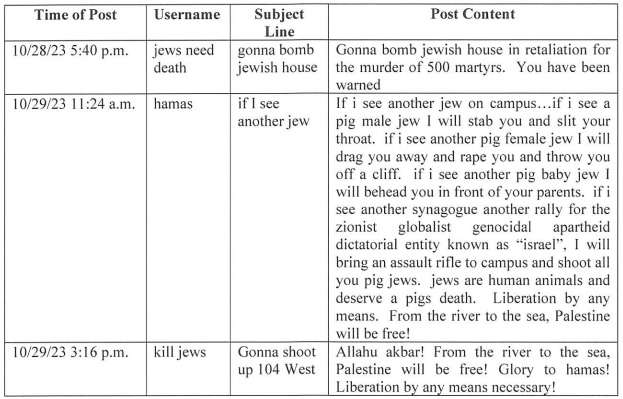
From a Justice Department press release Monday:
Patrick Dai, 22, formerly a junior at Cornell University and originally from Pittsford, New York, was sentenced today to 21 months in prison, followed by three years of supervised release and a special assessment in the amount of $100 for posting threats to kill or injure another person using interstate communications….
“[C]ourts do not use vagueness doctrine to establish a rule that government cannot regulate anything until it classifies everything.”
From Thayer v. City of Chicago, decided last week by Judges Frank Easterbrook, Ilana Rovner, and David Hamilton:
The Democratic National Convention will be held in Chicago from August 19 through August 22, 2024. Both the Chicago Police Department and the Secret Service have roles in protecting the persons attending the Convention or close to its venues. They have established security perimeters and issued lists of items that people will not be permitted to possess inside the perimeters.
The City's list, enacted as part of an ordinance, comprises:
- Laptops, Tripods, Monopods, and Selfie Sticks *If an invited guest arrives with a tablet, they will be redirected to the X-ray line for screening and then permitted entry with the tablet.
- Large Bags and Suitcases exceeding size restrictions (18″ x 13″ x 7″)
- Sealed packages
- Drones and other Unmanned Aircraft Systems
- Animals other than service/guide dogs
- Bicycles, Scooters, Folding Chairs, Balloons, Coolers
- Glass, Thermal, or Metal Containers
- Umbrellas with metal tips
- Any pointed object(s), including knives of any kind
- Aerosols, Tobacco Products, e-Cigarettes, Lighters, Matches
- Firearms, Ammunition, Fireworks, Laser Pointers, Stun Guns, Tasers, Mace/Pepper Spray, Toy Weapons
- Tents and Structures
- Any Other Items Determined by Chicago Superintendent of Police, in consultation with the United States Secret Service and the Chicago Office of Emergency Management and Communications, to be Potential Safety Hazards.
The Secret Service has its own list, which appears on the City's web site:
From Judge Neeti Pawar's opinion in People v. Hughes (Colo. Ct. App.), joined by Judges Anthony Navarro and Sueanna Johnson (decided last month, but just posted to Westlaw recently):
When Hughes returned from an overseas military deployment, his girlfriend, who lived in Virginia, A.B., met him in Colorado Springs. One night, they went to a bar where Hughes accused her of flirting with another patron, and they got into an argument. A.B. testified at trial that Hughes grabbed her and threw her to the ground outside the bar. When they returned to the hotel room they were staying in, Hughes destroyed the room, causing thousands of dollars in damage.
Over the next several months, they continued their relationship. A.B., her two-year-old daughter, and A.B.'s mother relocated to Colorado and moved in with Hughes. During this time, Hughes repeatedly accused A.B. of infidelity and repeatedly called her "whore," "slut," and "bitch."
The prosecution charged Hughes with several offenses, including as relevant here, criminal mischief for destroying the hotel room, third degree assault for his conduct outside the bar and in the hotel room, and multiple harassment counts.
The jury found Hughes not guilty of third degree assault and all but one of the harassment counts. The jury found him guilty of criminal mischief and the harassment count based on section 18-9-111(1)(h), C.R.S. 2023, for repeatedly insulting A.B. over the course of several months.
Hughes eventually sought to get the conviction vacated on the grounds that "both trial and appellate counsel were ineffective for failing to challenge the sufficiency of the evidence to support the harassment conviction because Hughes' speech was protected by the First Amendment," and the court agreed:
8/14/1935: President Roosevelt signs into law the Social Security Act of 1935. The Supreme Court upheld the constitutionality of this law in Helvering v. Davis (1937).
The Center for Investigative Reporting (CIR), home to Mother Jones, Reveal, and CIR Studios, is hiring a full-time remote First Amendment Fellow to join our legal department. This one-year paid position will allow the fellow the chance to work closely as an associate with in-house counsel.
Responsibilities:
- prepublication review of articles, podcasts, documentaries,
- intellectual property matters,
- news gathering questions,
- reviewing and editing amicus briefs,
- helping reporters file and write appeal letters for public records requests,
- filing and litigating freedom-of-information, court-access as well as defending libel suits and other litigation matters.
Qualifications:
- be a junior attorney or 2025 law school graduate
- have an outstanding academic record with excellent research and writing skills,
- have an exceptional ability to work with a large and diverse staff,
- have demonstrated deep interest in media law and the First Amendment,
- a great sense of humor and exceptionally collegial, and
- an ability to multitask and work under deadline pressure.
Please note: Preference will be given to students with public interest funding. The fellowship is designed to be both a learning and work experience for a new lawyer excited about media law and the First Amendment. To be clear, the position is not budgeted to lead to employment after one year.
Applications for the Fellow can be found here.
If participants in unauthorized encampments exclude Jewish or pro-Israel students from walking in parts of campus, UCLA would then have to close those parts to everyone.
From today's order by Judge Mark Scarsi (C.D. Cal.) in Frankel v. Regents:
In the year 2024, in the United States of America, in the State of California, in the City of Los Angeles, Jewish students were excluded from portions of the UCLA campus because they refused to denounce their faith. This fact is so unimaginable and so abhorrent to our constitutional guarantee of religious freedom that it bears repeating, Jewish students were excluded from portions of the UCLA campus because they refused to denounce their faith. UCLA does not dispute this. Instead, UCLA claims that it has no responsibility to protect the religious freedom of its Jewish students because the exclusion was engineered by third-party protesters. But under constitutional principles, UCLA may not allow services to some students when UCLA knows that other students are excluded on religious grounds, regardless of who engineered the exclusion….
On April 25, 2024, a group of pro-Palestinian protesters occupied a portion of the UCLA campus known as Royce Quad and established an encampment. Royce Quad is a major thoroughfare and gathering place and borders several campus buildings, including Powell Library and Royce Hall. The encampment was rimmed with plywood and metal barriers. Protesters established checkpoints and required passersby to wear a specific wristband to cross them. News reporting indicates that the encampment's entrances were guarded by protesters, and people who supported the existence of the state of Israel were kept out of the encampment. Protesters associated with the encampment "directly interfered with instruction by blocking students' pathways to classrooms."
Plaintiffs are three Jewish students who assert they have a religious obligation to support the Jewish state of Israel. Prior to the protests, Plaintiff Frankel often made use of Royce Quad. After protesters erected the encampment, Plaintiff Frankel stopped using the Royce Quad because he believed that he could not traverse the encampment without disavowing Israel. He also saw protesters attempt to erect an encampment at the UCLA School of Law's Shapiro courtyard on June 10, 2024.
Similarly, Plaintiff Ghayoum was unable to access Powell Library because he understood that traversing the encampment, which blocked entrance to the library, carried a risk of violence. He also canceled plans to meet a friend at Ackerman Union after four protesters stopped him while he walked toward Janss Steps and repeatedly asked him if he had a wristband. Plaintiff Ghayoum also could not study at Powell Library because protesters from the encampment blocked his access to the library.
And Plaintiff Shemuelian also decided not to traverse Royce Quad because of her knowledge that she would have to disavow her religious beliefs to do so. The encampment led UCLA to effectively make certain of its programs, activities, and campus areas available to other students when UCLA knew that some Jewish students, including Plaintiffs, were excluded based of their genuinely held religious beliefs.
From a motion filed today in Doe v. Intel Corp. (S.D.N.Y.); for more on the underlying lawsuit, see Intel Axes Israeli NYC Engineer Who Complained About Boss 'Liking' X Posts Cheering Hamas: Suit (N.Y. Post, Beri Kochman):
John Doe is a Jewish Israeli executive at Intel, a global multi-technology company, who proudly served in the Israeli Defense Forces ("IDF") before joining the company. At Intel, John Doe was forced to report to a supervisor—Intel Vice President Alaa Badr ("Badr")—who was openly and proudly supporting the terrorist organization Hamas and celebrating the deaths of Israelis after Hamas's brutal October 7, 2023 attacks on Israel which took the lives of over 1,000 innocent Israelis while hundreds more were taken captive by the terrorist group. Indeed, Badr openly liked social media posts—for anyone to see—celebrating the death of IDF soldiers, like John Doe, and celebrating "successful" Hamas missile strikes, including one that struck Mr. Doe's family home. In no uncertain terms, the heinous acts doled by Hamas on October 7, 2023 changed the landscape of the modern world for Israeli Jewish citizens worldwide.
The Israel-Hamas War that erupted after Hamas's October 7th attack has led to a frenetic and violent rise in hate crimes against Jews around the world, but specifically in New York where Plaintiff resides. According to the Anti-Defamation League (the "ADL"), antisemitic incidents in New York soared 110 percent in 2023—the highest number the ADL has ever recorded in New York and the second-highest number reported in any state across America. Indeed, nearly 14 percent of all antisemitic incidents reported nationwide in 2023 took place in New York State, and in the fourth quarter of 2023 alone, the ADL recorded 815 antisemitic incidents in New York. These statistics, of course, only reflect the number of reported incidents. The actual numbers are likely significantly higher.
New York City Mayor Eric Adams recognized the inherent danger that Jewish people in New York face when he said that after October 7th, he was seeing a "normalization of antisemitism in New York…" while district attorneys representing all 62 counties in New York recognized the increase in violence, condemned violence against Jewish people and pledged to prosecute hate crimes aggressively. Despite this, however, violence against Jewish people in New York has continued to escalate in 2024 with antisemitic hate crimes climbing sharply by 45 percent in the first quarter of the year. According to New York Police Department ("NYPD") data, in July 2024 alone, the NYPD investigated 30 anti-Jewish offenses, and there have been 229 antisemitic hate crimes reported in just the first seven months of 2024.
These statistics speak to the reality that all Jewish people are facing, but former IDF personnel—like John Doe—are at an even greater risk of being targeted both domestically and by foreign actors if they are revealed to be former IDF military members. There have been countless reports of individuals being attacked simply for wearing IDF clothing. As a result, John Doe publicly stating he served in the IDF and bringing these claims places him in significant danger of being subjected to harassment, threats, and physical violence. Given the heightened violence in both the United States and Israel since the October 7th massacre, Plaintiff has a reasonable fear of retaliatory physical harm to both himself and his family if he is publicly named.
From Hindu American Found. v. Kish, decided today by Judge Dale Drozd (E.D. Cal.):
[P]laintiff HAF [and nine individual plaintiffs, including three Doe plaintiffs, seek] declaratory and injunctive relief against defendant Kevin Kish, in his official capacity as the director of the California Civil Rights Department …, for allegedly violating the constitutional rights of all Hindu Americans by initiating a Fair Employment and Housing Act … enforcement action in state court against Cisco Systems, Inc. … for discrimination, harassment, and retaliation against an employee based on his caste status. Plaintiff HAF alleges that the Department's discrimination suit brought against Cisco … violated the … Free Exercise Clause … and the Due Process and Equal Protection Clauses … by linking the practice of caste discrimination to Hinduism….
The Ninth Circuit has identified three situations in which parties have been allowed to proceed under pseudonyms: "(1) when identification creates a risk of retaliatory physical or mental harm; (2) when anonymity is necessary to preserve privacy in a matter of sensitive and highly personal nature; and (3) when the anonymous party is compelled to admit [his or her] intention to engage in illegal conduct, thereby risking criminal prosecution …." A party requesting to proceed pseudonymously has the burden of showing that their "need for anonymity outweighs prejudice to the opposing party and the public's interest in knowing the party's identity."
If a party seeks to sue pseudonymously based on retaliatory harm, courts apply a five- factor balancing test that weighs: "'(1) the severity of the threatened harm, (2) the reasonableness of the anonymous party's fears, … (3) the anonymous party's vulnerability to such retaliation,' (4) the prejudice to the opposing party, and (5) the public interest." The first two factors are the most important….
To proceed under pseudonyms, "a plaintiff must show both (1) a fear of severe harm, and (2) that the fear of severe harm is reasonable." Here, the Doe plaintiffs argue that, as Hindus who reside or work in California, "they are vulnerable … to being individually sued by the [Department] in retaliation for participating in this action;" and they may experience "physical, mental, and economical harm from those around them, including but not limited to prospective employers, co-workers, and persons they interact with on a daily basis." However, the evidence presented by the Doe plaintiffs in the declarations they have filed in support of their motion falls short of persuading the court that consideration of these factors weigh in their favor.
From Johnson v. Knox County Bd. of Ed., decided Mar. 31 by Judge J. Ronnier Greer (E.D. Tenn.), but just recently posted on Westlaw; seems correct to me:
Plaintiffs allege the following facts: On the afternoon of March 31, 2022, Rebekiah Johnson, and her young adult son Shaque Johnson went to New Hopewell Elementary, where Brandon Pratt was the principal, "to bring attention to the racism within the schools and administration that the Johnsons had experienced through Principal Brandon Pratt." Shaque Johnson stood across the street from one of the parking lot exit/entrances holding a sign that stated, "Mr. Pratt was wrong. Read eagleswithcolor.com" on one side and "the TRUTH about Principal Pratt, eagleswithcolor.com" on the other side. Rebekiah Johnson walked along the street on the side of the school with her sign that read "Mr. Pratt is racist. eagleswithcolor.com" on one side, while the other side read, "The Community needs to know! eagleswithcolor.com." Rebekiah Johnson and her son were on the street, which is public property. As parents arrived to pick up their children, Rebekiah Johnson walked between the two exits/entrances holding her sign.
The SRO [School Resource Officer] approached Rebekiah Johnson and told her she needed to move across the street. Rebekiah Johnson told him that "she was on public property and had a right to stand where she was standing." The officer replied, "Yes … as long as you don't go behind the fence." At that time, Rebekiah Johnson was standing nearly thirty feet away from the fence. The SRO then walked away. Rebekiah Johnson continued walking along the street with her sign and only spoke with people who asked her a question. She did not impede traffic or create a disruption.
Meanwhile, Shaque Johnson stood silently across the street from the other exit of the school so parents could see his sign as they left the school parking lot. While he stood there, the SRO and another older white gentleman who was later identified as Fred Wade, a teaching assistant at New Hopewell Elementary School, walked along the school driveway and stood near the exit. Wade began addressing Shaque Johnson across the street. He seemed angry and the SRO was carrying a gun, so Shaque Johnson began recording the interaction on his phone. Wade yelled at him from across the street, stating that Shaque Johnson "could not be recording." Shaque Johnson told Wade he could record and Wade threatened to take Shaque Johnson's phone from him. When most of the cars had left the parking lot, Wade and the SRO walked away. "Once the school driveway was pretty much cleared out Rebekiah and Shaque Johnson decided to pack up their signs to leave."
On April 7, 2022, Rebekiah Johnson received a letter from Investigator Martin Timms. The letter stated, "It has come to the attention of the Knox County Schools Security Division that your recent protest at New Hopewell Elementary School has been inappropriate and disruptive. As a result of this behavior, you are being issued a civility code letter." The letter cited Knox County Board of Education Policy B-230 and stated, "Further violations in Knox County Schools Board Policy B-230 may result in you being banned from coming on to any property owned or controlled by Knox County Schools." Finally, the letter stated that Rebekiah Johnson needed to make herself aware of Tenn. Code Ann. §§ 39-14-405, 39-14-406, and 39-17-305." Rebekiah Johnson needed to be able to access KCBOE property to pick up her younger children, who attended Knox County schools other than New Hopewell Elementary. After receiving the letter, she and Shaque Johnson did not protest against Principal Pratt again….
The court allowed much of the plaintiffs' First Amendment case to go forward:
"[A] person in possession of a firearm and a facially valid permit for that firearm had a clearly established right to be free from the kind of forcible and prolonged detention to which Soukaneh was subjected, absent any objective reason to suspect that the permit was forged or otherwise invalid."
From yesterday's Second Circuit decision in Soukaneh v. Andrzejewski, decided by Judge Eunice Lee, joined by Judges Gerard Lynch and Beth Robinson:
The evidence, taken in the light most favorable to Plaintiff-Appellee Basel Soukaneh, would permit a reasonable jury to find that in the course of a routine traffic stop, [Nicholas Andrzejewski, a Waterbury, Connecticut police officer] unlawfully and violently handcuffed and detained Soukaneh in the back of a police vehicle for over half an hour and conducted a warrantless search of Soukaneh's vehicle after Soukaneh presented a facially valid firearms permit and disclosed that he possessed a firearm pursuant to the permit. On appeal, Andrzejewski argues that we should reverse the district court's denial of qualified immunity because the presence of the lawfully owned firearm in the vehicle gave him the requisite probable cause to detain Soukaneh, search the interior of his car, and search his trunk….
Andrzejewski argues that … his actions … were justified because he had both "a reasonable suspicion of possible criminal activity" and "probable cause to detain [Soukaneh] and search his person and his vehicle" once he was made aware of the presence of a gun in the vehicle—even absent any articulable basis to question the permit's validity….
The desire to confirm the legitimacy of the facially valid firearms permit that Soukaneh presented did not—with nothing more—provide Andrzejewski with probable cause for the half-hour or longer handcuffed detention that occurred. It is uncontested that Soukaneh presented Andrzejewski with a gun license, the legitimacy of which Andrzejewski himself admits he had no reason to question. Moreover, Andrzejewski concedes that he was informed of the facially valid license before Soukaneh told him that he had a gun and specified its location.
Celebrate your independence with a subscription to Reason magazine, your most trusted source of honest, insightful news and analysis.




