

3/30/1875: U.S. v. Cruikshank argued.
The Volokh Conspiracy
Mostly law professors | Sometimes contrarian | Often libertarian | Always independent | Est. 2002
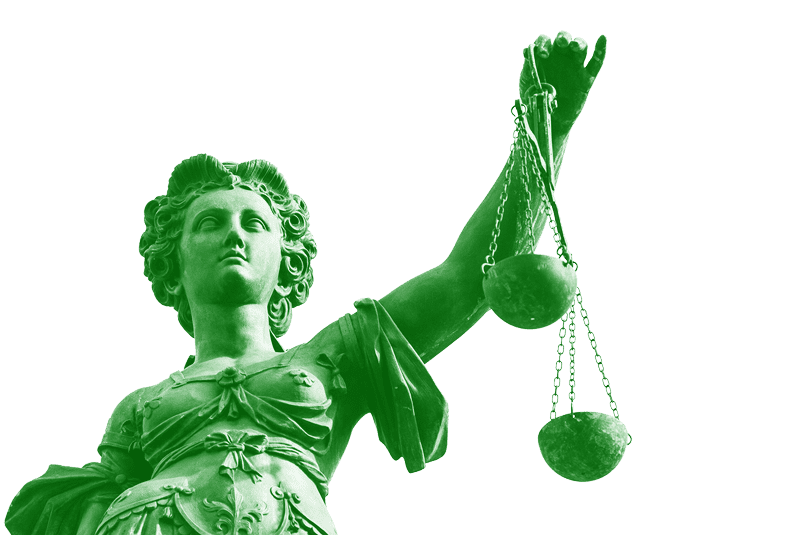
Coastal Judges Play Keep-Away From The Fifth Circuit
The Trump administration detains individuals in Texas and Louisiana, yet federal courts on the Amtrak Corridor continue to exercise jurisdiction.
Fights over forums are not new. Long before national injunctions flew from Amarillo and San Francisco, the executive branch sought to control where legal challenges could be filed. Perhaps the most prominent such recent example was Guantanamo Bay. The Bush Administration detained enemy combatants on the military base to avoid federal habeas jurisdiction. That plan, however, did not work out. In a series of cases leading to Boumedienne v. Bush (2008), the federal courts in the District of Columbia asserted jurisdiction over Guantanamo Bay.
However, the Bush Administration did secure a venue victory in another case: Rumsfeld v. Padilla (2004). At the time, the Fourth Circuit was considered the most conservative circuit in the country. And in that case, the Bush Administration detained Jose Padilla, a declared "enemy combatant," in a South Carolina military prison. A habeas suit was brought in the Southern District of New York. The Supreme Court held that the suit was not proper in New York. Rather, "for core habeas petitions challenging present physical confinement, jurisdiction lies in only one district: the district of confinement."
That past brings us to the present. In two prominent cases, the Trump Administration has taken actions to keep legal challenges within the Fifth Circuit. And in both cases, judges on the East Coast have played keep-away from the Fifth Circuit.
The first case is Trump v. J.G.G. In this case, aliens were held at a facility in Texas. They were then loaded on a plane bound for El Salvador. Around the same time, Judge Boasberg in the District of Columbia ordered this operation to be halted immediately. Yet, there was a threshold issue: was the federal court in the District of Columbia the proper court to even bring this suit? Last time I checked, the federal courts in Texas remain operational--true, they are far less busy now then they were before the inauguration. The obvious response is that the ACLU did not want this case anywhere near the conservative Fifth Circuit. But sometimes a strategic choice can backfire.
Challenging Trump's Tariffs Under the Major Question Doctrine
Georgetown law Prof. Jennifer Hillman explains why Trump's tariffs are vulnerable to challenge on this basis.

Back in February, I explained why Trump's planned use of the International Emergency Economic Powers Act of 1977 (IEEPA) to wage a massive trade war against Canada and Mexico is vulnerable to challenge under the nondelegation and major questions doctrines. Georgetown law Prof. Jennifer Hillman has an excellent Lawfare article laying out the major questions argument against Trump's IEEPA tariffs in greater depth and detail:
The U.S. Supreme Court's articulation of the major questions doctrine may have created insurmountable hurdles to the president's desire to use IEEPA as the legal basis for sweeping tariffs. Congress frequently delegates authority to the executive branch to regulate particular aspects of society, but in a number of recent decisions, the Supreme Court has declared that for an agency to decide an issue of major national significance, its action must be supported by clear congressional authorization….
The major questions doctrine entails that the Court "expect[s] Congress to speak clearly if it wishes to assign to an agency decisions of vast 'economic and political significance'," looking at the "the history and the breadth of the authority that [the Executive Branch agency] has asserted." In Utility Air Regulatory Group v. EPA, the Court expressed skepticism when agencies claim to have discovered in a long-extant statute "an unheralded power to regulate 'a significant portion of the American economy'…."
There can be no doubt that using IEEPA to impose broad tariffs is a major question. It falls squarely within the Supreme Court's notion of a "novel" use of an "unheralded" power given that no other president has used IEEPA in its nearly 50-year history to impose tariffs. The decision to impose the new tariffs on the United States's three largest trading partners constitutes a "transformative power expansion" and carries "vast economic and political significance" as it has significant breadth, national impact, and an effect on large segments of the economy. In 2024, imports from Canada, China, and Mexico exceeded $1.3 trillion. U.S. exports to Canada and Mexico totaled $680 billion, and trade among the three USMCA parties supports over 17 million jobs. Chinese imports of goods in 2024 were $439 billion, and additional tariffs on China will impact smartphones, computers, furniture, shoes, toys, food, and more. The Peterson Institute for International Economics estimates that these tariffs collectively are the "largest tax increase in at least a generation" and will cost the typical U.S. household more than $1,200 a year. Moreover, much of the burden of paying the tariffs will fall on lower- and middle-income households. Trade historian Douglas Irwin has noted that these IEEPA tariffs "would constitute a historic event in the annals of U.S. trade policy."
Applying the major questions doctrine to IEEPA also shows that Congress did not "clearly authorize" the president to impose broad-based tariffs. IEEPA sets forth a wide array of actions that the president can take following the formal declaration of a national emergency, including the power to "regulate … importation or exportation" of any property in which a foreign government or foreign national has any interest. While the power to regulate importation can be read to include the imposition of tariffs, an argument can be made that this does not constitute a sufficiently explicit congressional authorization. If Congress clearly intended to delegate its tariff power, it would have used tariff terms ("tariffs," "duties," or "taxes") and called for a tariff-related process to establish the factual predicate for and the appropriate level of such duties. This is not the case with IEEPA.
As Hillman notes, Trump's abuse of the IEEPA is not limited to imposing tariffs against Canada, China, and Mexico. He also intends to use it to impose a variety of other massive tariffs, as well. Hillman makes several other good points, as well. Anyone interested in this extremely important issue should read the whole thing.
The WilmerHale Complaint
Paul Clement and Erin Murphy brilliantly defend what shouldn't need defending, but does
Further to Eugene's post about the TRO that was entered in the suit filed by WilmerHale against the Trump Administration Executive Order, I highly recommend taking a look at the Complaint filed by the Paul Clement-Erin Murphy firm. The first six pages or so is as eloquent a defense of an independent legal enterprise as you are likely to read.
13. The Order violates the separation of powers twice over. The President's role is to enforce the law—not to create new law or adjudicate litigation conduct before the courts — and no statute or constitutional provision empowers him to unilaterally sanction WilmerHale in this manner. That is unsurprising; any legislative effort to restrict lawyers' access to government buildings, services, and materials just for representing disfavored clients or causes would be patently unconstitutional. And any executive-branch effort to deter private attorneys from representing particular clients or advancing particular arguments "threatens severe impairment of the judicial function," as courts depend on attorneys to "present all … reasonable and well-grounded arguments" on their clients' behalf. Legal Servs. Corp. v. Velazquez, 531 U.S. 533, 545- 46 (2001).
14. On top of that, the Order flagrantly violates due process. It imposes severe consequences without notice or any opportunity to be heard; it uses vague, expansive language that does not adequately inform WilmerHale (or its clients) of what conduct triggered these extraordinary sanctions; and it unfairly singles out WilmerHale based on its perceived connections to disfavored individuals and causes.
Nicely put.
Today in Supreme Court History: March 29, 1937
3/29/1937: West Coast Hotel v. Parrish decided.
Friday Open Thread
What's on your mind?
Court Temporarily Blocks Much of Executive Order Targeting the WilmerHale Law Firm
[UPDATE 3/28/25 10:17 pm: See also a similar result, but with less explanation, from Judge John Bates (D.D.C.) in Jenner & Block LLP v. U.S. Dep't of Justice.]
From today's decision partly granting a temporary restraining order in Wilmer Cutler Pickering Hale & Dorr LLP v. Executive Office of the President by Judge Richard Leon (D.D.C.) (see here for more details on plaintiff's arguments):
[P]laintiff has shown a likelihood of success on the merits of its First Amendment claims as to Sections 3 and 5 of the Executive Order. Undisputably, "the First Amendment prohibits government officials from subjecting individuals to 'retaliatory actions' after the fact for having engaged in protected speech." Houston Cmty. Coll. Sys. v. Wilson (2022).
This prohibition includes retaliatory actions based on perceived viewpoint. The retaliatory nature of the Executive Order at issue here is clear from its face-not only from Section 1, but also from the Fact Sheet published the same day. Indeed, the Executive Order requires government contracting agencies to disclose, review, and terminate all contracts with plaintiff—that is Section 3—and restricts WilmerHale employees from access to federal officials, buildings, and employment—that is Section 5. There is no doubt this retaliatory action chills speech and legal advocacy, or that it qualifies as a constitutional harm.
Regarding Section 2, however, plaintiff has not met its burden in showing a likelihood of success on the merits. Our Circuit has held that security clearance decisions are within the purview of the Executive Branch, see Lee v. Garland (D.C. Cir. 2024), and plaintiff has not pointed to persuasive authority that would support extraordinary injunctive relief at this early stage….
Short Circuit: An inexhaustive weekly compendium of rulings from the federal courts of appeal
Facsimile fun, federal funding freezes, and fateful photos.
Please enjoy the latest edition of Short Circuit, a weekly feature written by a bunch of people at the Institute for Justice.
New cert petition: Friends, it is almost entirely illegal to advertise medical marijuana in Mississippi even though the state has legalized the industry. And yet! The First Amendment protects truthful speech that proposes a legal commercial transaction, so we're asking the Supreme Court to step in and resolve a circuit split on how to apply its four-part test for the regulation of commercial speech.
New on the Short Circuit podcast: What's up with substantive due process?
Michael Ramsey's "The Originalist Case Against the Insular Cases"
An important new article explains why the Supreme Court's precedents denying many constitutional rights to residents of America's overseas territories are wrong.
In the Insular Cases of the early twentieth century, the Supreme Court ruled that much of the Constitution does not apply to America's "unincorporated" overseas territories, such as Puerto Rico. Thus, the federal government could rule the people there without being constrained by a variety of constitutional rights. In 2022, Supreme Court Justice Neil Gorsuch urged the Court to overrule these decisions.
Prominent originalist legal scholar Michael Ramsey has an important new article explaining why Gorsuch was right. Here is the abstract:
Concurring in United States v. Vaello Madero, Justice Neil Gorsuch argued that the Insular Cases are contrary to the Constitution's original meaning and should be overruled. The Supreme Court's decisions in the Insular Cases, which created a second-class constitutional status for U.S. overseas territories, have also been criticized by leading originalist scholars such as Professors Gary Lawson and Michael Paulsen. However, there is no fully developed scholarly assessment of the Insular Cases from an originalist perspective; their inconsistency with an originalist approach is more assumed than proven. This Article fills that gap. Using the methodology of original public meaning, it considers the constitutional status of U.S. territories from the founding era through the early nineteenth century to the constitutionalization of U.S. citizenship in the Fourteenth Amendment.
Although the matter is somewhat more complicated than Justice Gorsuch's concurrence may suggest, this Article finds no foundation in traditional originalist sources for the Insular Cases' differential treatment of overseas territories. To the contrary, it concludes that U.S. territories were widely understood to be broadly encompassed by the Constitution without differentiation until an academic and judicial reassessment at the beginning of the twentieth century, impelled by U.S. acquisition of territories with substantial non-white populations, set the stage for the Court's newly invented doctrine. This Article thus concludes that Justice Gorsuch's assessment is correct and should carry weight with the Court's originalist-oriented majority. Finally, this Article examines from an originalist perspective the implications for territorial government of overruling the Insular Cases, which it concludes would be significant but not substantially destabilizing.
At the Legal Theory Blog, Prof. Larry Solum gives this article his much-coveted "highly recommended" rating. I agree! The article is both compelling and important.
I would add that the Insular Cases are not the only important nonoriginalist, atextual abrogations of constitutional rights blessed by the Supreme Court as a result of late-19th century racial bigotry. The same is true of the "plenary power" doctrine, which exempts immigration restrictions from many of the constitutional constraints that apply to all other exercises of federal power. While later decisions have called elements of this doctrine into question, enough remains that it is not completely clear whether, for example, the government can deport immigrants for speech protected by the First Amendment (though I argue the answer should be an emphatic "no").
The Supreme Court would do well to definitively repudiate both these pernicious legacies of the same era that gave us Plessy v. Ferguson.
Paul Clement's Argument Against the Executive Order Targeting the WilmerHale Law Firm
It's a lawyer's argument, not an attempt at objective analysis. But I think that on balance it is generally quite correct, and powerfully framed.
I'll have a further post next week about the First Amendment and right-to-counsel problems with some of President Trump's Executive Orders. But in the meantime I thought I'd quote the introduction to the Complaint in Wilmer Cutler Pickering Hale & Dorr LLP v. Executive Office of the President, filed by former Solicitor General Paul Clement and his colleagues Erin Murphy and Joseph J. Demott at Clement & Murphy, PLLC:
"[T]he right to counsel is the foundation for our adversary system," Martinez v. Ryan (2012), and the "courage" of attorneys who take on unpopular clients has long "made lawyerdom proud," Sacher v. United States (1952). John Adams famously embodied these principles by defending eight British soldiers in the "Boston Massacre" trial, an effort he described as "one of the best pieces of service I ever rendered my country." And British monarchs' practice of punishing attorneys "whose greatest crime was to dare to defend unpopular causes"—which threatened to reduce lawyers to "parrots of the views of whatever group wields governmental power at the moment"—helped inspire the Bill of Rights. Cohen v. Hurley (1961) (Black, J., dissenting). It is thus a core principle of our legal system that "one should not be penalized for merely defending or prosecuting a lawsuit." F. D. Rich Co. v. United States ex rel. Indus. Lumber Co. (1974).
In an unprecedented assault on that bedrock principle, the President has issued multiple executive orders in recent weeks targeting law firms and their employees as an undisguised form of retaliation for representing clients and causes he disfavors or employing lawyers he dislikes. These "personal vendetta[s]" are so facially improper that the first court to address the merits of one of these orders concluded that it likely violates multiple foundational safeguards enshrined in the Bill of Rights.
The latest such directive …, dated March 27, 2025, targets Wilmer Cutler Pickering Hale and Dorr LLP …. Titled "Addressing Risks From WilmerHale LLP," the Order avowedly punishes WilmerHale for various matters the Firm has handled, including some it has taken on pro bono, and for its employment of certain attorneys who participated in the Department of Justice's investigation of the 2016 presidential election. In particular, WilmerHale has been a professional home for public servants like Robert Mueller and represented (among many others) President Trump's political opponents, including in litigation on behalf of the Democratic National Committee and the Biden and Harris campaigns in the two most recent presidential elections. This past month, WilmerHale also filed a lawsuit challenging the President's sudden dismissal of eight inspectors general at major federal agencies.
The Order's declared purpose is to retaliate against WilmerHale—and certain of its clients—for WilmerHale attorneys' constitutionally protected advocacy in matters that President Trump perceives to be adverse to his personal and/or political interests. Among other things, the Order accuses WilmerHale of "abus[ing] its pro bono practice," specifically referencing the Firm's election- and immigration-related litigation and its defense of race-based college admission policies.
Federalist Society Webinar on "The California Wildfires and America's Housing Shortage"
The panelists included M. Nolan Gray, Jennifer Hernandez, and myself.

Earlier this week, the Federalist Society held a webinar on "The California Wildfires and America's Housing Shortage." I have posted the video below.
The participants were M. Nolan Gray (nationally recognized housing expert and author of
I previously wrote about how exclusionary zoning exacerbated the impact of the fire and makes recovery more difficult here. In a recent Texas Law Review article my coauthor Josh Braver and I argue that zoning restrictions on housing construction violate the Takings Clause of the Fifth Amendment. For a summary of our argument, see our June 2024 article in the Atlantic.
Here is the video:
Sixth Circuit Won't Hear Pre-Final-Judgment Appeal in Case Alleging Ohio School "Encouraged Young Children to Become Transgender …
and then lied to parents about what was happening." Because some claims remain undecided in trial court, the court of appeals holds it lacks jurisdiction over the appeal.
From yesterday's opinion by Judges Eric Clay, Amul Thapar, and Stephanie Dawkins Davis in Kaltenbach v. Hilliard City Schools (6th Cir.):
Plaintiffs—several parents of children who are currently enrolled in the Hilliard City School District (the "In-District Plaintiffs"), and one parent, D.S., of a student who was previously enrolled in the school district—appeal the district court's dismissal, without prejudice, of the In-District Plaintiffs' claims and all but three of D.S.'s claims for lack of standing….
We have jurisdiction over appeals from final judgments of the district court. 28 U.S.C. § 1291. In the absence of a certification by the district court, an order or decision "that adjudicates fewer than all the claims or the rights and liabilities of fewer than all the parties does not end the action." Three of D.S.'s claims remain pending in the district court, which did not grant certification under Rule 54(b) for Plaintiffs to appeal its dismissal order.
Plaintiffs therefore attempt to invoke the collateral order doctrine, which vests us with jurisdiction over an appeal from a non-final order if it conclusively determines the disputed question, resolves an important issue completely separate from the merits, and is effectively unreviewable on appeal from a final judgment. We have held that standing fails the final prong of the collateral order doctrine inquiry; thus, we lack jurisdiction to review a non-final order on the basis that it granted or denied standing. Because Plaintiffs appeal a non-final order dismissing their claims only on standing grounds, the collateral order doctrine does not apply. Accordingly, the appeal is DISMISSED for lack of jurisdiction.
Judge Thapar concurred, writing:
The allegations in this case are beyond troubling. The plaintiffs say that a school district in Ohio encouraged young children to become transgender and then lied to parents about what was happening. They also say this decision wasn't just the act of a rogue educator; it was district policy. For one child, T.S., the ramifications were tragic: she attempted to commit suicide. And she's getting her day in court.
Because the District hasn't been forthcoming about what is taking place inside its walls, other parents sued to protect their children, too. While the complaint paints a detailed and stark picture of what happened to T.S., it leaves these other parents as an afterthought.
Black Student Expelled for Sexual Assault of White Classmate Seeks Pseudonymity Partly Because "Interracial Sexual Relationships …
between White women and Black men are the subject of heightened prejudice and violent responses that create a tangible risk of retaliation and animus against him."
No, says the Seventh Circuit, in yesterday's Doe v. Young, decided by Judges Michael Brennan, Amy St. Eve, and Nancy Maldonado:
After the University of Illinois investigated and dismissed him for sexually assaulting another student [Jane Roe], John Doe sued, arguing that the University's investigation was discriminatory and violated his right to due process…. The University … charged [Doe] with sexual assault, as well as drug manufacturing, sale, and distribution. Both Doe and Roe reportedly ingested "molly" (a synthetic drug) prior to the events at issue….
Doe alleged that the University—throughout its investigation—subjected him to race, gender, and disability-based discrimination, and failed to provide sufficient due process. He further alleged that his dismissal from the University was a breach of contract….
[T]he [district] court reviewed {two recent decisions from this court addressing the use of pseudonyms by litigants in Title IX student litigation[,] Doe v. Trs. of Ind. Univ (7th Cir. 2024) and Doe v. Loyola Univ. Chi. (7th Cir. 2024)} …. The court rejected Doe's suggestion that his alleged disabilities (a visual impairment and learning disability) justified proceeding anonymously or that the allegations against him in this case would subject him to acts of violence and harassment….
District judges have the discretion to permit pseudonymous litigation when the balance of harms justifies it. Anonymity can be justified by a minor's status, a substantial risk of harm, or improper retaliation from a third party. However, plaintiffs may not proceed anonymously merely to avoid reputational damage or embarrassment. And while anonymity has been common in Title IX litigation, these cases are "not an exception to the norm that adult litigants are identified by name." We uphold a district court's anonymity decision so long as the correct legal standard was applied, and the decision was based on facts supported by the record….
[Doe] argues, first, that the court ignored the risk of substantial harm he faces if he cannot proceed anonymously. He elaborates that interracial sexual relationships between White women and Black men are the subject of heightened prejudice and violent responses that create a tangible risk of retaliation and animus against him. In support, he cites the dissenting opinion from Thomas v. Lumpkin (2022) (Sotomayor J., dissenting from the denial of certiorari), which discusses the history of racism and prejudice evoked by interracial intimacy between Black men and White women.
Today in Supreme Court History: March 28, 1955
3/28/1955: Williamson v. Lee Optical decided.
What VanDerStok Says about Agency Interpretations of Statutes
The Court's opinion upholding federal regulation of "ghost guns" makes passing reference to Loper Bright Enterprises.
Yesterday, in Bondi v. VanDerStok, the Supreme Court upheld the federal regulation of so-called "ghost guns." Specifically, the Court upheld a regulation promulgated by the Bureau of Alcohol, Tobacco and Firearms pursuant to the Gun Control Act of 1968 to cover weapon parts kits "designed to or may readily be converted to expel a projectile."
The opinion for the Court by Justice Gorsuch concluded that the regulation was not facially inconsistent with the statute, while leaving aside whether the regulations lawfully reach particular weapons part kits or unfinished gun frames or receivers. (Justices Thomas and Alito dissented.)
One interesting portion of the opinion discussed the extent to which reviewing courts should give deference or respect to agency interpretations of the statutes which they administer. On this point, Justice Gorsuch wrote:
Without question, ATF's new rule seeks to regulate a greater variety of unfinished frames and receivers than the agency has in the past. But it is equally true that, for decades, the agency has consistently interpreted subsection (B) to reach some unfinished frames and receivers, including ones no more finished than Polymer80's product. See, e.g., Are "80%" or "Unfinished" Receivers Illegal?, ATF (Apr. 6, 2020), https://www.atf.gov/firearms/qa/are-"80"-or-"unfinished"-receivers-illegal; App. 117–118 (2013 guidance); id., at 5, 8, 10 (1990–1994 classification letters); id., at 22 (deeming a frame with additional "material left on top" to be a "firearm"). And while "courts must exercise independent judgment in determining the meaning of statutory provisions," the contemporary and consistent views of a coordinate branch of government can provide evidence of the law's meaning. Loper Bright Enterprises v. Raimondo, 603 U. S. 369, 394 (2024).
Of note, in this instance the Court concluded that the rule at issue reflected "the agency's consistent understanding" that the relevant statutory provisions reach at least some incomplete gun frames or receivers.
This reference to Loper Bright Enterprises underscores that the justices are concerned about the sort of dynamic that motivated the major questions decisions--the discovery of latent, previously undiscovered and unheralded sources of agency authority in long extant statutes--and not about disregarding agency interpretations altogether. It also suggests that the Trump Administration can expect resistance if it seeks to adopt new interpretations of old statutes, particularly where there is a long history of consistent agency understanding and application of the law in question.
Planned New Faculty-Supervised Independent Law Journal
Prof. Paul Robinson (Penn), a top criminal law scholar, is leading this project, and I think it's an excellent idea. I think we should have more faculty-supervised law journals, though I think there's also merit in student-edited law journals—having a mix of editorial structures may be better than having all be one or all be the other. (Indeed, the structure of this journal looks like it would be different from that of some other faculty-run journals, such as our Journal of Free Speech Law, but there too I think it's good to have different journals experimenting with different models.)
In any event, the Independent Law Journal is still in its planning stages, but if you're a law professor, legal scholar, or judge who supports the ILJ's mission, please get in touch with the ILJ folks. Here's the Journal's announcement, from Prof. Robinson:
Help Us Improve Publishing in Legal Academia
Legal academia is unique among academic fields in that publishing is largely controlled by graduate students through the law review system. While this saves faculty time, it also leads to numerous downsides when third-year law students guide scholarship in topics they barely know. Students on law review tend to be both less knowledgeable and more ideologically extreme than their professors. The result is a system that struggles to recognize good scholarship and penalizes pieces that differ from the current academic mainstream. Nobody benefits when free debate is suppressed, publications are siloed by ideology, and editors making publishing decisions simply don't know enough to determine an article's contribution to the literature.
To help foster high-quality publishing and free and robust debate in legal academia, a number of law professors from top schools are working together to start a new publication—the Independent Law Journal. All articles published in the Journal will be peer-approved by a faculty board, but student staff will still handle most of the Journal's operations and will collaborate with faculty in initial article selection. The Journal's mission statement is as follows:
Today in Supreme Court History: March 27, 1996
3/27/1996: Seminole Tribe of Florida v. Florida decided.
Updated Authorship Predictions for the October Sitting
Justice Barrett (almost certainly) has Medical Marijuana v. Horn.
On Wednesday, Justice Gorsuch wrote the majority opinion in Bondi v. VanDerStock. My prediction that Justice Barrett would write this majority opinion was wrong. I was right that Justice Thomas had Bufkin, the Veterans Claim case, and Alito had San Francisco v. EPA. The only remaining undecided case from the October sitting is Medical Marijuana v. Horn. Justice Barrett has not yet written a majority opinion from the October sitting. Justice Barrett almost certainly has Medical Marijuana, unless she lost the majority opinion in some other case.




