The Volokh Conspiracy

Mostly law professors | Sometimes contrarian | Often libertarian | Always independent | Est. 2002

The Volokh Conspiracy

Politics

Threats to the President-Elect, Whoever He or She Might Be

|

Judge David Campbell's opinion Thursday in U.S. v. Ortiz (D. Ariz.) deals with a somewhat unusual sort of threat. On Election Day 2024, Ortiz tried to file in court a document stating, "'I chose to execute the newly elected POTUS by firing an M-16A2 Service Rifle with a magazine of 6 rounds." (The document also noted "that the 'newly elected POTUS' would be 'either…K.D. Harris or D.J. Trump,'" but the court said that, "[b]ecause the document is not made part of the indictment, … the Court has not relied on it in ruling on the motion to dismiss.")

For this, Ortiz was charged with three counts. In Count 1, he was charged under 18 U.S.C. § 871, which "criminalizes threats of violence made against the President, the President-elect, or the Vice President," with threatening VP Harris; the court allowed the prosecution to go forward on this count:

Defendant argues that on November 5, 2024, there was no identifiable "newly elected POTUS" because it was Election Day and dozens of candidates were on the ballot…. [But] if it is not clear whether a statement is protected expression or a true threat, it generally should be submitted to the jury. On election day, only two candidates—Vice President Kamala Harris and former President Donald Trump—realistically could have become the "newly elected POTUS." Count 1 specifically identifies Vice President Harris as the alleged victim. Defendant can argue to the jury that his failure to identify her specifically makes his alleged statement too indefinite to constitute a true threat, but the Court cannot conclude as a matter of law that the existence of two possible targets of a death threat means that neither has been truly threatened….

In Count 2, Ortiz was charged under 18 U.S.C. § 879, which "criminalizes threats of violence against a former President." Again, the court allowed the prosecution to go forward:

Read More

Free Speech

No First Amendment Right to Wear Graduation Stole Displaying Star of David, Israeli Flag, U.S. Army Insignia

|

[Copied from the court opinion; I assume there's a "U." on the unphotographed part of the stole.]

From Judge Kathryn Kimball Mizelle in Thursday's Bar-Levy v. Cruze:

Yaakov Bar-Levy, a senior at West Port High School, moves for a temporary restraining order and preliminary injunction allowing him to wear a stole displaying the Star of David, the Israeli flag, and a U.S. Army insignia at his graduation ceremony on May 31, 2025. By denying him permission to don that garment at the school's event, Bar-Levy alleges that school officials will violate the First and Fourteenth Amendments and that the World Equestrian Center, the site of the graduation, will violate the Civil Rights of Act of 1964.

The Supreme Court has long held that schools may not ordinarily censor speech based on viewpoint. Had the evidence demonstrated viewpoint discrimination or selective enforcement, the equities otherwise favor a preliminary injunction. But Bar-Levy fails to present evidence that the school discriminates based on religion or viewpoint in prohibiting any non-academically earned stoles and honor cords, so he has not shown a substantial likelihood of success on the merits. I therefore deny his motion.

The court concluded that, because the graduation ceremony was "school-sponsored speech" (much like a school "theatrical production"): "Among other things, the school communicates its message celebrating academic achievement by prescribing the academic regalia worn at the ceremony and providing attendees with a bulletin explaining each adornment's meaning." The restriction on insignia, the court held, "will withstand constitutional scrutiny if it is "reasonably related to legitimate pedagogical concerns." And it held that "[o]n the current record, both requirements are met":

Read More

New Deal Justices and MAGA Justices

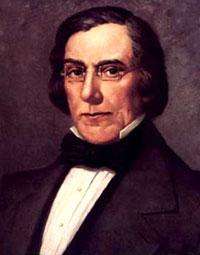
FDR appointed Hugo Black because he was a "thumping, evangelical New Dealer." Why can't Trump want a "thumping, evangelical MAGA warrior"?

|

The current outrage is that President Trump might seek to appoint judges who are in line with his MAGA agenda. This pearl clutching lacks any sense of history. Let's jump back about nine decades to the Democratic party's favorite modern president.

The centerpiece of President Franklin D. Roosevelt's domestic agenda was the New Deal. Roosevelt and New Dealers in Congress enacted statutes and reforms that clearly violated settled Supreme Court precedent. And, perhaps unsurprisingly, the Supreme Court halted several planks of his federal platform, as well as analogous state legislation.

FDR was so incensed by these rulings that he considered amending the Constitution to grant the federal government more powers. When that process seemed too difficult, he instead proposed the Court packing bill, to ensure there would be more Justices who supported his agenda. Ultimately, that plan never came to pass. Justice Owen Roberts, for one reason or another, began to uphold New Deal legislation. And soon enough, the Four Horsemen retired.

Biographer Howard Ball offers this account of how Roosevelt made his first Supreme Court appointment. Read it carefully: whenever you see the word "New Deal," substitute it for "MAGA." I think you'll get the picture quickly.

Consequently, Roosevelt turned to his attorney general, Homer Cummings, for a list of possible nominees to replace Van Devanter. Sixty names were produced, including federal judges, Solicitor General Stanley Reed, law professors such as Felix Frankfurter, and strong congressional defenders and advocates of the New Deal, including Senators Hugo Black of Alabama and Sherman "Shay" Minton of Indiana.

At a White House meeting, Roosevelt and Cummings agreed upon four criteria that the nominee had to meet. First, the nominee needed solid New Deal credentials; he had to be a "thumping, evangelical New Dealer," said Roosevelt (and Black was certainly that, having voted for all twenty-four of Roosevelt's major New Deal programs.) Second, he had to be confirmable in the Senate. Third, he had to be reasonably young. And finally, he had to come from a region of the country unrepresented (on the Court)--the West or the South. Using these criteria, by August 1, 1937, the two men had cut the list to seven names.

The seven included four federal judges (quickly dropped out because they were not economically liberal enough,) Solicitor General Reed (Kentucky), Senator Minton (Indiana), and Black. However, Reed, according to Roosevelt, "had no fire" and was dropped from consideration. . . .

Franklin Roosevelt, according to Harold Ickes, a Roosevelt Administration figure, liked Black very much. FDR thought Hugo was too liberal for his own state; while he was not as good a lawyer as others, he would make a good justice because of his support of New Dealism. According to Bill Douglas, at the time the new appointed chairman of the Securities and Exchange Commission (SEC), Roosevelt was attracted to Black for three reasons: his use of the investigative role of the Senate to shape the American mind of reforms, his strong voting record in the Senate, and his early support for FDR in 1933.

Douglas insisted that President Roosevelt chose Black because he wanted "to throw a 'tiger' as he put it, into the Court--an outstanding opponent of all that the old Court had done."

FDR wanted an economic liberal who supported his agenda, and would have courage on the Supreme Court. And who were Roosevelt's other picks: Solicitor General Stanley Reed, who defended New Deal policies in Court; Professor Felix Frankfurter, who provided the intellectual foundation of New Deal policies: William O. Douglas, who chaired the Roosevelt SEC; Attorney General Frank Murphy; Senator James Byrne, a New Dealer; Robert Jackson, the Solicitor General and Attorney General. FDR appointed all people close to him who he deemed loyal and supportive of the new Deal. Indeed, Byrne stepped down from the Court to take a position in the administration. Frankfurter continued advising Roosevelt even after he was appointed. These justices remained loyal to Roosevelt throughout.

If Trump simply said, "I want to appoint Justices like FDR did," would the left say "okay"? No. They'll say Trump is being hypocritical; progressives have no actual judicial philosophy, other than achieving progressive results, but conservative profess fidelity to originalism, which is not results oriented. Do as I say, not as I do.

For starters, I'm not sure Trump has ever said he was an originalist. And he has publicly disavowed those who supported his appointing originalists to the Court during his first term. Do you think anyone told Trump that appointing Justices who would overrule Chevron means that his policies get less deference?

Still, I will give Justice Black the benefit of the doubt, and assume was not just acting to support New Deal legislation. His judicial philosophy operationalized New Deal politics. His understanding of the Commerce Clause and other facets of federal authority led to decisions favorable to Roosevelt.

Relatedly, President Nixon wanted to appoint justices who were "tough on crime." As awful his picks were, Nixon succeeded on this limited front. The Burger Court scaled back the exclusionary rule and Miranda, even as they decided Roe v. Wade.

If Trump were to follow FDR's playbook, who would he pick? Let's see: who is a young Senator who supports the MAGA agenda who would be confirmed, and represents an under-represented part of the country? I think the obvious candidate would be Senator Josh Hawley. Plus, as a former Roberts clerk, that selection might even be enough to get Chief Justice to (at long last) retire.


Environmental Law

Permitting the Future

A symposium looking at the need to permit the construction and deployment of energy infrastructure in order to meet environmental goals.

|

Last week, the Supreme Court issued its long-awaited opinion in Seven County Infrastructure Coalition v. Eagle County. This opinion scaled back the (largely judicially imposed) requirements for Environmental Impact Statements under the National Environmental Policy Act (NEPA), and could dramatically reduce permitting burdens on needed infrastructure.

Also last week, the Case Western Reserve Law Review posted the papers from its "Permitting the Future" symposium issue. These papers examine the burden of permitting requirements on environmentally desirable development. Energy infrastructure is a major focus of the symposium, as it is of the larger debate over permitting, but some papers examine the effect on other issues, such as federal land management and urban revitalization.

The volume includes:

All of the papers are available online in their printed form.

My own contribution, beyond providing an introduction and overview, walks through the permitting gauntlet faced by the Lake Erie Wind Project, a gauntlet that ultimately killed the project. I believe it is a useful case study of how even well-intentioned permitting requirements and regulatory processes can make it very difficult for alternative energy sources to be developed and deployed (and can make it all-too-easy for a small set of determined opponents to kill a potentially valuable project).

The papers were prepared for a workshop co-sponsored by the Coleman P. Burke Center for Environmental Law (where I have spend the  past six years as the founding Director) and the Property and Environment Research Center (where I am a Senior Fellow).

Free Speech

"Trump Remedies to Harvard's Ills Should Respect Free Speech," by My Hoover Institution Colleague Peter Berkowitz

|

This excerpt from his piece today in Real Clear Politics should give you a flavor for the argument; the entire piece is worth reading:

In its multi-pronged efforts to pressure Harvard to live up to its self-proclaimed mission to seek and transmit knowledge and pursue the truth, the Trump administration seems to be of two minds on free speech. Along with demanding that Harvard meet its obligations under civil-rights law to combat antisemitism on campus and end race-based discrimination or lose federal funding, the Trump administration has conditioned billions in taxpayer dollars on the university's protecting the free speech on which excellence in scholarship and teaching depend. Yet the White House's remedies to Harvard's censoring and indoctrination clash with free-speech imperatives and risk turning Harvard, with its shameful record of stifling dissent from progressive orthodoxy, into a free-speech martyr.

Only weeks after inauguration, Vice President JD Vance delivered an unequivocal message to America's European friends: Free speech is central to our shared civilization and essential to our prosperity and security….  But the Trump administration's campaign against Harvard sends an equivocal message on free speech, affirming it and calling it into question….

Notwithstanding their many and serious faults, America's elite universities conduct extensive and costly scientific research that fuels America's global leadership in technology. A substantial portion of the billions in federal funds earmarked for Harvard frozen by the Trump administration supports such scientific research. Consequently, Trump's Harvard remedy erodes America's "technological edge." By operating against Harvard with a sledgehammer, the Trump administration not only breaks its promise to respect free speech but also impairs a core national-security interest….

Supreme Court

Is Justice Barrett "Solidifying Herself as the Swing Justice"?

Claims that Justice Amy Coney Barrett is at the center for the Court are not supported by the data. The truth is more complicated.

|

In a recent post, Josh Blackman writes that "Justice Barrett is solidifying herself as the swing Justice," citing a recent analysis by Adam Feldman of Legalytics. As someone who follows the Court quite closely, this did not seem right to me. It turns out my skepticism was warranted.

The primary point of Feldman's analysis, "The Myth of the Modern Swing Vote," is that there is no Justice Kennedy-style median justice on the current court. Rather, there is a more complex dynamic among the Court's six conservative justices that results in shifting coalitions depending upon the subject-matter and salience of the case at hand. But even with that caveat, and if one solely wishes to focus on which conservative justice's vote is most often in play to form a majority with multiple liberal justices, Feldman's analysis does not point to Justice Barrett. Indeed, it expressly rejects that position.

On the "central question" of "Which conservative justices act as swing votes—and under what conditions?" Feldman writes:

To answer this, I analyzed each instance where a conservative justice—Roberts, Kavanaugh, Barrett, Gorsuch, Alito, or Thomas—joined at least two liberal colleagues (Breyer, Sotomayor, Kagan, or Jackson) in forming the majority in a 5–4 or 6–3 decision. These are the votes that shift outcomes and signal ideological movement.

The results were clear—and revealing.

Chief Justice John Roberts was the most frequent swing vote, joining liberal-majority coalitions 31 times. Justice Brett Kavanaugh was close behind with 30 swings, followed by Justice Amy Coney Barrett, who broke ranks in 22 decisions. By contrast, Justice Gorsuch did so just 14 times, and Justices Thomas and Alito remained firmly aligned with the conservative bloc, swinging only 8 and 5 times, respectively.

And later he writes: "Roberts remains the most institutionally consistent swing voter."

Perhaps the Chief Justice as swing should be discounted, however, as it takes at least one more conservative justice to flip the outcome in a case. But even if one discounts the Chief Justice, Feldman's analysis identifies Kavanaugh as much more of a swing than Justice Barrett. It's even illustrated in a graph.

Feldman notes that the predictive model he develops is strongest with regard to Justice Barrett--suggesting a greater degree of jurisprudential consistency--but that is a different question. So he writes:

The quantitative and case-level analyses converge on a central insight: Justice Barrett's swing behavior, though less frequent than Roberts or Kavanaugh, is the most systematically tied to the nature of the case. While Chief Justice Roberts often garners attention as the Supreme Court's institutional swing vote, the data reveals a quieter but consequential evolution: Justice Amy Coney Barrett is emerging as a swing vote in key domains—particularly those involving enforcement power, procedural fairness, and statutory interpretation.

Since joining the Court in 2020, Barrett has aligned with liberal justices in multiple closely divided decisions. Her swing behavior concentrates in issue areas defined by constraint and clarity: the 4th Amendment & Police Powers and Post-Conviction & Habeas Corpus clusters. Her votes in these domains don't signal ideological drift but reflect a jurisprudence rooted in textual rigor and structural restraint. . . .

Barrett's swing votes do not appear driven by ideology—they are rooted in textual discipline, a willingness to reconsider enforcement practices, and a procedural sensibility that sometimes leads her to coalition with the Court's liberal wing. She is not a centrist in the Kennedy mold. But she is increasingly a structural voice for constraint—especially when liberty, enforcement, and precision intersect.

And in terms of how Justice Barrett's behavior differs from that of Roberts and Kavanaugh:

Chief Justice Roberts remains the most frequent swing voter. But his influence is no longer universal—it is situational, shaped by questions of institutional credibility and precedent. Justice Kavanaugh is nearly as likely to swing, particularly in cases involving procedural fairness or criminal law. And Justice Barrett, while swinging less frequently overall, shows the clearest directional shift: a rising presence in clusters where state power, enforcement boundaries, and constitutional dignity are contested.

This reflects not the death of the swing vote—but its transformation. The era of a single ideological median, epitomized by Justice Kennedy, has given way to a modular model: different conservative justices swing in different legal terrains, guided by distinct judicial logics.

Kennedy's swing votes spanned doctrines and decades. His role was personal, often framed in the language of dignity and individual autonomy. But today's Court does not hinge on personality. It hinges on terrain.

  • Roberts swings where institutional legitimacy is at stake—especially in administrative law, precedent-sensitive disputes, and interbranch tension.
  • Kavanaugh swings when procedural integrity comes to the foreground—cases involving arrest process, prosecution, or due process claims.
  • Barrett swings in domains of constitutional restraint—where liberty and dignity intersect with enforcement, and where doctrinal clarity can limit state power without signaling ideological compromise.

This fragmentation has both doctrinal and predictive consequences.

Among other things, Feldman notes, identifying and understanding the legal context of a given case is more important than political identity in determining whether one of these justices is likely to swing. That bottom line may not fit neatly into partisan or ideological complaints about any given justice's voting record, but it does provide important insight about the current Supreme Court.

David French Is Right: Judges Do Seek The "Respect" Of Their Peers

And that is the problem.

|

President Trump continues to shift paradigms and cause people to reconsider long-held beliefs. His latest Truth Social post has launched a thousands takes. I've already focused on Ed Whelan and the Wall Street Journal. Here, I will write about David French's column in the New York Times.

David purports to explain why many Republican-appointed judges have ruled against Trump. David is not simply writing based on what he reads in judicial opinions. Rather, he suggests that he has some inside information--or at least personal insights. French writes:

I come from the conservative legal movement, I have friends throughout the conservative legal movement (including many Trump-appointed judges), and I think I know the answer, or at least part of it.

David is speaking, or least he purports to speak, for judges that Trump appointed during his first term.

I've written that Whelan and the Wall Street Journal got the situation 100% backwards. French, to his credit, accurately perceives the symptoms, but makes the wrong diagnosis.

French explains that judges are more interested in the respect of their peers than the applause of the crowd:

The immense pressure that Trump puts on his perceived rivals and opponents exposes our core motivations, and the core motivations of federal judges are very different from the core motivations of members of Congress. Think of it as the difference between seeking the judgment of history over the judgment of the electorate, and to the extent that you seek approval, you place a higher priority on the respect of your peers than the applause of the crowd.

What David writes here is absolutely correct. But I don't think he sees the problem. Who are the "peers" that judges seek the approval of? Legal elites. The New York Times. The Wall Street Journal Editorial Page. The faculty at top law schools. Conservatives who are allowed in polite company. Look at the fawning treatment that Judges Wilkinson and Boasberg have received in recent months. By contrast, look at the crucible the press placed Judges Cannon and Judge Kacsmaryk under. If you rule the right way, you win awards and receive standing ovations from bar associations. If you rule the wrong way, you receive death threats. (The media has not seen fit cover the two cases in which defendants have pleaded guilty to threatening Judge Kacsmaryk--not just sending pizzas.)

There is an entire ecosystem established on the left and center-right to keep conservative judges in line. David is a focal point of that ecosystem. Indeed, this column, whether by design or intent, reinforces the theme that he and others are the gatekeepers of valid arguments.

Judges of all stripes seek the approval of one group over the other. David is simply telling us that seeking his approval is just fine, but don't even think about seeking other types of approval.

Judge Ho has written that most judges fear getting booed. He's right. And many judges really fear getting booed by people like Ed Whelan, David French, and the Wall Street Journal. What makes Trump nominees like Bove different is that they don't care. They reject these pillars of the conservative establishment. And in turn, the pillars can only charge people like Bove with being partisan hacks.

When I write about judicial courage, I am not simply speaking about standing up to pillories from the left. It also entails resisting pillories from the right. And this is the sort of fracture that we see happening before our eyes.

Those who once had influence see that influence slipping away. And the locus of influence is moving.

French writes:

If your decisions are the measure of your worth, then seeking the applause of the crowd can lead you down a dangerous path.

I agree, but I think seeking the applause from French and others is leading the Supreme Court down a very dangerous path. There is a storm brewing on the horizon.

Judges should stop seeking applause, full stop. Decide the case based on the law, and put all political considerations aside. We will all be much better for it. Judges have to follow the Constitution, just like the President.

Donald Trump

Hub and UnPopulist Podcasts About the Tariff Case

The podcasts cover the case and its relationship to the more general problem of abuse of emergency powers.

|

I recently did two additional podcasts on  our win in the tariff case before the US Court of International Trade, and its implications. One was with the Canadian conservative website The Hub:

The other podcast was with The UnPopulist (available here).

The Hub podcast focuses more on the legal issues at stake, while that with the UnPopulist considers the broader issue of abuse o emergency powers, and what can be done about it. I discussed that latter issue in greater detail  in a recent Lawfare article.

What Message Does Emil Bove's Nomination Send To Justices Thomas and Alito?

Do you really think Justices Thomas and Alito would prefer another Justice Barrett?

|

On Friday, the Wall Street Journal editorialized against Emil Bove's nomination. The Journal echoed points by Ed Whelan and others that fewer judges will step down if they think Trump will replace them with judges like Bove--including Justices Thomas and Alito:

The President should understand that his attacks on judicial conservatives will hurt his own agenda and legacy. His social-media post is the talk of the judicial ranks, and he is making no friends. Mr. Trump is likely to see fewer judges retire, lest they be replaced by partisan hacks. That includes Justices Samuel Alito (age 75) and Clarence Thomas (76). Keep exercising daily, good Justices.

Like Whelan, the Journal gets things 100% backwards. In Trump-related cases, Justices Thomas and Alito are dissenting alone. Look at A.A.R.P. v. Trump. Where are the three Trump appointees on that case? Justice Kavanaugh was the closest, but he still concurred. More generally, Justice Gorsuch has voted with Alito and Thomas on most religious liberty issues and separation of powers cases, but who can forget Bostock, McGirt, Brackeen, the tax return cases, and others. And as Adam Feldman's recent analysis shows, Justice Barrett is solidifying herself as the swing Justice. I appreciate this AI graphic from Adam's post. (Update: Jon Adler writes that Roberts, and not Barrett, is the true swing Justices. Well, yeah. But Roberts only makes 4. He needs to recruit Kavanaugh or Barrett to make a majority. And I'll let the Wall of Receipts speak for itself.)

If I had to guess, Justices Thomas and Alito would not want someone like the three Trump appointees to replace them. They would want someone who votes like them. Bove would likely fill the mold. Indeed, if the same sorts of people are advising Trump on his next batch of Supreme Court nominee who advised on his first batch, Thomas and Alito would just as well hold on.

Meanwhile, Politico quotes an unnamed conservative "consultant" who apparently has such strong insights, he cannot be named.

For Trump's allies, the Federalist Society now represents the old guard that "hide[s] behind a philosophy" instead of supporting the Republican cause, said one conservative consultant, who was granted anonymity in order to speak freely about dynamics in the Republican legal world. They want more people like Supreme Court Justice Samuel Alito and fewer people like Justice Amy Coney Barrett, the person said. . . .

"They don't want someone who's just going to be like, 'We're going to follow the law and do the originalistic thing, and whatever the result is, so may be it,'" said the consultant. "They want someone [who] can figure out how to get the result that they want."

Okay "originalistic" is not a real thing. I can't recall an actual originalist who has ever used this word. It mocks originalism. I have my doubts about this "conservative consultant's" insights into the conservative legal movement.

In any event, this quote backfires, big league. Justices Thomas and Alito are the standard-bearers for the conservative legal movement. This so-called conservative, by calling Emil Bove a political hack, is calling Thomas and Alito a hack.

More often than not, the difference between Justices Alito and Thomas, and their colleagues, is not jurisprudence, but courage. Alito and Thomas have been saying this for years. Only now, people are listening.

A kind note to Politico and other outlets: you can call me to get an on-the-record quote. You don't need to quote anonymous posters. Much of the reporting on this kerfuffle has been unusually one-sided. Quoting a Republican who disagrees with the Bove nomination does't count as "balance."

Free Speech

Plaintiff's Idaho Murder Libel Claim Continues to Beat Defendant's "Psychic Intuition"

More in Prof. Rebecca Scofield's defamation lawsuit against alleged psychic Ashley Guillard, based on Guillard's accusation that Scofield was involved in the Nov. 2022 murder of four University of Idaho students.

|

From Friday's decision by Judge Raymond Patricco (D. Idaho) in Scofield v. Guillard:

This case arises out of the tragic murder of four University of Idaho students in November 2022. Plaintiff Rebecca Scofield is a professor at the University of Idaho. She alleges that, despite never meeting any of these students or being involved with their murders in any way, Defendant Ashley Guillard posted numerous TikTok (and later YouTube) videos falsely claiming that Plaintiff (i) had an extramarital, same-sex, romantic affair with one of the victims; and then (ii) ordered the four murders to prevent the affair from coming to light….

Plaintiff asserts two defamation claims against Defendant: one is premised upon the false statements regarding Plaintiff's involvement with the murders themselves, the other is premised upon the false statements regarding Plaintiff's romantic relationship with one of the murdered students.

On June 6, 2024, the Court granted Plaintiff's Amended Motion for Partial Summary Judgment …. On the issue of liability for Plaintiff's two defamation claims against Defendant, the Court concluded that Plaintiff sufficiently demonstrated the absence of any genuine issue of material fact relating to the falsity of Defendant's statements about her. Id. (after citing evidence, stating: "This is powerful evidence at the summary judgment stage. It not only substantiates Plaintiff's argument that Defendant's statements about her are false, it also highlights the complete lack of any corroborating support for Defendant's statements.").

Under Rule 56, this shifted the burden to Defendant to dispute that claim by setting forth facts showing that there is a genuine issue for trial relating to whether her statements about Plaintiff are true. In relying only on her spiritual investigation into the murders, however, the Court concluded that Defendant did not satisfy her burden. Id. ("As a result, Defendant's psychic intuition, without more, cannot establish a genuine dispute of material fact to oppose Plaintiff's summary judgment efforts."). The Court therefore concluded that "the totality of the evidence reveals that there is no genuine dispute as to any material fact that Defendant defamed Plaintiff."

Also on June 6, 2024, the Court granted Plaintiff's Motion for Leave to Amend Complaint to Add Punitive Damages. In permitting a claim for punitive damages, the Court concluded that Plaintiff "established a reasonable likelihood of proving, by clear and convincing evidence, that Defendant's conduct in accusing Plaintiff of an affair with a student before ordering that student's and three other students' murders was oppressive, fraudulent, malicious, and/or outrageous." The extent of Plaintiff's damages, if any, remains an issue for trial.

Defendant moved to reconsider, but the court said no:

Defendant claims that newly discovered evidence (in the form of filings in a related state court criminal proceeding) "provides factual support that substantiates the Tik-Tok videos [Defendant] posted regarding the murder of the four University of Idaho students …." Defendant maintains that she cannot be found liable for defamation because this newly discovered evidence proves that she was telling the truth in these Tik-Tok videos, or otherwise highlights outstanding issues of material fact that precludes summary judgment…..

Read More

Checking A Presidential Bully

Do Congress and the courts have adequate tools to rein in Trump’s scattershot use of executive power?

|

[This is a guest blog from a friend and colleague, Abner S. Greene, who is the Leonard F. Manning Professor at Fordham Law School and has been following the constitutional separation-of-powers issues at the heart of many of the current cases involving the scope of President Trump's powers for many years.]

Donald Trump's aggressive use of executive power in his second term threatens to upset the balance of power between President and Congress, and although courts have pushed back against Trump's excesses,[i] up-front hurdles and back-end limits render courts an imperfect check.  In this essay I will describe an argument I made 30 years ago about the problem of expanded presidential power, explain the hurdles facing my suggestions for a better balance of executive-legislative power, discuss the limits of congressional power to check an unhinged President, and outline some difficulties with relying on courts to save the day.

In 1994, I published a law review article called "Checks and Balances in an Era of Presidential Lawmaking."[ii]  I examined the records of the 1787 constitutional convention and looked closely at the Federalist Papers.  From these materials, I concluded that "the framers were overwhelmingly concerned with either political branch aggrandizing its own power without sufficient checks.  To the extent that there is any 'original understanding' of the division of power between the President and Congress, it is that both are to be feared, neither is to be trusted, and if either one grows too strong we might be in trouble."[iii]

The article than zoomed forward to the post-New Deal era, where we have seen an enormous expansion of presidential power, sometimes from congressional delegations of power but other times without clear constitutional or statutory authorization.  Some of these presidential power-grabs are increases in foreign affairs or war power (e.g., attacking foreign nations without congressional authorization[iv]), while others are exercises of domestic policymaking without congressional approval, for example, dismantling a cabinet department, which one would think needs a statutory basis.[v]  In part to provoke discussion, I referred to such domestic policymaking actions – which seem to have the force of law – as lawmaking.  Understanding modern presidential power assertions in this way helps us see how far things have come since 1787.

I then examined several ways in which we might bring the Congress-President relationship back into the kind of balance the framers envisioned.  One angle was to support congressionally created independent agencies, where the heads may not be fired by the President except for good cause.  But in the intervening 30 years, the Supreme Court has increasingly (and incorrectly)[vi] cut back on Congress' power to create such agencies, asserting that they improperly take executive power from the President.[vii]  Another angle was to argue for congressional power to act through bicameralism (i.e., majority support in both houses of Congress) but not presentment (i.e., without need to present a Bill to the President for his approval and signature), in situations where the House and Senate deem a presidentially supported regulation beyond the scope of statutory delegation.[viii]  This would involve overruling INS v. Chadha,[ix] which nixed such a "legislative veto"[x] for not following proper Article I, section 7 process,[xi] and although I still support this move as a proper translation of how the framers would have wanted balanced power in today's world, I recognize that the U.S. Supreme Court is unlikely to overrule Chadha.[xii] Read More

Higher Education

"AI and the Death of Literary Criticism"

|

A very interesting piece by Prof. Thomas Balazs in Quillette. An excerpt:

When ChatGPT can analyse Hamlet as well as any grad student, we might reasonably ask, "What is the point of writing papers on Hamlet?" Literary analysis, after all, is not like building houses, feeding people, or practising medicine. Even compared to its sister disciplines in the humanities (e.g., history or philosophy) the study of literature serves little practical need. And, besides, when machines can build houses as easily as people, we won't need people to build houses either.

So, why do we teach English literature (or "language arts," as some secondary schools now call it) at all? According to the nineteenth-century British literary critic Mathew Arnold, the purpose of studying and teaching literature is "to know the best that is known and thought in the world, and by in its turn making this known, to create a current of true and fresh ideas." … English literature was, in truth, a substitute for religion. We wanted people to be good, but we no longer believed in God. Instead, we believed in Shakespeare, Milton, and eventually Toni Morrison. Until we didn't.

It's always been problematic, though, this idea that literature makes you a better person. Besides the obvious counterfactuals—the allied soldiers allegedly found copies of Johann Wolfgang von Goethe's works in the desk drawers of Nazi prison guards when they liberated the camps—there were the problems that always arise when you try to push your religion on other people.

Our religion was literature, and like any people of true faith, we deeply believed in it, thought it was essential, thought everyone must be saved through it. The remarkable thing was that we somehow convinced American college presidents of the idea, but then again, many of them, like University of Chicago president Robert Hutchins, creator of the "Common Core" and advocate of "Great Books," were members of the same religion. Not all countries make students of mathematics and engineering take literature courses, but in the United States we do. So for nearly a century, we evangelised our religion to college students, some of whom were already in love with reading and therefore happy to worship at the Temple of Literature. Many were not, but, nonetheless, we rammed Shakespeare, Herman Melville, and Toni Morrison down their throats—to make them better people.

That doesn't mean that it necessarily stayed with them…. Some students of the right temperament and with the right intellectual predilections are drawn to the Temple of Literature, but most are not. For most, it is like going to Sunday school—they endure it reluctantly and quickly forget any lessons learned.

But that's just an excerpt; here's the whole thing.

Tariffs

Prof. Jack Goldsmith (Harvard) on "The Weaknesses in the Trump Tariff Rulings"

|

A very interesting item in the Executive Functions substack newsletter, written by a leading expert on Presidential power:

On Wednesday, the U.S. Court of International Trade (CIT) ruled that the International Emergency Economic Powers Act (IEEPA) did not authorize President Trump's sprawling tariff policies and permanently enjoined them. On Thursday a federal district court in the District of Columbia reached the same conclusion about IEEPA for different reasons, and issued a preliminary injunction.

Before these rulings, I disagreed with most of the commentary on Trump's IEEPA sanctions and thought that the legal issues here were hard and close. Neither ruling convinced me otherwise. In what follows I explain why, though I must be necessarily selective in addressing complicated opinions chock full of technical arguments.

As I explain in the end, I think the lawfulness of Trump's IEEPA tariffs depends a lot on the proper application of the major questions doctrine (MQD) that both the CIT and the district court under-examined. Indeed, I think the major questions doctrine will be the central issue before the Supreme Court when these cases reach it. A reader in a hurry might skip the long intervening statutory interpretation technicalities and go directly to the more interesting and to my mind consequential analysis of the MQD's relevance at the end of this piece.

The Case for Trump's Tariffs Under IEEPA

IEEPA grants the president a number of emergency authorities, one of which is the authority to "regulate … importation … of … any property in which any foreign country or a national thereof has any interest by any person." It further provides that the president may exercise this authority "to deal with any unusual and extraordinary threat, which has its source in whole or substantial part outside the United States, to the national security, foreign policy, or economy of the United States, if the President declares a national emergency with respect to such threat." …

Much worth reading in its entirety.

More