California SB 771, which is now on Governor Newsom's desk for signature, would add a new statute that provides the following (some structure added):
(a) A social media platform [that has >$100M in annual revenues] that
violates [California Civil Code] Section 51.7, 51.9, 52, or 52.1 through its algorithms that relay content to users
or aids, abets, acts in concert, or conspires in a violation of any of those sections,
or is a joint tortfeasor in a violation of any of those sections,
shall … be liable to a prevailing plaintiff for a civil penalty for each violation sufficient to deter future violations but not to exceed [$1M for knowing violations, and $500K for reckless violations, potentially doubled if the platform knew, or should have known, that the plaintiff was a minor].
(b) (1) For purposes of this section, deploying an algorithm that relays content to users may be considered to be an act of the platform independent from the message of the content relayed.
(2) A platform shall be deemed to have actual knowledge of the operations of its own algorithms, including how and under what circumstances its algorithms deliver content to some users but not to others.
To explain (with some oversimplification) the statutory cross-references,
From Chief Judge James Boasberg (D.D.C.) yesterday in Doe v. NFL:
Plaintiff John Doe says that he is a Black man who has looked on with disgust, humiliation, and anxiety as the National Football League has discriminated against Black quarterbacks and coaching candidates and meted out harsher discipline to Black players.
He has finally had enough. So he is suing the league for violating the DC Human Rights Act, the DC Consumer Protection Act, DC's law barring businesses from racial discrimination, Title VII, and the Sherman and Clayton Acts, as well as negligence and intentional infliction of emotional distress. He wants declaratory and injunctive relief, plus $100 million in compensatory damages and $500 million in punitive damages. And he now moves to sue under a pseudonym. The Court will deny the Motion….
Generally, a complaint must identify the plaintiffs. See Fed. R. Civ. P. 10(a); [Local Civil Rules] 5.1(c)(1), 11.1. That requirement reflects the "presumption in favor of disclosure [of litigants' identities], which stems from the 'general public interest in the openness of governmental processes,' and, more specifically, from the tradition of open judicial proceedings." … Plaintiff has not shown that his privacy interests outweigh the public's presumptive and substantial interest in learning his identity.
I'm serializing my forthcoming Emory Law Journal article titled Addiction to Constitutionally Protected Activity: Speech, Press, and Religion. In my first two posts, I argued that calls to regulate social media platforms and video games on the theory that they are "addictive" could equally plausibly be made with regard to various religious practices, which seem to share some of the supposedly "addictive" properties—yet of course the Free Exercise Clause would preclude such regulation, at least as to adults. Here's where I also apply that to attempts aimed at shielding children from supposedly addictive religious practices; in coming posts, I'll talk about how this reasoning also applies to attempts aimed at shielding adults and children from supposedly "addictive" speech products:
[* * *]
So far, we have been speaking of the religious freedom rights of adults, and of religious organizations that deal with adults. But the Free Exercise Clause would also likely impose serious constraints on attempts, aimed at preventing "addiction of minors," to restrict religious organizations' conduct and speech.
[1.] "Addictive" practices promoted by parents
To begin with, say adults deliberately get their children involved in a religious institution or community, in a way that foreseeably (or even intentionally) makes the child emotionally dependent on that belief system and its practices. Indeed, say that there may be some plausible reason to think that this will lead to long-term emotional or financial harm to the children—for instance, by making them feel bad about their sexual desires or their sexual preferences, by teaching children that there are certain jobs or life paths that they shouldn't take because of what sex they are, or by depriving them of access to a quality secular education, leaving them ill-prepared for work.[48] Say that there is evidence that it's hard for people who grow up in the particular community to leave it as adults, even if they are dissatisfied with its teachings: They may feel fearful of damnation, or concerned about the possible loss of relationships with family members and friends.[49]
Yet it seems clear that, even under these circumstances, the Free Exercise Clause would preclude the government from trying to interfere with such parental attempts to inculcate religious beliefs into their children. Parents, for instance, have a constitutional right to send their children to private religious schools, including when they do so precisely to make sure that the children are properly taught the parents' religious beliefs.[50] Likewise, I take it that the government can't order churches to exclude children from certain programs that are seen as unduly psychologically addictive. And the government can't order religious web sites to take steps to make sure that certain religious teachings of those sites aren't accessed by minors.
From yesterday's decision by Magistrate Judge Elizabeth Stafford in Evans v. Robertson(E.D. Mich.) (both parties are pro se):
The Court notes that the parties' briefing contained multiple factitious citations and quotations, presumably a product of using artificial intelligence (AI) software. For example, Evans cites Aguirre v. Reese, No. 2:12-cv- 01837, 2013 WL 6577085, at *5 (D. Nev. Dec. 13, 2013). ECF No. 64, PageID.559. The citation is nonexistent, and the District of Nevada assigned that case number to Mazzorana v. Emergency Med. Phys. Grp., in which no filings were made on December 13, 2013. Next, Evans attributed the following quote to Doe v. F.B.I., 218 F.R.D. 256 (D. Colo. 2003): "Parties may not evade service by hiding behind pseudonyms while continuing to engage in legal actions using those same identities." ECF No. 64, PageID.561. That case contains no such language, nor has the Court found that language in any other case. Evans likewise misattributes quotations to two other cases. ECF No. 64, PageID.570-571 (citing United States v. Ziegler Bolt & Parts Co., 111 F.3d 878 (Fed. Cir. 1997); Sec. & Exchange Comm'n v. Knowles, 87 F.3d 413 (10th Cir. 1996)).
Robertson's filings also contain inaccurate citations. She cites Mickens v. 10th Jud. Dist. Ct., 460 F. App'x 728 (9th Cir. 2011), in support of her argument that courts may dismiss actions used to harass or intimidate rather than to vindicate legitimate claims. ECF No. 39, PageID.352. Although two cases by that title exist, Robertson's citation is inaccurate. See Mickens v. 10th Jud. Cir. Ct., 458 F. App'x 839 (11th Cir. 2012); Mickens v. 10th Jud. Cir., 181 F. App'x 865 (11th Cir. 2006). The cases were decided by the Eleventh Circuit and concern the application of the Rooker-Feldman doctrine and not dismissal of abusive litigation.
Robertson also cites McNair v. Everly, No. 18-12511, 2019 WL 2560069 (E.D. Mich. June 20, 2019), which does not exist. ECF No. 71, PageID.686. This district assigned that case number to Arnold v. Fresh Start Transitional Homes, in which no filings were made on June 20, 2019. Robertson's filings also contain other inaccuracies that the Court will not belabor here….
Pro se parties are expected to strictly follow procedural rules, and no authority suggests that those rules "should be interpreted so as to excuse mistakes by those who proceed without counsel." If an attorney had submitted a brief littered with inaccurate citations, Federal Rule of Civil Procedure 11 sanctions would have been appropriate.
The parties' pro se status offers no excuse for the factitious citations or quotations, and the Court will not tolerate this practice in future filings from either party. In each of their future filings, Evans and Robertson "must include a written representation that [they have] personally checked each legal citation and each citation is accurate and stands for its asserted proposition." Failure to do so may result in a recommendation to impose more stringent sanctions.
The song was written by Suno, in response to my short prompt that basically summarized the topic and provided the opening line; here are the resulting lyrics, with no edits on my part:
The case is Mendones v. Cushman & Wakefield, Inc., decided Sept. 9 by Judge Victoria Kolakowski (Cal. Super. Ct. Alameda County). Here's a short excerpt; the whole opinion (including copied images and detailed analysis) is worth reading:
The Court finds that Plaintiffs violated section 128.7(b) of the Code of Civil Procedure by submitting fabricated evidence in support of their motion for summary judgment….
The Court finds that exhibits 6A and 6C are products of GenAI and do not capture the actual speech and image of Geri Haas. In other words, these exhibits are deepfakes….
While the "person" depicted in exhibits 6A and 6C bears a passing resemblance to the person depicted in exhibit 36, they are not the same person. The accent, cadence, volume, word choice, pauses, gestures, and facial expression, among other characteristics, of the person depicted in exhibit 36 are vastly different from those demonstrated by the "persons" depicted in exhibits 6A and 6C….
The court also found other alterations, and concluded:
The Court finds that a terminating sanction is appropriate. This sanction is proportional to the harm that Plaintiffs' misuse of the Court's processes has caused. A terminating sanction serves the appropriate remedial effect of denying Plaintiffs— and other litigants seeking to make use of GenAI to submit video testimonials—of the ability to further prosecute this action after violating the Court's and the Defendants' trust so egregiously.
The decision in Chislett v. N.Y. City Dep't of Ed., decided today by Judge Pierre Leval, joined by Judges Joseph Bianco and William Nardini, dealt with a lawsuit brought by Chislett, a New York educator and administrator. Following a Department program of implicit bias trainings, and conflict that arose there, Chislett was demoted and then quit. The court rejected Chislett's claim of discriminatory demotion and constructive discharge, but held that Chislett's hostile work environment claim could go forward; here's an excerpt from the long opinion:
The test for a hostile work environment involves "both objective and subjective components: the conduct complained of must be severe or pervasive enough that a reasonable person would find it hostile or abusive, and the victim must subjectively perceive the work environment to be abusive." … Drawing all reasonable inferences in Plaintiff's favor, a rational juror could find that discriminatory conduct at the DOE was sufficiently severe and pervasive to have created a hostile work environment…. Chislett set forth sufficient evidence for a rational juror to find that she was repeatedly exposed to racial harassment at her workplace throughout 2018 and 2019.
First, Chislett presented evidence from which a rational jury could find that racist comments were expressed during bias trainings. For example, instructors mentioned several times that the "values of [w]hite culture are supremacist." Similarly, during one training session, Ababio-Fernandez, Senior Executive Director of the OEA [DOE's Office of Equity & Access], declared: "There is white toxicity in the air, and we all breathe it in." In the sessions, there was persistent messaging to the effect that white culture is generally "[d]efensive[];" "[e]ntitle[d];" "[p]aternalis[tic];" "[p]ower [h]oard[ers];" and "[p]rivilege[d]."
Further, there was physical segregation of white employees and singling out of staff by race during one training session as participants were ordered as to racial privilege associated with whiteness and physically "lined up to reveal the dividing 'color line of privileges that favored whites.'" Negative generalizations and stereotypes about white people were also targeted specifically at Chislett during the trainings. For instance, during a Q&A session, instructors told Chislett that her "interest in excellence was perfectionism and consistent with white supremacy." On the question of the objectivity of considering the training environment hostile and abusive, it is pertinent that one of Chislett's co-workers was similarly upset about the racial generalizations and that another regarded the DOE as "an extremely hostile environment for white individuals." {[And t]he fact that the purpose of the sessions was to combat race discrimination does not excuse the alleged presence of race discrimination in the conduct of the sessions.}
I'm serializing my forthcoming Emory Law Journal article titled Addiction to Constitutionally Protected Activity: Speech, Press, and Religion. In my first post, I argued that calls to regulate social media platforms and video games on the theory that they are "addictive" could equally plausibly be made with regard to various religious practices, which seem to share some of the supposedly "addictive" properties. But I follow this with an explanation that such regulations of religious practices would be unconstitutional. Here's the explanation as to adults; in the next post, I'll talk about how it also applies to attempts aimed at shielding children:
[* * *]
Yet I take it that our legal system wouldn't allow the government to regulate such religious practices in order to prevent people from making such unwise decisions. To be sure, religious institutions can be barred from engaging in physical abuse or physical coercion.[33] They can also be barred from outright lies about specific and secularly determinable factual assertions (e.g., about where donations would be going, or about whether the speaker had witnesses a divine visitation or healed someone through prayer).[34]
But the law can't prevent trying to play on people's emotions through religious leaders' sincerely believed theological claims about Heaven and Hell, or through the leaders' reliance on followers' desire for community acceptance or fear of excommunication. That is true of tort liability as well as of legislation.[35]
And that is true in spite of the fact that some religious groups, belief systems, and practices may be genuinely psychologically harmful—or, as critics of various religions have argued for millennia, may be tools that some religious leaders use to cynically milk parishioners for money. Religion can damage or destroy some people even as it helps or rescues others. (My argument doesn't rest on the theory that religion is uniformly good or even good on balance, and I personally am not religious.) Yet secular legal rules generally aren't allowed to protect people from supposedly manipulative or even addictive religious practices.
That is so, I think, for several closely related reasons.
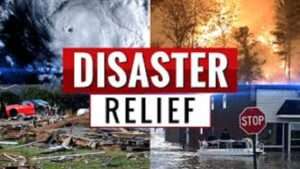
Earlier today, in Illinois v. FEMA a federal district court ruled the Trump administration cannot deny federal disaster relief aid to "sanctuary" states that limit assistance to federal efforts to deport undocumented immigrants. The suit was brought by twenty state governments, led by the state of Illinois, and by the District of Columbia. This is the latest in a long line of decisions striking down Trump Administration efforts to impose immigration-related conditions on federal grants to state governments, even though those conditions were never authorized by Congress.
Federal District Judge William E. Smith (a Republican George W. Bush appointee) ruled the Trump conditions violated the Spending Clause of the Constitution in three ways: the conditions are ambiguous, they aren't related to the purposes of the grants in question, and they are onerous enough to be coercive:
First, the Court finds that the contested conditions are not reasonably related to the purposes of the grants to which they attach. DHS justifies the conditions by pointing to its broad homeland security mission, but the grants at issue fund programs such as disaster relief, fire safety, dam safety, and emergency preparedness. Sweeping immigration-related conditions imposed on every DHS-administered grant, regardless of statutory purpose, lack the necessary tailoring. The Spending Clause requires that conditions be "reasonably calculated" to advance the purposes for which funds are expended, [South Dakota v.] Dole, 483 U.S. at 209, and DHS has failed to demonstrate any such connection outside of a few programs like Operation Stonegarden. The Court therefore concludes that the conditions are overbroad and unrelated to the underlying programs.
Second, the Court finds that the conditions are coercive. The record shows that states rely on these grants for billions of dollars annually in disaster relief and public safety funds that cannot be replaced by state revenues. Denying such funding if states refuse to comply with vague immigration requirements leaves them with no meaningful choice, particularly where state budgets are already committed. The financial pressure here goes well beyond the "relatively mild encouragement" approved in Dole, 483 U.S. at 211, and amounts instead to "economic dragooning" of the sort condemned in NFIB [v. Sebelius], 567 U.S. at 582. The coercion is even more pronounced because the threatened funds involve essential public safety responsibilities rather than optional or peripheral programs.
Third, the Court holds that the conditions are unlawfully ambiguous. The Spending Clause requires clarity so that states may exercise their choice knowingly. Here, DHS required states to provide "cooperation" and participate in "joint operations" and "information sharing," but without defining what compliance entails. Likewise, the prohibition on operating programs that "benefit illegal immigrants" or "incentivize illegal immigration" provides no meaningful standards and is hopelessly vague. States cannot predict how DHS will interpret these vague terms, yet they risk losing billions in federal funding for any perceived violation. Such ambiguity deprives the states of the ability to make informed decisions, rendering the conditions constitutionally invalid.
During Trump's first term, his administration lost numerous lawsuits over issues like this one. Last November, I predicted we would see a repetition of this pattern in his second term. It wasn't a hard prediction, and I don't claim any great credit for it. Sure enough, Trump 2.0 has indeed lost multiple cases over its attempts to impose grant conditions on sanctuary jurisdictions. Today's ruling follows a similar April decision addressing a variety of federal grants, and one in June dealing with transportation grants.
In the November 2024 post, I noted that longstanding Supreme Court precedent holds that conditions on federal grants must 1) be enacted and clearly indicated by Congress (the executive cannot make up its own grant conditions), 2) be related to the purposes of the grant in question (here, transportation grants cannot be conditioned on immigration enforcement), and 3) not be "coercive."
In the disaster aid case, the court seems obviously right to conclude the Trump conditions violated the first and second of these requirements. I would add that, in addition to being ambiguous, the conditions also were never authorized by Congress. And, Congress, not the executive, controls the spending power.
Whether the disaster aid conditions are also "coercive" is more debatable. The Supreme Court's jurisprudence on coercive grants is far from a model of clarity. NFIB v. Sebelius (2012), cited in today's ruling famously held that a condition onerous enough to be a "gun to the head" is coercive, but doesn't clearly explain exactly where the line between coercion and mere inducement is. I suspect that states actually vary as to the extent of their dependence on federal disaster aid, and therefore the conditions here may be coercive as to some states, but perhaps not others. Regardless, they were rightly invalidated on the other two grounds.
Today's ruling also holds that the disaster aid conditions violated the Administrative Procedure Act by being "arbitrary and capricious." I will leave that issue to others with greater relevant expertise. I will also pass by the procedural mootness issue addressed by the court.
There is, I think, a good policy argument for reducing federal disaster aid to state governments, and leaving most disaster relief to state, local, and private initiative. But that doesn't mean the executive should be able to use disaster relief as leverage to control state policy on unrelated issues. More generally, as I have long argued, executive-imposed spending conditions are a major threat to both federalism and separation of powers. Today's ruling, and others like it, help stave off that danger.
They also reinforce Steve Vladeck's point that the judiciary is resisting Trump's power grabs more effectively than many think. The second Trump Administration, like the first, keeps losing sanctuary city cases, and so far they have not tried to get them to the Supreme Court (probably because they know they are like to lose there, too). Because the issue has not reached the Supreme Court, and because there is so much else going in the news cycle, these cases have not attracted much public and media attention. But they nonetheless have substantial real-world effects. Had they gone the other way, Trump would have many more levers to compel state and local governments to do his bidding. That doesn't mean courts are doing everything right (they aren't), or that they can curb Trump's illegal policies entirely on their own (the latter requires a strategy combining litigation and political action). But they are making a real difference.
From today's decision by Judge Karen Schreier (D.S.D.) in Hook v. Rave:
Hook is a tenured Professor of Art at the University of South Dakota. He has taught at the University since 2006.
In the late afternoon on September 10, 2025, while at home and off work, Hook posted the following message concerning the recent shooting and killing of Charlie Kirk to his private Facebook account:
Okay. I don't give a flying f*** [the original reads "fuck" -EV] about this Kirk person. Apparently he was a hate spreading Nazi. I wasn't paying close enough attention to the idiotic right fringe to even know who he was. I'm sorry for his family that he was a hate spreading Nazi and got killed. I'm sure they deserved better. Maybe good people could now enter their lives. But geez, where was all this concern when the politicians in Minnesota were shot? And the school shootings? And Capitol Police? I have no thoughts or prayers for this hate spreading Nazi. A shrug, maybe.
Approximately three hours later, while still at home and off work, Hook removed the above message and made a second post. The second post stated:
Plaintiff Yacoub Ould Sidya resides in Mauritania in Western Africa. But he initiated this defamation lawsuit in the Western District of Kentucky. The question before the Court is whether Plaintiff should have to travel from Mauritania to Louisville, Kentucky for his deposition….
On March 17, 2024, Defendant Sidi Mohamed Kmache, a social media influencer from Mauritania that resides in Louisville, Kentucky, published a Facebook post ("the Post") about Plaintiff Yacoub Ould Sidya. The Post stated that police had surrounded Plaintiff's home, that Plaintiff owns an insurance company and "a plane to transport gold," and that the police entered his home to search it. According to Plaintiff, the information in the post is false.
The aftershock of the Post, Plaintiff explains, resulted in his house and phone being flooded with concerned visitors and callers, his sister getting into a car accident on her way to his house, his brother "also narrowly escaping bodily injury," and his son being bullied at school. Per Plaintiff, Defendant perpetuates this type of illegal scheme against other Mauritanians, by manufacturing defamatory fiction, posting about it on Facebook, and then offering to remove the content for a ransom payment.
One month after the Post, Plaintiff initiated this action in the Western District of Kentucky, alleging defamation and intentional infliction of emotional distress against Defendant….
My coauthors Cassandra Robertson, Zoe Robinson, and I have published a symposium piece entitled "Public Health Policy as Public Choice Failure" in the Houston Journal of Health Law & Policy, in which we use a public choice lens to examine the United States' often-unfortunate public health journey. Here is the abstract:
The COVID-19 pandemic has wrought a devastating toll, causing over a million deaths in the United States along with widespread disability and economic disruption. Yet the magnitude of these costs was not inevitable—it was shaped by the policy choices made in response to the crisis. This Article argues that the U.S. pandemic response suffered from public choice dynamics that systematically skewed policymaking away from the public interest. Examining three key policy areas—vaccine rollout, mask mandates, and ventilation standards—the Article demonstrates how misaligned political incentives led officials to prioritize short-term appeasement of a pandemic-weary public over science-based strategies that would maximize long-term welfare. In each domain, political actors faced strong incentives to downplay risks, overpromise solutions, and delay difficult decisions, resulting in a pandemic response that was often too little, too late, and too beholden to partisan interests. The Article concludes that reckoning honestly with these failures is a crucial first step toward reforming our public health institutions and ensure a more effective response to the next crisis. It offers recommendations for rebuilding public trust, depoliticizing public health communication, and institutionalizing science-based policymaking. More broadly, the Article underscores the urgent need to realign political incentives with the public interest in the prevention of and response to public health emergencies.
For more on the underlying errors in the plaintiffs' brief, see here. An excerpt from yesterday's sanctions order, in Puerto Rico Soccer League NFP, Corp. v. Federacion Puertorriquena de Futbol:
Plaintiffs' motions included at least fifty-five defective citations, requiring hours of work on the Court's end to check the accuracy of each citation. Plaintiffs' counsel never offered a satisfactory explanation for why their citations in multiple motions were so severely flawed. Plaintiffs denied using generative artificial intelligence. But the sheer number of inaccurate or nonexistent citations suggests otherwise. And in any event, the violations of Fed. R. Civ. P. 11 and applicable ethical rules occurred regardless of whether they were caused by misuse of generative artificial intelligence or other means. This behavior stands in contrast to several of the cases [that imposed much lower sanctions], where various attorneys facing sanctions offered an explanation as to how they erred.
Defendants actually asked for $60K in compensation for the attorney fees and research costs expended to deal with the incorrect citations, but the court reduced that by 60%:
The Court is aware that the errors committed by Plaintiffs' counsel received national attention, and that given both attorneys work for small firms and describe themselves as solo practitioners, the initial lodestar amount would prove a heavy financial burden. Furthermore, it is well-known that "an appropriate sanction should be no more severe than necessary to assure the deterrent objective" of Fed. R. Civ. P. 11…. [T]he Court is aware of no cases where a sanction approaching sixty thousand dollars for the misuse of artificial intelligence has been applied.
Salvador J. Antonetti-Stutts and Aníbal A. Román Medina (O'Neill & Borges LLC) and John J. Kuster, Jon Muenz, and Amanda M. Blau (Sidley & Austin LLP) represented defendants on the sanctions motion.
I have a forthcoming article with this title in an Emory Law Journal symposium issue, so I thought I'd serialize it here; there's plenty of time to improve it, so I'd love to hear people's feedback.
The background is, of course, the calls to regulate social media platforms and video games on the theory that they are unduly addictive. You'll see I'm skeptical about that. I start by arguing that similar arguments could be made as to religious practice, but that we should reject such regulations of "addictive" religious practice as violating religious freedom. I then argue that, analogously, we should reject regulations of "addictive" communicative products as violating the Free Speech and Free Press Clauses.
[* * *]
Introduction
Most behavior that is potentially addictive to some people is also pleasant and largely harmless to others. Gambling is a classic example: It seriously harms some people, but provides fairly inexpensive pleasure to others. Indeed, this is true even for some physiologically addictive substances, such as alcohol and likely some other drugs. There are many alcoholics, but many more nonaddicted social drinkers who genuinely enjoy moderate drinking.
Of course, for many behaviors, this effect just requires legislatures to ask a familiar regulatory tradeoff question: When should the freedom of some (even of many) be restricted to prevent harm to others? Different legislatures may answer this question differently as to different activities.
But when the behavior is also constitutionally protected, the problem becomes more difficult: Restricting the constitutional rights of some in order to prevent harms—especially self-inflicted harms—to others generally requires much more justification. This short essay will delve deeper into this question, focusing especially on free exercise rights and free speech/free press rights.
I. Religion
A. Adults
Religious practices as addictive
Many of the arguments that label certain interactions with speech products as "addiction" would apply much the same way to religious practices (whether or not the arguments' supporters would seek to so apply them). Yet I take it—and I will defend this in more detail below—that few of us would accept such arguments as a basis for restricting such religious behavior.
a. Harm
To begin with, religious practice, like supposedly addictive speech, can lead to economic loss and physical and mental harm. Some people may join religious groups that pressure them to donate substantial sums—perhaps as recurring 10% tithes,[1] or as occasional larger contributions[2]—with the pressure coming from the threat of social ostracism or eternal damnation, or from the promise of community or eternal salvation. That is presumably more serious pressure for most people than the pressure to make more in-game purchases.