The Volokh Conspiracy

Mostly law professors | Sometimes contrarian | Often libertarian | Always independent | Est. 2002

The Volokh Conspiracy

Possible Tort Liability for Harvard in Donated Cadaver Parts Theft Case

|

A short excerpt from yesterday's long Massachusetts high court decision in Weiss v. President & Fellows of Harvard College, written by Justice Scott Kafker:

In a macabre scheme spanning several years, Cedric Lodge, the person responsible for the care of cadavers at the Harvard Medical School morgue, dissected, stole, and sold parts of the bodies of individuals who donated their remains for research purposes….

Decedents' relatives sued Harvard, and the court concluded that the case could go forward, despite "the 'good faith' defense under the Uniform Anatomical Gift Act (UAGA …)":

As outlined in [a criminal] indictment, Lodge stole dissected portions of donated cadavers, including heads, brains, skin, bones, and other human remains, and transported them to his home in New Hampshire. From there, Lodge and his wife sold the stolen body parts to buyers, including the two alleged coconspirators, with whom they communicated via social media websites and cell phones.

Lodge also allowed third parties unauthorized access to the morgue in order to select body parts for purchase. For example, alleged coconspirator Katrina Maclean {the proprietor of "Kat's Creepy Creations"} agreed to meet Lodge at the Harvard morgue at 1 p.m. on Wednesday, October 28, 2020, to purchase two dissected faces for $600. Lodge also assisted Maclean with finding human skin to provide to a third party in exchange for his services tanning other human skin into leather. Coconspirator Joshua Taylor sent thirty-nine electronic payments, totaling over $37,000, to a PayPal account operated by Lodge's wife, including a $1,000 transaction with the memo "head number 7" and a $200 transaction with the memo "braiiiiiins."

While employed by Harvard during the period in which he was dissecting, removing, and selling donated body parts for profit, Lodge commuted to work in a car with a license plate that stated, "Grim-R." …

Read More

Hoover Fellow Program: Up-to-5-Year Paid In-Residence Position for Aspiring Academics (Including Aspiring Legal Academics)

|

The Hoover Institution at Stanford University, where I'm now a Senior Fellow, has long offered up-to-5-year paid in-residence positions (with no teaching obligations) in various fields.

This year, we'll also be considering people who are interested in becoming legal academics. We expect the selection process to be highly competitive: The position is unusually generous, compared to other fellowships, in salary ($165K-230K/year plus a $20K housing allowance), potential length, and lack of teaching obligations.

To be realistically eligible, applicants should have clerkships, top grades, published law review articles, and plans for new articles. It seems likely that most applicants will be from the Usual Suspect academic feeder law schools, but I'm a UCLA law graduate myself, so I'm certainly open to top people from other schools as well. We have no particular preferences for any particular fields within law: We'll gladly consider people who want to work in business law, constitutional law, international law, criminal law, immigration law, and all sorts of other topics.

The application deadline is Nov. 18, and the details are at https://www.hoover.org/hoover-fellows-program. Note that there would be no obligation for people to stay the full five years (and probably an expectation that they would stay no more). If someone gets a tenure-track law school teaching position two or three years into the fellowship—which tends to be the norm in the law market—we would be delighted to see them take it.

Read More

crime victims

Why the Supreme Court Should DIG Ellingburg v. U.S. Next Week

The Court granted cert to review whether criminal restitution under the Mandatory Victim Restitution Act is "penal" in character. But the defendant was ordered to pay restitution under a different statute.

|

Whoops! What happens if the Supreme Court grants certiorari to review a question presented about a particular statute—but the case does not involve that statute?! That's the situation in Ellingburg v. United States, a case that will be argued next week (Tuesday, October 14). The Court granted review of the question presented "[w]hether criminal restitution under the Mandatory Victims Restitution Act (MVRA) is penal for purposes of the Ex Post Facto Clause." But closely analyzing the proceedings below reveals that the petitioner/defendant was actually ordered to pay restitution not under that mandatory statute but under the discretionary regime of the Victim Witness Protection Act (VWPA). Accordingly, the Court should resolve the case by dismissing it as improvidently granted—or, colloquially, the Court should "DIG."

The Ellingburg case has been largely overlooked in previews of the Court's upcoming Term. But Ellingburg raises an important issue for the crime victims' rights movement: Whether restitution is "penal" in character because it punishes criminal defendants. If restitution is characterized as punishment rather than compensation, then the restrictions of the Ex Post Facto Clause apply to Congress and state legislatures as they craft restitution regimes. And perhaps other constitutional restrictions (such as the right to jury trial) attach as well.

Because of the importance of the issue to the movement, I've joined Allyson Ho, Bradley Hubbard, and other lawyers at Gibson Dunn in filing an amicus brief urging the Court to affirm the judgment below in Ellingburg and hold that restitution compensates victims rather than punishes defendants. Our amicus brief is filed on behalf of a crime victim's mother, Ms. Debra Ricketts-Holder, whose son was senselessly murdered. She received restitution for her son's funeral expenses under an (arguably) ex post facto restitution regime in Michigan. The  Michigan Supreme Court affirmed, explaining that restitution statutes "provide a civil remedy for victims' injuries rather than to provide a criminal punishment for defendants." The defendant in that case has sought review in the U.S. Supreme Court—and his petition is apparently being held for resolution of the Ellingburg case.

So how should the Supreme Court answer the question presented in Ellingburg about whether restitution under the federal MVRA is penal in character? An answer to that question might potentially shed some light on whether other restitution awards are penal, such as the award in Ms. Ricketts-Holder's case. But, remarkably, Ellingburg was not actually sentenced under the MVRA.

Here are the facts: In 1995, Ellingburg, along with an accomplice, robbed a bank with a sawed-off shotgun, escaping with $15,134.50 in cash. He was caught. In August 1996, a jury convicted Ellingburg of bank robbery and of using a firearm during a crime of violence. The district judge sentenced Ellingburg to 322 months in prison and ordered him to pay $7,567.25 in restitution to the bank—half of the money and his accomplice had stolen. In ordering restitution, the district court applied the VWPA, as the MVRA had only recently been adopted (between Ellingburg's crime and sentencing).

Several decades later, in  2022, Ellingburg finished his term of imprisonment, having paid only a quarter of his restitution obligation. Ellingburg's probation officer continued to seek restitution with interest, citing MVRA provisions allowing an extended period of time to collect restitution and adding interest to the obligation.

Ellingburg, proceeding pro se, challenged the continued enforcement of his restitution obligation under the Constitution's federal Ex Post Facto Clause, U.S. Const., art. I, § 9, cl. 3. He argued that the MVRA's liability extension of his restitution liability from 2016 to 2042 retroactively increased his punishment because the MVRA did not exist when he robbed the bank back in 1995.

The district court denied Ellingburg's motion. After examining the sentencing documents, the district court concluded that "rather than applying the MVRA in ordering restitution, the sentencing court instead applied the Victim and Witness Protection Act of 1982." The district court also held that extending the period of liability for a preexisting restitution obligation did not qualify as an increase in punishment for purposes of the Ex Post Facto Clause.

Ellingburg then obtained counsel and appealed to the Eighth Circuit. The Eighth Circuit affirmed on the ground that, under circuit precedent, MVRA restitution is not criminal punishment and therefore is not subject to the Ex Post Facto Clause.

Ellingburg filed a petition for a writ of certiorari in the Supreme Court. His petition did not disclose that the sentencing court had imposed his restitution obligation under the VWPA. Instead, the petition presented the question whether "criminal restitution under the [MVRA] is penal," extensively discussed the MVRA, and highlighted conflicting appellate decisions about whether MVRA restitution qualifies as criminal punishment.

After the Supreme Court granted certiorari, the government joined Ellingburg on the same side of the question presented. To assure adversarial argument, the Court appointed a very capable amicus (John Bash of the Quinn Emanuel firm) to defend the Eighth Circuit's judgment.

Ellingburg and the Government then filed their opening briefs on the merits, spilling lots of ink supporting their position that restitution awarded under the  Mandatory Victim Restitution Act was penal.

The Court-appointed amicus then filed his response, pointing out that this case does not involve restitution ordered under the MVRA. Thus, if the Court were to answer the question presented, it would be handing down an impermissible advisory opinion:

[Ellingburg] asks this Court to decide the nature of "criminal restitution under the
[MVRA]," but the sentencing court did not apply the MVRA in imposing restitution even though the statute was in effect at that time. In the proceedings below, the district court determined that "rather than applying the MVRA in ordering restitution, the sentencing court instead applied the Victim and Witness Protection Act of 1982." For support, the [district] court cited the (now-sealed) 1996 presentence investigation report and 1996 judgment stating that under "[the VWPA], restitution may be ordered in this case."

On appeal [to the Eighth Circuit], [Ellingburg's] opening brief agreed that "the district court judge appears to have sentenced petitioner under the VWPA, the statute in effect at the time of the offense conduct." [Ellingburg] enumerated "several indicators" supporting that conclusion and showing that he was in fact sentenced under the pre-MVRA version of the VWPA[] ….

[Ellingburg] was therefore never subject to "restitution under the [MVRA]," and the question presented is not implicated by this case.

Court-appointed Amicus Br. at 13-15 (some citations omitted).

The Court-appointed amicus is correct: Because petitioner Ellingburg was not ordered to pay restitution under the MVRA, his question presented about how to characterize restitution under the MVRA is not actually presented. The only appropriate result in the case, then, is a DIG. As the Supreme Court has explained in other cases, if it becomes apparent that the question presented is "without legal significance" to the "rights of the parties," Coffman v. Breeze Corp., 323 U.S. 316, 324 (1945), the case should be "dismissed as improvidently granted," Zacchini v. Scripps-Howard Broad. Co., 433 U.S. 562, 566 (1977).

A DIG does not rest on some sort of technicality. Instead, it relies on the commonsense observation that cases will be most accurately resolved when courts decide them against backdrop of a concrete factual dispute. Moreover, others who have an interest in the rule of law at stake in outcome can point to the underlying facts of a case as potential limits on any holding.

Here, for example, restitution awarded under the MVRA may significantly differ from restitution awarded under the VWPA. Under the VWPA, restitution is discretionary. In deciding whether to impose restitution, a sentencing court can consider "factors" beyond the victim's loss "as the court deems appropriate," such as the defendant's characteristics, the crime's circumstances, and other concerns. By contrast, under the MVRA's mandatory-restitution regime, a restitution award must cover all relevant victim losses without regard to any considerations other than (for non-violent offenses) impracticability or burden on the court.

In his reply, Ellingburg gamely maintains that the MVRA question somehow remains properly before the Court. Here's the most significant part of his claim:

The court of appeals here … took the view that no ex post facto analysis is necessary at all, on the theory that restitution under the MVRA is a civil penalty to which the Ex Post Facto Clause is categorically irrelevant. This Court has the ability, if it chooses, to review that rationale…. [W]hile restitution under [the  VWPA] remains discretionary, it shares other features in common with mandatory restitution under [the MVRA]: each is imposed "when sentencing a defendant" as a "penalty" for the commission of a criminal "offense," compare 18 U.S.C. 3663A(a)(1), with 18 U.S.C. 3663(a)(1)(A); each is subject to the procedures set forth in 18 U.S.C. 3664, see 18 U.S.C. 3556; and each has the same enforcement mechanisms, 18 U.S.C. 3613(f).

Ellingburg Reply Br. at 5 (some citations omitted).

Ellingburg gives away the game in conceding that the MVRA only "shares … certain features" in common with the VWPA.  That concession means that a Court ruling on restitution under the  MVRA would be advisory as to the parties,  because the other features of the VWPA might dictate a different result.  A Court decision on the question presented would not decide further proceedings. Rather than render an advisory opinion, the Court should DIG the case.

Tomorrow, I'll discuss why, if the Court nonetheless chooses to consider whether MVRA restitution penal, it should answer the question "no." Restitution is compensation for victims, not punishment of defendants.


Politics

The Heritage Guide to the Constitution: Essay Nos. 201–216

|

To continue my preview of The Heritage Guide to the Constitution, which will ship on October 14, here are the authors of essays 201–216.

  • Essay No. 201: The Fifteenth Amendment —Earl M. Maltz
  • Essay No. 202: The Income Tax Amendment —Andy Grewal
  • Essay No. 203: The Popular Election Of Senators Amendment —Michael R. Dimino
  • Essay No. 204: The Senate Vacancies Amendment —Todd J. Zywicki
  • Essay No. 205: The Prohibition Amendment —Paul J. Larkin
  • Essay No. 206: The Suffrage Amendment —Judge Edith H. Jones & Jacob R. Weaver
  • Essay No. 207: The Presidential Terms Amendment —Brian C. Kalt
  • Essay No. 208: The Repeal Of Prohibition Amendment —Paul J. Larkin
  • Essay No. 209: The Presidential Term Limits Amendment —Judge Chad A. Readler & Andy Nolan
  • Essay No. 210: The District Of Columbia Electors Amendment —Derek T. Muller
  • Essay No. 211: The Poll Taxes Amendment —Derek T. Muller
  • Essay No. 212: The Presidential Succession Amendment—Sections 1 And 2 —John D. Feerick
  • Essay No. 213: The Presidential Succession Amendment—Section 3 —John D. Feerick
  • Essay No. 214: The Presidential Succession Amendment—Section 4 —John D. Feerick
  • Essay No. 215: The Minimum Voting Age Amendment —Michael R. Dimino
  • Essay No. 216: The Congressional Compensation Amendment —Giancarlo Canaparo

"Deloitte Issues Refund for Error-Ridden Australian Government Report That Used AI"

|

Financial Times (Ellesheva Kissin) reports:

The Big Four accountancy and consultancy firm will repay the final instalment of its government contract after conceding that some footnotes and references it contained were incorrect, Australia's Department of Employment and Workplace Relations said on Monday….

In late August the Australian Financial Review reported that the document contained multiple errors, including references and citations to non-existent reports by academics at the universities of Sydney and Lund in Sweden….

While Deloitte did not state that AI caused the mistakes in its original report, it admitted that the updated version corrected errors with citations, references, and one summary of legal proceedings….

Free Speech

Free Speech Unmuted: From Brandenburg to Britain: Rethinking Free Speech in the Digital Era with Prof. Eric Heinze

Jane and I speak with Eric Heinze (Queen Mary University of London) about how the digital age has transformed the meaning and limits of free expression, from Britain’s recent Lucy Connolly case—involving online incitement and hate speech—to the philosophical and legal contrasts between the American Brandenburg standard and the U.K.’s more interventionist approach.

|

Prof. Heinze argues that democracies must rethink free speech in an era dominated by opaque, powerful platforms like Twitter and Facebook, where risk, harm, and accountability are far harder to define. He and Jane and I debate whether governments—or tech companies—should bear responsibility for regulating speech online, and what "freedom" really means when algorithms, not citizens, shape public discourse.

Our past episodes:

Read More

Amy Coney Barrett

Justice Barrett Is "Not Afraid"

A revealing interview with the Supreme Court's "Steel Magnolia."

|

Justice Amy Coney Barrett has been giving lots of interviews summer and fall as she promotes her best-selling book, Listening to the Law: Reflections on the Court and Constitution. Many of these interviews cover what is now well-trodden ground. Reading them all gets repetitive.

An exception is this recent interview by Jan Crawford of CBS News which digs a little more deeply into Justice Barrett's perspective about how she approaches her work on the Court (and much else).

Among the topics they discuss is how Justice Barrett feels about being protested, criticized, and potentially threatened. From the interview:

For Barrett, protesters have become routine, another logistical wrinkle in her everyday life, much like the ones who regularly gather at her home outside Washington, D.C., where she lives with her husband and younger children. What surprises her, she told me in a wide-ranging interview in her chambers late last month, is how she can let it roll off her back.

"If I had imagined before I was on the Court, how I would react to knowing that I was being protested, that would have seemed like a big deal, like, 'oh, my gosh, I'm being protested,'" she says. "But now I have the ability to be like, 'Oh, okay, well, are the entrances blocked?' I just feel very businesslike about it. It doesn't matter to me. It doesn't disrupt my emotions." . . .

As Crawford notes, criticism of the Court has led to threats on the justices themselves. The individual who sought to kill Justice Kavanaugh was just sentenced (to a paltry eight years), and there appears to have been a threat to several justices at this past weekend's "Red Mass."

I asked Barrett if she is ever afraid. Her response was immediate and emphatic: "I'm not afraid."

"You can't live your life in fear," she continued. "And I think people who threaten — the goal is to cause fear. And I'm not afraid. I'm not going to reward threats with their intended reaction."

That kind of mental discipline and self control, even in the face of threats and extreme criticism, reflects an outlook that has guided the 53-year-old Barrett much of her life.

Given the threats justices face in our current moment, criticism from commentators would seem to be small potatoes.

Her critics aren't convinced, but Barrett seems unfazed by the attacks on her judgment or her character. In our conversation, and in multiple interviews with those who know her, she comes across as someone with a strong sense of self and an equally clear view on the right way to interpret the Constitution. Unlike some justices, she says she doesn't monitor what journalists and law professors and politicians say about the Court. She has seen them get it wrong. It doesn't matter to her.

"If I could have, especially as a 16-year-old, imagined that I would not care or be impervious to being criticized and mocked, I would have been very surprised," she says. "And so I am glad, because I think this would be a miserable job if you let yourself care, if you let yourself be affected."

There is lots more in the interview. One other fun tidbit is this discussion of how she came to consider herself an originalist.

In our interview, Barrett said she was drawn to originalism when she read Justice Scalia's opinions in a constitutional law class during her second year at Notre Dame Law School. She said she was frustrated after a first-year criminal law class, reading liberal decisions of the Warren Court and finding them to be "unmoored." Scalia's opinions, with his originalist framework, made sense to her.

"I think I am different in style than Justice Scalia. I don't think I'm different in substance," she said. "I think one thing that was important to Justice Scalia is fidelity to his analytical framework, so fidelity to textualism and originalism, even when it led to places that he didn't want to go."

The full interview is worth a read. It is available here.

Common Good Constitutionalism

On Common Good Constitutionalism: Vermeule Response to Barrett

A reply to the Associate Justice's recent remarks.

|

In a recent NRO interview, Justice Amy Coney Barrett said she did not "like this common good constitutionalism movement," suggesting it was too "results-oriented."

At the New Digest, Professor Adrian Vermeule, author of Common Good Constitutionalism, has responded to Justice Barrett's comments. Here is a taste:

There is a serious ambiguity in Justice Barrett's critique.4 There is a sense of "result-oriented" that Justice Barrett would be quite right to criticize; in this sense, the judge must avoid result-orientation at all costs. This sense is captured in the federal judicial oath mandated by 28 U.SC. 453, which requires the judge to swear to "administer justice without respect to persons, and do equal right to the poor and to the rich." The judge must show no partiality whatsoever as between the parties to the case.

But I'm not at all sure that's what Justice Barrett means by "result-oriented." If, as I suspect, she is drawing upon a different sense of "result-oriented" widespread in originalist writing, she means something quite different: judges interpreting the law must never take into account the consequences for the common good or public interest of the various possible interpretations. Fiat sensus primigenius, ruat caelum - let the original meaning be done, though the heavens fall.

Common good constitutionalism does indeed hold that judges interpreting the law should sometimes take into account the consequences of their interpretations for the public interest; in that sense, although only in that sense, Barrett's charge of "result-orientation" is perfectly true. The difference between Barrett and the classical lawyer, however, is that the classical lawyer does not think it is bad for judges to be "result-oriented" in the second sense. Indeed I believe that "result-orientation" in the second sense is so firmly grounded in our legal theory and practice, from the very beginning of our republic, that any good-faith originalist ought to recognize a kind of bounded legal consequentialism as one component of her approach to adjudication.

The full essay is available here.

Justice Barrett is not the first jurist to critique common good constitutionalism. I noted Judge Bill Pryor's critique, as well as Prof. Vermeule's response (with Conor Casey).

Law & Government

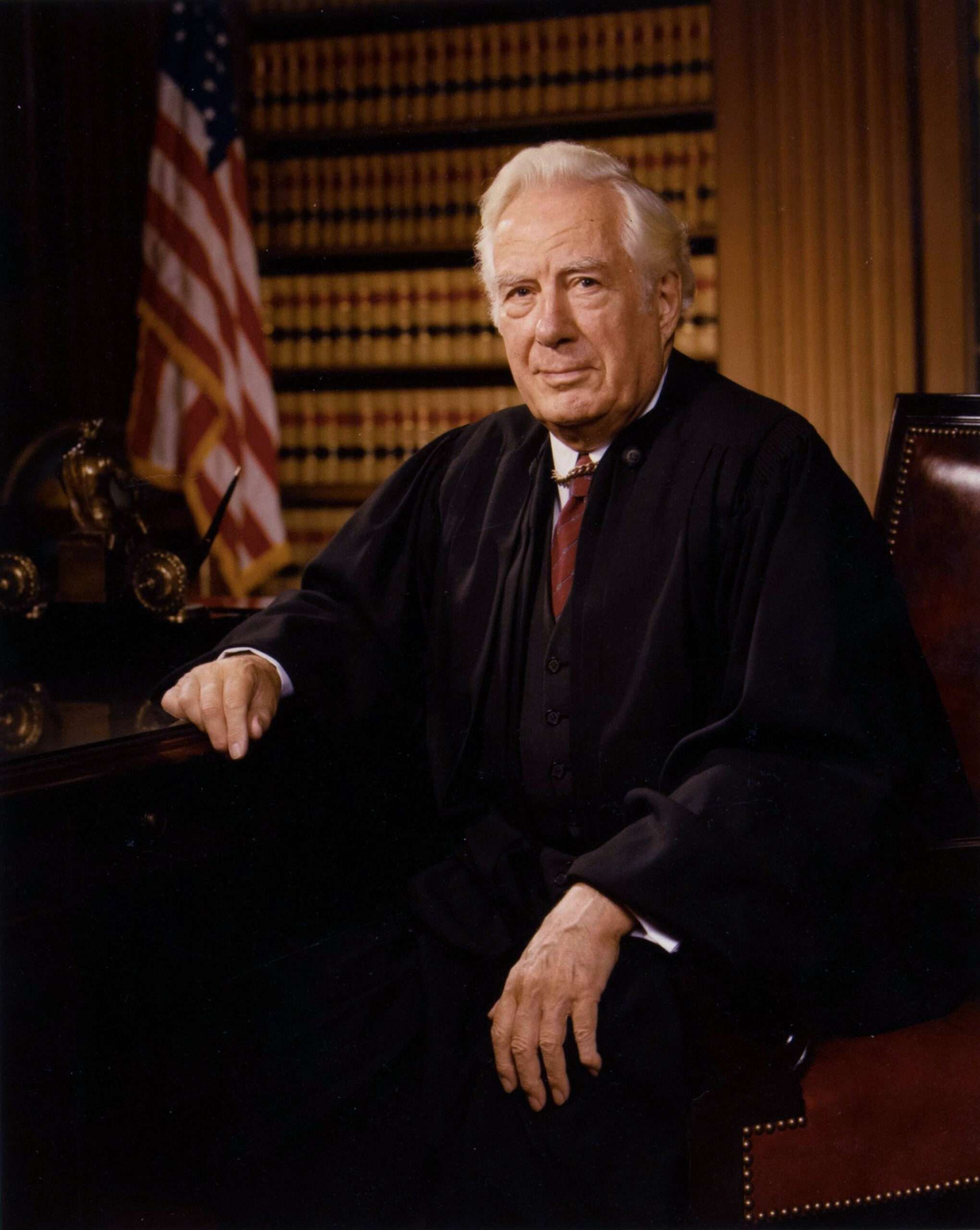
Chief Justice Burger Set the Stage for the Originalist Revolution

While conservative criticisms of the Burger Court may be justified, those criticisms do not apply to the "The Chief." He had only one vote on the Court ... and, too often, too little support from his colleagues to reach originalist results.

|

My co-blogger Josh Blackman has an interesting post, observing that the current Roberts Court has largely left Warren Court precedents in place, while often undoing Burger Court precedents. Blackman's argument is well-made. But in concluding his post, Blackman diverts into an unnecessary attack on Chief Justice Burger. Blackman suggests it was Chief Justice Burger who was "driving those trains" that went off the tracks. As a former law clerk for "The Chief" (as we called him), I'm biased. But I believe Blackman's criticisms of The Chief miss their mark. Blackman fails to adequately consider the situation that The Chief all too often himself in—one vote on a nine-Justice court that was often inclined to reaffirm and even expand dubious Warren Court precedents. And, if he had joined or written dissenting opinions, the result would often have been that the case assignment would have then moved from him (as the senior, Chief Justice) to a very liberal justice, with an even worse decision likely emerging. Working within these considerable constraints, The Chief took important steps to help to set the stage for the later originalist revolution.

Blackman launches his attack by looking at nine decisions of the Burger Court that have since been reversed. For convenient reference, I reproduce Blackman's list below:

  1. Roe v. Wade (1973), reversed by Dobbs v. Jackson Women's Health Organization (2022).
  2. Board of Regents of California v. Bakke (1978), which largely upheld the use of affirmative action policies. This decision was (basically) reversed by Students for Fair Admissions v. Harvard (2024).
  3. Lemon v. Kurtzman (1971) prohibited any "entanglement" between church and state.  Kennedy v. Bremerton School District (2022) effectively overruled the Lemon test.
  4. Abood v. Detroit Board of Education (1977) upheld the power of public sector unions to mandate certain dues from employees. Janus v. AFSCME (2018) overruled Abood.
  5. Chevron v. NRDC (1984) ruled that courts should defer to administrative agencies when a statute is "ambiguous." Loper Bright v. Raimondo (2024) overruled Chevron deference.
  6.  Apodaca v. Oregon (1972) allowed non-unanimous juries. It was overruled by Ramos v. Louisiana (2020).
  7. Nevada v. Hall (1979) held that states lack sovereign immunity from private lawsuits filed against them in the courts of another state. It was overruled by Franchise Tax Board of California (2019).
  8. Williamson County Planning v. Hamilton Bank (1985) limited access to federal courts for plaintiffs raising Takings Clause claims. It was overruled by Knick v. Township of Scott (2019).
  9. Davis v. Bandemer (1986) held that claims of partisan gerrymandering were justiciable in federal court. It was overruled by Rucho v. Common Cause (2019).

After recounting these nine cases, Blackman writes that "I've heard it said that Chief Justice Burger could have done more on the Court if he had more conservative votes. I'm not so sure. Burger was in the majority of most of the overruled cases. … Justice Rehnquist, appointed around the same time, was often the lone voice of reason."

So let's look at this set of nine cases, with Blackman's argument in mind. Read More

Foreign Law in American Courts

"Religious Arbitration, Family Law, and Constitutional Limits"

|

I was one of the panelists on this program, and much enjoyed it. (It's framed around some controversies in Texas, but we're talking about much bigger questions.) You'll see that I pretty sharply disagree with the other panelists—my remarks start at around 38:50—but that's what makes it fun. Here's the summary from the producers:

In recent months, Texas Governor Greg Abbott announced a ban on "Sharia law and Sharia compounds" in the state, citing longstanding principles that U.S. and Texas law take precedence over conflicting foreign law. This position is reflected in the 2017 American Laws for American Courts statute and in an Attorney General opinion affirming that contracts violating Texas public policy cannot be enforced.

These commitments were tested in a North Texas family law case, where an Islamic prenuptial agreement called for disputes to be resolved under religious law. The Texas Supreme Court ultimately stayed the arbitration order and ordered review of the original arbitration agreement for "validity and enforceability."

Other recent developments - including video accounts of a Houston imam calling for boycotts of certain businesses and reports of a proposed Muslim-exclusive residential community ("EPIC") - have prompted legislative responses such as HB 4211, which requires property transfer disclosures and ensures disputes are adjudicated under Texas and U.S. law.

How should courts weigh religious arbitration against constitutional and statutory protections? What legal tools exist to address disputes that implicate cultural or religious norms? How can Americans both respect religious diversity and uphold constitutional imperatives?

Free Speech

Did DA's Office Retaliate Against Prosecutor, When She Was Serving as Juror, for Voting to Acquit Defendant?

|

That's the issue in Hagan v. Funk, decided last Monday by Chief Judge William L. Campbell, Jr. (M.D. Tenn.); here are the allegations from the Complaint:

Plaintiff was employed as a prosecutor for the Office of the District Attorney General of the 20th Judicial District of Tennessee ("DA's Office") when she received a jury summons. The DA's Office has an employee manual with a policy governing jury duty. The policy states:

Jury service is a responsibility of good citizenship, and all employees are expected to honor subpoenas for jury duty in any court. It is the office policy that employees serve rather than seek to be excused or exempted. Jury service is both a privilege and an obligation. Our court system is founded upon the right to a jury trial, and all citizens should participate in order to insure [sic] that this right is meaningful. Because jury service requires sacrifice, many citizens try to avoid this obligation. Our office should set a good example by our willingness to serve, and we should be positive about our justice system and encourage all citizens to take part.

Every employee is to notify their respective supervisor immediately upon the receipt of a jury notice so that arrangements can be made to cover the employee's office assignments. Attorneys should also bring the matter to the attention of the judge of their court where appropriate. On each day at the conclusion of jury service, the employee shall return to work at the office, unless it is after office hours. All jury fees belong to the employee and will not affect an employee's pay.

Upon receiving the jury summons, Plaintiff notified her supervisor as well as Defendant. Plaintiff appeared for jury service on July 15, 2024, for the case State of Tennessee v. Karlos Reynolds, 2023-B-1023. Plaintiff was juror number nine. Based on this number, she would presumptively serve on the jury unless either the Court removed her for cause or one of the parties used a peremptory challenge to remove her.

Read More

Free Speech

The First Amendment and Restrictions on Gathering Information by Drone

|

From Sixth Circuit Judge John Bush's very interesting opinion Friday respecting denial of rehearing en banc in Yoder v. Bowen:

This case involves an as-applied challenge to a Michigan law (the drone statute) that makes it illegal to "us[e] an unmanned vehicle or unmanned device that uses aerodynamic forces to achieve flight"—i.e., a drone—while "tak[ing] game or fish." Drone Deer Recovery, a plaintiff here, offers a service where it tracks downed animals using drones and then posts the location of the animals' carcasses online so hunters can more easily find their kill. The plaintiffs allege that the drone statute violates their First Amendment rights because it (1) is a content-based speech restriction, (2) violates the speech-inputs doctrine, and (3) unconstitutionally restricts their ability to engage in inherently expressive conduct. The panel rejected all three arguments and determined that the statute survived intermediate scrutiny.

{We have referred to a type of protected speech as "speech inputs," but it goes by different names in different jurisdictions. The Tenth Circuit, for example, has referred to it as "the protected creation of speech," and the Supreme Court has referred to it as "[s]peech in aid of" protected speech.}

I write separately because I have concerns about the panel's reasoning related to the speech-inputs doctrine. The Supreme Court has indicated that "heightened scrutiny"— something more than O'Brien intermediate scrutiny—applies when the government seeks to ban the means to create speech. See Sorrell v. IMS Health Inc. (2011) (noting that a Vermont statute banning the sale of certain pharmaceutical data effectively banned certain entities from speaking with physicians and pharmaceutical companies and was therefore subject to "heightened scrutiny").

Read More

Guns

Second Amendment Violated by Seizure of Firearms License from Alleged Domestic Violence Victim

|

From Tuesday's opinion by Judge Aida Delgado-Colón (D.P.R.) in Ramos-Cruz v. P.R., granting summary judgment to plaintiff on her Second Amendment claim:

The Court draws the following factual findings from the parties' admissions on the record and those statements of proposed facts submitted by plaintiff that comply with L. Civ. R. 56….

On November 19, 2022, after an argument with her husband, plaintiff left her residence in Ceiba and went to Luquillo where she called the police to make a report against him for domestic violence. At the Luquillo Police Station, PRPB [Puerto Rico Police Bureau] agents seized plaintiff's firearms license [a seizure that apparently made it illegal for her to acquire new guns -EV]. The agents then travelled to plaintiff's house, where her father-in-law was present, and proceeded to enter the home, where they seized her weapons and ammunition. This was done without her permission and without a court order, pursuant to Article 2.13 of [Puerto Rico Weapons Act]. The next day, on November 20, 2022, an ex parte temporary restraining order was entered in plaintiff's favor and against her husband….

Article 2.13… reads, in relevant part, as follows:

Any law enforcement officer shall temporarily seize the license, firearms, and/or ammunition of a citizen if he has grounds to believe that the firearms license holder has used or shall use said firearms and ammunition unlawfully to harm other persons; for uttering threats to commit a crime; for stating the intention to commit suicide; for repeatedly demonstrating negligence or carelessness in handling the firearm; when it is believed that the firearms license holder has a mental illness, is considered to be a habitual drunkard, or is addicted to controlled substances; or in any other situation of grave risk or danger that warrants the seizure.

The record before the Court shows that none of the enumerated exceptions applied to plaintiff's situation when she sought assistance from the PRPB. Rather, the PRPB effectuated the seizure pursuant to the last, broadly worded clause: "in any other situation of grave risk or danger that warrants the seizure." …

Read More

Politics

The Heritage Guide to the Constitution: Essay Nos. 176–200

|

To continue my preview of The Heritage Guide to the Constitution, which will ship on October 14, here are the authors of essays 176–200.

  • Essay No. 176: The Jury Trial Clause —Judge Kurt D. Engelhardt, Ian Brinton Hatch, & Greta Gieseke
  • Essay No. 177: The Vicinage Clause —Brian C. Kalt
  • Essay No. 178: The Informed Of Accusation (Arraignment) Clause —Judge Michael B. Brennan
  • Essay No. 179: The Confrontation Clause —John F. Bash, III
  • Essay No. 180: The Compulsory Process Clause —Judge Joel M. Carson Iii & Jefferson F. Serfass
  • Essay No. 181: The Right To Counsel Clause —Judge Lawrence Vandyke & Alexandria Overcash
  • Essay No. 182: The Civil Jury Trial Clause —Renée Lettow Lerner
  • Essay No. 183: The Re-Examination Clause —Renée Lettow Lerner
  • Essay No. 184: The Excessive Bail Clause —John F. Stinneford
  • Essay No. 185: The Excessive Fines Clause —John F. Stinneford
  • Essay No. 186: The Cruel And Unusual Punishments Clause —John F. Stinneford
  • Essay No. 187: The Ninth Amendment —Ryan Williams
  • Essay No. 188: The Tenth Amendment —Charles J. Cooper
  • Essay No. 189: The Eleventh Amendment —Ernest A. Young
  • Essay No. 190: The Twelfth Amendment —Michael T. Morley
  • Essay No. 191: The Thirteenth Amendment —Kurt T. Lash
  • Essay No. 192: The Citizenship Clause —Kurt T. Lash
  • Essay No. 193: The State Action Clause —Lee J. Strang
  • Essay No. 194: The Privileges Or Immunities Clause —Kurt T. Lash
  • Essay No. 195: The Due Process Clause —Nathan S. Chapman & Michael W. Mcconnell
  • Essay No. 196: The Equal Protection Clause —Christopher R. Green
  • Essay No. 197: The Apportionment Of Representatives Clause —Gerard N. Magliocca
  • Essay No. 198: The Insurrection Or Rebellion Clause —Gerard N. Magliocca
  • Essay No. 199: The Public Debt Clause —Gerard N. Magliocca
  • Essay No. 200: The Enforcement Clause—James C. Phillips
More