
Supreme Court Grants Certiorari in Becerra v. Braidwood Management
Another significant administrative law grant of certiorari (and a dog that didn't bark).

Another significant administrative law grant of certiorari (and a dog that didn't bark).
Justice Neil Gorsuch criticized "the government's attempt to lodge secret evidence in this case." Still, things look grim for the app.
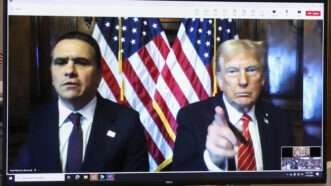
Despite some notable wins, the president-elect's overall track record shows he cannot count on a conservative Supreme Court to side with him.

Patrick Darnell Daniels Jr. was sentenced to nearly four years in prison for violating a federal law that bars drug users from owning firearms.

A local government gave ownership of Kevin Fair's Nebraska house—and all of its value—to a private investor, in a practice known as home equity theft.
Roberts identifies genuine problems, but little in the way of good solutions. He also sometimes overlooks ways in which the Supreme Court is partly responsible for the challenges the judiciary faces.

A Utica, New York, land grab offers the justices an opportunity to revisit a widely criticized precedent.
A growing body of evidence suggests bans on flavored vaping products will result in more young people smoking, but the FDA does not seem to care.

The case gives the Supreme Court an opportunity to revisit a widely reviled decision that invited such eminent domain abuses.
The Juliana plaintiffs are again seeking Supreme Court review of their case.

Whether or not the government is required under the 5th Amendment to pay such victims will remain an open question.
A TikTok ban could devastate thousands of independent workers, but the real challenge lies in modernizing labor laws to support the new economy.
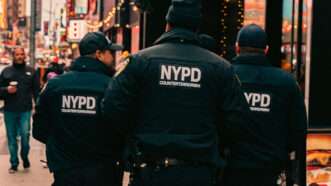
The government has given itself special powers to deal with crimes that it could already prosecute.
The ban violates the First and Fifth Amendments. Strike it down.
December certiorari grants on standing and religion are early holiday gifts for Court watchers.
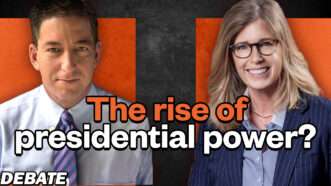
Glenn Greenwald and Elizabeth Price Foley debate Trump v. United States and its implications for presidential powers.

Gabriel Metcalf argues that his prosecution under the Gun-Free School Zones Act violated his constitutional right to keep and bear arms.
The Supreme Court's refusal to hear Boston Parent Coalition for Academic Excellence v. The School Committee for the City of Boston is bad news for equality under the law.
The junior justice authors a unanimous immigration law decision for the first of the term.

An e-liquid manufacturer is challenging the FDA's "arbitrary and capricious" rejection of flavored vaping products.

The FDA’s regulations are burdensome and unnecessary to address the inflated high school vaping epidemic.
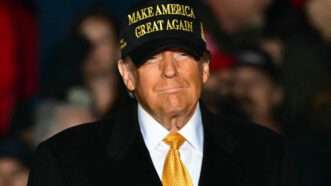
The executive order that the president-elect plans to issue contradicts the historical understanding of the 14th Amendment.
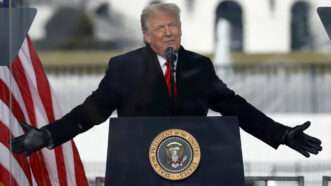
In response to charges that he illegally interfered with the 2020 election and improperly retained presidential records, Trump insisted that he was entitled to do whatever he wanted based on preposterous claims.
A challenge to the FCC's Universal Service Fee could produce a major administrative law decision.
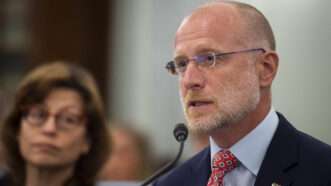
Brendan Carr’s plans for "reining in Big Tech" are a threat to limited government, free speech, free markets, and the rule of law.
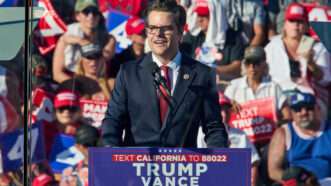
Several Republican senators have said they are not inclined to abdicate their "advice and consent" role in presidential appointments.
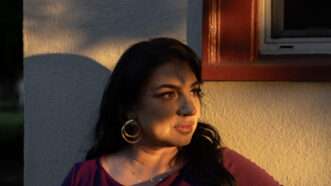
Desiree Martinez says police officers ignored her attempts to report her abusive boyfriend, who was also a cop. Those officers now have immunity from her lawsuit.
Justice Gorsuch shows more interest in property rights challenges than his colleagues on the Court.
Unsurprisingly, no justice showed any interest in reviving a lawsuit that should have died long ago.

U.S. District Judge Stephen McGlynn says the law bans firearms covered by the Second Amendment and is not supported by historical precedent.
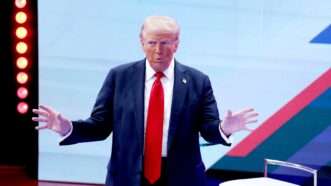
The justices, including Trump's nominees, have shown they are willing to defy his will when they think the law requires it.
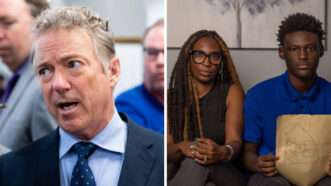
A federal court denied them the right to sue—despite Congress enacting a law five decades ago specifically for situations like this one.
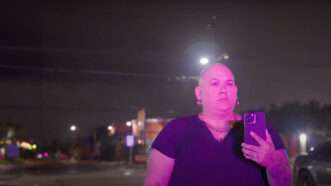
After being arrested for doing journalism, Priscilla Villarreal has taken her fight to the courts.

Federal agents are allowed to search private property without a warrant under this Prohibition-era Supreme Court precedent.

Law professor Ann Southworth offers a balanced take on the fallout from the Supreme Court's Citizens United decision.

A trucker lost his job because he tested positive for marijuana after consuming a supposedly THC-free CBD tincture.
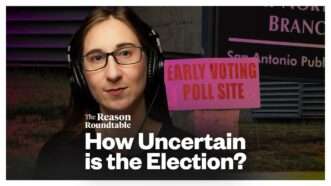
Plus: A listener asks the editors if the prospect of Supreme Court nominations is reason enough to favor Trump over Harris in this year’s presidential election?
With today's cert grants, the Court now has four cases that address the issue of where suits can be filed against federal agencies and who can file them.
Another interesting aside in the Royal Canin oral argument.
An amusing and potentially revealing exchange in a recent oral argument.
Some were surprised by the Supreme Court's action, but they should not have been.

Is this latest attempt at student debt forgiveness a serious policy or a pre-election ploy?
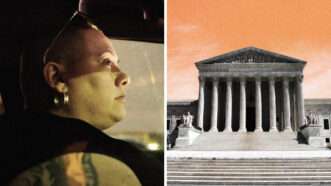
Priscilla Villarreal's case is about whether certain reporters have more robust free speech rights than others.
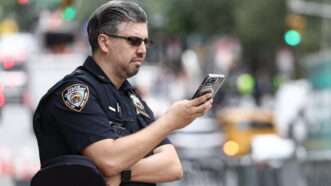
Without a warrant and specific proof of incriminating evidence, police should never be allowed past your phone’s lock screen.
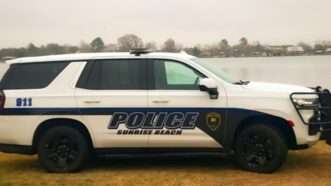
Mason Murphy says Officer Michael Schmitt violated his rights by punishing him for constitutionally protected speech.
Remembering the first time a partisan Senate minority blocked a judicial nomination that enjoyed majority support.
An examination of how Donald Trump's appointments to the Supreme Court have affected business interests.
Celebrate your independence with a subscription to Reason magazine, your most trusted source of honest, insightful news and analysis.




