"Red Sox Spirit" and Constitutional Theory
A potential new approach to state constitutional law.
Protesters continue to clash with law enforcement outside the Delaney Hall immigration detention facility, but questions remain over whether DHS policies comply with First Amendment law.
The 6th Circuit upheld that 158-year-old law, while the 5th Circuit concluded it could not be justified as a revenue measure.
The case could give the Court a chance to clarify what a "closely regulated" business is and what constitutional protections it enjoys.
The bill creates a new program to increase agency spending on small businesses, particularly those owned by women, minorities, and disabled veterans.
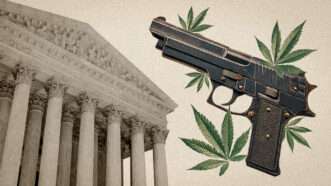
Most of the justices seemed unsatisfied by the Trump administration's argument that the law is constitutional as applied to a Texas marijuana user.
The battle against the president's so-called reciprocal tariffs is won, but the war for free trade and a stable business environment continues.
A few thoughts on the oral argument in Galette v. N.J. Transit Corp.
New data display the failures of the expanded Discovery Program.
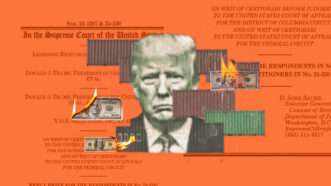
The International Emergency Economic Powers Act doesn't grant the president the power to regulate imports with tariffs. Even if it did, these tariffs would still be unconstitutional.
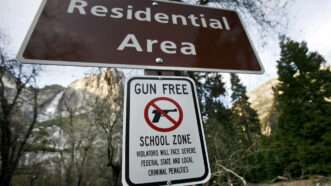
The DOJ tried to claim jurisdiction because he drove on a road.
The correct answer is: Yes, even when they are also regulations. Whether the Court agrees could determine the future of presidential power.
The federal law relies on a risible reading of the Commerce Clause to restrict a constitutional right.
Donald Trump's claim that the appeals court ruled against him for partisan or ideological reasons is hard to take seriously.
Seven judges agreed that the president's assertion of unlimited authority to tax imports is illegal and unconstitutional.
The appeals court rejected most of the arguments in favor of that policy, saying "the government must show non-intoxicated marijuana users pose a risk of future danger."
The decision overturns a staggering "disgorgement" order that was based on dubious math.
The 2016 brief defended the understanding of the 14th Amendment that the president wants to overturn.
My Cato Institute colleague Walter Olson explains.
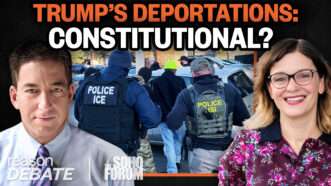
Glenn Greenwald debates Anna Gorisch on Trump's deportation policies.
A bit of cold water on a popular Court "reform" from a justice on the left-wing of the Court
The judgment is not surprising, since the president's reading of the 14th Amendment contradicts its text and history, plus 127 years of Supreme Court precedent.
A critical review of a new book on history and originalism.
The Cato Institute and the New Civil Liberties Alliance urge the Federal Circuit to extend the logic of a decision against the president's far-reaching import taxes.
Class actions and Administrative Procedure Act claims can achieve much the same result as the nationwide orders that the Supreme Court rejected.
Tellingly, the president avoided defending his dubious interpretation of the 14th Amendment at the Supreme Court.

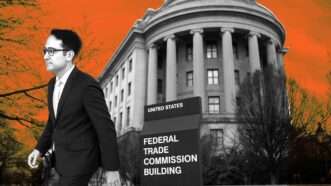
Trump fired Federal Trade Commissioner Alvaro Bedoya in March. Yesterday he gave up his claim to the job, but he's still challenging the White House's right to dismiss him.
The participants were Amanda Shanor (Univ. of Pennsylvania), Alan Trammell (Washington and Lee), Wilfred Codrington, III (Cardozo), and myself.
Stephen Miller's understanding of the Constitution is dubious for several reasons.
The Trump-appointed judge found that the administration's use of the Alien Enemies Act "exceeds the scope of the statute and is contrary to the plain, ordinary meaning of the statute's terms."
The International Emergency Economic Powers Act does not authorize the president's imposition of tariffs, a lawsuit alleges.
A response to Joel Alicea on whether originalism needs a moral defense.
The removals challenge Humphrey’s Executor, a Supreme Court precedent that protects independent agency officials from political firings.
The ruling by U.S. District Judge Jill Parrish emphasizes that religious freedom must protect "unpopular or unfamiliar religious groups" as well as "popular or familiar ones."
The president says those legislators are "subject to investigation at the highest level," notwithstanding their pardons and the Speech or Debate Clause.
Threats to impeach federal judges who rule against the government are a naked attack on their constitutionally crucial function.
President Donald Trump has begun kicking immigrant “Hamas sympathizers” out of the U.S.
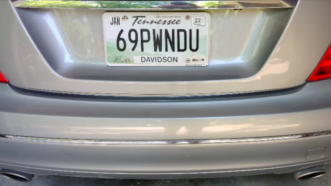
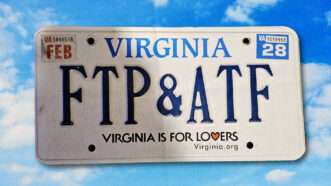
Most courts have ruled that vanity license plates are private speech and protected from viewpoint discrimination under the First Amendment.

The law is wasteful and protectionist. Now, a new lawsuit argues that it is unconstitutional too.

Georgetown constitutional law professor Randy Barnett discusses the legality of DOGE, Trump's executive orders, and birthright citizenship.
His position is grounded in concerns about the separation of powers that presidents of both major parties have raised for many years.
Federal judges in Washington and Maryland say the president's attack on birthright citizenship flouts the 14th Amendment and 127 years of judicial precedent.
New historical evidence on the ERA's invalidity.
Biden announced today that the Equal Rights Amendment is the "law of the land," but the Justice Department and the national archivist disagree.
A deeply mistaken decision on the way out of office.
The Supreme Court's refusal to hear Boston Parent Coalition for Academic Excellence v. The School Committee for the City of Boston is bad news for equality under the law.
Celebrate your independence with a subscription to Reason magazine, your most trusted source of honest, insightful news and analysis.