
Seventh Circuit Rules Against Trump Administration in Major Sanctuary City Decision
The latest in a long series of setbacks to the adminstration's efforts to pressure sanctuary jurisdictions by attaching conditions to federal grants.


The latest in a long series of setbacks to the adminstration's efforts to pressure sanctuary jurisdictions by attaching conditions to federal grants.
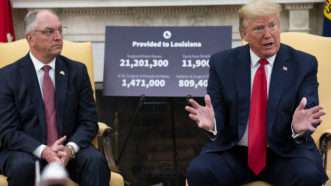
Varying state responses will provide the thing we need most right now: information.

Yes, the Reason Roundtable podcast has gone quarantine-crazy.

While denying Donald Trump's dictatorial impulses, William Barr notes that public health emergencies do not give governments unlimited powers.

It's available for preorder now, and will be delivered on April 23

The article explains why the coronavirus crisis does not justify weakening constitutional limits on federal government power.

We may find that we like making our own decisions.
Your opportunity to learn more about Uncle Sam and Mary Jane.
The president has a history of asserting powers he does not actually have.

Plus: Americans plan to stay home for months, courts block more abortion bans, Amash "looking closely" at presidential run, and more...

The president again insisted that the federal government can open the country by fiat. It cannot.
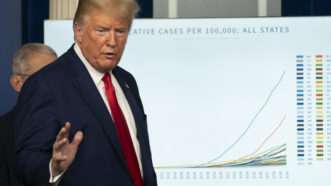
The president also cannot reopen the country whenever he pleases.
States have so far taken the lead in battling the coronavirus, and there is some merit to this decentralized approach, which fits the original meaning of the Constitution. But it also has flaws, and there is still a good chance the crisis will ultimately lead to an expansion of federal power.
The ruling is in line with numerous other court decisions on the same subject, but conflicts with an anomalous recent ruling by the Second Circuit.
The EPA has talked the talk of cooperative federalism, but it's not yet fully walking the walk.
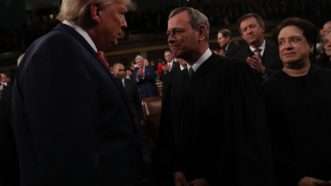
The legal battle over immigration, federalism, and executive power heats up.
A book released next month will explore the conflict between federal and state marijuana laws, and what to do about it.

Lynchings are already illegal. But the law would give prosecutors more power—including what amounts to an expansion of the federal death penalty.
The decision allows the Justice Department to impose immigration enforcement conditions on federal grants to state governments, and goes against numerous other court decisions striking down the exact same policy.

My 2008 article on this subject is now available on SSRN.
The new lawsuits against the state of New Jersey and King County, Washington have many of the same constitutional flaws as the administration's other efforts to to target sanctuary cities.

How can prosecuting a black woman for slapping Jews in 2020 be authorized by the constitutional amendment that abolished slavery in 1865?
It will be published by Oxford University Press in April.
I took part in panels on these topics at the recent Federalist Society National Lawyers Convention

The new federal ban on animal cruelty converts the Commerce Clause into a general police power.
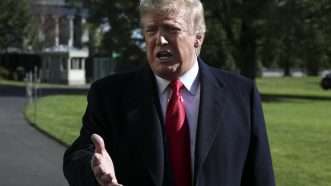
The constitutional showdown over federalism and immigration approaches SCOTUS.
The latest in a long line of court decisions ruling against Trump's efforts to pressure sanctuary cities into helping deport undocumented immigrants features an opinion by two conservative Republican judicial appointees.
Prof. Brian Frye of the University of Kentucky Law School interviewed me on this subject, as part of his series of "Ipse Dixit" podcasts.

California has largely prevailed in the lower courts, and the administration's petition focuses on the part of the law with the strongest backing from Supreme Court federalism precedent. It's a case the administration deserves to lose.
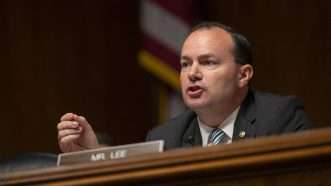
The Drone Integration and Zoning Act seeks to expand private property rights and give localities more say in airspace regulation.

The court rejected the four states' claims that the cap on the SALT deduction enacted in the 2017 tax act violated the Tenth Amendment and "coerced" states.
religious organizations' right to discriminate in some employment decisions, and federal funding conditions preferring local agencies that help federal immigration enforcement.

Give the Republican Party control of the White House and Congress, and it's only a matter of time before Democrats discover the virtues of devolving authority to state and local governments.

This vote is "a hopeful sign that the harmful policies of marijuana prohibition will soon be a relic of the past."
Are we ready for a return to the "original meaning" of the Electoral College?
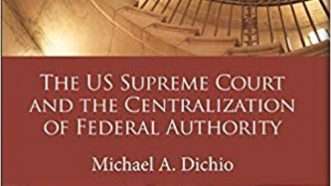
The book by political scientist Michael Dichio argues that the Court has done more to promote centralization than protect states, and is the most thorough analysis to date, of this longstanding issue..
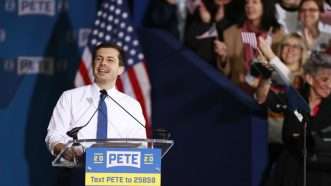
The idea has some flaws, but would be a major improvement over the status quo. It also has much in common with a proposal for state-issued visas promoted by two Republican members of Congress in 2017.

The long shot presidential candidate wants booming cities to get rid of their restrictions on new development.

The MORE Act combines laudably broad legalization and expungement provisions with taxes and spending that may alienate potential Republican allies.
In this follow-up to my Washington Post article on the same subject, I consider whether current liberal support for federalism is purely opportunistic, and whether the political left is inherently pro-centralization.

Reps. Earl Blumenauer and Thomas Massie have introduced a bill that would cut federal airport spending while giving airports more freedom to raise their money.

The late Supreme Court justice was an inconsistent defender of civil liberties.

In recent years, many liberals have come to develop a new appreciation for constitutional limits on federal power. Whether the trend continues remains to be seen.
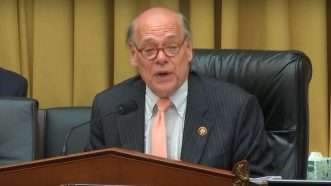
Should federal marijuana reform be tied to a broader "racial justice" agenda?

A solid majority of congressmen, including 41 Republicans, voted for a spending rider that bars the Justice Department from interfering with the legalization of cannabis for medical or recreational use.
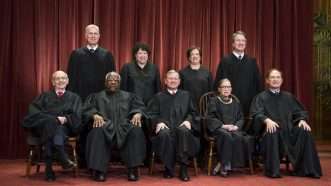
Understanding today’s Supreme Court decision in Virginia Uranium, Inc. v. Warren

The decision is a complicated ruling that potentially sets a dangerous precedent for the scope of federal power under the Constitution.
Celebrate your independence with a subscription to Reason magazine, your most trusted source of honest, insightful news and analysis.




