
A Gun Ruling Highlights the Tricks Congress Uses To Evade Limits on Its Power
During the last century, the Commerce Clause has replaced the Taxing Clause as an excuse for federal legislation.

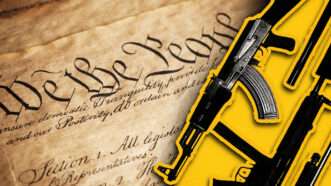
During the last century, the Commerce Clause has replaced the Taxing Clause as an excuse for federal legislation.

The Constitution assigns control of federal property to Congress, which never approved the president's demolition and replacement of the East Wing.
Misconduct and misrepresentations by Justice Department lawyers have led some federal judges to question the traditional benefit of the doubt they give to the government.
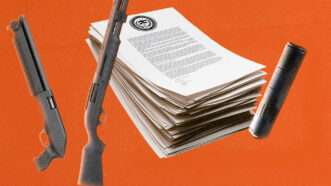
When Congress eliminated taxes on suppressors, short-barreled rifles, and short-barreled shotguns, it also eliminated the constitutional justification for regulating them.
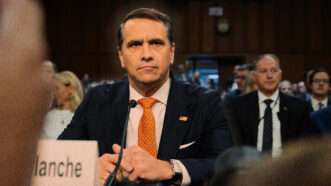
The acting attorney general confirms his dishonesty in presenting that jaw-dropping scam as the resolution of a bona fide legal dispute.
By haggling over the details of Trump's flagrantly corrupt IRS "settlement," dissenting Republican senators give a pass to Blanche's unethical and illegal approval of it.

The president's latest round of broad import taxes, like the previous two, treats his statutory authority as an afterthought.
The episode illustrates the president's routine weaponization of government against his enemies.

The record settlement pushes AI companies away from a fair use fight they might have won.

A federal judge ordered sweeping improvements to conditions at the Adelanto ICE Processing Center in California. Families say their loved ones died of neglect inside.

And it can't ban a former state lawmaker from wearing a sweatshirt that advertises that website, either.

In a decision written by a Joe Biden nominee, the appeals court addresses a long-simmering issue that the Supreme Court will consider during its next term.

Leonard Hoffmann and his neighbors in North Dakota went to court to fight for fair market value—as the Constitution promises—after WBI Energy Transmission said it would take their land at a discount.

The FDA says it can't license Regenative Lab's overseas sales today because it might change its regulations tomorrow. Now, the company is suing.

Gov. J.B. Pritzker signed a bill that promises property owners will receive the surplus proceeds when the government seizes their home to satisfy a tax debt.

During his confirmation hearing, the attorney general nominee repeatedly misrepresented the nature and scope of the sweeping immunity deal he approved.

Contradicting a federal judge, the acting attorney general, who blessed that cozy arrangement, insists it was not a product of collusion or self-dealing.
Trump’s nominee for attorney general has repeatedly subverted justice to benefit his boss.
U.S. District Judge Kathleen Williams concludes that the case never presented a true "case or controversy" because both sides were controlled by the president.
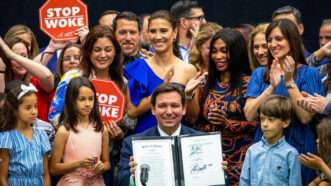
In the U.S., government officials aren’t allowed to fight ideas they don’t like with censorship.

Cops stopped a semitruck because of a drug tip, then tried to dress the illegal search up as a routine inspection.

The decision rebukes the DOJ for demanding "private and sensitive" information about Georgia election workers "with no legitimate law enforcement purpose."

Assistant Attorney General Harmeet Dhillon argues that both laws are unconstitutional because they prohibit arms in common use for lawful purposes.

The officer's avowed reasons for killing Dennis Tuttle and Rhogena Nicholas were contradicted by the physical evidence.

The case could settle the long-simmering issue of whether the Second Amendment covers commonly owned but politically disfavored rifles.
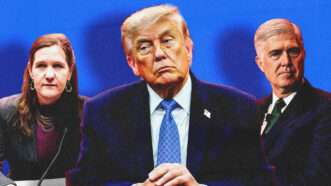
The Supreme Court has "no shortage of tools" to enforce the separation of powers, Justice Neil Gorsuch notes. "The only real question is whether we will use them."
In a pair of decisions on Monday, the Supreme Court ruled that presidents have full authority to fire heads of executive branch agencies—but that the Fed is different.

The Supreme Court's decision in United States v. Hemani could open the door to relief for cannabis consumers convicted of illegal gun possession.

The decision is a modest but welcome step toward rectifying the injustice of criminalizing conduct that violates no one’s rights.

The Pung family of Isabella County, Michigan, maintained they were entitled to fair market value. The high court disagreed, but with a twist.
The DOJ's unilateral abandonment of the Anti-Weaponization Fund "makes it crystal clear that these parties were never adverse," the former judges argue.

The court said the law—which would require age verification for everyone—constitutes only a “marginal burden” and "does not raise meaningful concerns about muting valuable protected discourse."
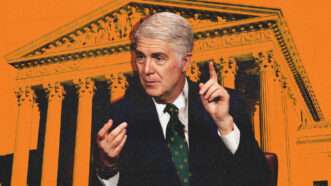
The Supreme Court ruled that "an agreement not to appeal a sentence is unenforceable when it would result in a miscarriage of justice."

Richard Hershey is asking the Supreme Court to overrule a 5th Circuit decision that blocked the lawsuit provoked by that obvious First Amendment violation.

The proposal was nixed only after White House Staff Secretary Will Scharf explained why it was legally dubious.

The family's attorney says it's the largest settlement for a dog shooting case in Colorado history.
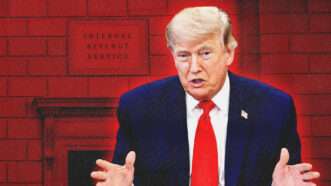
The sweet deal that resolved the president's fatally flawed lawsuit against the IRS was business as usual at the DOJ, his attorneys told a federal judge.
The president himself has repeatedly contradicted that claim.
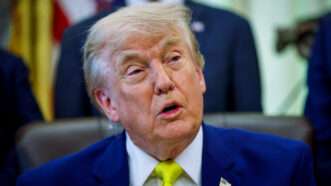
The president has repeatedly argued that courts have no business deciding whether his actions are legal.
U.S. District Judge Leo Sorokin struck down the fee, saying it exceeds the president's statutory authority and violates the separation of powers.

A Homeland Security official's testimony that ICE agents couldn't rely on REAL IDs as proof of citizenship led a federal judge to reply, "Help me understand how that makes sense."

The economic fallout of the law has been significant. Is it even legal?
The government had imposed an indefinite pause on adjudicating asylum petitions and applications for green cards, work permits, and citizenship for legal immigrants from certain countries.

The D.C. Circuit is reviewing an injunction issued by a judge who said "no statute comes close to giving the President the authority he claims to have."
The administration has paid $20 billion in refunds. Now, it is asking a federal appeals court to limit which businesses will get the rest.

Blanche is happy to pervert justice in service of the president's personal agenda. No wonder Trump wants to keep him as attorney general.

The American Civil Liberties Union is asking a judge to block the Memphis Safe Task Force from retaliating against anyone who exercises their First Amendment right to record the police.
An addendum to the president's "settlement" of his lawsuit against the IRS shields him and his family from liability for any federal offenses they committed prior to May 19.
Celebrate your independence with a subscription to Reason magazine, your most trusted source of honest, insightful news and analysis.




