
Mr. Hand Beats Mr. Yuk in Contest to Repel Kids From Marijuana
Will a new warning label help prevent accidental ingestion of cannabis? We may never know.


Will a new warning label help prevent accidental ingestion of cannabis? We may never know.

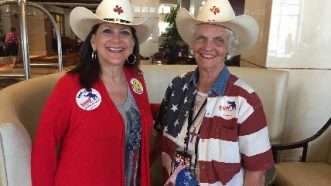
Republicans Against Marijuana Prohibition take on the RNC.
They want "a reasoned pathway for future legalization," while Republicans can't even support limited medical use.
All four presidential candidates say states should be free to legalize marijuana, but they differ on whether that's a good idea.
All four say states should be free to legalize pot, but only two say that's a smart policy.
The regulations could be looser in some respects than rules adopted by U.S. states.
An imminent rescheduling decision is bound to disappoint anyone hoping for pot by prescription.
Reports of pot prohibition's death have been greatly exaggerated.
The Adult Use of Marijuana Act qualifies for the ballot.
Except for marijuana, Gary Johnson wants to "keep the drugs illegal."
The Libertarian presidential nominee missed an opportunity to make a moral case against prohibition.
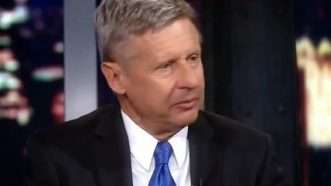
Were the Libertarian Party's representatives prepared for the most obvious question?
The results contrast with those from the National Survey on Drug Use and Health.
Two new papers argue that domination by a few large firms is unlikely and that overregulation is as big a risk as underregulation.
After an ardent prohibitionist bought Nevada's leading newspaper, a formerly libertarian editorial board suddenly turned against marijuana legalization.
When Nevada's largest newspaper changed owners, it changed its position on marijuana legalization.
Underage consumption is lower today than it was before two dozen states legalized cannabis for medical or recreational use.
Prohibitionists warned that loosening legal restrictions on cannabis would encourage teenagers to smoke pot.
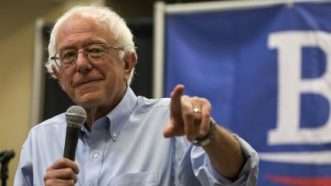
Ballot initiative in the works.
William Bratton cites a problem created by prohibition as a reason to keep it.
That exaggerates the actual change by a factor of 72.
Kristine Kirk's family say her husband would not have killed her if he had been properly warned about THC side effects.
Traffic safety trends in Washington after marijuana legalization are ambiguous.
MPP, which decried the behind-the-counter rule as "absurd" and "unconstitutional" in Colorado, is backing it in Maine.
Recent polls indicate that legalization also has plenty of public support.
The percentage of students who say pot is easy to get shows little change in recent years.
An initiative that was temporarily derailed by a notary public's sloppy signature qualifies for the ballot.
The two states want to join appeals filed by landowners and sheriffs.

Park security looked the other way.
The bill also covers candy shaped like fruit or people but not moons, stars, hearts, or marijuana leaves.
A new report from the state Department of Public Safety considers the consequences.
A new report suggests some tentative observations about the consequences of legalization.
Exchanging marijuana "gifts" for "donations" is not, alas, legal in Washington, D.C.
Creative entrepreneurs try to fill the gap between legal demand and illegal supply.
Clinton minimizes her role in advocating longer sentences and exaggerates her role in trying to shorten them.
"The people of Colorado have the right to make the decision," he tells reporters in Denver.
The ruling says the secretary state improperly rejected signatures based on an unreasonably narrow reading of the law.
Contrary to what prohibitionists claim, the numbers from Colorado are equivocal.
Colorado's numbers do not show what opponents of legalization claim.
Diane Kroupa helped establish the confusing rules for paying taxes on income from marijuana sales.
The president prefers to pretend that rescheduling requires congressional action.
A long overlooked provision of the Controlled Substances Act makes it a felony to "place" a marijuana ad.
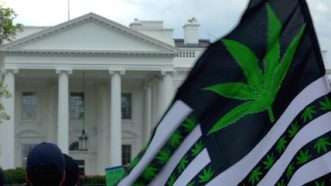
The Reschedule 420 campaign seeks to remove marijuana as a Schedule 1 drug.
Where other conservatives see cannabis chaos, Mike Ritze sees a victory for federalism.
"Does anybody trust anybody that's high to do anything?" the MSNBC host wonders.
Celebrate your independence with a subscription to Reason magazine, your most trusted source of honest, insightful news and analysis.




