
This Revolutionary Robotic Suit Enabled a Paralyzed Man To Carry the Olympic Torch
Wandercraft, the French company that developed the exoskeleton suit, recently got FDA approval to use them for stroke rehab in the U.S.


Wandercraft, the French company that developed the exoskeleton suit, recently got FDA approval to use them for stroke rehab in the U.S.
The New Right talks a big populist game, but their policies hurt the people they're supposed to help.
The filmmakers who brought The Coddling of the American Mind to the big screen discuss the students whose stories inspired the film and the state of the media, Hollywood, and storytelling.

The Kids Online Safety Act would have cataclysmic effects on free speech and privacy online.

How legislators learned to stop worrying about the constitutionality of federal drug and gun laws by abusing the Commerce Clause.

The agency claims DOI and DOC have "a high potential for abuse" because they resemble other drugs it has placed in Schedule I.

According to a new report, the average eighth-grader needs over nine months of extra school time to catch up with pre-COVID achievement levels.
Life is a decentralized, horizontal network, not merely a centralized, hierarchical tree.

Robert Williams was arrested in 2020 after facial recognition software incorrectly identified him as the person responsible for a Detroit-area shoplifting incident.

Collecting and analyzing newborns' blood could allow the state to surveil people for life.

Libs of TikTok is blasting out screenshots of random people's offensive posts to her millions of followers in hopes of claiming their scalps.

Sen. Rand Paul writes that the lawsuit punishes Apple for a feature its customers like.
Growth of regulation slowed under former President Trump, but it still increased.

Both parties—and the voters—are to blame for the national debt fiasco.

We're looking at four more years of anti-tech and anti-business antics from the FTC no matter who wins this November.

In a "novel" order concerning the app NGL, the agency takes aim at online anonymity and at minors on social media.

The move "will significantly reduce the amount of time students can be on phones without parental supervision," according to Gov. Glenn Youngkin.

Good intentions, bad results.

Even if EcoHealth's "basic research" in Wuhan didn't cause the pandemic, it certainly failed in its mission to stop it.
Plus: A listener asks whether Bruce Springsteen's song Born in the U.S.A is actually patriotic.

Proposed bills reveal the extreme measures E.A.’s AI doomsayers support.

And the Supreme Court agrees to weigh in.

Don't blame criminal justice reform or a lack of social spending for D.C.'s crime spike. Blame government mismanagement.
Even as he praises judicial decisions that made room for "dissenters" and protected "robust political debate," Tim Wu pushes sweeping rationales for censorship.
The majority opinion makes clear that social media content moderation is an activity protected by the First Amendment. That likely dooms large parts of the state laws restricting content moderation.

The Court is remanding these two cases for more analysis—but it made its views on some key issues clear.

China's free speech record is bad, but the federal government's isn't so great either.
Americans shouldn’t count on the department to use the technology responsibly or in a limited way.
The standing requirements laid down by the majority might make it extremely difficult or impossible for victims of indirect goverment censorship to get their cases to court.
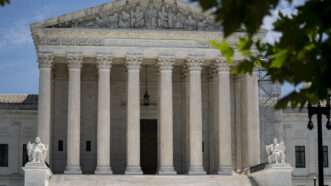
The verdict in Murthy v. Missouri is a big, flashing green light that jawboning may resume.

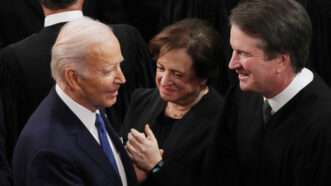
Murthy v. Missouri challenges government efforts to suppress dissenting viewpoints on social media.

Ending U.S. aid would give Washington less leverage in the Middle East. That's why it's worth doing.

A widely cited study commits so many egregious statistical errors that it's a poster child for junk science.

"It’s not like public health is infallible," the Stanford professor and Great Barrington Declaration author tells Reason's Nick Gillespie.

Plus: A listener asks if there are any libertarian solutions to rising obesity rates.
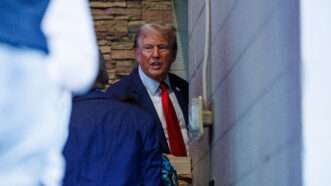
Plus: Catholic hospitals may be forced to provide euthanasia, Milei's accomplishments in Argentina, migrant crisis near the Canary Islands, and more...
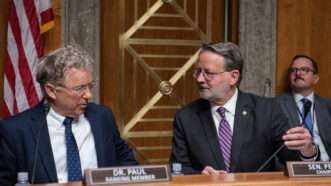
The Biden administration says its new guidance will make pandemic research safer. Critics say it suffers the same flaws as past, failed gain-of-function regulations.
A covert U.S. military social media campaign was an exercise in profound hypocrisy.

X's child porn detection system doesn’t violate an Illinois biometric privacy law, the judge ruled.

The obstacles to having more babies can't be moved by tax incentives or subsidized child care.

Sen. Rand Paul explains why FOIA litigation shouldn’t have been necessary to find this out.

We need parents with better phone habits, not more government regulation of social media.
Plus: Ex-NSA chief joins forces with OpenAI, conscription squads hunt Ukrainian draft-dodgers, and more...

Case in point: The Washington Post's Philip Bump.
The plaintiffs hope to "help Republicans and conservatives see why this ban is inconsistent with the free speech values they say they care about."


New from Reason: a look into what Javier Milei has accomplished and what it will take to make the most of Argentina’s window for real change. Out now for subscribers.

