
A Jury Acquitted Them of Various Charges. They Served Prison Time for Them Anyway.
The Supreme Court may soon consider if acquitted conduct sentencing is illegal.

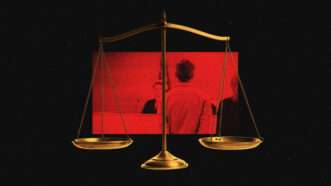
The Supreme Court may soon consider if acquitted conduct sentencing is illegal.

Republicans turned off by Walker at least have a third option, but for House races in Georgia, state law makes it extremely difficult for third-party candidates to get on the ballot.

Plus: The Onion weighs in on qualified immunity case, Supreme Court rejects challenges to bump stock ban, and more...
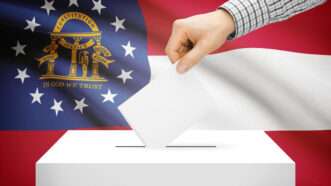
Despite the state's law allowing no third-party House candidates to get on the ballot in 60 years, the Court declined to hear the case.

Does Section 230 shield YouTube from lawsuits about recommendations? Can Twitter be forced to pay damages over the terrorists it hasn’t banned?
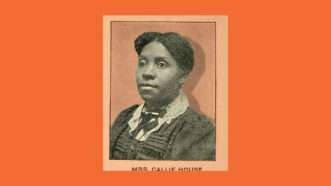
A new petition seeks a posthumous pardon for Callie House.
and some thoughts about judicial fearlessness

Ten years after their unanimous Supreme Court victory against the Environmental Protection Agency, the Sacketts return to One First Street for another round.

A former guidance counselor served six years of a 25-year sentence thanks to a public defender's incompetence.

The Federal Prison Oversight Act would create an independent ombudsman to investigate complaints about the Bureau of Prisons, something prison advocacy groups have long called for.

Netflix's The G Word tries and fails to restore faith in big government.


A federal judge denied PLF's motion to block implementation of the policy. But denial is "without prejudice," and PLF can quickly refile the case.
The lawsuit has a more conventional - and stronger - basis for standing than that filed yesterday by the Pacific Legal Foundation.
The Yale Law School DinnerPartyGate lawsuit (Stubbs v. Gerken) can go forward on an interference with prospective business relationships claim, based in large part on the law school's alleged interference with plaintiffs' clerkship opportunities, though the other claims are dismissed.

"There's a new special interest group in town: parents."
It was filed by Pacific Legal Foundation public interest lawyer Frank Garrison, and includes a novel strategy for getting around the problem of standing.
"[A] prisoner's right to be free from highly invasive intrusions on bodily privacy by prison employees of the opposite sex—whether on religious or privacy grounds—does not change based on a guard's transgender status."
A New York trial court judge concludes that polyamorous relationships are entitled to the sort of legal protection given to two-person relationships.
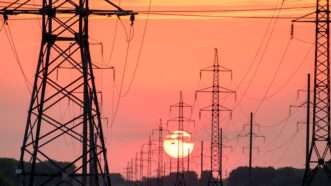
If climate change is an emergency that requires immediate action, it makes sense to streamline environmental reviews that tangle green energy projects in red tape.

Plus: FIRE teams up with Ice-T, self-preferencing shouldn't be an antitrust offense, and more...

Democrats pander to immigrants but do little to liberalize the system. Meanwhile, Republicans' hostility to immigrants has increased.
An appellate panel thoroughly dismantles Judge Cannon's order blocking Department of Justice access to documents President Trump kept at Mar-a-Lago.

Critics of the Martha’s Vineyard flights are raising a bevy of questions about the finances and alleged deception behind the scheme.
Based upon Totenberg's new book, a prominent legal ethicist thinks the conflict was a real one.
In the wake of West Virginia v. EPA, it seems that "major questions" can be found almost anywhere.

So much for the idea that low interest rates meant the government could borrow endlessly with no consequences.

In the popular imagination, teachers are compensated terribly. What about in the real world?

The Big Apple's building regulations are almost impossible to navigate, and officials like it that way.

Lincoln's wartime governance had dire, and longstanding, economic consequences.

Until he won the Republican nomination in New Hampshire, Don Bolduc insisted that the presidential election was stolen.

A genuine surprise: Politicians prioritize a bill’s possible success over partisan campaign signaling.

The narrowly averted strike would have been an economic catastrophe. The story of how we reached the brink of that disaster is an illustrative one.
As per usual, politicians' response to negative effects of the drug war is…more drug war.

The case is now on appeal after a lower court said the ban on websites promoting prostitution didn't concern protected speech.

The British spy series shows the lengths to which government overseers will go to protect themselves.

The senator's avowed devotion to federalism is no match for his political ambitions.
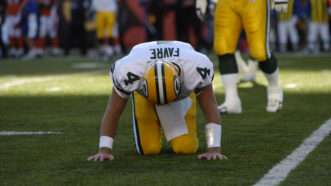
How the former NFL quarterback convinced Mississippi to spend its public assistance money on a volleyball facility.

The Republican senator improbably claims his bill is authorized by the 14th Amendment and the Commerce Clause.

Starr's role in the impeachment of Clinton may have cost him a seat on the Supreme Court. And the biggest beneficiary of Starr's failure was probably George W. Bush.

Plus: The authoritarian convergence, inflation up and stocks down, and more...
Celebrate your independence with a subscription to Reason magazine, your most trusted source of honest, insightful news and analysis.




