
Why Civilization Needs Better Manuals
Whole Earth Catalog creator Stewart Brand discusses maintaining complex systems, the importance of stewardship, and how technological optimism shapes the future.

Whole Earth Catalog creator Stewart Brand discusses maintaining complex systems, the importance of stewardship, and how technological optimism shapes the future.

Plus: AI and entitlements, a new Turing prize winner, eight donuts a day, the first trailer for Dune 3, and more...

Plus: Strait talk, vaccines and the courts, Ted Cruz vs. the Oscars, and more...

This regulation didn't make anyone safer but it did make it harder to build nuclear energy projects in the United States.

Contrary to the claims of the not-in-my-backyard technophobes, all this growth comes with minimal environmental downsides.
A Federalist Society forum on the first big case of OT 2026.

Stephen Miller's wife is giving renewables a P.R. boost.
The plan recognizes that public opinion is what's holding data centers back the most.
The Supreme Court granted certiorari in Suncor Energy v. County Commissioners of Boulder County
A couple of lawyers and a couple of scribes discuss the legal challenges to come.
The Environmental Protection Agency is reportedly prepared to rescind the "endangerment finding" that underpins the regulation of greenhouse gases under the Clean Air Act.
The EPA under the Obama and Biden administrations invoked that finding to adopt strict and costly regulations aiming to reduce emissions.
The job of scientists isn't to manufacture alarm. It's to communicate the truth.

The bill has a wide variety of groups worried that they could be targeted for criticism of large agribusinesses.

The Trump administration excludes advanced nuclear power reactors from excessive National Environmental Policy Act requirements.
The Department of Justice failed to demonstrate that the court had jurisdiction to hear the (premature) claims.

“We’re standing up not just for ourselves, but for the principle that government must respect property rights.”
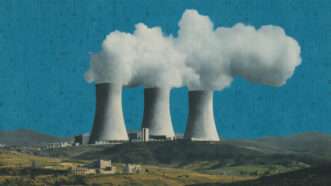
Is this small modular nuclear power’s moment?

The company is backed by Volkswagen but still received considerable funding from state taxpayers.


Plus: The Trump administration wants to roll back "disparate impact" regulations, New York Gov. Kathy Hochul wants to roll back environmental review regulations, and L.A. waives fees for wildfire rebuilds.

The AI boom is showing the limits of our regulated monopoly model for generating electricity.

With commercial off-the-shelf vehicles readily available, cheaper, and already used in its fleet, why did the USPS decide to commission its new trucks from Oshkosh Defense?

Is this "the end of the climate hawk era"?

The plan is both light on specifics and full of contradictions.

The Reason editors examine the most underreported stories of 2025 across politics, economics, global affairs, and culture.
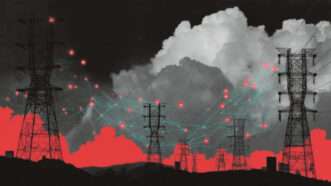
Don't blame AI for your high electricity bill. Blame the politicians who are trying to take AI away.

History shows clearly that the societies most capable of generosity and liberalism are not those trapped in poverty but those that have escaped it.
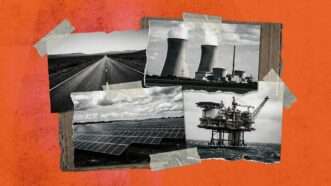
The SPEED Act is unlikely to pass the Senate, but hopefully it will initiate sorely needed bipartisan reforms.
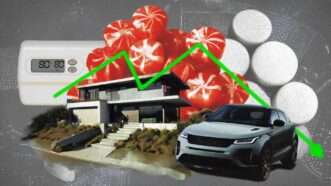
A real affordability agenda would unleash free markets, not constrain them.

Recent innovations could help address plastic pollution.
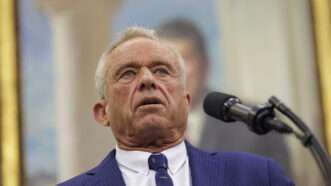
The Trump administration continues a long tradition of subsidizing the things it tells Americans to eat less of.

Trump isn’t the first president to pick energy winners and losers, but he should be the last.

Here's a Trump reform that could actually make something more affordable.

When voters believe they're living through an economic apocalypse, they're willing to embrace the very policies that would create one.
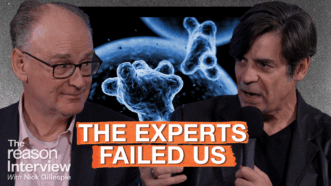
Author Matt Ridley examines how science became centralized and dogmatic, why public trust collapsed during COVID, and how open dissent is essential to restoring credibility.
Whatever the merits of climate tort suits (or lack thereof), the argument they are preempted does not hold up.

We have many things to be grateful for this time of year. The government isn't one of them.

The portion that Americans spend on food has fallen steeply over the last century.

Federal gas taxes no longer cover the cost of highways, leaving taxpayers to fill a growing multibillion-dollar gap.

A recent Transportation Department audit of Hurricane Sandy relief funds found $95 million in questionable costs and $2.9 billion in unspent money.
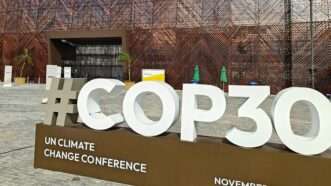
COP30 in Brazil just ended and was more of the same.

A spending bill approved as part of the package that ended the federal shutdown aims to close a loophole that gave birth to $28 billion industry.

GOP lawmakers in Wisconsin and elsewhere are pushing the idea that abortions are a water quality issue.
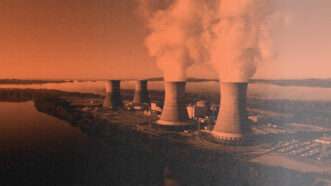
Bringing the defunct power plant back online is a good thing. The government's involvement is not.

The appropriations bill, which the House is considering, would wipe out an industry that offers alternatives to cannabis consumers in states that still prohibit recreational marijuana use.

There are several reasons why beef prices are at a record high. Collusion isn't one of them.
Celebrate your independence with a subscription to Reason magazine, your most trusted source of honest, insightful news and analysis.




