
Trump Wants More Low Interest Rates From Federal Reserve but Isn't Getting Them
Trump worries that the Fed chief's predictable interest rate policy could impair the economic growth needed to make his tax policies viable.


Trump worries that the Fed chief's predictable interest rate policy could impair the economic growth needed to make his tax policies viable.

Representatives of the auto industry are in Washington to deliver an obvious message to the oblivious Commerce Department.
Trump adviser Larry Kudlow says the tax law will bring the deficit down. An administration report shows that's not right.

Ingenuity, not capital accumulation or exploitation, made cotton a little king.
Tariffs always divert resources toward government-favored firms and away from everyone else.

The United States has accused the victims of its tariffs of engaging in unfair and punitive measures with their retaliatory tariffs.

Tariffs let the government pick winners and losers-but sometimes even the winners get hung out to dry.

"Capitalism has not always existed in the world and it will not always exist in the world."

Food prices are rising, and they're likely to soar even more
But will Congress act to rein in Trump?

Of course, June's deficit represents just a small fraction of our overall national debt.

Amash wondered why Mitch McConnell and Paul Ryan even want to be leaders in Congress "if all they intend to do is outsource their jobs to the president."

Is Congress finally ready to get into the fight?
In Poplar Bluff, Missouri, support for Trump's tariffs is about tribalism more than anything else. That's dangerous and scary.
Federal debt now equals 78 percent of gross domestic product.
Trump's tariffs are just part of the problem.

Economist Michael C. Munger argues the sharing economy is the next great economic revolution—and it's already underway.

Automakers, motorcycle manufacturers, the stock market, and even the White House's own analyses are telling Trump to change course.

The island's population has fallen dramatically even as Spanish speakers from other nations are desperate for a new home.

The unseen costs of the Trump administration's bellicose trade policy matter too.

"The business of buying weapons that takes place in the Pentagon is a corrupt business."
If you read Reason you already know these three pieces of good news about global trends.

If you don't want a black market in booze to develop, keep the tax man on a leash and regulators in check.
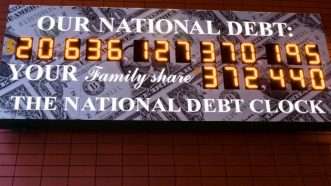
Entitlement spending, health care costs, and the GOP tax legislation will drive up the debt.

"It's all working out great," Trump said in South Carolina. Few people seem to agree with that assessment.

The E.U. retaliated against Trump's steel and aluminum tariffs. Now, whiskey drinkers will pay the price.
One government intervention into the economy begets another, and American businesses are caught in the chaos. Good and easy to win? Not so much.

It can do that because it's a global brand, but other businesses aren't as lucky. And workers everywhere stand to lose.

In 18th century France, wearing the wrong fabric could get you in big trouble.
Thirty years of data show "refugee burden" is a myth: Migrants to Europe have been a significant economic benefit

How to understand new data on independent contracting.

A new British study shows that rescheduling hydrocodone, a powerful opiate painkiller, just forced users onto the darknet to get their fix.

Commodities are falling across the board, but soybean farmers are taking the brunt. What's happening in Iowa is the perfect demonstration of why trade works.

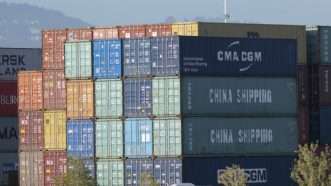
Prices for steel, washing machines, and lumber spiked after Trump imposed tariffs on them. This time it will be different, right?
Another week, another bumbling trade declaration from the president.
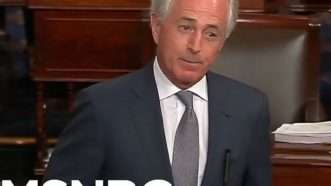
June 12 was not a good day for free-market constitutionalism in the modern GOP.
It's a damned shame that he doesn't seem to really believe in it.
Carbon-neutral transportation fuels might be possible.
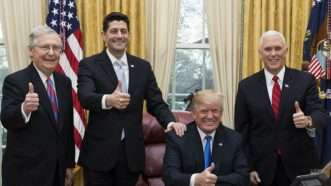
President Donald Trump's rescission bill actually cuts just $57 million from current year spending. So that oughta solve the fiscal crisis.

The outgoing senator wants to require congressional approval for "national security" tariffs, while the low-polling president taunts Flake about his low poll numbers.
The GOP betrays its principles for the sake of political expediency.

I mean, sure, that makes as much sense as any other reason.

Medicare will run dry even sooner. Do you trust anyone in Washington to solve this problem?

Extending the justification would allow government intervention into just about anything.
Via trade and immigration restrictions, the president is completing the GOP's conversion to the party of economic micro-management.
Celebrate your independence with a subscription to Reason magazine, your most trusted source of honest, insightful news and analysis.




