
Instead of Helping Americans Battle Rising Prices, Biden Escalates 'Big Oil' Blame Game
Removing tariffs could save American households $800 this year. What is the White House waiting for?


Removing tariffs could save American households $800 this year. What is the White House waiting for?

St. Paul has seen a 61 percent decrease in building permits after the city imposed rent control on future housing.

Plus: Will the January 6 hearings change any minds?

...and why government spending is like an infestation of cicadas.

The Federal Reserve started the problem, and consumers are paying for the consequences.
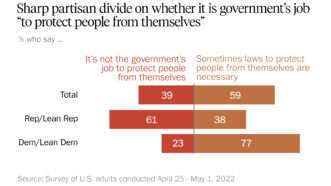
Only 6 percent of Americans say the federal government is extremely "careful with taxpayer money," yet those same Americans consistently report that they want the government to do more.

Despite a few encouraging analyses, the numbers just don't add up.

It would force us to "live within our means," says the president of the Foundation for Research on Equal Opportunity.

Under Biden, Trump, and Obama, government federal spending almost doubled.

Biden should stop layering new, contradictory orders into the market and simply get government out of the way.

America can join with more free trade or it can miss out.

Tariffs imposed by President Donald Trump and kept in place by President Joe Biden are costing consumers $51 billion annually.

This crisis is the result of protectionism, regulation, and central planning.
"[P]olitics has no place in Kentucky's public pensions.... '[S]takeholder capitalism' and 'environmental, social, and governance' investment practices that introduce mixed motivations to investment decisions are inconsistent with Kentucky law governing fiduciary duties owed by investment management firms to Kentucky's public pension plans."

The president's argument is amazing for its tone-deafness, inconsistent thinking, and sheer economic ignorance.

Attacking big firms just for being big could drive up prices.

Inflation damages the economy while doing the greatest harm to the most vulnerable.

Biden's three-point plan to tackle inflation is really a one-point plan: Let the Federal Reserve handle this mess.

Millions of lower-income or unbanked people are more likely to use cryptocurrency as a payment method.

Governments can't plan economies, but can disrupt them.
Lawmakers stuffed more than $8 billion in pet projects into an omnibus federal spending bill passed in March. But wait, didn't Congress ban earmarks back in 2011?


The president is trying to claim credit for falling deficits. Actually, his administration has overseen a $2.4 trillion increase in the long-term deficit.

It incentivizes high-noise, low-cost signaling rather than actual cultural changes.
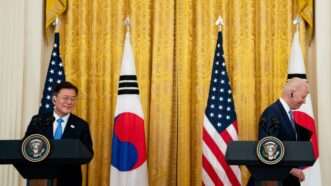
Biden's top trade adviser says tariffs must be "strategic," but what strategic value do tariffs on South Korean steel serve?

The self-described "freedom maximalist" and former hedge fund manager talks "incorruptible money," Austrian economics, and why Satoshi Nakamoto's invention is unstoppable.

Congress has radically restricted the number of pilots without doing anything to increase safety.

Federal regulations make it more likely that a driver can be suspended or fired for drug use, regardless of whether they ever drove unsafely.

Plus: A listener asks if it’s possible for bureaucracy ever to be good.

"Hold on, now, you're starting to sound like an anarchist..."
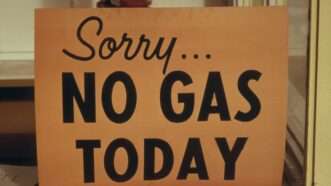
Democrats are trying to inject a political solution into an economic problem.
There is seldom any meaningful accountability for government incompetence.

Markets work if you let them. The Biden administration and Congress should remove supply restraints on baby formula that never made any sense in the first place.

Last week, the price of bitcoin fell to lows not seen since 2020 while a prominent stablecoin collapsed. Does this mean it was all a Ponzi scheme?

Plus: The editors each point out one key disagreement they have with one another.

When politicians break the economy, they hurt us in the short term but also create future opportunities to do harm in the name of undoing the damage they inflicted.

Unfortunately, an automatic crypto purchase made with after-tax earnings won't lower your taxable income.

According to new CDC numbers, the death toll rose 15 percent last year after jumping 30 percent in 2020.

Despite bitcoin's steep slide, the CEO of MicroStrategy is bullish on its mass adoption.

The state’s unemployment rate is well above average, yet there’s a ballot initiative hoping to push the minimum wage to $18 an hour.

Plus: The Pro-Choice Caucus thinks choice is a harmful word, trade restrictions worsened the baby formula shortage, and more...

Several studies have found that the vast majority of costs incurred by increased corporate taxes are passed along to workers in the form of lower wages.
Plus: Texas' social media law goes back into effect, inflation worries voters, and more...

The MicroStrategy CEO and biggest corporate owner of bitcoin is HODLING for the long haul, come bull or bear market.

Gas prices fell in April, dragging the month's average price increases down to 0.3 percent after March's staggering climb.

Plus: A democratic socialist running for office is caught up in a MeToo witch hunt, inflation woes continue, and more...

Despite a promising April jobs report, the U.S. is still 3 million workers short.

Plus: Trusting the science is now an explicitly partisan issue, stocks are still plummeting, and more...


New from Reason: a look into what Javier Milei has accomplished and what it will take to make the most of Argentina’s window for real change. Out now for subscribers.

