
No, Recycling Will Not Save the Environment
Despite what you may have heard, many "recyclables" sent to recycling plants are never recycled at all.


Despite what you may have heard, many "recyclables" sent to recycling plants are never recycled at all.

The Supreme Court has agreed to hear 94-year-old Geraldine Tyler's case challenging home equity theft.

Planners and politicians from Saudi Arabia to Scotland want to transform interconnected cities into isolated "urban villages" no one ever needs to leave.

The factory may have been a bad deal for Virginia, but tying the decision to Chinese aggression is the wrong move.
The Lords of Easy Money argues that the Fed created an economy with nearly irresistible incentives for foolish choices.

Taking stock of the utterly unserious fiscal policy discourse in Washington.
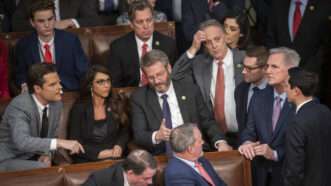
While some Republicans may have had misguided motivations, a few disrupted McCarthy's campaign in order to enact fiscal restraint. Their colleagues were fine with business as usual.

The Commission's lone dissenter says Congress has not charged it with regulating noncompete clauses.

Inflation fell to 6.5 percent in December, but new House rules ensure that Congress will have to consider the inflationary impact of future spending bills.

Data show Florida and New York had similar death numbers despite vastly different approaches.

The warning signs are flashing "don't be like China."

Economist Bryan Caplan explains how cutting back on zoning and other restrictions could create millions of new jobs for workers - on top of other beneficial effects.

The consequences of our obsession with urban dystopias and utopias

But partisans are having the wrong debate.

We’d all be better off if politicians spared us their experiments in subsidies, wages, and trade.


The insurgent Republicans want to balance the budget, impose new barriers to immigration, and increase transparency for future earmark spending.

The Inflation Reduction Act extended tax credits for buying electric vehicles, but the requirements will put them out of reach for most customers.

Compliance could prove impossibly expensive for independent food sellers.

Sebastian Mallaby's The Power Law explores how venture capital and public policy helped shape modern technology.

Rents and home prices skyrocketed almost everywhere over the past two years. There's some hope new supply will bring costs down in the new year.

If lawmakers keep spending like they are, and if the Fed backs down from taming inflation, then the government may create a perfect storm.

When I was young, I assumed government would lift people out of poverty. But those policies often do more harm than good.

Join Reason on YouTube and Facebook on Thursday at 1 p.m. Eastern for a live discussion of "stakeholder capitalism" or Environmental, Social, and Governance (ESG) investing.

After two terms in the Senate as a champion for free markets and limited government, Pennsylvania's Republican senator is heading into retirement.

Deregulation can help the millions of people who prefer flexible, independent jobs.
The Congressional Budget Office projects that future deficits will explode. But there's a way out.

Plus: An attempt to criminalize porn, D.C. hopes making tourism more expensive will boost tourism, and more…

Plus: Title 42 order termination is on hold, the FTC vs. Meta, and more...

Plus: The editors extend the discussion on the lack of immigration reform in this week’s bill.

Unless Congress takes action, those tariffs will return on January 1. And the baby formula shortage hasn't yet passed.

If political pressure to forgive debt can work once, why wouldn't it work again every five or 10 years?

The government spent $501 billion in November but collected just $252 billion in revenue, meaning that about 50 cents of every dollar spent were borrowed.

Some people would benefit. Others would lose money or be rendered unemployable.

The country's strategy ignores the failures of prohibition.

Antitrust regulators don't seem to understand how the video game industry works.

The Superabundance authors make a compelling case that the world is getting richer for everyone.

Superabundance explains why a world of 8 billion people is infinitely richer than one with 1 billion.
As the Court agrees to take up yet another case against the Education Department's loan forgiveness plan, Biden's goal of forgiving billions in student loans seems increasingly doomed.

With the FORMULA Act soon to expire, the U.S. baby formula market is about to return to the conditions that left it so vulnerable to a shortage in the first place.

Food prices were up 0.5 percent during November, even as energy prices fell by about 1.6 percent.

Most dangerously of all, they're starting to make their own central bank digital currencies.

Plus: Destigmatizing sex work, free markets and grocery store mergers, and more...

Yes, America benefits from immigrants who can write code. But we also need ones who can swing hammers.

It's especially outrageous when considering the billions of dollars in fraud that took place thanks to COVID-19 relief programs.

With high job vacancies and a low birth rate, Germany is turning to the world to fill the holes in its economy.

You can’t turn lives and economies off and on without inflicting lingering harm.

Fixing federal permitting rules and easing immigration policies would help companies like the Taiwan Semiconductor Manufacturing Company, which are interested in building more plants in America.


New from Reason: a look into what Javier Milei has accomplished and what it will take to make the most of Argentina’s window for real change. Out now for subscribers.

