
When Businesspeople Run Government, the Government Doesn't Become a Business
Central planning from Commerce Secretary Howard Lutnick, President Donald Trump, and others reflects a fundamental misunderstanding of what makes private markets work.

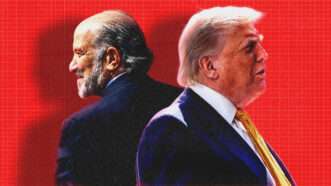
Central planning from Commerce Secretary Howard Lutnick, President Donald Trump, and others reflects a fundamental misunderstanding of what makes private markets work.
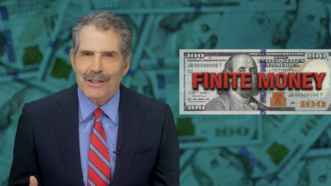
Yes, capitalism can cause some problems. It's also the only thing that works.

Chinese cars are cheap and widely popular, but Americans can't buy them.

Nominees include stories on America's gerontocracy, the war on chocolate, how Texas beat California on housing, and more.
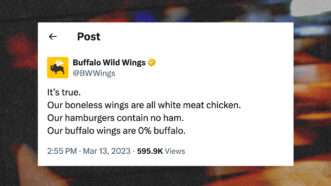
"Our boneless wings are all white meat chicken....Our buffalo wings are 0% buffalo," Buffalo Wild Wings quipped.

Some of the people building AI have started acting like it might be dangerous.

The restrictions are often framed as a crime prevention measure. But the fine print points to a different motivation: adding union jobs.
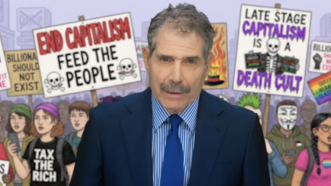
"The New Deal made investment in America a risky project," says economist Donald J. Boudreaux, author of The Triumph of Economic Freedom.

Following a backlash to its Super Bowl commercial, Ring owner Amazon announced that it was canceling a planned partnership with Flock Safety.

There was little rhyme or reason to the president's "emergency" tariffs, which fluctuated wildly depending on his mood.
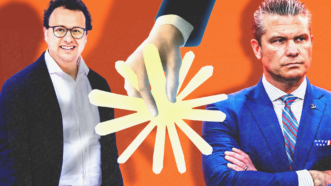
Judge Rita Lin's preliminary injunction confirms what government officials had implicitly acknowledged: The supply chain risk designation was punishment, not policy.

Is there really a truck driver shortage? Or are companies just using that story to pull off an outrageous corporate welfare scam?

As demand for trips has plummeted in the wake of the wage hikes, the Drivers Union is trying to limit the number of gig workers on the road.

Many states have deregulated hair braiding, but Louisiana lawmakers want to tighten regulations by demanding more coursework, including on the ancient origins of braiding.

Trump administration officials openly seek to punish the AI company for its corporate philosophy.

A proposal in Victoria would require every business, no matter the size, to allow two days of remote work a week.
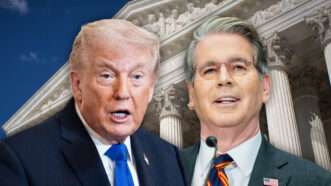
It said that if it lost in court, it would refund companies that paid unlawful tariffs. Now it says the process could take years.
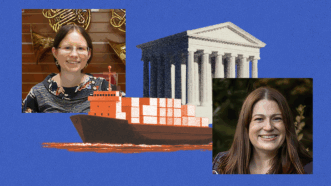
The battle against the president's so-called reciprocal tariffs is won, but the war for free trade and a stable business environment continues.

The video game's anti-corporate satire is so over the top that it undermines its point.

Aimen Halim sued Buffalo Wild Wings, saying he was tricked into buying chicken breast nuggets when he thought he was getting deboned wings.

New York City's own past policies are to blame for much of the gig economy drama, which Mayor Mamdani will further exacerbate.

If Anyone Builds It, Everyone Dies is an extreme proposal to effectively outlaw promising AI progress.

A Canadian boycott and retaliatory trade barriers have wiped out U.S. wine and spirits sales abroad, costing American producers jobs, revenue, and entire export markets.

A new bill in Wyoming aims to defend Americans against the U.K.’s online regulators.

The Enhanced Games are letting athletes take performance enhancing drugs—and they want their events to be big as the Super Bowl.

Mayors come and go, but New York City remains fundamentally itself.
"Flexibility at work has the power to drive fertility decisions," according to researchers running a survey in the U.S. and 38 other countries.
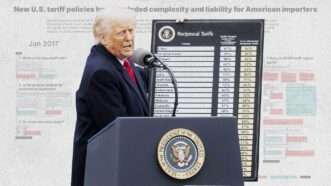
Oh, so now the Trump administration is worried about the complexity of its tariff polices?

Immigrants start businesses at a higher rate than native-born Americans, benefitting not only themselves but also their American workers and customers.
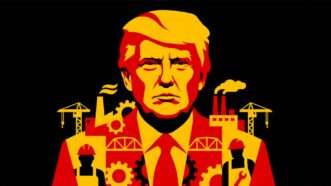
The Trump administration has not made a convincing case for why it is buying stakes in these companies—and why these companies in particular, rather than others.
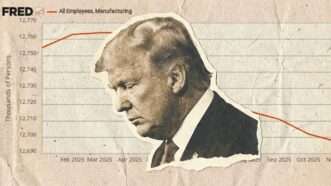
These metrics are bad proxies for prosperity, but they reveal just how flawed the president's arguments have been.
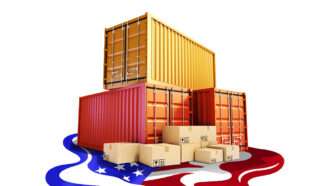
For Trump, tariffs are a solution to every problem, and his trade war is more about the vibes than the economics.
Countries like Canada and Germany are lining up to welcome companies and workers priced out by the H1-B price hike.

If antitrust regulators allow the deal to go through, consumers stand to benefit from a less expensive Netflix–HBO Max bundle.

What's wrong with Big Tech isn't the fault of libertarianism.

When voters believe they're living through an economic apocalypse, they're willing to embrace the very policies that would create one.
The Trump administration's pivot toward socialism did not come without warning.
Biden said "companies are investing in America again." Instead, America is investing in companies—and getting little in return.
By looking to the past, Democrats could chart a pro-freedom blueprint for their party’s future.
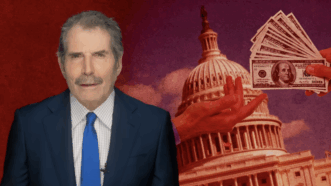
To support chipmaker Intel, the president used our money to buy 433 million shares of Intel stock. That's not a free market.

You can’t legislate your way to prosperity.
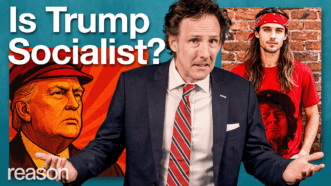
Donald Trump’s new stock-buying strategy isn’t socialism, but it is a step toward a government-controlled economy.

"Look at the corruption," says Dale Davenport. "Look how many city councilmen have gone to jail."

Progressive politicians want to ban restaurants from adjusting prices based on demand—even when no one’s actually doing it.

Amazon, with its deep pockets, could have helped turn things around. Instead, regulators consigned the company to die a slow and painful death.

Billions of dollars are at stake in New York City’s mayoral election.

President Donald Trump says his tariffs protect American businesses, but more than 700 small businesses represented by We Pay The Tariffs beg to differ.

Socialism is government control of the means of production. When the government becomes your largest shareholder, that's a strong first step.
Celebrate your independence with a subscription to Reason magazine, your most trusted source of honest, insightful news and analysis.




