
More Age Verification Fallout: Artist Blogs Blocked, Porn Data Leaked, Traffic Boosts for Noncompliant Sites
Unintended—but entirely predictable—consequences abound!

Unintended—but entirely predictable—consequences abound!
It also rejects Hunter Biden's invasion-of-privacy counterclaim, on statute of limitations grounds.
Age verification laws are already coming for Americans’ access to free speech.

Convincing the U.K. to stand down on backdoor access to Apple's encryption is a big win. The next battle will be fought over age verification.

A new campaign pushes back against the widespread use of automatic license plate readers without warrants.
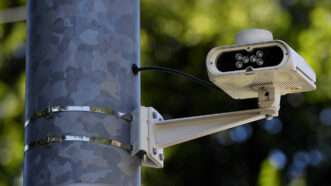
The technology enables routine surveillance that would have troubled the Fourth Amendment’s framers.
Trump’s new executive order addresses political discrimination in banking, but we need deeper reforms to money-laundering laws and the Bank Secrecy Act to truly protect freedom and privacy.
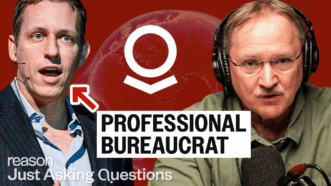
The former CIA analyst and Cato scholar discusses Palantir, Trump's new national database, and the sordid history of federal law enforcement on Just Asking Questions.

Local officials initially were unfazed by complaints that the constant surveillance raised serious privacy concerns.

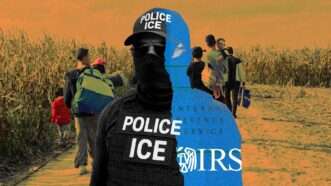
ICE wants to access confidential IRS data to locate tax-paying undocumented immigrants and boost detention numbers.
Defendant had 100K X followers, and as a result O'Leary "was flooded with unwanted communications."

The immigration agency has reportedly gained access to a private database designed to fight insurance fraud.

Why Edward Snowden deserves not only a presidential pardon, but a hero's welcome home.
The child, and her 12-year-old brother, were left under the supervision of a neighbor by the mother, who left town for six days for a foreign job interview.
Officials at the border have the power to paw through sensitive data on your phone.
A lawsuit against the genomics company "imposes top-down restrictions" rather than "establishing clear rules" or "letting companies equip individuals with better tools to manage their privacy," says one expert.

Flock Safety’s 40,000 cameras present in over 5,000 communities across the U.S. are being used to detain undocumented immigrants, many of whom have no criminal history.
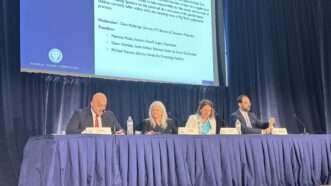
The result is the same: attacks on tech companies and attempts to violate Americans' rights.

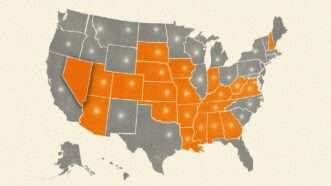
A new law prohibits the state from requiring nonprofits to disclose the personal information of their supporters, protecting Americans’ First Amendment right to free association.

If you think the government will only use these tools to track illegal immigrants, think again.
So the Ninth Circuit held today, by a 2-1 vote. I tentatively think the majority got it right as a matter of First Amendment law and statutory interpretation, though I think such statutes ought to be written to include some privacy exceptions as to gender identity and not just sex.
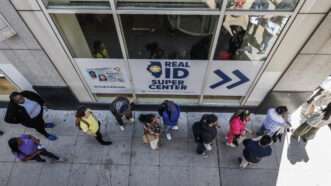
To make us safer, the feds required standardized ID and one-stop shopping for identity thieves.
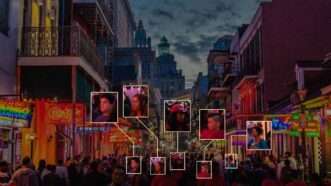
Although the AI-generated surveillance of the public has been paused, the program continues to send automatic alerts to the Louisiana State Police and federal authorities.
The Big Sky State becomes the first to close the "data broker loophole" allowing the government to get private information without a warrant.
A Supreme Court case could determine whether Americans own their digital data—or whether the government can take that information without a warrant.

Congress just approved a new online censorship scheme under the auspices of thwarting revenge porn and AI-generated "nonconsensual intimate visual depictions."

The feds are rapidly deploying artificial intelligence across spy agencies. What could go wrong?
Schools across the country are gathering personal information and putting students' privacy at risk.
Detroit lawyer Amir Makled has confidential client data on his phone. That didn’t stop U.S. Customs and Border Protection from trying to search it.

Know how much the law does—and doesn’t—protect your privacy rights.
Popular encryption apps are probably secure if government officials rely on them.
And you shouldn't be panicked into doing it either.
The court leaves open, though, the possibility that a narrower challenge aimed just at restrooms with closed stalls, where students wouldn't generally be partly or fully undressed where others can see them.
Central bank digital currencies would destroy any chance for financial privacy, but society is willingly moving in that direction.

Already this year, the agency has allegedly conducted a warrantless raid in Newark and several warrantless arrests in the Midwest.
Celebrate your independence with a subscription to Reason magazine, your most trusted source of honest, insightful news and analysis.




