
'Hamstringing the Government': A Viral Narrative Distorts Ketanji Brown Jackson's Understanding of Free Speech
If partisans have one thing in common, it's confirmation bias.

If partisans have one thing in common, it's confirmation bias.
The justices established guidelines for determining whether that is true in any particular case.

Diosdado Cabello, Nicolás Maduro's right-hand man, is threatening retribution against the satirical website.
Justice Jackson, like Justice Breyer (whom she replaced and for whom she clerked), seems to be considering an approach that is more embracing of speech restrictions that she views as especially urgent—including perhaps ones that departs from precedents such as the Pentagon Papers case.
The government can't block viewpoints it condemns from its own property that has been opened to publicspeech. Should there be limits on government systematically and substantially encouraging private entities to block the same viewpoints from their property—which may be much more important to public debate than the government property where speech remains free?
Such speech can be found to be "impermissible harassment," the court says, partly because "deference to schoolteachers is especially appropriate today, where, increasingly, what is harmful or innocent speech is in the eye of the beholder."
The government is entitled to try to persuade social media to take down posts, but not to coerce them to do so.

Several justices seemed concerned that an injunction would interfere with constitutionally permissible contacts.
Plus: A listener asks about Republicans and Democrats monopolizing political power in the United States.
Citizens should be able to choose the same high-quality defensive arms that peace officers choose

The story behind the city's ban on unlicensed drone businesses is even weirder than the ban itself.

The company leaves Texas over an “ineffective, haphazard, and dangerous” age-verification law.
The former civil liberties group continues morphing into a progressive organization.
The newspaper portrays the constitutional challenge to the government's social media meddling as a conspiracy by Donald Trump's supporters.

James Crumbley, who was convicted of involuntary manslaughter, may be an unsympathetic defendant. But this prosecution still made little sense.
The president of the new University of Austin wants to reverse the decline of higher education in America.
The Indiana Court of Appeals, though, reverses the order, concluding the judge wasn't allowed to issue such an order on his own initiative; it doesn't decide whether such an order would violate the First Amendment.
This bears on when the official's comment deletion or blocking decisions may violate the First Amendment.
The Institute for Justice says its data show that a century-old Supreme Court doctrine created a huge exception to the Fourth Amendment.
"It's a disturbing gift of unprecedented authority to President Biden and the Surveillance State," said Sen. Rand Paul (R–Ky.).
Instead of freeing Americans from censorship, the TikTok bill would tighten the U.S. government's control over social media.
and also because private clubs generally have broad discretion in interpreting their internal rules.
Even as they attack the Biden administration's crusade against "misinformation," Missouri and Louisiana defend legal restrictions on content moderation.

Are you in compliance with the Corporate Transparency Act? Have you even heard of it?

"Laws like this don't solve the problems they try to address but only make them worse," says a Foundation for Individual Rights and Expression attorney.
An "uncompromising" journal cancels an essay for failing to say the right things.
The Fifth Circuit leaves room for possible retroactive pseudonymization of the case, however, though it doesn't decide for certain whether such retroactive pseudonymization is proper.
Part of the facts in an interesting recent case, dealing with plaintiff's claims that the police retaliated against her for exercising her First Amendment rights to report crime.

Plus: Microaggression discourse, AI espionage, housing policy wins, and more...

when in context the statement just expressed "an intention to file a complaint against the conduct of government officials."
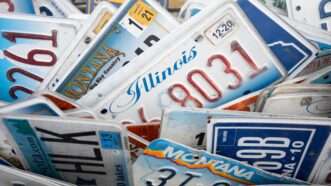
Censorship of 2,872 Pennsylvania license plates raises free speech questions.
A new bill would ban TikTok and give the president power to declare other social media apps off limits.
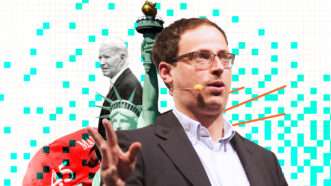
"People are not in politics for truth-seeking reasons," argues the data journalist and author of On The Edge: The Art of Risking Everything.
The culture of public accusation and shaming, in high school (and stemming from a relationship that apparently happened when the accuser and accused were sophomores).
Celebrate your independence with a subscription to Reason magazine, your most trusted source of honest, insightful news and analysis.




